
Market Report · September 7, 2026

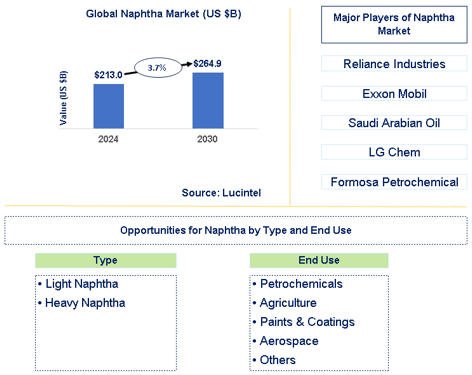
Key data points: The market size in 2030 = $264.9 billion, growth forecast = 3.7% annually for the next 6 years. Scroll below to get more insights. This market report covers trends, opportunities, and forecasts in the global naphtha market to 2030 by type (light naphtha and heavy naphtha), end use (petrochemicals, agriculture, paints & coatings, aerospace, and others), and region (North America, Europe, Asia Pacific, and the Rest of the World)
We'll send your sample report shortly.
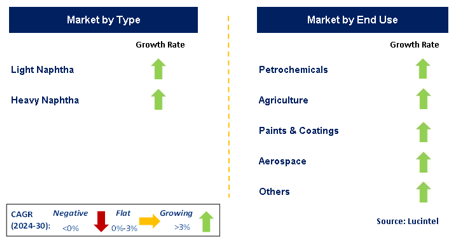
• Lucintel forecasts that, within the type category, within the type category light naphtha is expected to witness higher growth over the forecast period.
• Within the end use category, petrochemical is expected to witness the highest growth.
• In terms of regions, APAC is expected to witness the highest growth over the forecast period. Gain valuable insights for your business decisions with our comprehensive 150+ page report.
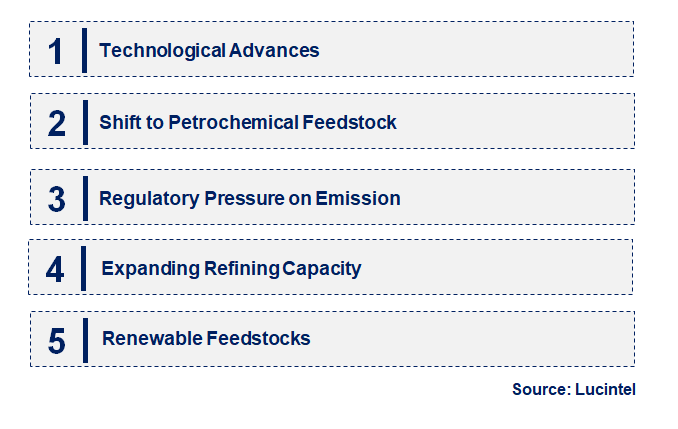
• Technological Advances: Advanced refining technologies are gradually improving naphtha production in both efficiency and quality. The latest developments in catalytic cracking and hydrocracking increase yield and optimize product output.
• Shift to Petrochemical Feedstock: Naphtha is increasingly utilized as a feedstock for petrochemical production. This trend explains the rising demand for chemicals used in manufacturing plastics, synthetic fibers, and other products.
• Regulatory Pressure on Emissions: Rising regulations aimed at reducing greenhouse gas emissions are influential factors in the naphtha production process. Companies are investing in cleaner technologies and adopting various practices to meet stricter environmental standards.
• Expanding Refining Capacity: Various countries are developing their naphtha refining capacity due to the rapid increase in domestic and international demand. Most new refinery projects and upgrades target efficiency and production improvement.
• Renewable Feedstocks: There is growing interest in integrating renewable feedstocks into naphtha production. This trend aims to reduce dependence on fossil fuel supplies and meet global sustainability goals. These trends are remodeling the naphtha market, driving changes in technological improvements, production methods, and environmental concerns. In other words, efficiency, petrochemical applications, and sustainability are key agendas for change.
• Refining Capacity Expansion: Most regions are expanding their refining capacities to increase naphtha production. New refinery projects, as well as upgrades, are competing for higher capacity utilization and better efficiency.
• Technological Innovations: Improvements in refinery technologies, such as enhanced catalytic and hydrocracking techniques, result in higher-quality naphtha. These innovations have boosted the economy and encouraged greener, environmentally friendly, and sustainable production methods.
• Increased Use in Petrochemicals: The demand for naphtha as a feedstock is rising for petrochemical production. This trend is driven by the growth of industries that manufacture plastics and other finished products using naphtha-based chemicals.
• Regulatory Changes: Stricter environmental regulations are driving refineries to adopt cleaner technologies and practices. Compliance with these regulations necessitates investments in emission-reducing technologies and processes.
• Incorporation of Renewable Feedstock: There is an increased focus on incorporating renewable feedstocks into naphtha production. This aligns with sustainability goals and further reduces dependence on traditional fossil fuels. These changes signify a transformation in the naphtha market, from increased capacity and improved technology to better sustainable development. The market is shaping its future based on changing demand and regulatory pressures.
• Petrochemical Industry: A surge in demand for petrochemicals has created growth opportunities for naphtha. As industries expand the use of naphtha-based chemicals, the potential for market growth and innovation increases.
• Refining Upgrades: Investment in upgrading refining technologies offers opportunities to increase the yields and quality of naphtha. Further development and strengthening of refining processes can meet rapidly changing market demands.
• Sustainable Production Practices: Integrating renewable feedstocks and cleaner technologies in naphtha production contributes to environmental sustainability. This trend allows companies to align with environmental regulations and attract eco-conscious customers.
• Emerging Markets: Growth in emerging markets, particularly in Asia and Africa, may catalyze new opportunities for naphtha producers. Increasing industrialization and energy requirements in these markets lead to a growing volume of naphtha production and supply.
• Technological Innovations: Ongoing improvements in refining and processing technologies present significant opportunities to enhance efficiency and product differentiation. Innovations in naphtha processing are well-positioned to improve competitiveness in the marketplace, driving profitability. These strategic growth opportunities highlight the potential for development and innovation in the naphtha market. The movement toward technology, sustainability, and emerging markets is defining the future of the industry.
• Technological Advancements: Innovations in refining and processing technologies drive market growth by improving naphtha yield and efficiency. Advanced technologies enhance product quality and operational performance.
• Demand for Petrochemicals: Increased applications of naphtha as a feedstock for petrochemicals fuel the market. Expansion of industries dependent on naphtha-based chemicals boosts demand and production.
• Environmental Regulations: Stricter environmental regulations encourage cleaner production processes. Compliance with such regulations necessitates investment in emission-reducing technologies and sustainable practices.
• Economic Growth: Economic growth, particularly in developing economies, continues to drive up demand for naphtha. The enlarged industries of manufacturing and transport increase demand for fuel and chemical output derived from naphtha.
• Investment in Refining Capacity: Widening the refining capacities and upgrading their technologies leads to increased naphtha production. Increased investments in new facilities and improvements in technology are encouraging this market. Challenges in the naphtha market are:
• Cost of Compliance with Regulations: Making products compliant with strict environmental regulations adds up to the cost of production. Investments made in compliance measures and upgrade of technology affect the overall profitability.
• Unpredictable Price of Raw Materials: Sudden changes in the prices of crude oil generally raise costs associated with the production of naphtha. Such fluctuations may affect market stability and, in turn, profitability.
• Competition from Alternatives: Increased availability of alternative fuels and feedstocks is pushing the market position of naphtha. Increased demand for renewable and sustainable products takes away from the demand for traditional naphtha. The growth drivers for the naphtha market include technological development and increasing demand for petrochemicals, while the challenges include strict regulatory compliance and fluctuating prices of raw materials. These factors are influencing market dynamics and future prospects in different ways.
• Reliance Industries
• Exxon Mobil
• Saudi Arabian Oil
• LG Chem
• Formosa Petrochemical
• Light Naphtha
• Heavy Naphtha
• Petrochemicals
• Agriculture
• Paints & Coatings
• Aerospace
• Others
• North America
• Europe
• Asia Pacific
• The Rest of the World
• United States: In the US, naphtha production is rising due to increased shale oil extraction. Advanced refinery technologies enhance yield efficiency while domestic demand for petrochemicals and gasoline continuously drives market activity.
• China: Naphtha is being refined at an increasing pace in new and expanded facilities in China to support its rapidly developing petrochemical industry. The country aims to boost production levels to meet growing domestic demand for industrial and transportation fuels.
• Germany: Germany emphasizes upgrading its current naphtha refining processes with the latest technologies to improve energy efficiency and reduce pollution. There is also interest in integrating renewable feedstocks into naphtha production.
• India: Refinery upgrades and increased infrastructure investment have led to higher naphtha production in Indian refineries, meeting the ever-growing demand of the petrochemical industry.
• Japan: Japan continues to optimize energy efficiency and naphtha cracking technologies at its refineries. The country is focused on balancing naphtha imports with domestic supply to stabilize availability.


• Reliance Industries
• Exxon Mobil
• Saudi Arabian Oil
• LG Chem
• Formosa Petrochemical Q6. Which naphtha market segment will be the largest in future? Answer: Lucintel forecasts that, within the type category light naphtha is expected to witness higher growth over the forecast period. Q7. In naphtha market, which region is expected to be the largest in next 5 years? Answer: In terms of regions, APAC is expected to witness the highest growth over the forecast period. Q.8 Do we receive customization in this report? Answer: Yes, Lucintel provides 10% customization without any additional cost.


Choose a license that fits your team. Instant PDF delivery.
Prices exclude taxes. Instant delivery. Custom licensing available on request.
Market Report · September 7, 2026
Market Report · July 22, 2026
Market Report · July 22, 2026
Trusted partner for strategic intelligence and business growth


Receive a complimentary market analysis tailored to your industry. Our analysts will identify key growth opportunities and competitive dynamics specific to your business.

Market size, growth rate, and key trend analysis for your specific sector.

Top competitor positioning and market share analysis.

Strategic recommendations backed by data-driven insights.
Get curated market intelligence and competitive moves straight to your inbox.
By subscribing, you agree to receive our monthly insights. Unsubscribe anytime.
Receive a complimentary market analysis tailored to your industry. Our analysts will identify key growth opportunities and competitive dynamics specific to your business.
Market size, growth rate, and key trend analysis for your specific sector.
Top competitor positioning and market share analysis.
Strategic recommendations backed by data-driven insights.
Get curated market intelligence, emerging trends, and competitive moves straight to your inbox each month.
By subscribing, you agree to receive our monthly insights. Unsubscribe anytime.
We'll send your sample report shortly.