
Market Report · May 18, 2026

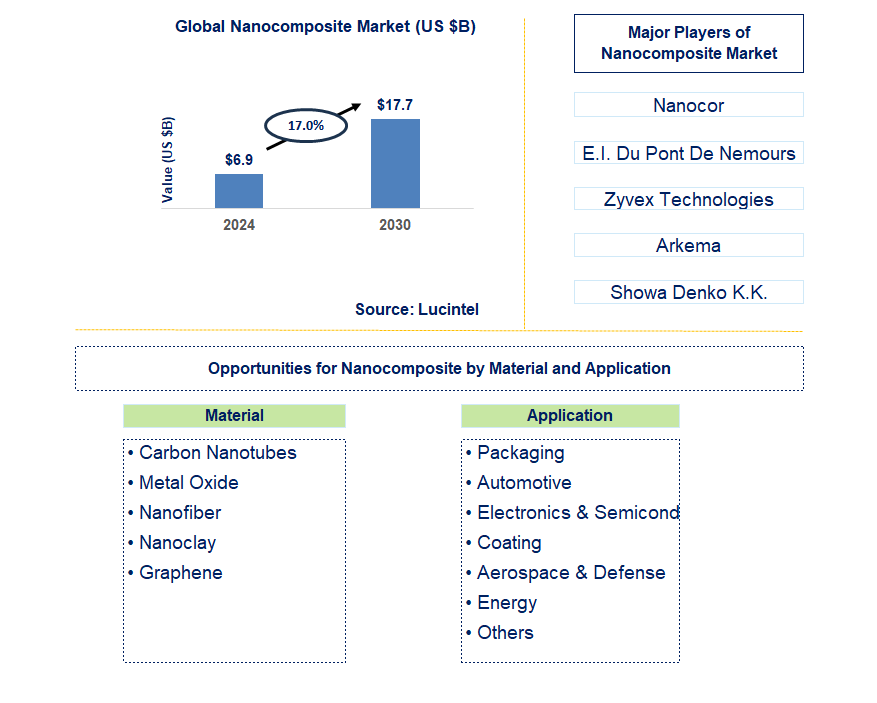
Key data points: The market size in 2030 = $17.7 billion, growth forecast = 17.0% annually for the next 6 years. Scroll below to get more insights. This market report covers trends, opportunities, and forecasts in the global nanocomposite market to 2030 by material (carbon nanotubes, metal oxide, nanofiber, nanoclay, and graphene), application (packaging, automotive, electronics & semiconductors, coating, aerospace & defense, energy, and others), and region (North America, Europe, Asia Pacific, and the Rest of the World)
We'll send your sample report shortly.
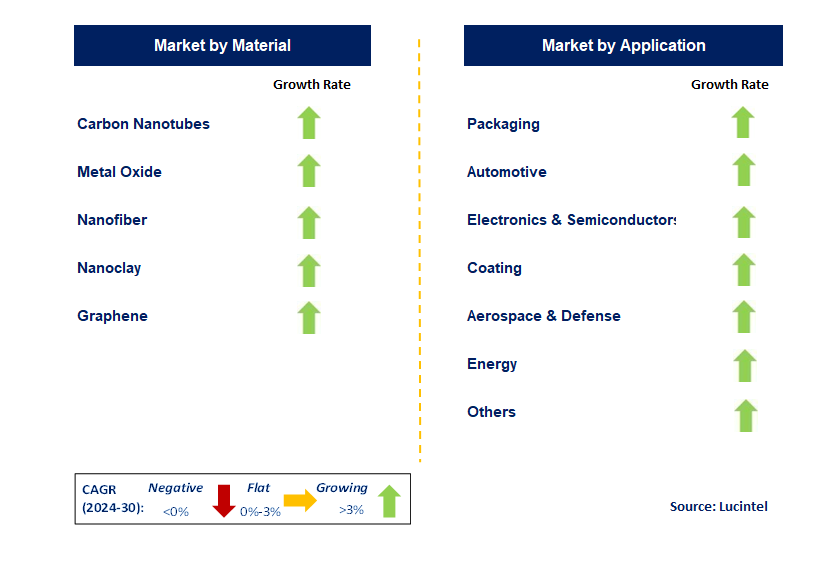
• Lucintel forecasts that, within the material category, carbon nanotubes is expected to witness the highest growth over the forecast period due to the favorable electrical characteristics, as well as, viable replacement properties for IoT transparent conductors in electronics applications.
• In terms of region, APAC is expected to witness the highest growth over the forecast period due to the existence of numerous manufacturers of nanocomposites and industries that utilize these materials, as well as, region's growing population and rising urbanization. Gain valuable insights for your business decisions with our comprehensive 150+ page report.
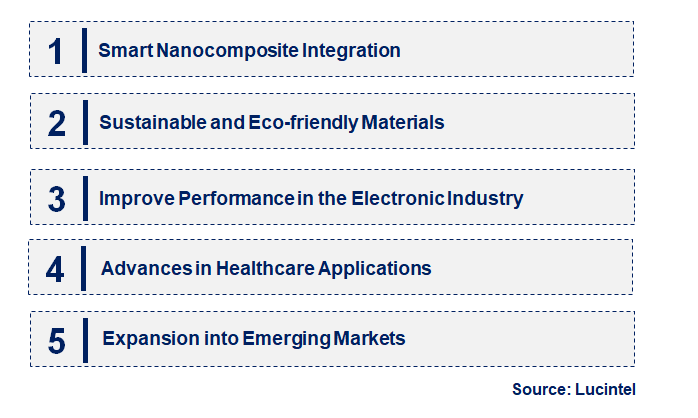
• Smart nanocomposite integration: Currently, the development of smart nanocomposites reveals a response to stimuli from the environment. These materials exhibit property changes with temperature, pH, or light, allowing advanced functionalities in applications such as sensors and adaptive coatings.
• Sustainable and eco-friendly materials: There is a growing emphasis on developing sustainable nanocomposites, including biodegradable and recyclable materials. This trend is driven by increasing environmental regulations and the need for eco-friendly alternatives in various industries.
• Improved performance in the electronic industry: Nanocomposites enhance the performance attributes of electronic devices. This includes the development of materials that improve electrical conductivity and thermal management for more effective and reliable electronics.
• Advances in healthcare applications: Nanocomposites are gaining traction in healthcare, with new developments in drug delivery systems, tissue engineering, and diagnostic tools. These materials offer better targeting and efficacy in medical treatments.
• Expansion into emerging markets: The use of nanocomposites is expanding into emerging markets such as construction, agriculture, and textiles. This growth is driven by demands for advanced material solutions that provide better performance and functionality across a wide range of applications. These trends are reshaping the nanocomposite market by introducing new technologies, enhancing material performance, and increasing the scope of applications. They contribute to the growth of nanocomposites and their application in various sectors.
• Advancement in Fabrication Techniques: New fabrication techniques for nanocomposites improve material properties and scalability. Techniques such as advanced extrusion and layering enhance performance and enable large-scale production.
• Breakthroughs in Material Properties: Recent research has led to the development of nanocomposites with improved mechanical, thermal, and electrical properties. These breakthroughs make nanocomposites more suitable for demanding applications in the electronics and automotive industries.
• Development of Biodegradable Nanocomposites: Recently, the development of biodegradable nanocomposites has drawn significant attention due to environmental concerns. These materials find applications in packaging, agriculture, and medical fields for waste control and reduced environmental impact.
• Innovations in Biomedical Applications: Newly developed nanocomposites find modern applications in targeted drug delivery and regenerative medicine. These innovations offer enhanced efficacy and accuracy in medical treatments.
• Penetration into Construction and Infrastructure: Nanocomposites are increasingly finding applications in construction and infrastructure. This segment includes nanocomposite coatings and materials that enhance durability, strength, and energy efficiency in buildings and infrastructure. These developments promote growth in the Nanocomposite market by enhancing material properties, increasing applications, and addressing environmental concerns. They reflect ongoing development and innovation in this field.
• Development of smart nanocomposites: Investment in the development of smart nanocomposites that can adapt to changes in their surroundings opens up new possibilities for applications such as sensors, adaptive coatings, and responsive materials.
• Growth in sustainable materials: This development opportunity is an important factor for sustainable nanocomposites, including biodegradable and recyclable materials. In fact, this growth opportunity aligns with increasing environmental regulations and demand for green products.
• Electronics development: The advanced electrical and thermal properties of nanocomposites reveal future growth opportunities in the field of electronics. Innovations that improve device performance and longevity can potentially lead to market growth.
• Expansion in healthcare applications: The development of nanocomposites for healthcare applications, such as drug delivery and tissue engineering, presents growth opportunities. These applications offer improved treatment options and personalized medicine.
• Construction and infrastructure applications: Over the last few decades, the increasing use of nanocomposites in construction and infrastructure has been observed. Opportunities exist to develop materials with enhanced durability, strength, and energy efficiency for building and infrastructure projects. These strategic growth opportunities influence changes in the nanocomposite market, driving innovation, addressing environmental concerns, and finding wider applications in various industries. Overall, they contribute to the growth and development of the market.
• Technological advances: The demand for fabrication technologies in nanocomposites has brought innovation in techniques and materials science. Advanced technologies enhance properties that increase the applications of materials across many industries.
• Growing demand for sustainable materials: In response to the demand for eco-friendly and sustainable materials, the development of degradable and recyclable nanocomposites is increasing. This addresses environmental regulations and appeals to consumers.
• Widening industrial applications: With the rising applications of nanocomposites in electronics, healthcare, and construction, the growth rate seems to improve each day. These materials demonstrate improved performance and functionality for various applications.
• Increased investment in R&D: Increased investment in research and development has further accelerated the development of nanocomposite technologies. Such investments initiate innovation and lead to new product creation for market introduction.
• Growing green concerns: The awareness of environmental issues and the trend toward greener technologies provide a thrust for the discovery of nanocomposites that have low environmental impacts. This trend encourages the use of sustainable materials. Challenges in the nanocomposite market include:
• High cost of production: The high production cost of nanocomposites limits their applications due to unsuitability for cost-sensitive industries. This factor affects market growth and the widespread use of advanced material technologies.
• Regulatory and safety issues: Some regulatory and safety issues related to nanomaterials add to the complexity of regulatory requirements and impact market development. Compliance with regulations is an important determinant for entry into and acceptance in the market.
• Technological limitations: Despite progress in technology, especially in fabrication and scalability, gaps remain in current technology concerning nanocomposites. There is a significant need to address the technological limitations of nanocomposites, particularly regarding improved performance and cost efficiency. Both drivers and challenges are dynamic concerning the nanocomposite market. These factors must be addressed for technological advancement, extended application, and sustainable growth to be realized.
• Nanocor
• E.I. Du Pont De Nemours
• Zyvex Technologies
• Arkema
• Showa Denko K.K.
• Powdermet
• RTP Company
• Nanophase Technologies
• Unidym
• Nanocyl
• Carbon Nanotubes
• Metal Oxide
• Nanofiber
• Nanoclay
• Graphene
• Packaging
• Automotive
• Electronics & Semiconductors
• Coating
• Aerospace & Defense
• Energy
• Others
• North America
• Europe
• Asia Pacific
• The Rest of the World
• United States: In the U.S., active development of advanced nanocomposites for various applications in electronics and automotive is taking place. Recently, improved methods of fabrication and implementation of nanomaterials have been developed, enhancing the capabilities of new high-tech devices.
• China: China has been significantly scaling up in the nanocomposite market, focusing on both manufacturing and construction. Efforts are being made to enhance production technologies while developing nanocomposite materials with greater durability and energy efficiency for building materials.
• Germany: Germany is the leading research and development hub for nanocomposites, with new innovations in biodegradable materials and high-performance coatings. The country also invests in environmentally friendly production methods due to its environmental policies.
• India: In India, considerable growth in the healthcare and agriculture segments is raising the demand for nanocomposite materials. New developments relate to nanocomposite-based drug delivery systems and agricultural coatings aimed at advanced crop protection and yield enhancement.
• Japan: Japan is also concentrating on the incorporation of nanocomposites into the electronic and automotive industries. Recent developments include advanced material properties for electronic devices and lightweight, high-strength composites for automotive parts.


• Nanocor
• E.I. Du Pont De Nemours
• Zyvex Technologies
• Arkema
• Showa Denko K.K.
• Powdermet
• RTP Company
• Nanophase Technologies
• Unidym
• Nanocyl Q6. Which nanocomposite market segment will be the largest in future? Answer: Lucintel forecasts that carbon nanotubes is expected to witness the highest growth over the forecast period due to the favorable electrical characteristics, as well as, viable replacement properties for IoT transparent conductors in electronics applications. Q7. In nanocomposite market, which region is expected to be the largest in next 5 years? Answer: APAC is expected to witness highest growth over the forecast period due to the existence of numerous manufacturers of nanocomposites and industries that utilize these materials, as well as, region's growing population and rising urbanization. Q.8 Do we receive customization in this report? Answer: Yes, Lucintel provides 10% customization without any additional cost.


Choose a license that fits your team. Instant PDF delivery.
Prices exclude taxes. Instant delivery. Custom licensing available on request.
Market Report · May 18, 2026
Market Report · May 18, 2026
Market Report · October 10, 2025
Trusted partner for strategic intelligence and business growth


Receive a complimentary market analysis tailored to your industry. Our analysts will identify key growth opportunities and competitive dynamics specific to your business.

Market size, growth rate, and key trend analysis for your specific sector.

Top competitor positioning and market share analysis.

Strategic recommendations backed by data-driven insights.
Get curated market intelligence and competitive moves straight to your inbox.
By subscribing, you agree to receive our monthly insights. Unsubscribe anytime.
Receive a complimentary market analysis tailored to your industry. Our analysts will identify key growth opportunities and competitive dynamics specific to your business.
Market size, growth rate, and key trend analysis for your specific sector.
Top competitor positioning and market share analysis.
Strategic recommendations backed by data-driven insights.
Get curated market intelligence, emerging trends, and competitive moves straight to your inbox each month.
By subscribing, you agree to receive our monthly insights. Unsubscribe anytime.
We'll send your sample report shortly.