
Market Report · July 22, 2026

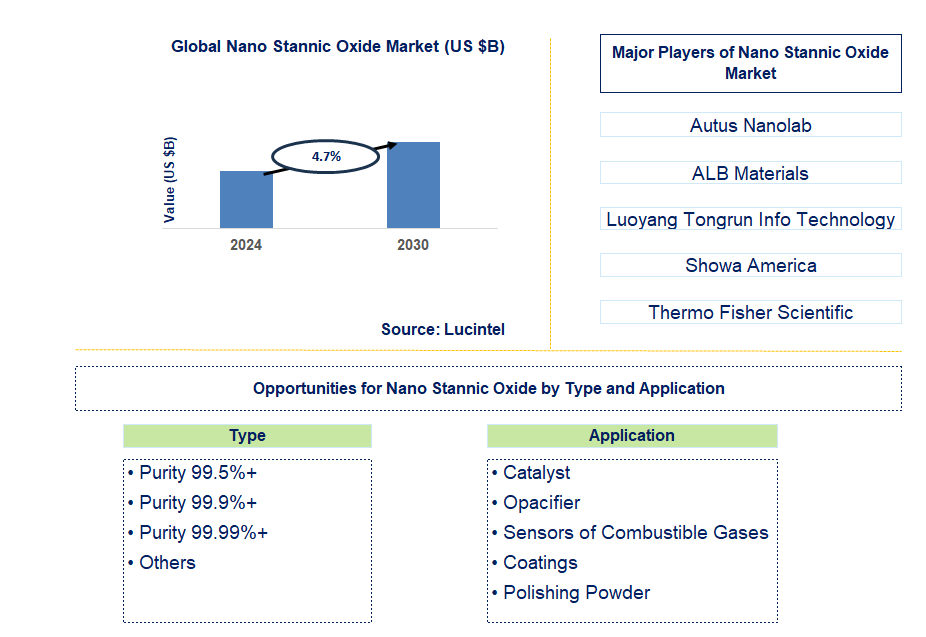
Key data points: The growth forecast = 4.7% annually for the next 6 years. Scroll below to get more insights. This market report covers trends, opportunities, and forecast in the global nano stannic oxide market to 2030 by type (purity 99.5%+, purity 99.9%+, purity 99.99%+, and others), application (catalyst, opacifier, sensors of combustible gases, coatings, and polishing powder), and region (North America, Europe, Asia Pacific, and the Rest of the World)
We'll send your sample report shortly.
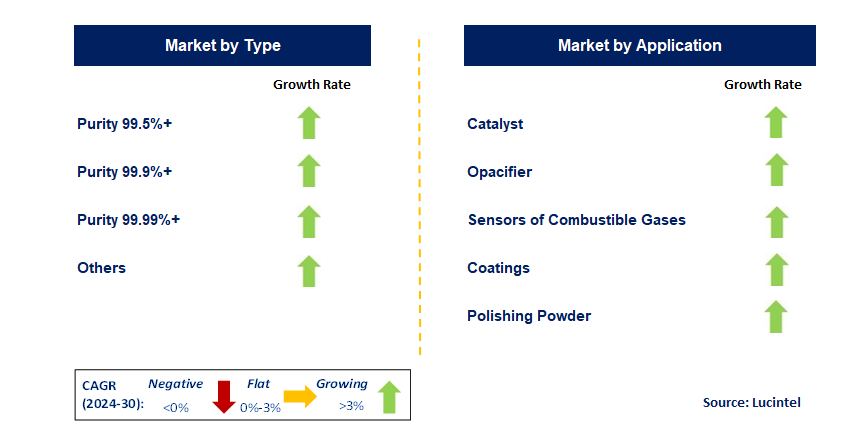
• Lucintel forecasts that, within the type category, purity 99.5%+ is expected to witness the highest growth over the forecast period.
• Within the application category, the catalyst is expected to witness the highest growth.
• In terms of regions, APAC is expected to witness the highest growth over the forecast period. A more than 150-page report is developed to help in your business decisions.
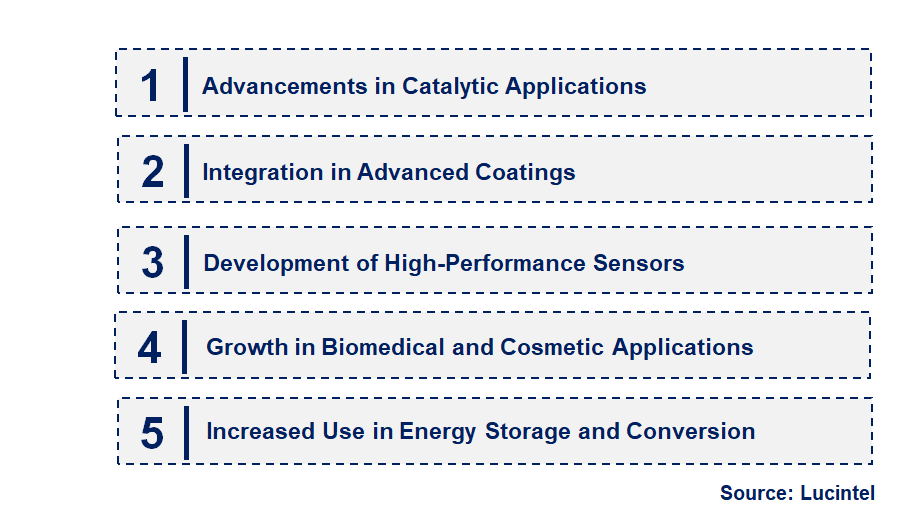
• Advancements in Catalytic Applications: Nano stannic oxide is increasingly used as a catalyst in various chemical reactions due to its high surface area and catalytic efficiency. Its application in environmental and industrial catalysts is expanding, particularly in processes that require high activity and selectivity. This trend is driven by the need for more efficient and sustainable catalytic solutions.
• Integration in Advanced Coatings: There is growing adoption of nano stannic oxide in advanced coatings, which are utilized for their superior properties, such as enhanced durability, corrosion resistance, and optical clarity. This trend is prominent in the automotive, aerospace, and electronics industries, where high-performance coatings are crucial. Innovations in coating formulations are pushing the boundaries of what nano stannic oxide can achieve in protective and decorative applications.
• Development of High-Performance Sensors: The use of nano stannic oxide in sensors, especially for detecting combustible gases and environmental pollutants, is on the rise. These sensors benefit from nano stannic oxide’s high surface area and sensitivity. Emerging applications include smart environmental monitoring systems and industrial safety sensors, reflecting a trend toward more precise and reliable detection technologies.
• Growth in Biomedical and Cosmetic Applications: Nano stannic oxide is gaining traction in biomedical and cosmetic fields due to its biocompatibility and functional properties. It is used in drug delivery systems, imaging agents, and as a component in skin care products. The trend toward integrating nanomaterials in healthcare and personal care products is driven by the search for more effective and targeted therapeutic and cosmetic solutions.
• Increased Use in Energy Storage and Conversion: Research is increasingly focusing on the use of nano stannic oxide in energy storage and conversion technologies, such as batteries and fuel cells. Its role as a conductive material and its ability to improve energy efficiency are key drivers. The trend is toward developing more efficient and durable energy systems, addressing the growing demand for advanced energy storage solutions. These emerging trends are reshaping the nano stannic oxide market by driving innovation, expanding applications, and promoting sustainability. The increased focus on advanced synthesis and performance enhancement is likely to accelerate market growth and open new opportunities.
• Enhanced Synthesis Methods: Recent innovations in synthesis methods, such as sol-gel and hydrothermal techniques, have improved the purity and uniformity of nano stannic oxide particles. These methods allow for precise control over particle size and distribution, resulting in enhanced performance in electronic and catalytic applications. The ability to produce high-quality nano stannic oxide more efficiently drives its adoption in advanced technologies and boosts market growth.
• Expansion in Electronics Applications: Nano stannic oxide is increasingly used in electronic components such as sensors, transistors, and display technologies. Advancements in material formulations have enhanced its electrical conductivity and stability, making it ideal for high-performance electronic devices. The growing demand for smaller, more efficient electronic components drives the integration of nano stannic oxide, expanding its market presence.
• Growth in Energy Storage Technologies: The use of nano stannic oxide in energy storage solutions, including batteries and supercapacitors, has gained traction. Innovations in nano stannic oxide formulations improve energy density, charge/discharge rates, and overall performance of these storage devices. This growth is driven by the increasing demand for efficient and high-capacity energy storage solutions, supporting the expansion of the nano stannic oxide market.
• Emphasis on Sustainable Production: There is a growing focus on making the production of nano stannic oxide more environmentally sustainable. Advances in green synthesis methods and recycling of tin resources help to reduce the environmental impact of production processes. This trend aligns with global sustainability goals and is expected to enhance the market’s appeal by addressing environmental concerns and reducing production costs.
• Diversification into New Applications: The nano stannic oxide market is diversifying into new applications, such as advanced coatings, medical technologies, and environmental remediation. Recent developments in these areas include the use of nano stannic oxide in anti-corrosion coatings, diagnostic imaging, and pollution control. This diversification creates new revenue streams and expands the market’s reach across various industries. These developments significantly impact the nano stannic oxide market by driving technological advancements, expanding applications, and promoting sustainability. The enhanced synthesis methods, growth in electronics and energy storage, emphasis on sustainable production, and diversification into new applications collectively contribute to the market’s growth and reshape its future.
• Electronics Industry: Nano stannic oxide is increasingly used in electronics for applications such as sensors, transparent conductive films, and semiconductor devices. Its excellent electrical conductivity and transparency make it ideal for advanced electronic components. The rising demand for miniaturized and high-performance electronic devices is propelling the adoption of nano stannic oxide, thereby expanding its market reach.
• Energy Storage Solutions: In energy storage, nano stannic oxide is finding applications in batteries and supercapacitors. Its high surface area enhances the charge/discharge efficiency and energy density of these devices. The growing need for efficient energy storage solutions in consumer electronics and renewable energy systems is driving significant interest and investment in nano stannic oxide technologies.
• Environmental Remediation: Nano stannic oxide is used in environmental technologies for pollution control and water purification. Its photocatalytic properties enable effective degradation of organic pollutants and bacteria. With increasing environmental regulations and a focus on sustainable solutions, the demand for nano stannic oxide in environmental applications is set to rise, supporting cleaner and more efficient remediation technologies.
• Medical and Healthcare Applications: In the medical field, nano stannic oxide is being explored for diagnostic imaging and drug delivery systems. Its biocompatibility and ability to be functionalized for specific targets make it a promising candidate for enhancing medical imaging and therapeutic efficacy. The growing emphasis on precision medicine and advanced diagnostics is likely to drive the adoption of nano stannic oxide in healthcare applications.
• Coatings and Catalysts: Nano stannic oxide is used in coatings for its anti-corrosive and self-cleaning properties, as well as in catalysts for chemical reactions. Its inclusion in protective coatings and catalytic processes enhances performance and durability. The increasing demand for high-performance coatings in industrial and consumer applications is fueling growth in this segment, making it a key opportunity for market expansion. These strategic growth opportunities are significantly impacting the nano stannic oxide market. By capitalizing on its applications in electronics, energy storage, environmental remediation, healthcare, and coatings, the market is witnessing enhanced adoption and growth. The diverse range of applications underscores the material's versatility and positions it as a critical component in advancing technology and sustainability across multiple sectors.
• Technological Advancements: Advances in nanotechnology have significantly enhanced the properties of nano stannic oxide, such as its electrical conductivity, catalytic activity, and optical properties. Innovations in synthesis and processing techniques have expanded its applications across electronics, energy storage, and environmental technologies. These technological improvements drive increased demand and market growth.
• Growing Demand for Electronics: The rise in consumer electronics, such as smartphones, tablets, and wearable devices, has increased the demand for advanced materials like nano stannic oxide. Its use in transparent conductive films and sensors enhances the performance and functionality of electronic devices. This growing market for electronics continues to fuel the demand for nano stannic oxide.
• Advancements in Energy Storage: The development of high-efficiency batteries and supercapacitors benefits from the enhanced surface area and conductivity of nano stannic oxide. As the demand for better energy storage solutions grows, especially in electric vehicles and renewable energy systems, nano stannic oxide's role becomes increasingly significant, driving market expansion.
• Environmental and Sustainability Trends: With heightened environmental awareness and stricter regulations, nano stannic oxide is used in pollution control and water purification due to its photocatalytic properties. The push for sustainable technologies and green solutions boosts the adoption of nano stannic oxide in environmental applications, supporting market growth.
• Medical and Healthcare Innovations: The use of nano stannic oxide in medical imaging and drug delivery systems capitalizes on its biocompatibility and functionalization capabilities. As the healthcare industry advances toward personalized medicine and improved diagnostic techniques, the demand for nano stannic oxide in these applications is expected to rise. Challenges in the Nano Stannic Oxide Market The nano stannic oxide market faces several challenges that could impact its growth and adoption across industries:
• High Production Costs: Producing nano stannic oxide involves complex and costly processes, including the use of high-purity raw materials and advanced manufacturing techniques. These costs can limit the widespread adoption of nano stannic oxide, particularly in price-sensitive markets and applications.
• Regulatory Hurdles: Compliance with stringent environmental and safety regulations for nanomaterials can be challenging. Regulatory standards vary by region and application, which complicates market entry and can increase operational costs for manufacturers. Navigating these regulatory landscapes requires significant time and resources.
• Market Competition: The nano stannic oxide market faces competition from alternative materials and technologies. Innovations in other nanomaterials or advanced composites could offer similar or even superior properties, potentially affecting market share and growth opportunities for nano stannic oxide. Despite these challenges, the nano stannic oxide market is driven by several factors, including technological advancements, growing demand from electronics and energy storage sectors, trends toward environmental sustainability, and innovations in healthcare. Effectively balancing these drivers and overcoming the challenges will be crucial for stakeholders seeking to capitalize on growth opportunities and navigate the evolving market landscape.
• Autus Nanolab
• ALB Materials
• Luoyang Tongrun Info Technology
• Showa America
• Thermo Fisher Scientific
• Finetech Industry Limited
• Sigma-Aldrich
• Purity 99.5%+
• Purity 99.9%+
• Purity 99.99%+
• Others
• Catalyst
• Opacifier
• Sensors of Combustible Gases
• Coatings
• Polishing Powder
• North America
• Europe
• Asia Pacific
• The Rest of the World
• United States: The U.S. is focusing on improving production efficiency and scaling up manufacturing capabilities for nano stannic oxide. Recent advancements include the integration of high-throughput synthesis methods and improvements in material purity, which have enhanced its use in electronics and catalysis. Increased investment in research and development (R&D) is driving innovation and expanding the scope of nano stannic oxide applications in various industries.
• China: China has become a dominant force in the nano stannic oxide market by ramping up its production capacities and introducing advanced synthesis technologies. The country is also investing heavily in new applications, particularly in energy storage and environmental protection. By focusing on reducing production costs while maintaining quality, China has solidified its position as a leading global supplier of nano stannic oxide.
• Germany: Germany is known for its advancements in high-performance applications of nano stannic oxide, particularly in sensors and catalysts. The country has a reputation for stringent quality standards and has introduced more efficient production processes to meet these standards. German research institutions are also exploring new applications in renewable energy and high-tech industries, further strengthening the country’s role in the nano stannic oxide market.
• India: India is emerging as an important player in the nano stannic oxide market, with developments focused on scaling up production and improving cost efficiency. Nano stannic oxide is seeing increasing use in coatings and electronics. Government initiatives and collaborations with international players are expected to drive further growth in this sector, positioning India as a significant contributor to the global market.
• Japan: Japan is innovating in the application of nano stannic oxide, particularly in electronics and advanced materials. Recent developments include the integration of nano stannic oxide into new types of display technologies and energy-efficient devices. Japan’s emphasis on precision and high-quality standards is fostering technological advancements and driving the growth of the nano stannic oxide market in the region.


• Autus Nanolab
• ALB Materials
• Luoyang Tongrun Info Technology
• Showa America
• Thermo Fisher Scientific
• Finetech Industry Limited
• Sigma-Aldrich Q5. Which nano stannic oxide market segment will be the largest in the future? Answer: Lucintel forecasts that purity 99.5%+ is expected to witness the highest growth over the forecast period. Q6. In the nano stannic oxide market, which region is expected to be the largest in the next 5 years? Answer: APAC is expected to witness the highest growth over the forecast period. Q.7 Do we receive customization in this report? Answer: Yes, Lucintel provides 10% customization without any additional cost.


Choose a license that fits your team. Instant PDF delivery.
Prices exclude taxes. Instant delivery. Custom licensing available on request.
Market Report · July 22, 2026
Market Report · July 22, 2026
Market Report · July 22, 2026
Trusted partner for strategic intelligence and business growth


Receive a complimentary market analysis tailored to your industry. Our analysts will identify key growth opportunities and competitive dynamics specific to your business.

Market size, growth rate, and key trend analysis for your specific sector.

Top competitor positioning and market share analysis.

Strategic recommendations backed by data-driven insights.
Get curated market intelligence and competitive moves straight to your inbox.
By subscribing, you agree to receive our monthly insights. Unsubscribe anytime.
Receive a complimentary market analysis tailored to your industry. Our analysts will identify key growth opportunities and competitive dynamics specific to your business.
Market size, growth rate, and key trend analysis for your specific sector.
Top competitor positioning and market share analysis.
Strategic recommendations backed by data-driven insights.
Get curated market intelligence, emerging trends, and competitive moves straight to your inbox each month.
By subscribing, you agree to receive our monthly insights. Unsubscribe anytime.
We'll send your sample report shortly.