
Market Report · July 29, 2026

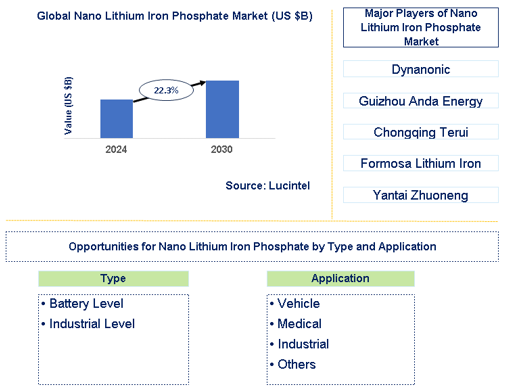
Key data points: The growth forecast = 22.3% annually for the next 6 years. Scroll below to get more insights. This market report covers trends, opportunities, and forecasts in the global nano lithium iron phosphate market to 2030 by type (battery level and industrial level), application (vehicle, medical, industrial, and others), and region (North America, Europe, Asia Pacific, and the Rest of the World)
We'll send your sample report shortly.
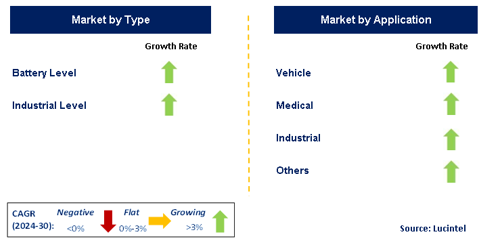
• Lucintel forecasts that, within the type category, the battery level is expected to witness a higher growth over the forecast period.
• Within the application category, vehicle is expected to witness the highest growth.
• In terms of regions, APAC is expected to witness the highest growth over the forecast period. Gain valuable insights for your business decisions with our comprehensive 150+ page report.
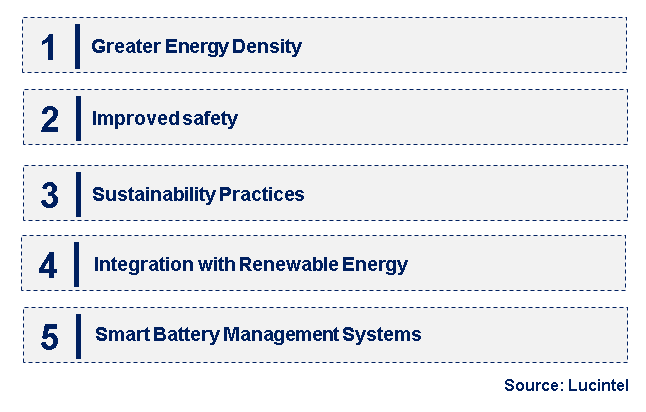
• Greater energy density: The increased energy density of nano LiFePO4 batteries is on the upward trend. To achieve higher capacity without adversely affecting safety criteria, particle size and morphology must be optimized. This optimization is necessary for making batteries more competitive in applications such as electric vehicles, where space and weight are critical.
• Improved safety: Safety aspects always rank as the number one consideration in battery designs. Research involving nano LiFePO4 technology targets improvements in thermal stability and decreases the prospects of thermal runaway. This trend enhances both consumer electronics and electric vehicles by improving user confidence and opening the market to more users.
• Sustainability practices: With sustainability at the top of manufacturers' lists, there will be a push for eco-friendly production of nano LiFePO4 batteries. This effort will require recycling and reducing carbon footprints in production. Increased awareness of environmental concerns among consumers will lead to greater demand for sustainable battery solutions.
• Integration with renewable energy: Nano LiFePO4 batteries are increasingly being integrated into renewable energy systems, including solar and wind. They are now widely used in grid storage solutions, promoting better management and reliability in energy distribution. This integration is essential for further spreading and promoting renewable energy sources.
• Smart battery management systems: The use of smart battery management systems has been on the rise because such systems measure battery performance, maximize charging cycles, and extend battery life. This trend improves the efficiency and usability of nano LiFePO4, making it attractive for various applications. In conclusion, these emerging trends are profoundly changing the nano lithium iron phosphate market regarding better performance, safety, and sustainability. As manufacturers adapt to these trends, this market is well-positioned for continued growth and innovation.
• Advanced synthesis methods: Novel synthesis routes, such as sol-gel and hydrothermal processes, have been studied to prepare nano LiFePO4 with ideal particle uniformity and superior performance characteristics. These enhanced features offer better electrochemical properties, longer battery life, and greater efficiency. They cater to the ever-expanding requirement for energy storage in high-performance applications.
• Collaboration and partnerships: Increased collaboration between research institutes and industrial players is driving innovation in nano LiFePO4 technology. Partnerships enable knowledge sharing and resource pooling, hastening the development of next-generation batteries that meet diverse application needs, particularly for electric vehicles and renewable energy storage.
• Focus on recycling technologies: The demand for recycling spent lithium batteries is increasing. Companies are seeking investment in recycling technologies to recover valuable materials from spent batteries. This approach to sustainability addresses environmental issues and supports the circular economy of lithium resources, contributing to long-term growth in the nano LiFePO4 market.
• Support of regulatory frameworks and standards: Governments are establishing supportive regulatory frameworks for nano lithium iron phosphate technologies. These initiatives provide manufacturers with incentives and establish regulations and standards to ensure the safe performance of these batteries, promoting innovation and stabilizing the market.
• Expansion of production capacities: Leading producers are expanding their production capacities to meet the growing demand for nano LiFePO4 batteries. This investment in high-technology manufacturing facilities has improved economies of scale for high-quality battery production, positioning them to capture a larger market share. Thus, these recent developments enhance innovation, sustainability, and production capabilities affecting the nano lithium iron phosphate market. Progress in these areas will determine the market's trajectory over time.
• Electric vehicles: The increased adoption of electric vehicles presents the most significant growth opportunity for nano LiFePO4 batteries. High-capacity models specifically designed for this industry will be in high demand due to the exceptional safety and long cycle life of nano LiFePO4 batteries.
• Renewable energy storage: As the demand for renewable energy sources rises, the need for effective storage solutions also increases. Nano LiFePO4 batteries are increasingly being applied to grid storage, offering reliable backup and better utilization and storage of energy, making this a major growth area.
• Consumer electronics: The consumer electronics sector is booming, with high-performance demands on batteries. New nano LiFePO4 batteries may be developed to promise higher energy density and safety, aligning with current market trends, thus positioning companies favorably in the market.
• Industrial applications: There is a growing demand for nano LiFePO4 battery solutions in industrial applications such as robotics and automation, providing high durability and efficiency to meet industry requirements and expanding market reach for manufacturers.
• Medical devices: The medical device industry requires cutting-edge, high-performance battery technologies. Nano LiFePO4 batteries meet the stringent requirements for safety and reliability imposed by new medical devices, presenting a worthwhile market opportunity. In conclusion, the strategic growth opportunities highlighted here illustrate the potential for companies in the nano lithium iron phosphate market to expand across different applications. Focusing on these areas will enable manufacturers to strengthen their market positions and support long-term growth.
• Technological advancements: Advances in battery technology, particularly in energy density and cycle life, significantly enhance nano LiFePO4 performance. Improved batteries can meet the increasing demands of electric vehicles and renewable energy applications, leading to higher adoption rates and market growth.
• Growth in electric vehicle demand: The surge in electric vehicle adoption remains a key growth driver for the nano LiFePO4 market. Increasing concerns about sustainability enhance the quest for battery efficiency and reliability, motivating manufacturers to innovate and expand production, thus benefiting the overall market.
• Integration with renewable energy: The rising demand for energy storage solutions related to renewable energy sources is driving the demand for nano LiFePO4 batteries. Their reliable performance makes them ideal for grid applications, supporting the transition to clean energy systems and contributing to sustainability goals.
• Focus on sustainability: Growing consumer awareness about environmental issues has created a strong demand for sustainable energy sources. Nano LiFePO4-based batteries are considered more environmentally friendly than traditional lithium-ion batteries, thus having greater potential for increased adoption across various applications and sustainable initiatives.
• Government initiatives and incentives: Supportive government policies and incentives for clean energy technologies promote investment in nano LiFePO4 batteries. Research and development in these fields receive support, and improved infrastructure is developed to meet the growing demand, further contributing to market growth. Challenges in the nano lithium iron phosphate market include:
• High manufacturing costs: Producing nano LiFePO4 batteries can be costly, hindering widespread adoption, even in price-sensitive markets. Companies must find innovative ways to improve manufacturing without compromising quality to remain competitive.
• Competition from alternative technologies: The battery market features several competitive technologies, including other lithium-ion chemistries and emerging alternatives. Companies must differentiate their products and showcase the unique advantages of nano LiFePO4 to gain market share and sustain growth.
• Supply chain vulnerabilities: Fluctuations in raw material supply can disrupt production and affect pricing. Manufacturers must establish strong supply chains and explore alternative strategies to mitigate risks associated with material scarcity. The growth trend of the nano lithium iron phosphate market is shaped by its drivers and challenges. On one hand, technological improvements and increasing demand for sustainable energy solutions boost market development. On the other hand, high manufacturing costs and competition from alternative technologies pose serious obstacles. Once these challenges are addressed and market drivers are effectively leveraged, stakeholders will enhance their competitive advantage and contribute to the long-term success of the nano LiFePO4 market.
• Dynanonic
• Guizhou Anda Energy
• Chongqing Terui
• Formosa Lithium Iron Oxide
• Yantai Zhuoneng
• KTC
• BASF
• Pulead Technology
• Bamo Technology
• Nano One Materials
• Battery Level
• Industrial Level
• Vehicle
• Medical
• Industrial
• Others
• North America
• Europe
• Asia Pacific
• The Rest of the World
• United States: The U.S. has made significant investments in research and development for nano LiFePO4 batteries, particularly for electric vehicle applications. Original equipment manufacturers are focusing on higher capacities and faster charging. This effort has led universities and tech firms to collaborate on innovations, such as pilot projects demonstrating the potential for battery-based grid storage and electric vehicle applications, establishing the U.S. as a key player in the international market.
• China: As the world's largest producer of lithium batteries, China is optimizing the synthesis of nano LiFePO4 to enhance cycle life and thermal stability. Government support for electric vehicle production has fueled efforts in nano-enhanced batteries, making China a leading provider of global sustainable energy solutions. Additionally, lithium recovery and associated materials have stimulated investments in recycling technologies, supporting the circular economy.
• Germany: Advances in Germany's nano LiFePO4 market encompass developments in automobile applications and integration with renewable energy. German companies are researching hybrid battery systems that incorporate nano LiFePO4 with other chemistries to achieve maximum energy efficiency. Germany is also strengthening environmental regulations, driving manufacturers toward cleaner production methods.
• India: Nano LiFePO4 technology is rapidly advancing in India, driven by the electric vehicle market and renewable energy initiatives. Local players are working on cost-effective enhancements to nano batteries to ensure affordability for broader utilization. Government incentives are supporting clean energy technologies by reducing reliance on fossil fuels and enhancing energy security.
• Japan: Japan is leveraging its expertise in electronics and materials science to develop niche applications for nano LiFePO4 technologies. Japanese companies are investing in advanced materials to improve battery performance, including thermal management systems. The consumer electronics and electric vehicle sectors are key growth markets for high-performance batteries. Japanese firms are also exploring recycling options and sustainability practices.


• Dynanonic
• Guizhou Anda Energy
• Chongqing Terui
• Formosa Lithium Iron Oxide
• Yantai Zhuoneng
• KTC
• BASF
• Pulead Technology
• Bamo Technology
• Nano One Materials Q5. Which nano lithium iron phosphate market segment will be the largest in future? Answer: Lucintel forecasts that battery level is expected to witness a higher growth over the forecast period. Q6. In nano lithium iron phosphate market, which region is expected to be the largest in next 5 years? Answer: APAC is expected to witness the highest growth over the forecast period. Q.7 Do we receive customization in this report? Answer: Yes, Lucintel provides 10% customization without any additional cost.


Choose a license that fits your team. Instant PDF delivery.
Prices exclude taxes. Instant delivery. Custom licensing available on request.
Market Report · July 29, 2026
Market Report · July 20, 2026
Market Report · July 20, 2026
Trusted partner for strategic intelligence and business growth


Receive a complimentary market analysis tailored to your industry. Our analysts will identify key growth opportunities and competitive dynamics specific to your business.

Market size, growth rate, and key trend analysis for your specific sector.

Top competitor positioning and market share analysis.

Strategic recommendations backed by data-driven insights.
Get curated market intelligence and competitive moves straight to your inbox.
By subscribing, you agree to receive our monthly insights. Unsubscribe anytime.
Receive a complimentary market analysis tailored to your industry. Our analysts will identify key growth opportunities and competitive dynamics specific to your business.
Market size, growth rate, and key trend analysis for your specific sector.
Top competitor positioning and market share analysis.
Strategic recommendations backed by data-driven insights.
Get curated market intelligence, emerging trends, and competitive moves straight to your inbox each month.
By subscribing, you agree to receive our monthly insights. Unsubscribe anytime.
We'll send your sample report shortly.