
Market Report · July 29, 2026

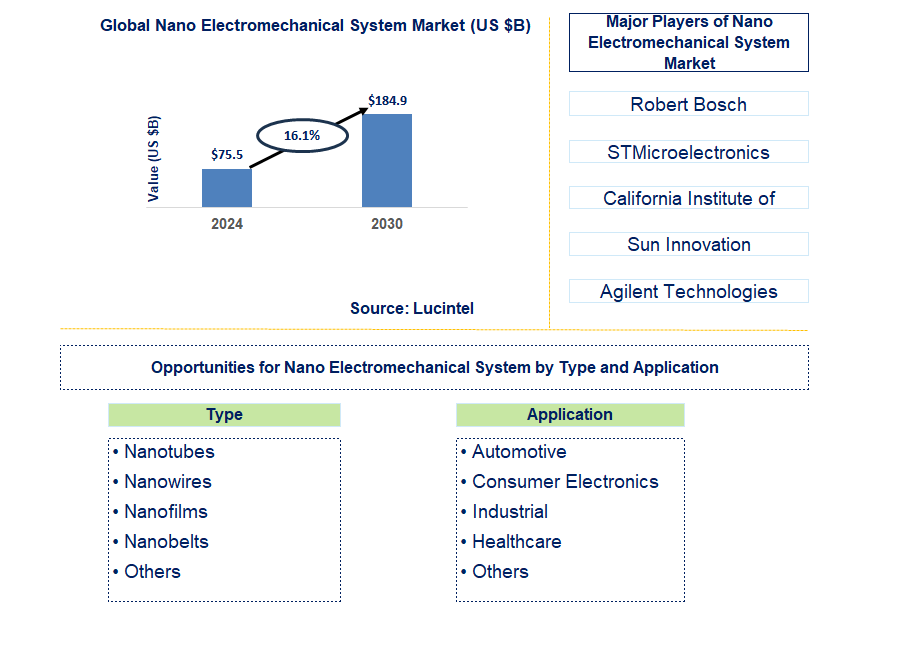
Key data points: The market size in 2030 = $184.9 million, growth forecast = 16.1% annually for the next 6 years. Scroll below to get more insights. This market report covers trends, opportunities, and forecasts in the global nano electromechanical system market to 2030 by type (nanotubes, nanowires, nanofilms, nanobelts, and others), application (automotive, consumer electronics, industrial, healthcare, and others), and region (North America, Europe, Asia Pacific, and the Rest of the World)
We'll send your sample report shortly.
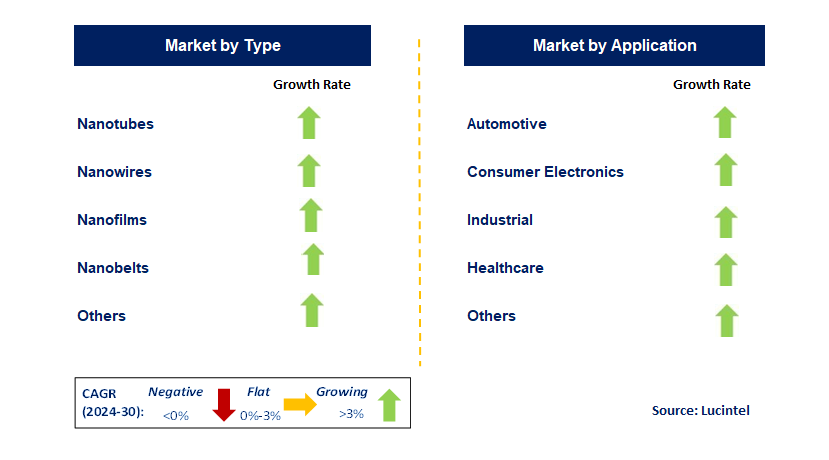
• Lucintel forecasts that, within the type category, nanotube is expected to witness the highest growth over the forecast period.
• Within this application category, automotive is expected to witness the highest growth.
• In terms of region, APAC is expected to witness the highest growth over the forecast period. A more than 150-page report is developed to help in your business decisions.
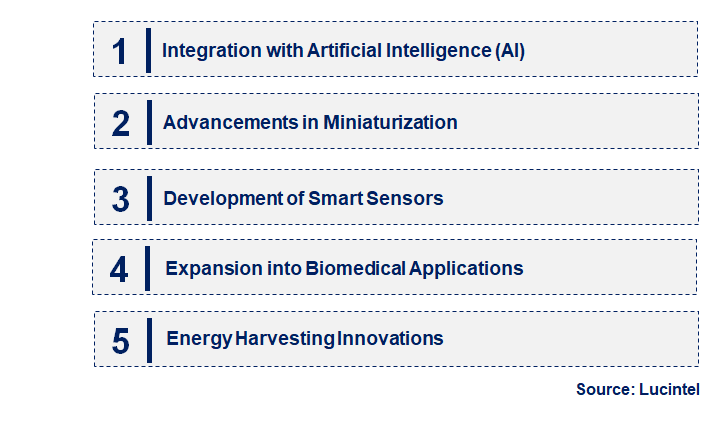
• Integration with Artificial Intelligence (AI): NEMS technology is increasingly integrated with AI to boost performance and functionality. AI algorithms analyze information from tiny sensors, providing real-time insights, predictive analytics, and self-governing decision-making. This trend enables more sophisticated applications in fields such as industrial monitoring, healthcare diagnostics, and smart automation. NEMS are therefore proving instrumental in driving precision, efficiency, and operational intelligence with the help of AI.
• Advancements in Miniaturization: The current miniaturization trend continues to push the limits of NEMS technology. The development of these devices focuses on smaller but highly performing units for varied applications, including consumer electronics and the aerospace industry. Device integration becomes possible through miniaturization, which reduces size constraints while enhancing overall functionality. Consequently, this trend broadens the scope of NEMS technology to incorporate it into compact and complex systems.
• Development of Smart Sensors: There is a growing trend of smart sensors within the NEMS market, offering better data collection and processing capabilities. High sensitivity combined with high resolution can be achieved by nanoscale sensors that have advanced functionalities for various applications such as environmental monitoring, medical diagnostics, and industrial automation. By linking them with IoT platforms, such sensors allow for real-time data transmission and remote monitoring. The advent of smart sensor technologies fosters innovation in data-driven applications, thereby boosting system-level intelligence.
• Expansion into Biomedical Applications: Significant strides are being made in the NEMS technology field toward biomedical applications. Innovations include nanoscale sensors and actuators used for purposes such as drug delivery systems, implantable devices, and medical diagnostics. These advances guarantee high-resolution data collection inside the human body, resulting in more effective monitoring and treatment options. Increased demand for tailored medicine, along with advanced healthcare solutions, drives the penetration of NEMS technology within this sector.
• Energy Harvesting Innovations: Energy harvesting has emerged as an important driver within the NEMS market, focusing on generating power from small-scale energy sources. Developments in this area include nano-devices that can convert ambient energies, such as vibrations or light, into electrical power. For low-power and remote sensors, such devices are particularly useful because they reduce battery dependence and enhance the sustainability of NEMS applications. This represents an advancement toward more efficient and self-sustaining NEMS solutions through energy harvesting innovations. The nano electromechanical system (NEMS) market is poised for substantial growth as it addresses the increasing demand for compact, high-performance devices across various industries. With the proliferation of IoT and smart technologies, NEMS are becoming integral to advancements in data collection and automation. Ongoing innovations in materials and manufacturing techniques further enhance their capabilities, paving the way for new applications in healthcare, automotive, and consumer electronics. As the market evolves, companies that invest in research and development and prioritize collaboration will be well-positioned to capitalize on emerging opportunities and drive the future of NEMS technology.
• Advancement in Nano-Scale Sensors: There has been a significant improvement in the sensitivity and accuracy of nano-sensors, enhancing their use in numerous application areas. This has been achieved through the adoption of new materials such as carbon nanotubes and graphene in sensors, which enhances conductivity and increases mechanical strength. As a result, more sensitive sensors are now available that can detect slight alterations in environmental conditions, including gas concentration, temperature, and pressure. The highly accurate measurement capability supports numerous applications such as environmental monitoring, healthcare diagnostics, and industrial automation.
• Integration with IoT and AI: NEMS technology is increasingly integrating with the Internet of Things (IoT) and Artificial Intelligence (AI). Through this integration, smart NEMS devices have become possible due to their real-time data collection, analysis, and transmission capabilities. Moreover, these algorithms provide actionable insights through predictive analytics that assist in making automated decisions based on nano-scale sensor data.
• Shrinking Devices with Better Performance: Miniaturization continues to shape innovations in NEMS technology. Recent developments have focused on reducing device sizes while simultaneously improving performance. New methods such as micro-manufacturing techniques have enabled smaller yet more efficient components for NEMS devices.
• Development of Energy Harvesting Technologies: Energy harvesting has been a key focal point for NEMS market players, who aim to create products that harvest energy from ambient environmental sources. Innovations range from piezoelectric devices at the nanoscale to photovoltaic cells that convert light, thermal gradients, and mechanical vibrations into electrical current supply.
• Biomedical Applications and Innovations: Notable advances have been made in the use of NEMS technology in the biomedical field. Recently, there has been development of nano-scale sensors and actuators that find applications in medical diagnostics, drug delivery systems, and implantable devices. Recent developments within the sphere of NEMS include significant progress in sensor technology, integration with IoT and AI, miniaturization advancements, energy harvesting techniques, and biomedical applications. These achievements ensure that this technology is increasingly applied across various sectors, leading to innovation as well as increased performance and efficiency in the market since many aspects of nano-devices have been addressed through the efforts of scientists.
• Automotive Industry: NEMS can revolutionize automotive technology by integrating smart sensors and actuators that improve vehicle performance, safety, and efficiency. These systems enable advanced driver-assistance systems (ADAS), real-time monitoring of vehicle conditions, and precise control of critical functions. As vehicles become more autonomous and connected, the demand for reliable, miniaturized sensors and actuators will increase, driving growth in this sector.
• Consumer Electronics: In consumer electronics, NEMS offer opportunities for creating smaller, more efficient devices with enhanced functionality, such as smartphones, wearables, and smart home gadgets. The miniaturization of components allows for the development of more compact and powerful devices, meeting consumer demand for high-performance electronics in smaller form factors. This trend supports innovations in areas like touchscreens, MEMS microphones, and miniaturized sensors.
• Industrial Automation: NEMS can advance industrial automation by providing high-precision sensors and actuators that enhance process control and monitoring. In manufacturing and industrial settings, NEMS improve automation processes, reduce downtime, and increase productivity. Their integration into robotics, machinery, and production lines can lead to more efficient and accurate operations, driving growth in the industrial sector.
• Healthcare: NEMS offer significant growth potential in healthcare by enabling the development of advanced diagnostic tools and minimally invasive surgical devices. The application of NEMS in medical devices such as implantable sensors, lab-on-a-chip systems, and micro-robots enhances diagnostic accuracy and treatment effectiveness. This leads to improved patient outcomes and drives demand for innovative healthcare solutions.
• Aerospace and Defense: In aerospace and defense, NEMS can be utilized to develop high-reliability sensors and actuators for critical applications, including navigation, communication, and control systems. The use of NEMS in aerospace components can enhance performance in harsh environments and improve mission success rates. Their small size and high precision are critical for space exploration, aircraft control systems, and defense technologies. The strategic growth opportunities in the nano electromechanical systems market span multiple high-impact applications, including automotive, consumer electronics, industrial automation, healthcare, and aerospace. Each sector leverages the unique benefits of NEMS—miniaturization, precision, and functionality—to drive innovation and efficiency. As technology advances, the role of NEMS will continue to expand, opening new avenues for growth and development across these key applications.
• Technological Advancements: Nano-fabrication developments and materials science are vital to the NEMS market. The performance and precision of NEMS devices are enhanced by advances in nano-manufacturing, such as improved deposition and etching techniques. These technological breakthroughs boost market growth through the development of more efficient and capable nano-scale components.
• Demand for Miniaturization: There has been an increasing demand for smaller, high-performance devices in areas such as consumer electronics and medical technology. Miniaturization facilitated by NEMS technology enables the integration of complex functionalities within small devices. As industries seek advanced, portable solutions, this trend supports the expansion of the NEMS market.
• Growing IoT Market: The rise of the Internet of Things (IoT) creates a significant driver for NEMS technology. IoT relies on interconnected sensors to collect and transmit data, and NEMS technology plays a pivotal role in providing compact and highly efficient sensors for this purpose. With the expansion of IoT applications, such as smart cities, industrial automation, and healthcare, the demand for NEMS devices is expected to grow rapidly. Challenges in the Nano Electromechanical Systems (NEMS) market are:
• Manufacturing Complexity and Costs: The production of NEMS devices requires specialized equipment and highly sophisticated manufacturing processes. This presents challenges in scaling production while maintaining precision and cost-effectiveness. High manufacturing costs could limit the widespread adoption of NEMS technology in some industries, especially small-scale enterprises.
• Reliability and Durability: While NEMS devices offer significant benefits in terms of performance and miniaturization, their reliability and durability in harsh environments remain a challenge. Overcoming these challenges requires continuous research into materials and protective coatings to ensure the devices can withstand extreme conditions, such as temperature fluctuations, vibrations, and exposure to chemicals.
• Integration with Existing Systems: The integration of NEMS technology with existing infrastructure and systems presents technical challenges. Ensuring seamless compatibility between NEMS devices and legacy systems may require significant modifications or upgrades, increasing the complexity of implementation. This can deter some companies from adopting NEMS technology. As the NEMS market continues to grow, the industry must address these challenges while leveraging the key drivers of technological advancements, miniaturization, and IoT demand to sustain growth.
• Robert Bosch
• STMicroelectronics
• California Institute of Technology
• Sun Innovation
• Agilent Technologies
• Bruker Corporation
• Asylum Research Corporation
• Nanotubes
• Nanowires
• Nanofilms
• Nanobelts
• Others
• Automotive
• Consumer Electronics
• Industrial
• Healthcare
• Others
• North America
• Europe
• Asia Pacific
• The Rest of the World
• United States: In the US, the NEMS market has seen significant advancements in both research and commercial applications. Leading tech companies and research institutions are focused on integrating NEMS with AI and IoT to improve their performance and functionality. There is a notable increase in funding as well as government support for nano-scale research, which is driving innovation in MEMS-based sensors and actuators.
• China: China is quickly growing in the NEMS market due to substantial investments in technology and infrastructure. It aims for massive production capacity expansion and cooperation between industry players and academia. The most recent developments include the introduction of NEMS devices into consumer electronics and smart manufacturing. China has made efforts to strengthen its technological capabilities by advancing nano-sensors and energy harvesting technologies that aim to improve the performance and integration of these systems across various sectors.
• Germany: Germany has long been known for precision engineering, especially in nanotechnology, a fact that is reflected in recent events in the NEMS market. Key steps forward have included combining high-precision manufacturing processes with NEMS and developing innovative nano-scale sensors for industrial automation. German businesses are also considering renewable energy applications, such as efficient energy harvesting or conversion using NEMS. Research institutions are focusing on improving the reliability of these devices, thus contributing to the growth of automation and control systems.
• India: The Indian NEMS market is growing due to increased investment in R&D, including the establishment of specialized nanotechnology centers. Some major developments include advancements in medical diagnostics and environmental monitoring using NEMS. Startups in India and some research institutes are focusing on cost-effective local needs, such as low-cost agricultural or healthcare application sensors based on the affordability of NEMS. Government initiatives aimed at fostering innovation, coupled with support for high-tech industries, have further propelled the rapid advancement of this technology within India.
• Japan: Japan continues to lead in nanotechnology and MEMS, and recent developments in the NEMS market underscore this fact. The country is moving into nano-robotics and high-precision sensors. Japanese companies are investing in smart technologies and robotics that incorporate NEMS into manufacturing and healthcare applications. Among the technological innovations are ultra-sensitive sensors for environmental and medical use. A strong focus on R&D and collaboration between academia and industry has led to significant advancements within the NEMS arena in Japan.


• Robert Bosch
• STMicroelectronics
• California Institute of Technology
• Sun Innovation
• Agilent Technologies
• Bruker Corporation
• Asylum Research Corporation Q6. Which nano electromechanical system market segment will be the largest in future? Answer: Lucintel forecasts that nanotube is expected to witness the highest growth over the forecast period. Q7. In nano electromechanical system market, which region is expected to be the largest in next 5 years? Answer: APAC is expected to witness the highest growth over the forecast period. Q.8 Do we receive customization in this report? Answer: Yes, Lucintel provides 10% customization without any additional cost.


Choose a license that fits your team. Instant PDF delivery.
Prices exclude taxes. Instant delivery. Custom licensing available on request.
Market Report · July 29, 2026
Market Report · July 20, 2026
Market Report · July 20, 2026
Trusted partner for strategic intelligence and business growth


Receive a complimentary market analysis tailored to your industry. Our analysts will identify key growth opportunities and competitive dynamics specific to your business.

Market size, growth rate, and key trend analysis for your specific sector.

Top competitor positioning and market share analysis.

Strategic recommendations backed by data-driven insights.
Get curated market intelligence and competitive moves straight to your inbox.
By subscribing, you agree to receive our monthly insights. Unsubscribe anytime.
Receive a complimentary market analysis tailored to your industry. Our analysts will identify key growth opportunities and competitive dynamics specific to your business.
Market size, growth rate, and key trend analysis for your specific sector.
Top competitor positioning and market share analysis.
Strategic recommendations backed by data-driven insights.
Get curated market intelligence, emerging trends, and competitive moves straight to your inbox each month.
By subscribing, you agree to receive our monthly insights. Unsubscribe anytime.
We'll send your sample report shortly.