
Market Report · July 22, 2026

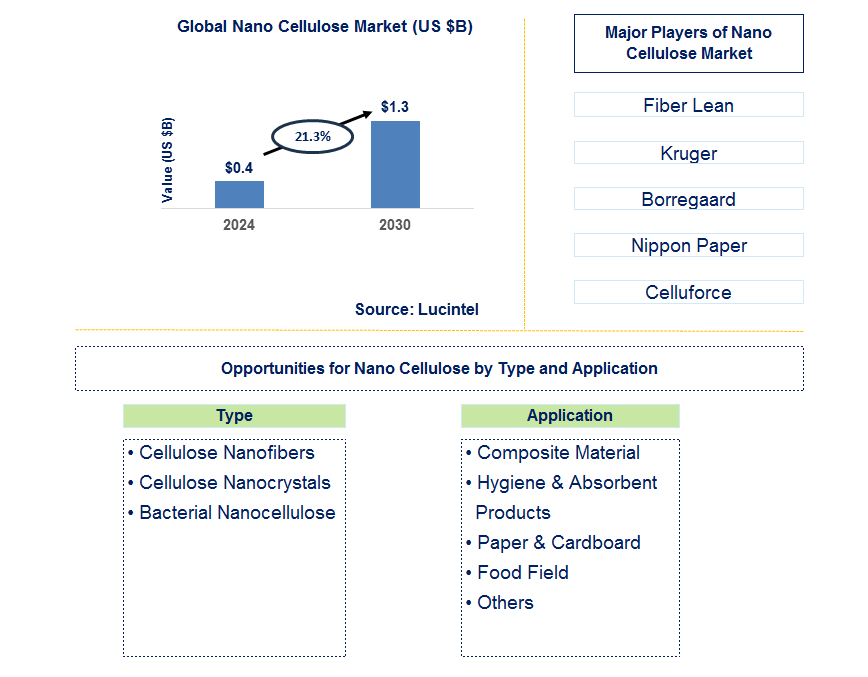
Key data points: The market size in 2030 = $1.3 billion, growth forecast = 21.3% annually for the next 6 years. Scroll below to get more insights. This market report covers trends, opportunities, and forecasts in the global nano cellulose market to 2030 by type (cellulose nanofibers, cellulose nanocrystals, and bacterial nanocellulose), application (composite material, hygiene & absorbent products, paper & cardboard, food field, and others), and region (North America, Europe, Asia Pacific, and the Rest of the World)
We'll send your sample report shortly.
• United States: The U.S. has seen significant investment in nano cellulose research, particularly for biomedical applications. Companies are developing advanced methods for producing nano cellulose with tailored properties, which enhances its use in drug delivery systems and tissue engineering. Collaborations between universities and industries are fostering innovation, while regulatory frameworks are evolving to support commercialization.
• China: China is rapidly scaling its nano cellulose production capabilities, emphasizing sustainable practices. Government initiatives are promoting the use of nano cellulose in various sectors, particularly in packaging and textiles. Recent developments include advancements in extraction techniques, which enhance yield and quality, making nano cellulose more competitive against traditional materials.
• Germany: Germany is focusing on integrating nano cellulose into eco-friendly product designs. Recent innovations include the development of biodegradable composites that utilize nano cellulose to improve mechanical properties. Strong collaboration between research institutions and industry is driving advancements, particularly in packaging and automotive applications, aligning with Germany’s sustainability goals.
• India: India is emerging as a key player in the nano cellulose market, with growing interest in sustainable materials. Startups are exploring innovative applications in agriculture and food packaging. Recent advancements in extraction methods have improved efficiency, making nano cellulose more accessible and appealing to local manufacturers.
• Japan: Japan is leveraging its technological expertise to enhance nano cellulose applications in electronics and healthcare. Recent developments include the incorporation of nano cellulose in flexible electronic devices and bio-compatible materials for medical use. The focus on high-performance materials is driving innovation and positioning Japan as a leader in the nano cellulose market.
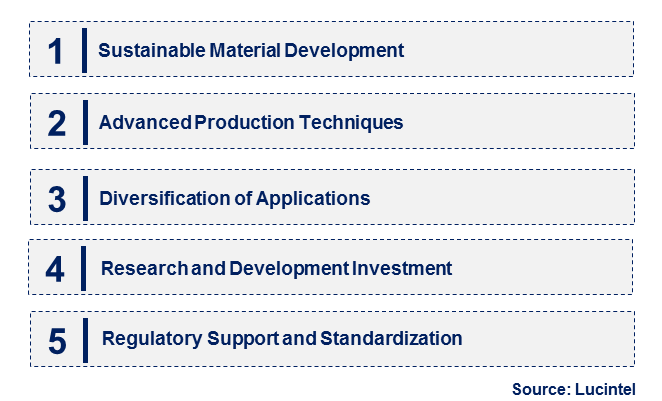
• Sustainable Material Development: The shift towards sustainable materials is a major trend in the nano cellulose market. Manufacturers are increasingly focusing on bio-based and biodegradable options, reducing reliance on fossil fuels and minimizing environmental impact. This trend attracts eco-conscious consumers and aligns with global sustainability goals.
• Advanced Production Techniques: Innovations in extraction and processing technologies are enhancing the efficiency and scalability of nano cellulose production. Techniques such as enzymatic extraction and solvent-free methods are gaining traction, leading to higher purity and lower costs. These advancements are making nano cellulose more competitive against traditional materials.
• Diversification of Applications: Nano cellulose is finding new applications across various sectors, including packaging, electronics, and healthcare. The versatility of nano cellulose allows for its use in creating lightweight composites, drug delivery systems, and sustainable packaging solutions, broadening market potential and driving demand.
• Research and Development Investment: Increased investment in R&D is fostering innovation in nano cellulose technologies. Public and private sectors are collaborating to explore new applications and improve material properties, ensuring that nano cellulose remains at the forefront of material science advancements.
• Regulatory Support and Standardization: As the nano cellulose market matures, regulatory frameworks are evolving to support its safe and sustainable use. Standardization efforts are promoting consumer confidence and encouraging industry adoption, facilitating market growth. These emerging trends are reshaping the nano cellulose market by enhancing sustainability, expanding applications, and driving technological advancements. Companies that align with these trends will be better positioned to capture market opportunities and meet consumer demands.
• Innovative Extraction Methods: New extraction techniques, such as enzymatic hydrolysis and mechanical processing, are improving the yield and quality of nano cellulose. These advancements reduce production costs and enhance material properties, making nano cellulose more competitive in various applications.
• Integration into Biodegradable Products: Manufacturers are increasingly incorporating nano cellulose into biodegradable composites, enhancing mechanical strength while maintaining eco-friendliness. This development is particularly relevant in the packaging sector, where sustainability is a key consumer demand.
• Collaborative Research Initiatives: Partnerships between academia and industry are fostering innovation in nano cellulose applications. Recent collaborations focus on developing new materials for healthcare, such as bioactive scaffolds for tissue engineering, driving advancements in medical technology.
• Expansion into Food Packaging: The use of nano cellulose in food packaging is gaining traction due to its barrier properties and biodegradability. Recent developments include active packaging solutions that extend shelf life while maintaining product quality, responding to consumer preferences for sustainable options.
• Technological Innovations in Electronics: Nano cellulose is being integrated into electronic devices, enhancing flexibility and performance. Developments include the use of nano cellulose in flexible displays and sensors, reflecting the material's potential in advanced technology applications. These key developments are significantly impacting the nano cellulose market by improving production efficiency, expanding applications, and fostering innovation. Manufacturers that leverage these advancements will be well-positioned to thrive in the evolving market landscape.
• Packaging Industry Growth: The demand for sustainable packaging solutions is rising, creating opportunities for nano cellulose applications. Its biodegradability and mechanical strength make it an attractive option for manufacturers looking to meet environmental regulations and consumer preferences.
• Biomedical Applications: The healthcare sector offers significant growth potential for nano cellulose, particularly in drug delivery and tissue engineering. Its biocompatibility and versatility allow for innovative medical solutions, driving investment in research and development.
• Construction Materials: Nano cellulose can enhance the properties of construction materials, offering improved strength and durability. Its application in green building practices aligns with the growing trend toward sustainable construction, presenting new market opportunities.
• Textile Industry Innovations: The textile industry is increasingly exploring nano cellulose for producing eco-friendly fabrics and composites. Its lightweight and breathable properties make it ideal for creating sustainable clothing, tapping into the growing demand for green fashion.
• Electronics and Sensors: The integration of nano cellulose in flexible electronics and sensors represents a burgeoning market opportunity. Its unique properties enable the development of lightweight, high-performance devices, catering to the advancing technology landscape. These strategic growth opportunities highlight the versatility and potential of nano cellulose across multiple sectors. Companies that capitalize on these opportunities will enhance their market positioning and drive sustainable growth.
• Sustainability Trends: Growing awareness of environmental issues is driving demand for sustainable materials. nano cellulose, derived from renewable sources, offers eco-friendly alternatives to traditional materials, appealing to environmentally conscious consumers.
• Technological Advancements: Innovations in extraction and processing techniques are enhancing the efficiency and scalability of nano cellulose production. These advancements lower costs and improve material properties, making nano cellulose more competitive in various applications.
• Regulatory Support: Increasing government regulations promoting sustainability and eco-friendly materials are driving market growth. Supportive policies encourage manufacturers to adopt nano cellulose technologies, facilitating market adoption.
• Versatile Applications: The diverse range of applications for nano cellulose, including packaging, healthcare, and construction, drives demand across multiple sectors. Its unique properties enable innovative solutions that cater to evolving market needs.
• Growing R&D Investments: Increased investment in research and development is fostering innovation in nano cellulose technologies. Collaborations between industry and academia are exploring new applications and improving material properties, driving market growth. Challenges in the nano cellulose market are:
• Production Costs: The costs associated with producing nano cellulose can be high, impacting profitability. Manufacturers must find ways to optimize production processes to remain competitive while ensuring quality.
• Market Competition: The nano cellulose market is becoming increasingly competitive, with numerous players entering the space. Companies must differentiate their products and innovate to maintain market share amid growing options.
• Consumer Awareness: Limited consumer awareness regarding the benefits of nano cellulose can hinder market growth. Effective education and marketing strategies are essential to inform consumers and drive adoption. The interplay of these drivers and challenges significantly impacts the nano cellulose market, shaping strategic decisions and influencing overall growth potential. Companies that effectively navigate these factors will be better positioned to succeed in this evolving landscape.
• Fiber Lean
• Kruger
• Borregaard
• Nippon Paper
• Celluforce
• University of Maine
• American Process
• Oji Paper
• Innventia
• SCIENCEK
• Cellulose Nanofibers
• Cellulose Nanocrystals
• Bacterial Nanocellulose
• Composite Material
• Hygiene & Absorbent Products
• Paper & Cardboard
• Food Field
• Others
• North America
• Europe
• Asia Pacific
• The Rest of the World
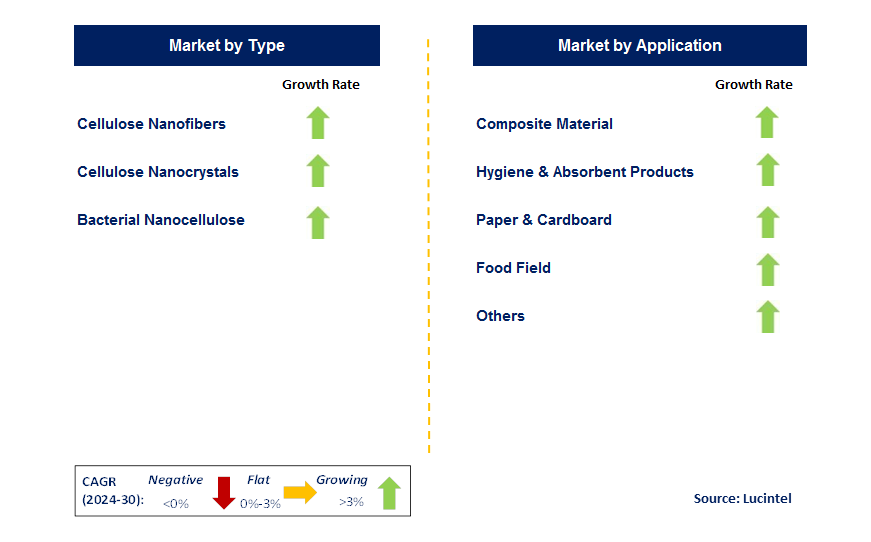
• Lucintel forecasts that, within the type category, cellulose nanofiber is expected to witness the highest growth over the forecast period.
• Within the application category, composite material is expected to witness the highest growth.
• In terms of regions, APAC is expected to witness the highest growth over the forecast period.


• Fiber Lean
• Kruger
• Borregaard
• Nippon Paper
• Celluforce
• University of Maine
• American Process
• Oji Paper
• Innventia
• SCIENCEK Q6. Which nano cellulose market segment will be the largest in future? Answer: Lucintel forecasts that cellulose nanofiber is expected to witness the highest growth over the forecast period. Q7. In nano cellulose market, which region is expected to be the largest in next 5 years? Answer: APAC is expected to witness the highest growth over the forecast period. Q.8 Do we receive customization in this report? Answer: Yes, Lucintel provides 10% customization without any additional cost.


Choose a license that fits your team. Instant PDF delivery.
Prices exclude taxes. Instant delivery. Custom licensing available on request.
Market Report · July 22, 2026
Market Report · July 22, 2026
Market Report · July 22, 2026
Trusted partner for strategic intelligence and business growth


Receive a complimentary market analysis tailored to your industry. Our analysts will identify key growth opportunities and competitive dynamics specific to your business.

Market size, growth rate, and key trend analysis for your specific sector.

Top competitor positioning and market share analysis.

Strategic recommendations backed by data-driven insights.
Get curated market intelligence and competitive moves straight to your inbox.
By subscribing, you agree to receive our monthly insights. Unsubscribe anytime.
Receive a complimentary market analysis tailored to your industry. Our analysts will identify key growth opportunities and competitive dynamics specific to your business.
Market size, growth rate, and key trend analysis for your specific sector.
Top competitor positioning and market share analysis.
Strategic recommendations backed by data-driven insights.
Get curated market intelligence, emerging trends, and competitive moves straight to your inbox each month.
By subscribing, you agree to receive our monthly insights. Unsubscribe anytime.
We'll send your sample report shortly.