
Market Report · July 22, 2026

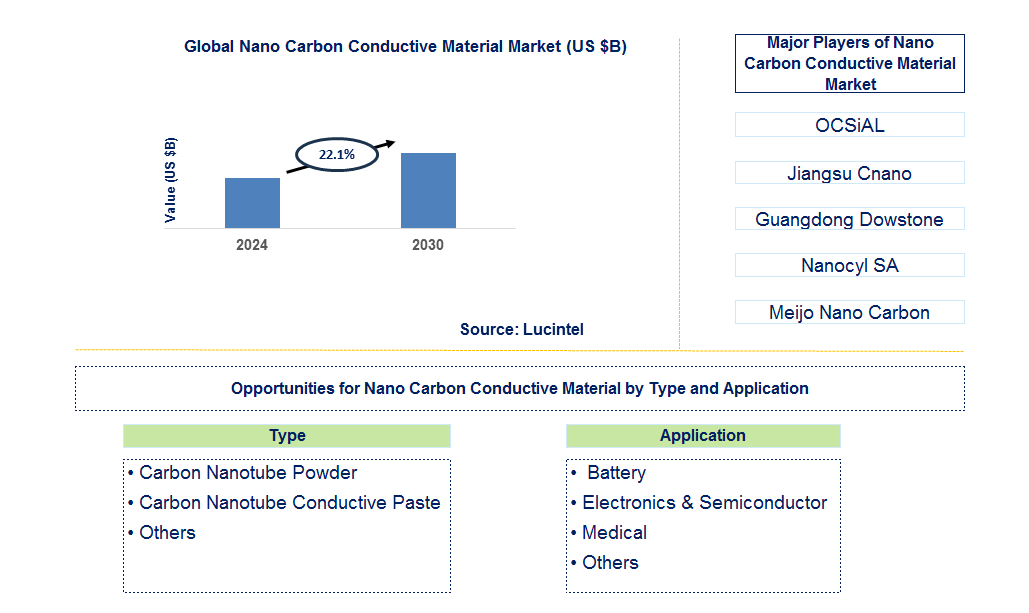
Key data points: The growth forecast = 22.1% annually for the next 6 years. Scroll below to get more insights. This market report covers trends, opportunities, and forecasts in the global nano carbon conductive material market to 2030 by type (carbon nanotube powder, carbon nanotube conductive paste, and others), application (battery, electronics & semiconductor, medical, and others), and region (North America, Europe, Asia Pacific, and the Rest of the World)
We'll send your sample report shortly.
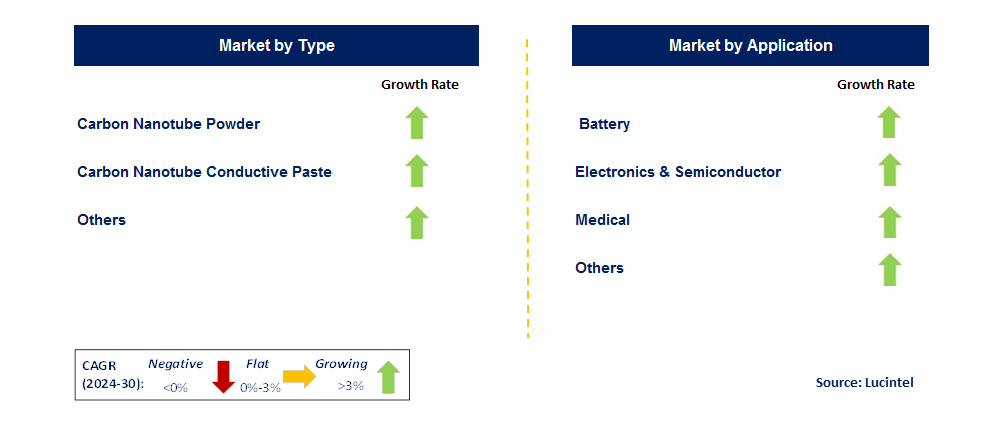
• Lucintel forecasts that, within the type category, carbon nanotube powder is expected to witness a higher growth over the forecast period.
• Within the application category, battery is expected to witness the highest growth.
• In terms of regions, APAC is expected to witness the highest growth over the forecast period. Gain valuable insights for your business decisions with our comprehensive 150+ page report.
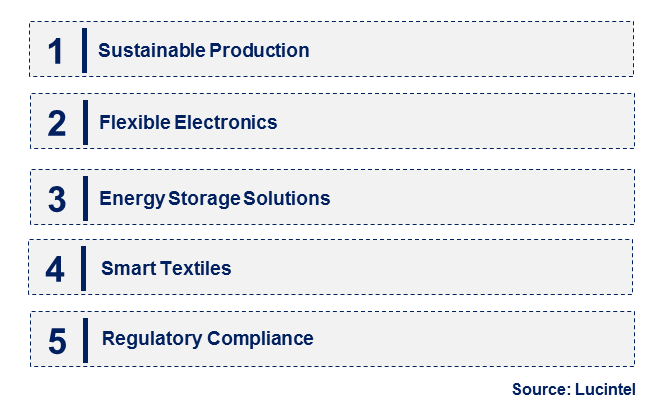
• Sustainable Production: Increasing focus on environmentally friendly manufacturing processes is driving the development of eco-conscious materials.
• Flexible Electronics: Growing demand for flexible and wearable electronics is promoting innovations in nano carbon materials that cater to this sector.
• Energy Storage Solutions: Advancements in batteries and supercapacitors are leveraging nano carbon materials for enhanced energy density and efficiency.
• Smart Textiles: The integration of conductive materials into textiles is creating opportunities in fashion and healthcare applications.
• Regulatory Compliance: Stricter regulations regarding material safety and environmental impact are influencing product development strategies.
• Collaborative R&D: Partnerships between academia and industry are fostering innovation and advancing material properties, enhancing application potential. These emerging trends reflect the dynamic nature of the nano carbon conductive materials market, highlighting opportunities for innovation and growth across various sectors.
• Product Innovations: Companies are launching advanced formulations that improve the conductivity and mechanical properties of nano carbon materials for diverse applications.
• New Applications: The exploration of new markets, including biomedical applications and IoT devices, is expanding the scope of nano carbon materials.
• Technological Advancements: Continuous innovations in production technologies are enhancing efficiency and reducing costs, making nano carbon materials more accessible.
• Sustainability Initiatives: Manufacturers are increasingly adopting green technologies to minimize the environmental impact of their production processes.
• Market Expansion: Companies are seeking to expand their reach in emerging markets, increasing market share and tapping into new opportunities.
• Rising Demand in Emerging Industries: The growing use of nano carbon materials in renewable energy and advanced electronics is driving demand and shaping market trends. These recent developments underscore ongoing innovation and strategic growth within the nano carbon conductive materials market, positioning it for continued expansion.
• Expanding Electronics Sector: Increased demand for advanced electronic components provides significant opportunities for innovative nano carbon applications.
• Automotive Industry Demand: The growing need for lightweight and high-performance materials in automotive applications presents lucrative opportunities.
• Energy Storage Innovations: The shift towards renewable energy solutions drives demand for nano carbon materials in batteries and supercapacitors.
• Consumer Goods Market: Rising demand for smart textiles and wearable technology opens new avenues for nano carbon conductive materials.
• Geographic Expansion: Exploring opportunities in developing regions can enhance market reach and revenue potential for manufacturers.
• Research Collaborations: Engaging in partnerships with research institutions can facilitate technological advancements and broaden application areas. By capitalizing on these strategic growth opportunities, stakeholders can enhance their competitiveness and drive innovation in the nano carbon conductive materials market.
• Rising demand for high-performance materials: The need for advanced materials in the electronics and automotive sectors fuels demand for nano carbon products.
• Technological innovations: Continuous advancements in nanomaterial production techniques enhance the performance and applications of nano carbon conductive materials.
• Environmental awareness: Increasing consumer awareness of sustainability drives the adoption of eco-friendly materials in various applications.
• Expansion of application areas: Broader use of nano carbon materials in industries like energy storage, electronics, and textiles increases market opportunities. Challenges in the nano carbon conductive materials market include:
• High production costs: The complexity of producing high-quality nano carbon materials can lead to increased costs, impacting pricing and competitiveness.
• Regulatory hurdles: Compliance with stringent regulations regarding safety and environmental impact can complicate product development and market entry.
• Market competition: Intense competition among established players may result in price wars and reduced profit margins.
• Limited consumer awareness: A lack of knowledge regarding the benefits and applications of nano carbon materials may hinder market growth. Understanding these drivers and challenges is essential for stakeholders to navigate the market effectively and devise strategies that leverage opportunities while mitigating risks.
• OCSiAL
• Jiangsu Cnano Technology
• Guangdong Dowstone Technology
• Nanocyl SA
• Meijo Nano Carbon
• Zeon Corporation
• LG Chem
• Carbon Nanotube Powder
• Carbon Nanotube Conductive Paste
• Others
• Battery
• Electronics & Semiconductor
• Medical
• Others
• North America
• Europe
• Asia Pacific
• The Rest of the World
• USA: The nano carbon conductive materials market in the USA is rapidly evolving, driven by advancements in electronics, automotive, and renewable energy sectors. Companies are focusing on the development of high-performance conductive inks and coatings for flexible electronics, enhancing device efficiency. Recent partnerships between tech firms and research institutions aim to innovate in nanomaterials, addressing challenges like conductivity and dispersion stability. Additionally, the U.S. market is witnessing a growing trend towards sustainable production methods, with several companies investing in eco-friendly materials to reduce environmental impact while maintaining performance standards.
• Germany: In Germany, the nano carbon conductive materials market is witnessing significant growth, particularly in automotive and industrial applications. Recent innovations have focused on enhancing the mechanical and electrical properties of carbon nanomaterials for use in advanced composite materials. German manufacturers are heavily investing in research and development to create lightweight, high-strength materials that meet stringent automotive standards. Furthermore, the emphasis on energy efficiency and sustainability is driving the adoption of nano carbon materials in battery technology, contributing to the country’s commitment to green technology and the circular economy.
• China: China continues to dominate the global nano carbon conductive materials market, fueled by robust demand in electronics, energy storage, and manufacturing. Recent developments include the mass production of graphene and carbon nanotubes, which significantly lower costs and enhance availability. Chinese companies are also expanding their R&D capabilities, focusing on applications in flexible displays and smart textiles. Government initiatives promoting innovation and technology in nanomaterials are supporting this growth. Additionally, collaborations between academic institutions and industry leaders are fostering advancements in material properties and application methods, positioning China as a leader in the nano carbon space.
• India: The nano carbon conductive materials market in India is gaining traction, driven by the burgeoning electronics and automotive industries. Recent initiatives by Indian startups focus on developing low-cost, high-performance conductive materials tailored for local manufacturing needs. Innovations in production techniques, such as chemical vapor deposition, are enhancing the quality and scalability of carbon nanomaterials. The government’s push for ‘Make in India’ is facilitating partnerships between domestic manufacturers and research institutions to foster innovation. Additionally, increasing awareness of energy-efficient solutions is promoting the use of nano carbon materials in various applications, including batteries and sensors.
• Japan: Japan’s nano carbon conductive materials market is characterized by high-quality production and advanced technological applications, particularly in electronics and automotive sectors. Recent developments have included the integration of carbon nanotubes in semiconductors and energy devices, enhancing performance and efficiency. Japanese companies are investing heavily in R&D to explore innovative applications, such as in biomedical devices and wearable technology. The focus on precision and quality has led to partnerships between manufacturers and research institutes, driving advancements in material properties. Furthermore, Japan’s commitment to sustainability is fostering the development of eco-friendly production methods for nano carbon materials.


• OCSiAL
• Jiangsu Cnano Technology
• Guangdong Dowstone Technology
• Nanocyl SA
• Meijo Nano Carbon
• Zeon Corporation
• LG Chem Q5. Which nano carbon conductive material market segment will be the largest in future? Answer: Lucintel forecasts that carbon nanotube powder is expected to witness higher growth over the forecast period. Q6. In nano carbon conductive material market, which region is expected to be the largest in next 5 years? Answer: APAC is expected to witness the highest growth over the forecast period. Q.7 Do we receive customization in this report? Answer: Yes, Lucintel provides 10% customization without any additional cost.


Choose a license that fits your team. Instant PDF delivery.
Prices exclude taxes. Instant delivery. Custom licensing available on request.
Market Report · July 22, 2026
Market Report · July 22, 2026
Market Report · July 22, 2026
Trusted partner for strategic intelligence and business growth


Receive a complimentary market analysis tailored to your industry. Our analysts will identify key growth opportunities and competitive dynamics specific to your business.

Market size, growth rate, and key trend analysis for your specific sector.

Top competitor positioning and market share analysis.

Strategic recommendations backed by data-driven insights.
Get curated market intelligence and competitive moves straight to your inbox.
By subscribing, you agree to receive our monthly insights. Unsubscribe anytime.
Receive a complimentary market analysis tailored to your industry. Our analysts will identify key growth opportunities and competitive dynamics specific to your business.
Market size, growth rate, and key trend analysis for your specific sector.
Top competitor positioning and market share analysis.
Strategic recommendations backed by data-driven insights.
Get curated market intelligence, emerging trends, and competitive moves straight to your inbox each month.
By subscribing, you agree to receive our monthly insights. Unsubscribe anytime.
We'll send your sample report shortly.