
Market Report · July 22, 2026

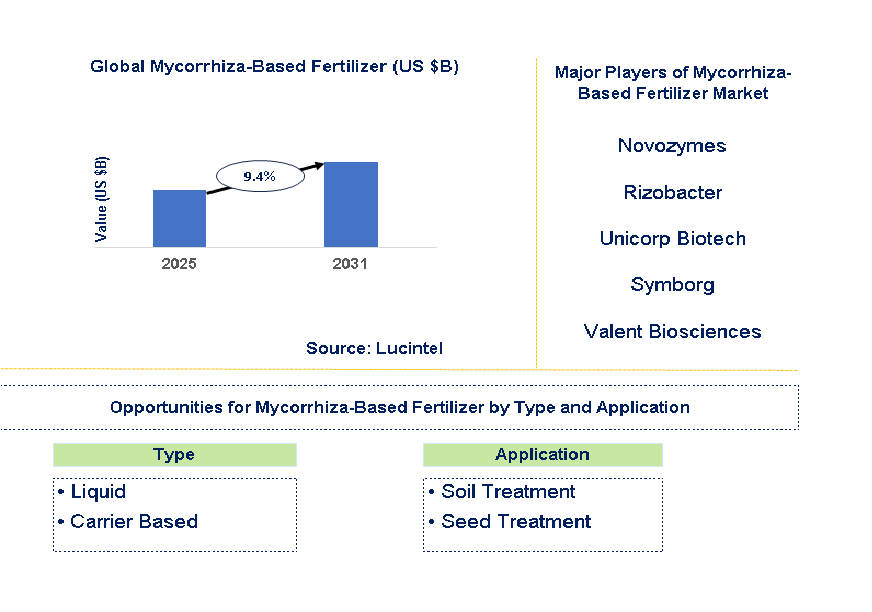
Key data points: The growth forecast = 0.094 annually for the next 7 years. Scroll below to get more insights. This market report covers Trends, opportunities and forecasts in mycorrhiza-based fertilizer market to 2031 by type (liquid and carrier based), application (soil treatment and seed treatment), and region (North America, Europe, Asia Pacific, and the Rest of the World)
We'll send your sample report shortly.
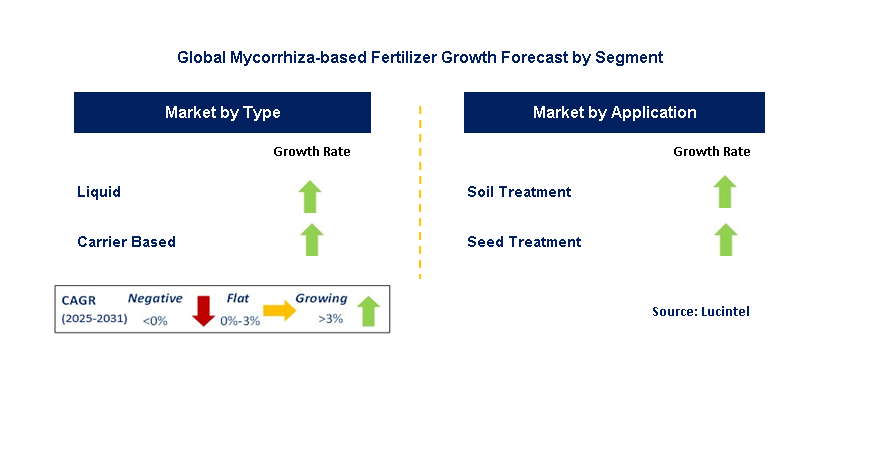
• Lucintel forecasts that, within the type category, carrier-based is expected to witness higher growth over the forecast period due to more uniform application in large-scale farming.
• Within the application category, soil treatment is expected to witness higher growth due to it improves overall soil health and fertility for entire crops.
• In terms of region, North America is expected to witness the highest growth over the forecast period due to by the growing demand for sustainable and organic farming practices.
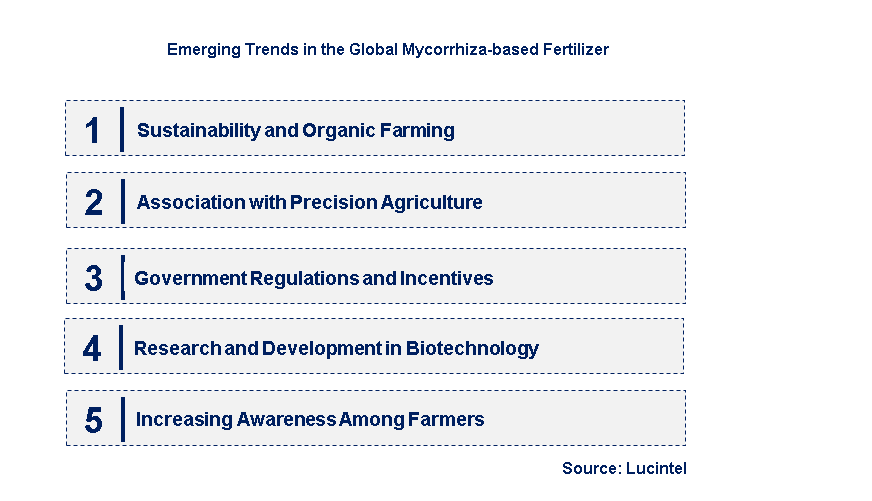
• Sustainability and Organic Farming: Among the agriculture trends, sustainability dominates the scene, and organic farm practices are being actively engaged in. Fertilizers based on mycorrhiza help improve soil health without increasing the dependency on chemical or synthetic alternatives. The increasing demand for organically produced food items and the environmental urge for "green" farming solutions have encouraged adoption of these organic fertilizers. The benefits of mycorrhiza inoculants include improved nutrient uptake, soil biodiversity, and ideal nutrient uptake for organic farming, thus managing to create healthy soils and reduce environmental impact.
• Association with Precision Agriculture: Mycorrhiza-based fertilizers also maintain association with precision agriculture technologies. Precision agriculture uses data-driven techniques to optimize farming practices, and the use of mycorrhizal inoculants is being enhanced by tools such as soil sensors, drones, and AI-based analytics. By mapping soil conditions and crop needs, farmers can apply mycorrhiza-based fertilizers more effectively, ensuring maximum benefit. This integration helps improve crop yields, minimize fertilizer waste, and increase overall farm productivity.
• Government Regulations and Incentives: Governments around the world are introducing regulations and incentives to encourage the use of sustainable farming practices. Mycorrhiza-based fertilizers benefit from these policies, as they align with national goals for reducing chemical inputs and protecting the environment. In countries like the European Union and the U.S., subsidies, tax incentives, and grants are available to farmers adopting eco-friendly alternatives such as mycorrhizal inoculants. These incentives are driving market growth and helping farmers transition to more sustainable agricultural practices.
• Research and Development in Biotechnology: Ongoing research and development in biotechnology are leading to new innovations in mycorrhiza-based fertilizers. Scientists are working to develop more efficient strains of mycorrhizal fungi, optimized for specific crops and soil types. Advances in genetic engineering and microbiology are expected to improve the performance and adaptability of these fungi, making them even more effective in enhancing plant growth and nutrient uptake. These breakthroughs are creating new opportunities for the commercialization of mycorrhiza-based fertilizers in diverse agricultural systems.
• Increasing Awareness Among Farmers: As farmers become more aware of the long-term benefits of using mycorrhiza-based fertilizers, adoption rates are rising. Education campaigns, workshops, and field demonstrations are helping farmers understand how these products can improve soil health, reduce fertilizer costs, and enhance crop yields. The increasing awareness of the environmental and economic advantages of mycorrhizal inoculants is contributing to their growing popularity, particularly among farmers seeking sustainable alternatives to chemical fertilizers. These emerging trends are reshaping the mycorrhiza-based fertilizer industry, with sustainability, technological integration, and ongoing research driving significant change. The adoption of mycorrhiza-based fertilizers is expected to continue growing as both consumers and farmers prioritize environmentally friendly and efficient solutions in agriculture.
• Enhanced Strains of Mycorrhizal Fungi: Researchers are developing enhanced strains of mycorrhizal fungi, specifically tailored to optimize nutrient uptake for different crop types. These strains are engineered to be more effective in various environmental conditions, improving the overall efficiency of mycorrhiza-based fertilizers. The development of specialized strains, such as those resistant to drought or high salinity, is expected to expand the market by addressing challenges faced in diverse farming regions.
• Increased Collaboration Between Agriculture and Biotechnology Industries: There has been a growing trend of collaboration between agricultural companies and biotechnology firms to develop more efficient mycorrhiza-based fertilizers. These partnerships are helping to accelerate research and development, leading to innovations in product formulations and application methods. The integration of biotechnology into the development of mycorrhizal inoculants has also led to more targeted and effective products that address specific agricultural challenges.
• Expansion of Market Availability and Accessibility: The availability and accessibility of mycorrhiza-based fertilizers have increased significantly in recent years. As demand for these eco-friendly solutions grows, manufacturers are expanding their distribution networks to reach a broader range of farmers. Additionally, the development of cost-effective mycorrhizal inoculants has made these products more accessible to small-scale and developing country farmers, opening up new markets and fostering global adoption.
• Integration with Organic Certification Programs: Mycorrhiza-based fertilizers are increasingly being integrated into organic certification programs, allowing farmers to use them in compliance with organic farming standards. This has broadened their appeal to organic farmers who are seeking natural alternatives to chemical fertilizers. The ability to use mycorrhizal inoculants in certified organic systems is expected to further drive market demand as organic farming continues to grow globally.
• Emergence of Tailored Products for Specific Crops: As the understanding of mycorrhizal fungi continues to grow, more tailored products are being developed for specific crops. These customized fertilizers address the unique nutrient requirements of different plants, improving crop yields and efficiency. This specialization is expected to drive growth in markets with diverse agricultural systems, as farmers seek products that meet their specific needs. These developments in the mycorrhiza-based fertilizer market are driving innovation, expanding market reach, and fostering adoption in diverse agricultural systems. As the market continues to evolve, mycorrhiza-based fertilizers are positioned to play a key role in the future of sustainable agriculture.
• Organic Farming: Organic farming is experiencing significant growth as more consumers demand food produced without synthetic chemicals. Mycorrhiza-based fertilizers align with organic farming principles, improving soil fertility and promoting plant growth while reducing the use of chemical fertilizers. The adoption of these fertilizers in organic systems enhances nutrient uptake, improves soil structure, and fosters biodiversity, making them an ideal solution for organic farmers. This trend is expected to continue, as organic farming regulations support the use of natural products like mycorrhizal inoculants.
• Horticulture and Landscaping: In horticulture and landscaping, the need for sustainable practices and improved plant growth is increasing. Mycorrhiza-based fertilizers are effective in meeting these demands, improving root development, increasing drought resistance, and improving the overall health of the plant. These fertilizers are used in high-value crops such as ornamental plants, flowers, and turfgrass. The demand for mycorrhizal inoculants is increasing because of the increasing focus on eco-friendly landscaping practices, thus creating a wide range of market opportunities in the horticultural sector.
• Agricultural Crops (Row Crops, Fruits, and Vegetables): The application of mycorrhiza-based fertilizers in conventional and intensive farming systems is rising. Crops like wheat, maize, rice, fruits, and vegetables benefit from enhanced nutrient absorption and resistance to environmental stresses. By improving soil health and increasing crop yields, mycorrhiza-based fertilizers can offer long-term benefits for both large-scale and small-scale farmers. As farmers increasingly seek ways to reduce dependency on chemical fertilizers and improve soil sustainability, mycorrhizal inoculants present a growing opportunity in mainstream agriculture.
• Land Reclamation and Environmental Restoration: Mycorrhiza-based fertilizers are particularly beneficial in land reclamation and environmental restoration projects. These fertilizers support the growth of plants in degraded soils, where nutrient levels and soil quality are poor. Mycorrhizal fungi improve soil structure, increase nutrient availability, and promote the growth of vegetation, making them an essential tool in efforts to restore and rehabilitate damaged ecosystems. The increasing focus on land reclamation and habitat restoration presents a significant growth opportunity for mycorrhiza-based fertilizers in these projects.
• Greenhouse and Indoor Farming: Greenhouse and indoor farming are growing rapidly due to urbanization and the increasing demand for fresh, locally grown produce. These farming systems often rely on controlled environments where soil health is a challenge. Mycorrhiza-based fertilizers provide a solution to this issue by promoting root development and enhancing nutrient uptake, even in soils with limited fertility. The scalability of mycorrhizal inoculants in small, controlled spaces opens up a significant market opportunity for these products in the greenhouse and indoor farming sectors. Strategic growth opportunities for mycorrhiza-based fertilizers abound in organic farming, horticulture, row crops, land reclamation, and greenhouse farming. Mycorrhiza-based fertilizers stand at the very forefront of changing the future face of agriculture since the demand for sustainable, eco-friendly agricultural solutions continues to increase.
• Novozymes
• Rizobacter
• Unicorp Biotech
• Symborg
• Valent Biosciences
• Asfertglobal
• Agrinos
• Sustane Natural Fertilizer
• Sikko Industries
• Agrilife
• Liquid
• Carrier Based
• Soil Treatment
• Seed Treatment
• North America
• Europe
• Asia Pacific
• The Rest of the World
• United States: In the United States, the market for mycorrhiza-based fertilizers has grown as demand for organic farming practices and sustainable agriculture increases. The U.S. Environmental Protection Agency (EPA) has also shown interest in promoting eco-friendly agricultural products. Recent advancements in research and biotechnology have led to the development of highly effective strains of mycorrhizal fungi, which improve crop yields and increase resistance to pests and diseases. Companies are increasingly offering innovative mycorrhiza-based fertilizers designed for a variety of crops, including vegetables, fruits, and turfgrass.
• China: China has embraced the use of mycorrhiza-based fertilizers as part of its broader initiative to reduce the environmental impact of chemical fertilizers. In recent years, China has seen significant growth in the adoption of these bio-based fertilizers, driven by both government policies and growing consumer demand for organic produce. Research in mycorrhizal fungi is being funded by both public and private sectors, with studies focused on optimizing their effectiveness for China’s diverse agricultural sectors, including rice, wheat, and maize farming. Mycorrhizal inoculants are seen as a way to boost soil health and reduce the over-reliance on chemical fertilizers.
• Germany: Germany has been at the forefront of developing and promoting sustainable agricultural products. The use of mycorrhiza-based fertilizers is gaining traction as part of Germany’s commitment to reducing chemical fertilizer use and enhancing soil biodiversity. Mycorrhiza inoculants are being increasingly incorporated into agricultural systems for organic farming. The development of specialized mycorrhiza strains tailored to Germany’s specific soil conditions and crop requirements has become a key focus, with a strong emphasis on optimizing fertilizer efficiency. Regulatory support and market incentives have accelerated the adoption of these bio-based solutions in both conventional and organic farming systems.
• India: In India, mycorrhiza-based fertilizers are being recognized for their potential to enhance the productivity of small-scale farms, which rely heavily on chemical fertilizers. The government’s push for sustainable agriculture and organic farming has opened the door for greater use of mycorrhizal fungi in crop production. Research and development efforts are focused on improving the compatibility of mycorrhizal inoculants with various Indian crops, such as rice, cotton, and pulses. The widespread adoption of mycorrhizal-based fertilizers is also supported by the availability of low-cost inoculants and the growing awareness among farmers of the long-term benefits of these bio-based products.
• Japan: Japan is one of the countries that has been a front runner in embracing precision agriculture and sustainable farming, including mycorrhiza-based fertilizers. With a strong focus on minimizing environmental pollution and improving soil fertility, Japan has increasingly turned to mycorrhizal inoculants as a means of enhancing plant growth while minimizing synthetic chemicals. The Japanese government has been supporting research on mycorrhizal fungi for crops such as rice and vegetables, which are integral to the country's food production systems. The Green Innovation Fund of Japan is also allocating funds for the development and commercialization of mycorrhizal fertilizers, which will accelerate the growth of the market further.


• Novozymes
• Rizobacter
• Unicorp Biotech
• Symborg
• Valent Biosciences
• Asfertglobal
• Agrinos
• Sustane Natural Fertilizer
• Sikko Industries
• Agrilife Q5. Which mycorrhiza-based fertilizer market segment will be the largest in future? Answer: Lucintel forecasts that, within the type category, carrier-based is expected to witness higher growth over the forecast period due to more uniform application in large-scale farming. Q6. In mycorrhiza-based fertilizer market, which region is expected to be the largest in next 5 years? Answer: In terms of region, North America is expected to witness the highest growth over the forecast period due to by the growing demand for sustainable and organic farming practices. Q7. Do we receive customization in this report? Answer: Yes, Lucintel provides 10% customization without any additional cost.


Choose a license that fits your team. Instant PDF delivery.
Prices exclude taxes. Instant delivery. Custom licensing available on request.
Market Report · July 22, 2026
Market Report · July 16, 2026
Market Report · May 18, 2026
Trusted partner for strategic intelligence and business growth


Receive a complimentary market analysis tailored to your industry. Our analysts will identify key growth opportunities and competitive dynamics specific to your business.

Market size, growth rate, and key trend analysis for your specific sector.

Top competitor positioning and market share analysis.

Strategic recommendations backed by data-driven insights.
Get curated market intelligence and competitive moves straight to your inbox.
By subscribing, you agree to receive our monthly insights. Unsubscribe anytime.
Receive a complimentary market analysis tailored to your industry. Our analysts will identify key growth opportunities and competitive dynamics specific to your business.
Market size, growth rate, and key trend analysis for your specific sector.
Top competitor positioning and market share analysis.
Strategic recommendations backed by data-driven insights.
Get curated market intelligence, emerging trends, and competitive moves straight to your inbox each month.
By subscribing, you agree to receive our monthly insights. Unsubscribe anytime.
We'll send your sample report shortly.