
Market Report · July 31, 2026

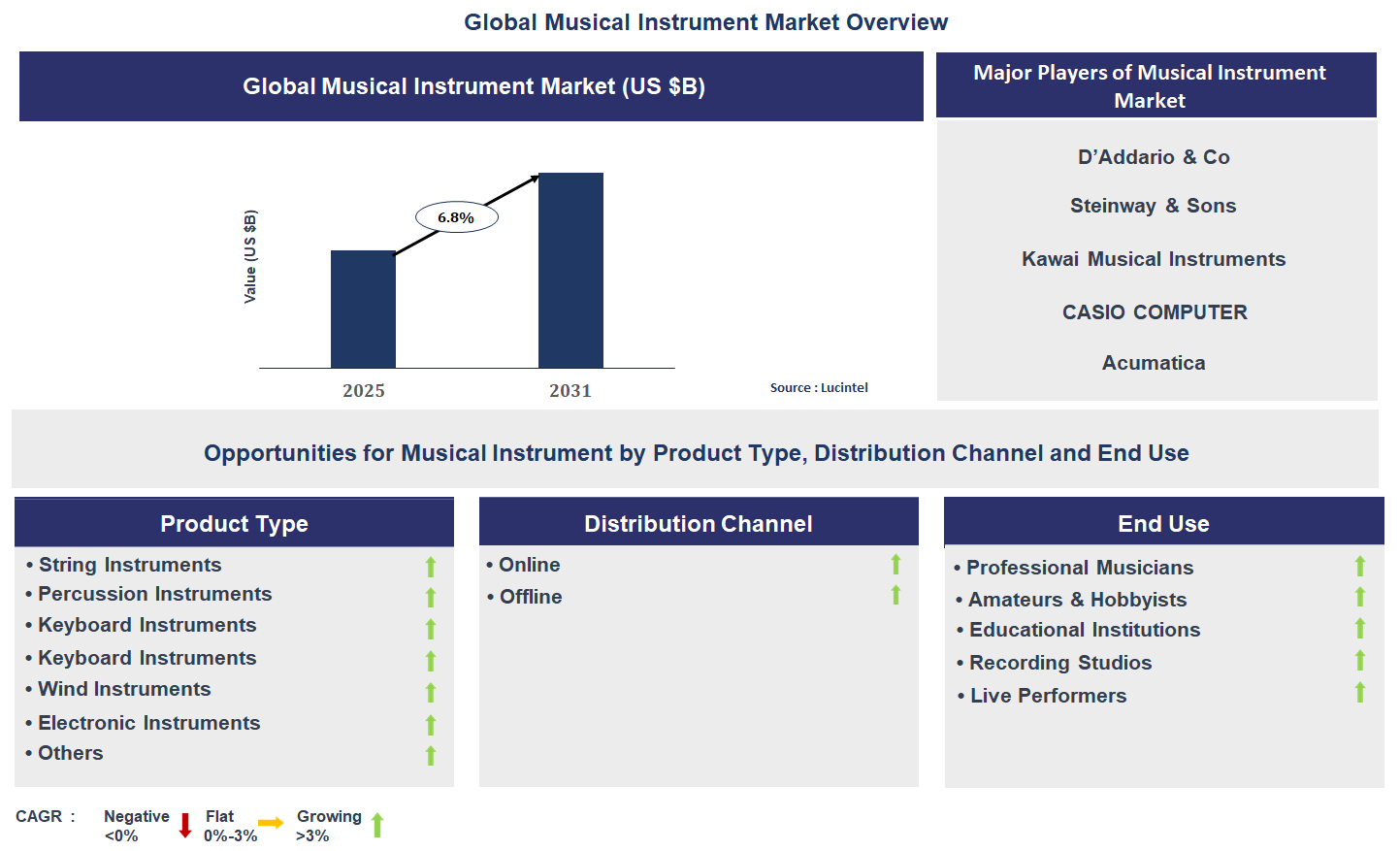
Key data points: The growth forecast = 6.8% annually for the next 7 years. Scroll below to get more insights. This market report covers trends, opportunities and forecasts in musical instrument market to 2031 by product type (string instruments, percussion instruments, keyboard instruments, keyboard instruments, wind instruments, electronic instruments, and others), distribution channel (online and offline), end use (professional musicians, amateurs & hobbyists, educational institutions, recording studios, and live performers), and region (North America, Europe, Asia Pacific, and the Rest of the World)
We'll send your sample report shortly.
• Lucintel forecasts that, within the product type category, string instrument is expected to witness the highest growth over the forecast period.
• Within the end use category, educational institution is expected to witness the highest growth.
• In terms of region, APAC is expected to witness the highest growth over the forecast period. Gain valuable insights for your business decisions with our comprehensive 150+ page report. Sample figures with some insights are shown below.
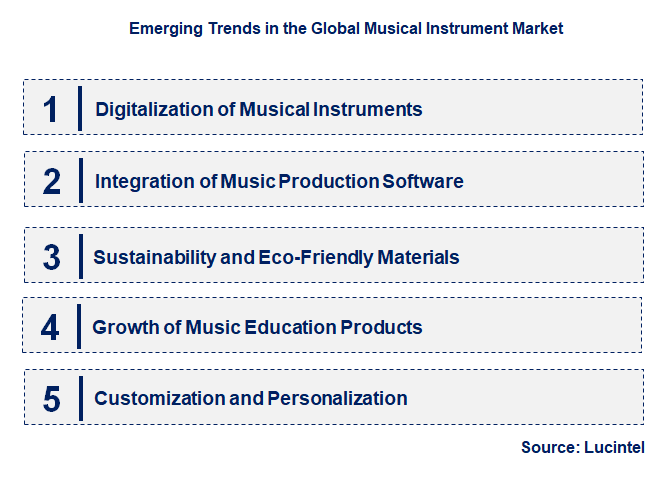
• Digitalization of Musical Instruments: Digital instruments, including synthesizers, electric guitars, and drum machines, are becoming increasingly popular. These instruments offer flexibility, portability, and a wide range of sounds, allowing musicians to create and produce music with ease. As technology improves, digital instruments are becoming more accessible and affordable, making them appealing to both amateurs and professionals.
• Integration of Music Production Software: The integration of software with musical instruments is a key trend. Many companies are now offering instruments that come with pre-installed software or offer compatibility with popular DAWs (digital audio workstations). This trend makes it easier for musicians to transition from playing to producing music, fueling growth in the home studio market.
• Sustainability and Eco-Friendly Materials: Consumers are increasingly concerned with the environmental impact of their purchases. As a result, there is a growing demand for instruments made from sustainable materials like bamboo, recycled woods, and eco-friendly plastics. Companies that prioritize sustainability are gaining a competitive edge by appealing to eco-conscious consumers.
• Growth of Music Education Products: With the rise of online music education, there is increasing demand for educational instruments and learning tools. Platforms offering virtual music lessons and apps are integrating with beginner-level instruments, making it easier for people to start learning music. This trend is driving the growth of entry-level musical instruments, especially among younger audiences.
• Customization and Personalization: Consumers are looking for musical instruments that reflect their personal style and preferences. Customization options, such as personalized finishes, hardware, and sound modifications, are becoming more prevalent. This trend is especially prominent in the guitar market, where customization has become a significant part of the brand experience. Emerging trends in the musical instrument market are being driven by technological advancements, consumer demands for personalization and sustainability, and the expansion of music education. As digital instruments and software integration continue to rise, the market is becoming more diverse and accessible. These trends will shape the future of music creation, production, and learning.
• Rise of Online Music Education Platforms: The surge in online learning platforms has led to a significant shift in how people engage with music. Websites, apps, and video tutorials have made it easier for people to learn at their own pace. This has boosted the demand for beginner instruments and has opened new opportunities for brands to offer educational kits.
• Smart Instruments and Accessories: The integration of smart technology into musical instruments is a significant development. For example, smart pianos with built-in apps help learners improve their skills, while smart guitars and basses allow for real-time tuning and sound effects. These innovations are appealing to tech-savvy musicians and students looking for interactive learning experiences.
• Focus on Hybrid Instruments: Hybrid instruments, which blend traditional acoustic features with digital technology, are becoming more common. Instruments like electric violins and digital pianos combine the authenticity of classical instruments with the versatility of modern technology, making them appealing to musicians who need flexibility in both performance and recording.
• Expansion of Music Production Tools: Musical instruments are becoming more integrated with music production tools. Companies are offering products that connect seamlessly with DAWs (Digital Audio Workstations), expanding the possibilities for home studio setups. This development is driven by the growing number of bedroom producers and musicians who require affordable, high-quality instruments for music production.
• Direct-to-Consumer Sales Models: Many musical instrument brands are shifting towards direct-to-consumer (D2C) sales models, bypassing traditional retail channels. This allows companies to offer better pricing and personalized services, while also fostering closer relationships with their customers. The shift to D2C is also accelerated by the rise of online marketplaces and e-commerce platforms. These key developments reflect the growing intersection of technology, consumer demand, and global distribution in the musical instrument market. From smart instruments to direct-to-consumer sales, the market is being reshaped by new approaches to music creation, education, and performance, making instruments more accessible and versatile for musicians at all levels.
• Expansion of Digital Music Production Tools: The growing popularity of home music production is creating opportunities for manufacturers to develop digital instruments and software solutions. Tools that cater to hobbyists and professional musicians are in high demand, and companies that offer affordable, high-quality products can capture a larger market share.
• Focus on Sustainability: As consumer demand for eco-friendly products grows, companies that integrate sustainability into their manufacturing processes can capitalize on this trend. Instruments made from sustainable materials, as well as those with reduced environmental impact, are gaining popularity, particularly among environmentally conscious buyers.
• Growth in Online Music Education: With the rise of online learning, there is an increasing demand for entry-level musical instruments, along with educational tools and resources. Companies that partner with online platforms to offer instructional materials, apps, and support will likely see strong growth in this sector.
• Integration with Augmented Reality and Virtual Reality: The integration of AR and VR technology in music learning and performance opens new avenues for growth. Companies that leverage these technologies to enhance musical experiences—whether for education, virtual concerts, or interactive learning—have a unique opportunity to tap into a growing market of tech-savvy consumers.
• Targeting Emerging Markets: As disposable incomes rise in emerging markets like India, Latin America, and Southeast Asia, there is an increasing demand for both traditional and modern musical instruments. Expanding product lines to cater to these regions—by offering affordable, high-quality instruments—represents a major growth opportunity for global manufacturers. Strategic growth opportunities in the musical instrument market are driven by technological innovation, consumer preferences for sustainability, and the increasing role of online education. Manufacturers that focus on these areas are positioned to benefit from evolving trends and tap into new market segments, ensuring long-term success in a dynamic industry.
• D’Addario & Co
• Steinway & Sons
• Kawai Musical Instruments
• CASIO COMPUTER
• Acumatica
• C.F. Martin & Co.
• Roland Corporation
• String Instruments
• Percussion Instruments
• Keyboard Instruments
• Keyboard Instruments
• Wind Instruments
• Electronic Instruments
• Others
• Online
• Offline
• Professional Musicians
• Amateurs & Hobbyists
• Educational Institutions
• Recording Studios
• Live Performers
• North America
• Europe
• Asia Pacific
• The Rest of the World
• United States: The U.S. remains a leader in the global musical instrument market, with a strong demand for both traditional and electronic instruments. The rise of home music production, fueled by the popularity of platforms like YouTube and TikTok, has spurred growth in affordable instruments. Digital instruments, synthesizers, and educational products are also seeing increased demand.
• China: China has become one of the largest markets for musical instruments, particularly with the rise in music education and the popularity of Western music. There is a growing demand for both traditional Chinese instruments and Western instruments, with a focus on affordable, high-quality products. Chinese manufacturers are also expanding internationally, bringing innovation and competition to the global market.
• Germany: Germany’s music market remains robust, driven by a strong tradition in classical music and craftsmanship, especially in the manufacturing of high-end instruments. Brands like Steinway & Sons and Yamaha continue to dominate, while younger generations are exploring electronic music and digital production tools. The market sees steady growth in both traditional and modern instruments.
• India: India’s musical instrument market is booming, particularly in the realm of traditional instruments like the tabla and sitar, while modern instruments such as guitars and electronic keyboards are gaining popularity. The rise of music festivals, streaming platforms, and a growing middle class is propelling demand. Local and international brands are expanding to meet this demand.
• Japan: Japan’s musical instrument market is known for its high-quality production, especially in stringed instruments and electronic music gear. Brands like Yamaha and Roland continue to innovate, offering both professional and consumer-grade products. The country has a unique blend of classical and modern music cultures, driving demand for a wide range of instruments, from pianos to synthesizers.


• D’Addario & Co
• Steinway & Sons
• Kawai Musical Instruments
• CASIO COMPUTER
• Acumatica
• C.F. Martin & Co.
• Roland Corporation Q5. Which musical instrument market segment will be the largest in future? Answer: Lucintel forecasts that, within the product type category, string instrument is expected to witness the highest growth over the forecast period. Q6. In musical instrument market, which region is expected to be the largest in next 5 years? Answer: In terms of region, APAC is expected to witness the highest growth over the forecast period. Q7. Do we receive customization in this report? Answer: Yes, Lucintel provides 10% customization without any additional cost.


Choose a license that fits your team. Instant PDF delivery.
Prices exclude taxes. Instant delivery. Custom licensing available on request.
Market Report · July 31, 2026
Market Report · July 31, 2026
Market Report · July 31, 2026
Trusted partner for strategic intelligence and business growth


Receive a complimentary market analysis tailored to your industry. Our analysts will identify key growth opportunities and competitive dynamics specific to your business.

Market size, growth rate, and key trend analysis for your specific sector.

Top competitor positioning and market share analysis.

Strategic recommendations backed by data-driven insights.
Get curated market intelligence and competitive moves straight to your inbox.
By subscribing, you agree to receive our monthly insights. Unsubscribe anytime.
Receive a complimentary market analysis tailored to your industry. Our analysts will identify key growth opportunities and competitive dynamics specific to your business.
Market size, growth rate, and key trend analysis for your specific sector.
Top competitor positioning and market share analysis.
Strategic recommendations backed by data-driven insights.
Get curated market intelligence, emerging trends, and competitive moves straight to your inbox each month.
By subscribing, you agree to receive our monthly insights. Unsubscribe anytime.
We'll send your sample report shortly.