
Market Report · July 31, 2026

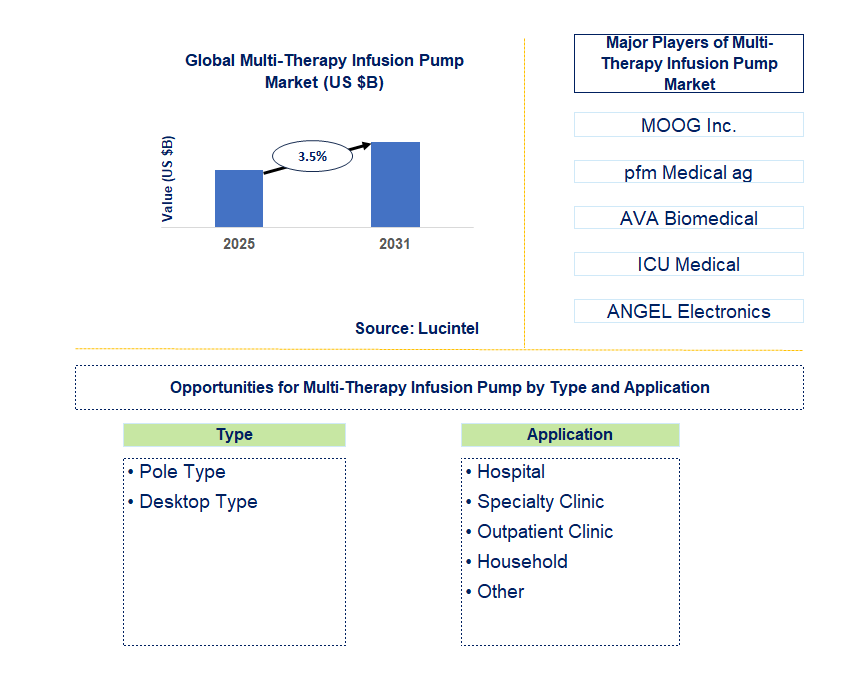
Key data points: The growth forecast = 3.5% annually for the next 7 years. Scroll below to get more insights. This market report covers Trends, opportunity and forecast in multi-therapy infusion pump market to 2031 by type (pole type and desktop type), application (hospital, specialty clinic, outpatient clinic, household, and other), and region (North America, Europe, Asia Pacific, and the Rest of the World)
We'll send your sample report shortly.
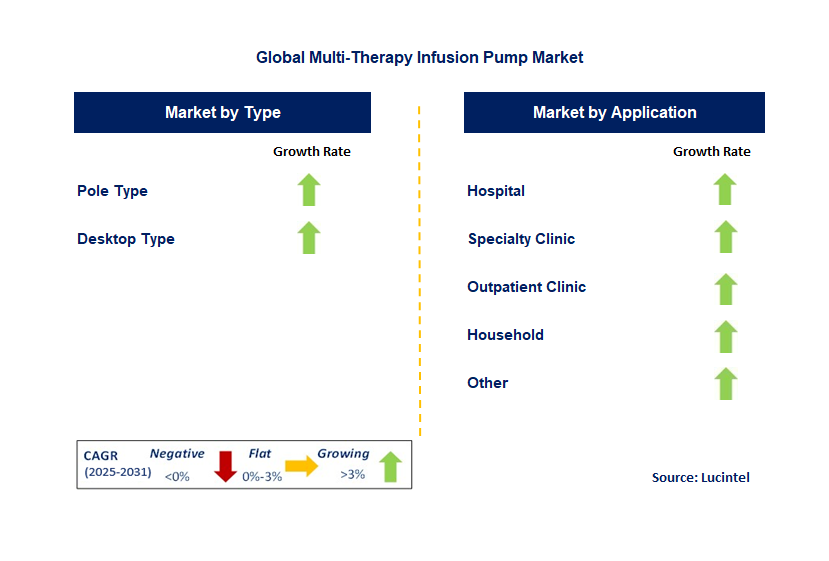
• Lucintel forecasts that, within the type category, pole-type is expected to witness higher growth over the forecast period.
• Within the application category, households is expected to witness the higher growth.
• In terms of region, APAC is expected to witness the highest growth over the forecast period. Gain valuable insights for your business decisions with our comprehensive 150+ page report. Sample figures with some insights are shown below.
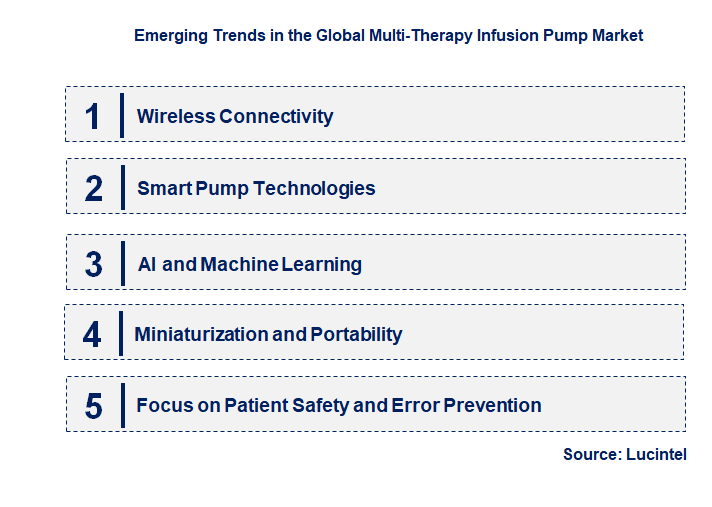
• Wireless Connectivity: Wireless-enabled infusion pumps are becoming more common, allowing real-time data transmission to hospital networks or cloud-based platforms. This enables healthcare professionals to monitor patient conditions remotely and adjust drug delivery parameters as needed, improving patient safety and treatment efficiency.
• Smart Pump Technologies: Smart infusion pumps integrated with advanced algorithms can detect and prevent medication errors, offering greater safety. These pumps can adjust infusion rates, deliver precise drug doses, and provide alerts, reducing human error and improving clinical outcomes.
• AI and Machine Learning: Artificial intelligence (AI) and machine learning (ML) are being integrated into infusion pump systems to predict patient responses and automate the adjustment of infusion rates. These technologies help customize treatment plans, ensuring more accurate drug delivery and reducing adverse events associated with manual calculations.
• Miniaturization and Portability: Miniaturized and portable infusion pumps are gaining traction, particularly for homecare use. These compact devices are lightweight, easy to use, and allow patients to receive treatments at home, enhancing their quality of life while reducing hospital stays.
• Focus on Patient Safety and Error Prevention: Enhanced safety features, such as advanced alarm systems, anti-free-flow technology, and drug libraries, are being incorporated into infusion pumps to minimize the risk of medication errors. These features are helping healthcare providers improve patient safety and ensure accurate dosing. The evolving trends in the multi-therapy infusion pump market are revolutionizing healthcare delivery by prioritizing patient safety, precision, and ease of use. With advancements in wireless technology, AI, and miniaturization, the market is moving toward more efficient and personalized treatment solutions. As these trends continue to shape the market, we can expect better healthcare outcomes, enhanced patient experiences, and a reduction in medical errors.
• Integration with Electronic Health Records (EHRs): More infusion pumps are now integrated with EHR systems, allowing seamless data exchange between devices and healthcare providers. This ensures accurate, real-time monitoring of patients, facilitating timely adjustments to treatment protocols and minimizing errors.
• Remote Monitoring Capabilities: Advances in telemedicine and remote monitoring technologies have led to the development of infusion pumps with built-in remote monitoring capabilities. Healthcare providers can now monitor patients’ infusion therapy progress from a distance, improving care for patients in both hospitals and at home.
• Enhanced Safety Features: To address concerns around medical errors, new infusion pumps come equipped with advanced safety features such as automatic pressure monitoring, anti-free-flow mechanisms, and infusion data logging. These improvements ensure the accurate and safe administration of drugs, thereby reducing the likelihood of complications.
• Market Growth in Emerging Economies: The demand for multi-therapy infusion pumps is rising in emerging economies, especially in Asia and Africa. As healthcare access improves and the prevalence of chronic diseases increases, these regions are seeing rapid adoption of advanced infusion pump systems tailored to their healthcare needs and budgets.
• Customization and Personalization: Infusion pumps are becoming more customizable to meet individual patient needs, particularly for those undergoing complex or multi-drug therapies. These pumps allow for tailored treatment regimens, ensuring precise dosing and minimizing adverse effects. Recent developments in the multi-therapy infusion pump market are driving improvements in healthcare efficiency, patient safety, and treatment precision. The integration of advanced technologies, enhanced safety mechanisms, and customization options are shaping the future of infusion pumps, enabling better management of complex therapies across diverse healthcare settings globally. These developments are setting new benchmarks for patient care and treatment outcomes.
• Homecare Infusion Therapy: The shift towards homecare, especially for chronic disease management, provides a significant growth opportunity for infusion pumps. Devices designed for home use are becoming more compact, user-friendly, and connected, empowering patients to manage treatments outside of hospitals
• Outpatient Clinics: Outpatient clinics are increasingly adopting multi-therapy infusion pumps for ambulatory care, including chemotherapy and pain management. These settings require portable, accurate, and reliable infusion pumps to deliver treatment in non-hospital environments, creating a growing market segment.
• Chronic Disease Management: As the prevalence of chronic diseases such as diabetes, cancer, and cardiovascular conditions continues to rise, multi-therapy infusion pumps are increasingly being used for long-term drug delivery. The focus on improving drug administration efficiency creates an opportunity for growth in this segment.
• Hospital IT Integration: The increasing integration of infusion pumps with hospital IT systems, such as patient management and electronic medical records, offers opportunities for enhanced data-sharing, monitoring, and reporting. This connectivity can improve clinical workflows, making infusion pumps integral to hospital operations.
• Regulatory Advancements in Emerging Markets: As regulatory standards improve in emerging markets, there is a growing demand for high-quality, compliant infusion pumps. Manufacturers have the opportunity to expand their presence by offering affordable, reliable solutions tailored to the needs of these markets. Strategic growth opportunities in the multi-therapy infusion pump market are focused on homecare, outpatient clinics, and chronic disease management. Additionally, the integration of pumps with hospital IT systems and the expansion of regulatory frameworks in emerging markets create further avenues for growth. These opportunities are expected to drive the continued evolution of the market, enabling more personalized and efficient care worldwide.
• MOOG Inc.
• pfm Medical ag
• AVA Biomedical
• ICU Medical
• ANGEL Electronics
• Pole Type
• Desktop Type
• Hospital
• Specialty Clinic
• Outpatient Clinic
• Household
• Other
• North America
• Europe
• Asia Pacific
• The Rest of the World
• United States: The U.S. market for multi-therapy infusion pumps is expanding with advancements in smart infusion pump technologies. These pumps now offer wireless communication, data tracking, and integration with electronic health records (EHRs) to improve patient outcomes. Furthermore, the rise in outpatient surgeries, home healthcare, and the need for precise drug delivery are contributing to market growth. Regulatory support from the FDA and increasing investment in healthcare automation also support this trend.
• China: In China, the multi-therapy infusion pump market is growing rapidly due to increasing healthcare expenditure, urbanization, and a large aging population. The demand for advanced infusion pumps with features like automatic drug delivery, remote monitoring, and alarm systems is on the rise. The government’s push for improving healthcare infrastructure, coupled with rising chronic disease prevalence, is propelling the market. Moreover, local manufacturers are developing cost-effective solutions to meet the demands of a diverse healthcare system.
• Germany: Germany’s infusion pump market is influenced by its robust healthcare system, with significant investments in medical technology. The country has been a leader in adopting smart infusion pumps, especially in hospitals where patient safety and precision are crucial. The regulatory environment is stringent, but this encourages high-quality innovation. Moreover, Germany is focusing on reducing medical errors through better integration of infusion pumps with hospital IT systems, including patient management systems.
• India: In India, the multi-therapy infusion pump market is expanding due to growing healthcare needs, particularly in tier 2 and tier 3 cities. The increase in healthcare awareness, chronic disease management, and government initiatives for improving healthcare accessibility is driving demand. However, affordability remains a challenge, leading to a growing demand for cost-effective, low-maintenance solutions. Indian manufacturers are catering to this gap with more affordable, feature-rich pumps aimed at both private and public hospitals.
• Japan: Japan’s aging population is a significant factor driving the multi-therapy infusion pump market. Hospitals are increasingly adopting advanced infusion pump technologies that offer better monitoring capabilities and drug delivery accuracy. There is also a rising focus on home healthcare devices to cater to elderly patients with chronic conditions. Additionally, Japan’s strong medical device regulations ensure that only the highest standards of quality and safety are maintained in the market, promoting consumer confidence.


• MOOG Inc.
• pfm Medical ag
• AVA Biomedical
• ICU Medical
• ANGEL Electronics Q5. Which multi-therapy infusion pump market segment will be the largest in future? Answer: Lucintel forecasts that pole-type is expected to witness higher growth over the forecast period. Q6. In multi-therapy infusion pump market, which region is expected to be the largest in next 5 years? Answer: APAC is expected to witness the highest growth over the forecast period. Q7. Do we receive customization in this report? Answer: Yes, Lucintel provides 10% customization without any additional cost.


Choose a license that fits your team. Instant PDF delivery.
Prices exclude taxes. Instant delivery. Custom licensing available on request.
Market Report · July 31, 2026
Market Report · July 31, 2026
Market Report · July 31, 2026
Trusted partner for strategic intelligence and business growth


Receive a complimentary market analysis tailored to your industry. Our analysts will identify key growth opportunities and competitive dynamics specific to your business.

Market size, growth rate, and key trend analysis for your specific sector.

Top competitor positioning and market share analysis.

Strategic recommendations backed by data-driven insights.
Get curated market intelligence and competitive moves straight to your inbox.
By subscribing, you agree to receive our monthly insights. Unsubscribe anytime.
Receive a complimentary market analysis tailored to your industry. Our analysts will identify key growth opportunities and competitive dynamics specific to your business.
Market size, growth rate, and key trend analysis for your specific sector.
Top competitor positioning and market share analysis.
Strategic recommendations backed by data-driven insights.
Get curated market intelligence, emerging trends, and competitive moves straight to your inbox each month.
By subscribing, you agree to receive our monthly insights. Unsubscribe anytime.
We'll send your sample report shortly.