
Report Feature
Moxibustion Market Trends and Forecast
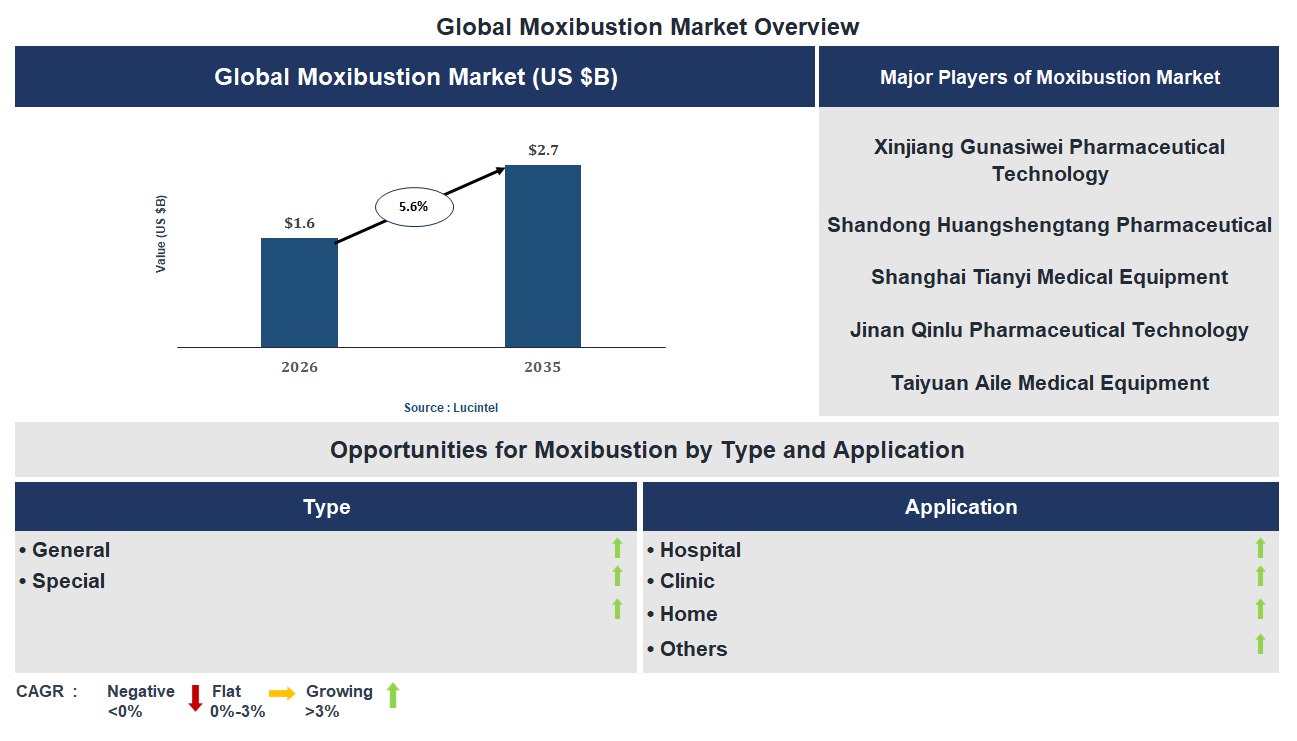
The future of the global moxibustion market looks promising with opportunities in the hospital, clinic, and home markets. The global moxibustion market is expected to reach an estimated $2.7 billion by 2035 with a CAGR of 5.6% from 2026 to 2035. The major drivers for this market are the increasing demand for alternative therapies, the rising awareness of traditional chinese medicine, and the growing adoption in pain management treatments.• Lucintel forecasts that, within the type category, special is expected to witness higher growth over the forecast period.
• Within the application category, home is expected to witness the highest growth.
• In terms of region, APAC is expected to witness the highest growth over the forecast period. Gain valuable insights for your business decisions with our comprehensive 150+ page report. Sample figures with some insights are shown below.
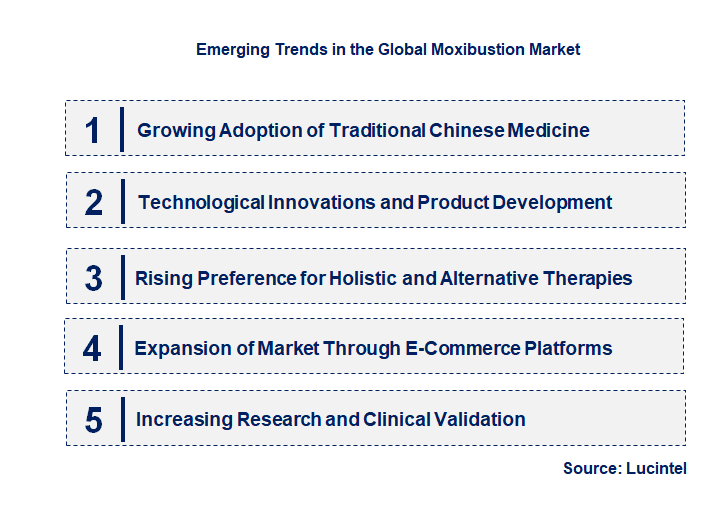
Emerging Trends in the Moxibustion Market
The moxibustion market is experiencing significant growth driven by increasing interest in traditional Chinese medicine, holistic health approaches, and the rising demand for alternative therapies worldwide. As consumers seek natural and non-invasive treatment options, the market is evolving with technological advancements, expanding applications, and a broader acceptance across different regions. These developments are not only expanding the market size but also enhancing the quality and accessibility of moxibustion therapies. Understanding these emerging trends is crucial for stakeholders aiming to capitalize on the markets potential and adapt to the changing healthcare landscape.• Growing Adoption of Traditional Chinese Medicine (TCM): The increasing global acceptance of TCM, including moxibustion, is driven by rising awareness of its health benefits and a shift towards natural remedies. Countries outside China, such as the U.S. and European nations, are integrating TCM into mainstream healthcare systems. This trend is supported by government initiatives promoting traditional medicine and the growing number of practitioners trained in TCM techniques. As a result, the market is expanding beyond its traditional boundaries, attracting a broader customer base seeking holistic and non-invasive treatment options.
• Technological Innovations and Product Development: Advances in technology are leading to the development of safer, more effective moxibustion devices. Innovations include smokeless moxibustion products, electronic moxibustion devices, and portable applicators that improve user safety and convenience. These innovations are making moxibustion more accessible to a wider audience, including home users and clinics. The integration of technology enhances treatment precision and reduces adverse effects, thereby increasing consumer confidence and expanding market reach.
• Rising Preference for Holistic and Alternative Therapies: Consumers are increasingly seeking holistic health solutions that address physical, emotional, and mental well-being. Moxibustion, as part of traditional Chinese medicine, aligns with this trend by offering natural pain relief, immune support, and stress reduction. The shift towards alternative therapies is driven by dissatisfaction with conventional medicine and a desire for personalized care. This trend is boosting demand for moxibustion in wellness centers, spas, and integrative health clinics, thereby broadening its application scope.
• Expansion of Market Through E-commerce Platforms: The proliferation of online retail channels is facilitating easier access to moxibustion products and related services. E-commerce platforms enable manufacturers and practitioners to reach a global audience, providing detailed product information, customer reviews, and convenient purchasing options. This trend is particularly significant in regions where traditional medicine is less accessible through brick-and-mortar stores. The digital shift is also fostering educational initiatives, increasing awareness, and driving market growth through direct-to-consumer sales.
• Increasing Research and Clinical Validation: Growing scientific research and clinical trials are providing evidence of moxibustion’s efficacy, safety, and mechanisms of action. This validation is crucial for gaining acceptance among healthcare professionals and regulatory bodies. As more studies are published, the credibility of moxibustion increases, encouraging integration into mainstream healthcare practices. This trend is also attracting investment in product development and training programs, further fueling market expansion and innovation. These trends are collectively reshaping the moxibustion market by enhancing product innovation, expanding geographical reach, and increasing consumer and professional acceptance. The market is becoming more sophisticated, accessible, and evidence-based, positioning moxibustion as a prominent component of holistic healthcare solutions worldwide.
Recent Development in the Moxibustion Market
The moxibustion market is experiencing significant growth driven by increasing awareness of traditional therapies, rising demand for holistic health solutions, and expanding research validating its benefits. As consumers seek alternative medicine options, the market is witnessing innovations and broader acceptance across healthcare sectors. This evolving landscape presents numerous opportunities for industry players to expand their reach, improve product offerings, and integrate moxibustion into mainstream wellness practices, ultimately transforming the traditional therapy into a globally recognized health solution.• Growing Awareness and Acceptance: The increasing recognition of moxibustion’s health benefits is expanding its consumer base. As more people seek natural and holistic treatments, demand for moxibustion rises, encouraging healthcare providers to incorporate it into treatment plans. This trend is supported by educational campaigns and scientific research, which validate its efficacy. The growing acceptance is also fostering new markets in wellness centers and integrative medicine clinics, boosting overall market growth and encouraging innovation in product development.
• Technological Innovations in Moxibustion Devices: Advances in technology are leading to safer, more efficient moxibustion devices, such as electric moxibustion sticks and heat therapy tools. These innovations improve user safety, ease of use, and treatment precision, making moxibustion more accessible to a broader audience. The development of portable and user-friendly devices is also enabling home-based treatments, expanding market reach. These technological improvements are attracting new demographics and increasing adoption rates across healthcare settings.
• Increasing Research and Clinical Validation: Growing scientific research and clinical trials are providing evidence of moxibustion’s therapeutic benefits, such as pain relief and immune system enhancement. This validation is crucial for gaining acceptance among healthcare professionals and regulatory bodies. As research continues to demonstrate its efficacy, more hospitals and clinics are integrating moxibustion into their treatment protocols. This trend is fostering credibility, encouraging insurance coverage, and opening new opportunities for market expansion and product innovation.
• Expansion into Global Markets: The market is witnessing rapid expansion into emerging economies and regions with traditional medicine practices. Countries in Asia, Europe, and North America are increasingly adopting moxibustion as part of integrative health approaches. This globalization is driven by rising health consciousness and the desire for natural therapies. Market players are establishing distribution channels and partnerships to penetrate these regions, which significantly boosts sales and diversifies revenue streams, ultimately contributing to the global recognition of moxibustion.
• Integration with Complementary Therapies: Moxibustion is increasingly being combined with other holistic treatments like acupuncture, herbal medicine, and physiotherapy. This integrated approach enhances therapeutic outcomes and appeals to consumers seeking comprehensive wellness solutions. The synergy between therapies is also encouraging practitioners to adopt multi-modal treatment plans, expanding the scope of moxibustion applications. This trend is fostering innovation, increasing market size, and positioning moxibustion as a vital component of integrative healthcare practices. These developments are significantly transforming the moxibustion market by broadening its acceptance, enhancing product innovation, and expanding global reach. Increased scientific validation and technological advancements are making treatments safer and more accessible, while market expansion into new regions is driving growth. The integration with other therapies is positioning moxibustion as a key element in holistic health approaches. Overall, these opportunities are propelling the market toward sustained growth and mainstream recognition.
Strategic Growth Opportunities in the Moxibustion Market
The moxibustion market is experiencing significant growth driven by increasing awareness of traditional medicine, rising demand for alternative therapies, and expanding applications in healthcare. Innovations in delivery methods and growing acceptance in Western countries further contribute to market expansion. As consumers seek holistic and natural treatment options, the market presents numerous opportunities for development across various regions and applications, promising substantial revenue growth and increased adoption of moxibustion therapies worldwide.• Expansion of Moxibustion in Integrative Healthcare Settings: The integration of moxibustion into mainstream healthcare is a key growth opportunity. Hospitals and clinics are increasingly adopting traditional therapies to complement conventional treatments, especially for pain management and chronic conditions. This trend is driven by rising patient interest in holistic approaches and evidence supporting efficacy. Developing standardized protocols and training healthcare professionals will facilitate broader acceptance, ultimately expanding market reach and fostering collaboration between traditional and modern medicine practitioners.
• Development of Innovative Delivery Devices for Moxibustion: Advancements in device technology are creating new avenues for market growth. Portable, safer, and user-friendly moxibustion devices are being developed to replace traditional methods involving open flames. These innovations improve safety, convenience, and accessibility, encouraging home use and self-treatment. Investment in research and development of such devices will cater to a broader consumer base, including those hesitant to try traditional methods, thereby expanding the market and increasing product adoption.
• Growing Adoption in Wellness and Spa Industries: The wellness and spa sectors are increasingly incorporating moxibustion as part of holistic health and relaxation services. Its perceived benefits for stress relief, detoxification, and overall well-being are attracting health-conscious consumers. Spa chains and wellness centers are offering moxibustion treatments to diversify their service portfolios. This trend opens new revenue streams, promotes awareness, and drives demand among a broader demographic seeking natural and alternative therapies for health maintenance and relaxation.
• Rising Use of Moxibustion for Pain Management and Chronic Conditions: The application of moxibustion for pain relief, arthritis, and other chronic ailments is a significant growth driver. As patients seek alternatives to pharmaceuticals, moxibustion offers a non-invasive, natural option with minimal side effects. Increasing clinical research and positive patient outcomes are boosting credibility and adoption. Expanding practitioner training and awareness campaigns will further enhance its use, positioning moxibustion as a mainstream complementary therapy for managing persistent health issues.
• Increasing Market Penetration in Emerging Economies: Emerging economies present substantial growth potential due to rising healthcare awareness and traditional medicine acceptance. Governments and the private sectors are investing in traditional therapy infrastructure, promoting moxibustion through health tourism and wellness initiatives. Local manufacturing and affordable product options will facilitate market entry and expansion. As awareness and acceptance grow, these regions are poised to become significant contributors to global market growth, driven by increasing demand for natural, cost-effective healthcare solutions. These growth opportunities are poised to significantly influence the moxibustion market by expanding its applications, improving product innovation, and increasing global acceptance. The market’s evolution will be driven by technological advancements, integration into mainstream healthcare, and rising consumer interest in natural therapies. Collectively, these factors will foster sustained growth, diversification, and increased market share for moxibustion worldwide.
Moxibustion Market Driver and Challenges
The moxibustion market is influenced by a variety of technological, economic, and regulatory factors that shape its growth trajectory. Advances in traditional medicine integration, increasing consumer awareness, and supportive government policies are key drivers. However, challenges such as regulatory hurdles, lack of standardized practices, and limited scientific validation pose significant obstacles. Understanding these drivers and challenges is essential for stakeholders aiming to capitalize on market opportunities and address potential risks effectively. The factors responsible for driving the moxibustion market include:-• Growing Acceptance of Traditional Medicine: Increasing global acceptance of traditional Chinese medicine, including moxibustion, is a major driver. Consumers are seeking natural, holistic treatment options for various ailments, which boosts demand. This trend is supported by rising awareness of alternative therapies and their perceived safety and efficacy. Additionally, integration of moxibustion into mainstream healthcare systems in some regions enhances its credibility and accessibility, further fueling market growth.
• Technological Advancements and Innovation: Innovations in moxibustion devices, such as safer, more efficient delivery systems, are expanding their usability. Development of portable, user-friendly products allows for home-based treatments, increasing consumer convenience. Moreover, research and development efforts are improving the understanding of moxibustion’s mechanisms, leading to enhanced product offerings and broader application scopes, which attract a wider customer base.
• Increasing Healthcare Expenditure and Wellness Focus: Rising healthcare spending worldwide and a growing emphasis on wellness and preventive care are significant drivers. Consumers are investing more in complementary therapies like moxibustion to manage chronic conditions, reduce medication dependency, and improve overall health. This trend is particularly prominent in developed economies, where healthcare budgets support alternative medicine practices, thereby expanding market opportunities.
• Supportive Regulatory Environment and Government Initiatives: Favorable policies and regulations in certain countries promote the use of traditional medicine, including moxibustion. Governments are funding research, establishing standards, and integrating traditional therapies into public health programs. Such initiatives enhance legitimacy, safety, and awareness, encouraging practitioners and consumers to adopt moxibustion, which in turn propels market growth. The challenges in the moxibustion market are:
• Regulatory and Standardization Challenges: Lack of uniform standards and regulatory frameworks across regions hampers market growth. Variability in safety regulations, quality control, and practitioner certification creates uncertainty for manufacturers and consumers. This inconsistency can lead to safety concerns, legal issues, and limited acceptance in mainstream healthcare, restricting market expansion.
• Limited Scientific Validation and Clinical Evidence: Despite traditional use, scientific validation of moxibustion’s efficacy remains limited. The absence of extensive clinical trials and standardized research impedes acceptance among healthcare professionals and insurance providers. This skepticism affects market credibility and restricts integration into conventional treatment protocols, posing a significant barrier to broader adoption.
• Cultural and Knowledge Barriers: In some regions, a lack of awareness or cultural resistance to traditional therapies like moxibustion limits market penetration. Misconceptions about safety, efficacy, and cultural preferences for Western medicine hinder consumer acceptance. Overcoming these barriers requires extensive education and awareness campaigns, which can be resource-intensive and slow to produce results. The moxibustion market is driven by increasing acceptance of traditional medicine, technological innovations, rising healthcare expenditure, and supportive policies. However, regulatory inconsistencies, limited scientific evidence, and cultural barriers pose notable challenges. These factors collectively influence the market’s growth potential, requiring strategic efforts to enhance credibility, standardization, and consumer awareness. Addressing these challenges while leveraging drivers can facilitate sustainable expansion and wider adoption of moxibustion therapies globally.
List of Moxibustion Companies
Companies in the market compete on the basis of product quality offered. Major players in this market focus on expanding their manufacturing facilities, R&D investments, infrastructural development, and leverage integration opportunities across the value chain. With these strategies moxibustion companies cater increasing demand, ensure competitive effectiveness, develop innovative products & technologies, reduce production costs, and expand their customer base. Some of the moxibustion companies profiled in this report include-• Xinjiang Gunasiwei Pharmaceutical Technology
• Shandong Huangshengtang Pharmaceutical
• Shanghai Tianyi Medical Equipment
• Jinan Qinlu Pharmaceutical Technology
• Taiyuan Aile Medical Equipment
• Jiangsu Aize Biotechnology
• Jinan Kangmin Pharmaceutica
Moxibustion Market by Segment
The study includes a forecast for the global moxibustion market by type, application, and region.Moxibustion Market by Type [Value from 2019 to 2035]:
• General
• Special
Moxibustion Market by Application [Value from 2019 to 2035]:
• Hospital
• Clinic
• Home
• Others
Moxibustion Market by Region [Value from 2019 to 2035]:
• North America
• Europe
• Asia Pacific
• The Rest of the World
Country Wise Outlook for the Moxibustion Market
The moxibustion market has experienced notable growth and innovation across various regions, driven by increasing interest in traditional medicine, rising healthcare awareness, and expanding research initiatives. Countries are integrating modern technology with traditional practices, leading to enhanced product development and wider adoption. Regulatory frameworks are evolving to accommodate these changes, fostering a more structured market environment. Consumer preferences are shifting towards natural and holistic health solutions, further boosting demand. This global trend reflects a broader acceptance of complementary and alternative medicine, with regional differences influencing market dynamics. The following summarizes recent developments in the United States, China, Germany, India, and Japan.• United States: The US market for moxibustion is witnessing increased acceptance within integrative healthcare settings. Several clinics and practitioners are incorporating moxibustion into treatment plans for pain management and wellness. Research institutions are conducting clinical trials to validate efficacy, leading to greater credibility. Regulatory agencies are beginning to recognize traditional therapies, facilitating product approvals. Additionally, online platforms and wellness centers are expanding access, making moxibustion more popular among health-conscious consumers seeking natural alternatives. Overall, the US market is moving towards mainstream integration with a focus on scientific validation.
• China: As the birthplace of moxibustion, China continues to lead in market expansion and innovation. The government is actively promoting traditional medicine, including moxibustion, through policies and funding for research. New product formulations, such as smokeless and standardized moxibustion devices, are being developed to improve safety and convenience. The domestic market remains robust, with increasing adoption in hospitals and clinics. Export opportunities are also growing, driven by international interest in traditional Chinese medicine. Digital platforms are facilitating education and distribution, further strengthening Chinas dominant position in this sector.
• Germany: Germanys market for moxibustion is expanding within the context of holistic health and alternative medicine. The country has seen a rise in certified practitioners offering moxibustion as part of complementary therapy packages. Regulatory frameworks are well-established, ensuring product safety and quality standards. Innovative devices, including portable and electronic moxibustion tools, are gaining popularity. Germanys emphasis on scientific research is fostering collaborations between traditional practitioners and medical researchers, leading to more evidence-based applications. The market is characterized by a blend of traditional practices and modern technology, appealing to health-conscious consumers seeking natural therapies.
• India: The Indian market is experiencing rapid growth driven by increasing awareness of traditional medicine systems like Ayurveda and alternative therapies. Moxibustion is gaining recognition as a complementary treatment for various ailments, especially in urban centers. Local manufacturers are developing affordable, herbal-based moxibustion products tailored to regional preferences. Government initiatives promoting traditional medicine are supporting market expansion. Additionally, rising wellness tourism and the integration of moxibustion into holistic health clinics are contributing to market growth. The focus remains on combining traditional practices with modern healthcare to meet the rising demand for natural healing methods.
• Japan: Japan continues to emphasize the integration of traditional medicine with modern healthcare. Moxibustion is widely practiced in clinics and wellness centers, often combined with acupuncture. Recent developments include the introduction of standardized, safety-certified moxibustion devices and products. Research efforts are focused on scientifically validating traditional claims, leading to increased acceptance among healthcare professionals. The government supports traditional medicine through regulations and funding for research projects. Consumer interest in natural and holistic health solutions remains high, fostering a steady market growth. Japans approach balances tradition with innovation, ensuring the continued relevance of moxibustion in contemporary healthcare.

Features of the Global Moxibustion Market
Market Size Estimates: Moxibustion market size estimation in terms of value ($B). Trend and Forecast Analysis: Market trends (2019 to 2025) and forecast (2026 to 2035) by various segments and regions. Segmentation Analysis: Moxibustion market size by type, application, and region in terms of value ($B). Regional Analysis: Moxibustion market breakdown by North America, Europe, Asia Pacific, and Rest of the World. Growth Opportunities: Analysis of growth opportunities in different types, applications, and regions for the moxibustion market. Strategic Analysis: This includes M&A, new product development, and competitive landscape of the moxibustion market. Analysis of competitive intensity of the industry based on Porter’s Five Forces model.
FAQ
Q1. What is the market size and growth forecast for moxibustion market? Answer: The global moxibustion market is expected to reach an estimated $2.7 billion by 2035 and grow with a CAGR of 5.6% from 2026 to 2035. Q2. What are the major drivers influencing the growth of the moxibustion market? Answer: The major drivers for this market are the increasing demand for alternative therapies, the rising awareness of traditional chinese medicine, and the growing adoption in pain management treatments. Q3. What are the major segments for moxibustion market? Answer: The future of the moxibustion market looks promising with opportunities in the hospital, clinic, and home markets. Q4. Who are the key moxibustion market companies? Answer: Some of the key moxibustion companies are as follows:• Xinjiang Gunasiwei Pharmaceutical Technology
• Shandong Huangshengtang Pharmaceutical
• Shanghai Tianyi Medical Equipment
• Jinan Qinlu Pharmaceutical Technology
• Taiyuan Aile Medical Equipment
• Jiangsu Aize Biotechnology
• Jinan Kangmin Pharmaceutical Technology
• Chizhou Fuaitang Biotechnology
• Shandong Century Pharmaceutical Technology
• Jiangsu Huajiu Biotechnology Q5. Which moxibustion market segment will be the largest in future? Answer: Lucintel forecasts that, within the type category, special is expected to witness higher growth over the forecast period. Q6. In moxibustion market, which region is expected to be the largest in next 5 years? Answer: In terms of region, APAC is expected to witness the highest growth over the forecast period. Q7. Do we receive customization in this report? Answer: Yes, Lucintel provides 10% customization without any additional cost.
Table of Contents
List of Figures
List of Tables
Methodology
- In-depth interviews of the major players in this market
- Detailed secondary research from competitors’ financial statements and published data
- Extensive searches of published works, market, and database information pertaining to industry news, company press releases, and customer intentions
- A compilation of the experiences, judgments, and insights of Lucintel’s professionals, who have analyzed and tracked this market over the years.


Buy Now
Choose a license that fits your team. Instant PDF delivery.
Prices exclude taxes. Instant delivery. Custom licensing available on request.
Key Questions
- • What are some of the most promising, high-growth opportunities for the moxibustion market by type (general and special), application (hospital, clinic, home, and others), and region (North America, Europe, Asia Pacific, and the Rest of the World)?
- • Which segments will grow at a faster pace and why?
- • Which region will grow at a faster pace and why?
- • What are the key factors affecting market dynamics? What are the key challenges and business risks in this market?
- • What are the business risks and competitive threats in this market?
- • What are the emerging trends in this market and the reasons behind them?
- • What are some of the changing demands of customers in the market?
- • What are the new developments in the market? Which companies are leading these developments?
- • Who are the major players in this market? What strategic initiatives are key players pursuing for business growth?
- • What are some of the competing products in this market and how big of a threat do they pose for loss of market share by material or product substitution?
- • What M&A activity has occurred in the last 7 years and what has its impact been on the industry? For any questions related to Moxibustion Market, Moxibustion Market Size, Moxibustion Market Growth, Moxibustion Market Analysis, Moxibustion Market Report, Moxibustion Market Share, Moxibustion Market Trends, Moxibustion Market Forecast, Moxibustion Companies, write Lucintel analyst at email: helpdesk@lucintel.com. We will be glad to get back to you soon.


