
Market Report · July 31, 2026

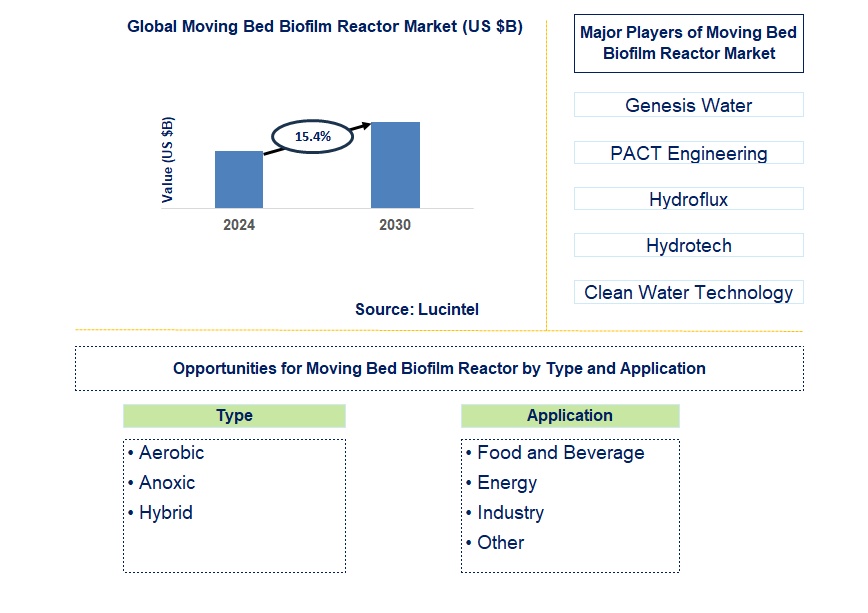
Key data points: The growth forecast = 15.4% annually for the next 6 years. Scroll below to get more insights. This market report covers trends, opportunities, and forecasts in the global moving bed biofilm reactor market to 2030 by type (aerobic, anoxic, and hybrid), application (food and beverage, energy, industry, and other), and region (North America, Europe, Asia Pacific, and the Rest of the World)
We'll send your sample report shortly.
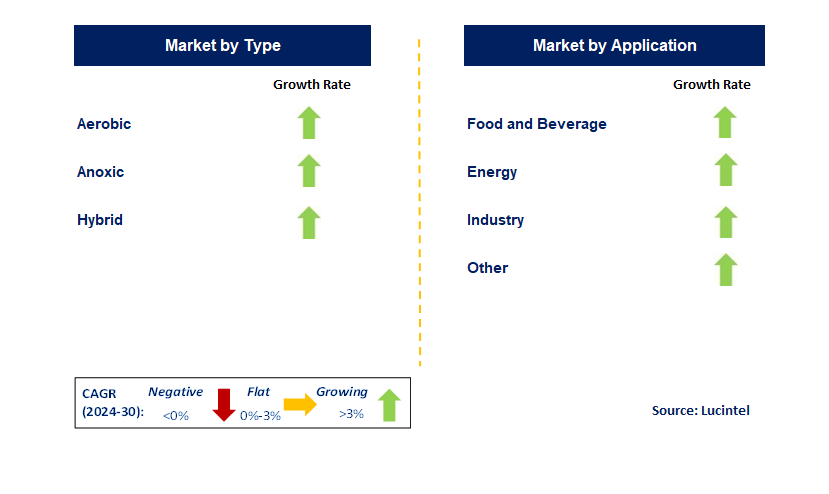
• Lucintel forecasts that, within the type category, aerobic is expected to witness a higher growth over the forecast period.
• Within this application category, food and beverage will remain the largest segment.
• In terms of regions, North America is expected to witness the highest growth over the forecast period. A more than 150-page report is developed to help in your business decisions.
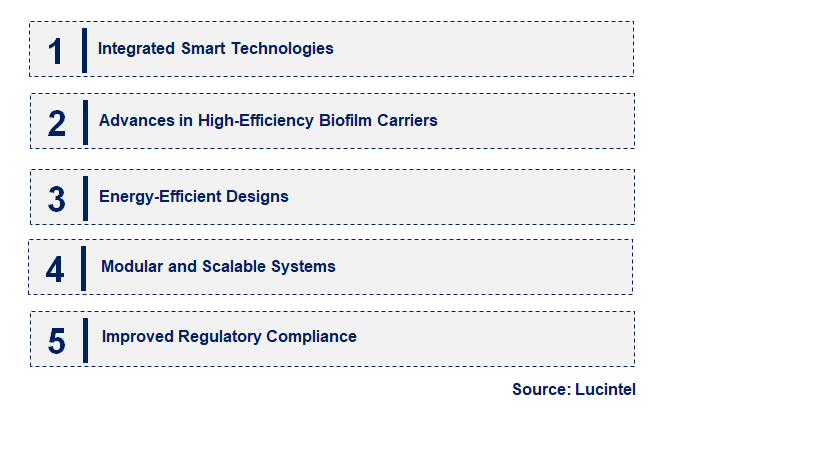
• Integrated Smart Technologies: The integration of smart technologies like IoT and data analytics provides moving bed biofilm reactor systems with better performance and management. With these technologies, some benefits include real-time monitoring and predictive maintenance, which help optimize reactor performance, improve system reliability, and reduce operational costs.
• Advances in High-Efficiency Biofilm Carriers: Improvements in moving bed biofilm reactor efficiency are being achieved through advancements in biofilm carrier materials and designs. High-efficiency carriers provide large surface areas for microbial growth, which directly improves treatment efficiency and reduces footprint. This trend is moving towards a more compact and efficient wastewater treatment solution.
• Energy-Efficient Designs: There is a growing interest in energy-efficient designs of moving bed biofilm reactors that lead to low operational costs and reduced environmental impact. Innovations include reactor design and aeration systems that promise to lower energy consumption while achieving high performance in treatment.
• Modular and Scalable Systems: Modular and scalable moving bed biofilm reactor systems offer flexible and cost-effective wastewater treatment solutions. These systems can be easily extended or reconfigured to meet increasing or changing treatment needs.
• Improved Regulatory Compliance: Stricter environmental discharge regulations are enforcing pressure on the development of moving bed biofilm reactor technologies that ensure compliance. Innovations that enhance treatment performance and capacity for stricter monitoring provide better support to organizations in maintaining and sustaining environmental regulations. The moving bed biofilm reactor market is witnessing notable emerging trends driven by advancements in environmental technology and increasing demands for efficient wastewater treatment. Innovations such as enhanced biofilm carriers and optimized reactor designs are improving treatment efficiency and operational stability. The growing focus on sustainable and energy-efficient wastewater management solutions is accelerating the adoption of moving bed biofilm reactor systems, particularly in industrial and municipal applications. Additionally, the integration of real-time monitoring and automation technologies enables more precise control and optimization of treatment processes. These trends reflect a broader movement towards more effective, scalable, and eco-friendly solutions in wastewater treatment, positioning the moving bed biofilm reactor market for continued growth and innovation.
• Intelligent monitoring systems: The inclusion of intelligent monitoring systems, particularly IoT and data analytics, is redefining moving bed biofilm reactor. The ability to monitor and analyze the performance of moving bed biofilm reactor in real time, along with predictive maintenance and optimization, improves overall efficiency while saving costs.
• High-performance biofilm carriers: Advancements in materials and designs of biofilm carriers have enhanced the efficiency of moving bed biofilm reactor systems. Higher effectiveness in treatment performance with smaller reactor sizes is achievable through advanced carriers that increase the surface area for microbial development.
• Energy-efficient reactor designs: Recent reactor designs focus on energy efficiency, including newer aeration systems and designs, such as those offered by GE Water Technologies, that have significantly reduced energy consumption while retaining high effectiveness in treatment, resulting in lower operational costs and energy use.
• Modular moving bed biofilm reactor systems: The development of modular systems provides flexibility and scalability in wastewater treatment. Modular moving bed biofilm reactor systems can be easily adapted to various treatment requirements and can therefore be applied across multiple fields, leading to cost-effective solutions.
• Advanced regulatory compliance: moving bed biofilm reactor technology is being developed to meet stringent environmental regulations. New designs and innovations are targeting enhancements in performance and advanced levels of monitoring to align with discharge standards. Recent developments in the moving bed biofilm reactor (moving bed biofilm reactor) market highlight significant advancements in technology and application. Innovations such as improved biofilm carrier materials and more efficient reactor designs are enhancing treatment performance and operational reliability. The integration of advanced monitoring and control systems is enabling more precise management of wastewater treatment processes, resulting in better outcomes and energy savings. Additionally, growing environmental regulations and a push for sustainable practices are driving increased adoption of moving bed biofilm reactor systems in both municipal and industrial settings. These developments indicate a strong trend toward more effective, scalable, and eco-friendly wastewater treatment solutions, reflecting the market's adaptability and growth potential.
• Growth in Smart Technologies: The growth in smart technologies offers one of the best developments as an opportunity in the advancement of advanced moving bed biofilm reactor systems. The use of IoT, data analytics, and real-time monitoring can enhance system performance, lower operational costs, and provide effective wastewater treatment solutions.
• High-Performance Biofilm Carriers: There is tremendous scope in the development of high-performance biofilm carriers. Developments that enhance surface area and promote the growth of microorganisms can lead to efficient treatment and reactor sizes suitable for a wide range of applications, improving the overall efficiency of the system.
• Initiation of Energy-Efficiency Designs: While considering energy efficiency, the opportunity to develop low-energy-consuming moving bed biofilm reactor systems that do not compromise performance presents itself. Low-energy-consuming reactors and aeration systems improve productive efficiency while allowing facilities to meet sustainability objectives, making them quite attractive to several industries.
• Modular System Solutions: The modular and scalable moving bed biofilm reactor system has high growth potential due to its flexibility and can be configured based on specific treatment requirements. These systems are applicable for various purposes and help provide cost-effective solutions for diverse sectors.
• Increased Regulatory Compliance: The demand for moving bed biofilm reactor technologies is driven by stringent regulatory requirements. Innovations in improved performance and monitoring of treatment can help organizations meet environmental norms, leading to effective management and reduced environmental impact. The strategic growth of the moving bed biofilm reactor (moving bed biofilm reactor) market is being propelled by innovations in technology and increasing regulatory pressures for sustainable wastewater management. Advances such as enhanced biofilm carriers, more efficient reactor configurations, and the incorporation of real-time monitoring and automation are significantly improving treatment efficiency and operational cost-effectiveness. The rising demand for eco-friendly and energy-efficient solutions, combined with stringent environmental regulations, is driving broader adoption across municipal and industrial sectors. This growth trajectory underscores the moving bed biofilm reactor market's role in advancing wastewater treatment technologies, positioning it as a critical component in the pursuit of more sustainable and scalable environmental solutions.
• Technological Advances: Innovation in moving bed biofilm reactor technology, including smart monitoring systems, advanced biofilm carriers, and energy-efficient designs, is driving upscaling in the market by allowing better maintenance efficiency in treatment while maintaining low operating costs. Advances in performance are making moving bed biofilm reactors more appealing for wastewater treatment, making these markets particularly attractive to investors.
• Regulatory Compliance Requirements: More stringent environmental regulations are pushing for higher quality discharge standards and improved monitoring capabilities to treat and dispose of wastewater, which are compelling increasing demands for effective treatment solutions. Most of the moving bed biofilm reactor technologies developed in pursuit of high discharge standards and improved monitoring capabilities have provided greater growth opportunities in markets and their adoption.
• Sustainability Focus: Due to the increased emphasis on sustainability and environmental effects, moving bed biofilm reactor systems are in high demand, offering efficiency in energy consumption and minimizing the environmental footprint. This trend increases the possibility of developing sustainable wastewater treatment technologies.
• Urbanization and Industrialization: Increasing growth in urbanization and industrial activities leads to the expansion of urban areas and increased industrial activities in regions that require effective wastewater treatment. moving bed biofilm reactors offer very compact and effective management of increased volumes in rapidly growing and developing regions.
• Demand for Modular Solutions: The necessity for flexible and scalable wastewater treatment systems opens an opportunity to develop modular moving bed biofilm reactor designs that can be tailored to meet specific treatment requirements, thus providing cost-effective solutions for various applications. Challenges in the moving bed biofilm reactor market include:
• High Front-End Expenses: New moving bed biofilm reactor technologies are costlier in terms of initial investments, which is a significant barrier for adoption, especially in developing economies. This entails moderate market growth, as significant investments would be weighed against long-term advantages and cost savings.
• Integration Complexity: The integration of new moving bed biofilm reactor technologies involves complexity and resource intensity along with the existing wastewater treatment infrastructure. Organizations face issues with compatibility and management during the technological upgrade process.
• Maintenance and Operation Problems: Even though moving bed biofilm reactors have numerous advantages, the complexity of some advanced systems makes maintenance and operation quite difficult. Proper maintenance should optimize and manage the performance of the system to handle potential issues and maximize the benefits that come with moving bed biofilm reactor technologies. The moving bed biofilm reactor market is driven by a combination of factors and challenges based on technological advancements, regulatory requirements, and sustainability goals. Driving factors include technological innovations, rising regulatory requirements, and environmental concerns, which are boosting market growth. Other factors, such as high investment costs, complexity in integration, and maintenance problems, inhibit the growth of this market. By considering these factors, the opportunities and challenges in the moving bed biofilm reactor market can be understood, guiding the journey through this market and indicating where growth and development can be seen in wastewater treatment technologies.
• Genesis Water Technologies
• PACT Engineering
• Hydroflux
• Hydrotech
• Clean Water Technology
• H + E
• Flootech
• Aerobic
• Anoxic
• Hybrid
• Food and Beverage
• Energy
• Industry
• Other
• North America
• Europe
• Asia Pacific
• The Rest of the World
• United States: Advanced biofilm carrier technologies and intelligent monitoring systems have been recent trends in the moving bed biofilm reactor market in the U.S. The integration of IoT and data analytics is elevating reactor performance, including real-time monitoring and predictive maintenance. These innovations reduce operational costs for municipal and industrial applications while increasing efficiency.
• China: Major investments have been made in wastewater infrastructure, along with technological innovation. High-performance biofilm carriers and reactor designs that increase treatment capacity are among the latest developments. Another impetus is the government policies that increasingly favor modern water treatment solutions, leading to greater adoption of moving bed biofilm reactor s in urban and industrial sectors.
• Germany: Technological advancements in moving bed biofilm reactor technology in Germany continue to mature with a focus on reducing energy consumption and costs. New innovations include improved biofilm carrier materials and reactor configurations that enhance treatment efficiency. Hybrid designs combining moving bed biofilm reactor s with other technologies are increasingly used for complex wastewater problems under stringent European regulations.
• India: The moving bed biofilm reactor market in India is expanding as the country upgrades its wastewater treatment infrastructure. Key developments include the adoption of scalable and cost-effective moving bed biofilm reactor systems for both urban and rural applications. With improved government efforts to enhance water quality and sanitation, the adoption of moving bed biofilm reactor s for municipal and industrial wastewater is also increasing.
• Japan: There has been ongoing development of reactor technology in Japan, including new biofilm carrier designs and automatic control systems that enhance the efficiency and sustainability of operations. Environmental impacts, coupled with technological innovation, have driven advancements in high-end moving bed biofilm reactor systems for various wastewater treatment applications.


• Genesis Water Technologies
• PACT Engineering
• Hydroflux
• Hydrotech
• Clean Water Technology
• H + E
• Flootech Q5. Which moving bed biofilm reactor market segment will be the largest in future? Answer: Lucintel forecasts that aerobic is expected to witness higher growth over the forecast period. Q6. In moving bed biofilm reactor market, which region is expected to be the largest in next 5 years? Answer: North America is expected to witness highest growth over the forecast period. Q.7 Do we receive customization in this report? Answer: Yes, Lucintel provides 10% customization without any additional cost.


Choose a license that fits your team. Instant PDF delivery.
Prices exclude taxes. Instant delivery. Custom licensing available on request.
Market Report · July 31, 2026
Market Report · July 22, 2026
Market Report · July 20, 2026
Trusted partner for strategic intelligence and business growth


Receive a complimentary market analysis tailored to your industry. Our analysts will identify key growth opportunities and competitive dynamics specific to your business.

Market size, growth rate, and key trend analysis for your specific sector.

Top competitor positioning and market share analysis.

Strategic recommendations backed by data-driven insights.
Get curated market intelligence and competitive moves straight to your inbox.
By subscribing, you agree to receive our monthly insights. Unsubscribe anytime.
Receive a complimentary market analysis tailored to your industry. Our analysts will identify key growth opportunities and competitive dynamics specific to your business.
Market size, growth rate, and key trend analysis for your specific sector.
Top competitor positioning and market share analysis.
Strategic recommendations backed by data-driven insights.
Get curated market intelligence, emerging trends, and competitive moves straight to your inbox each month.
By subscribing, you agree to receive our monthly insights. Unsubscribe anytime.
We'll send your sample report shortly.