
Market Report · July 31, 2026

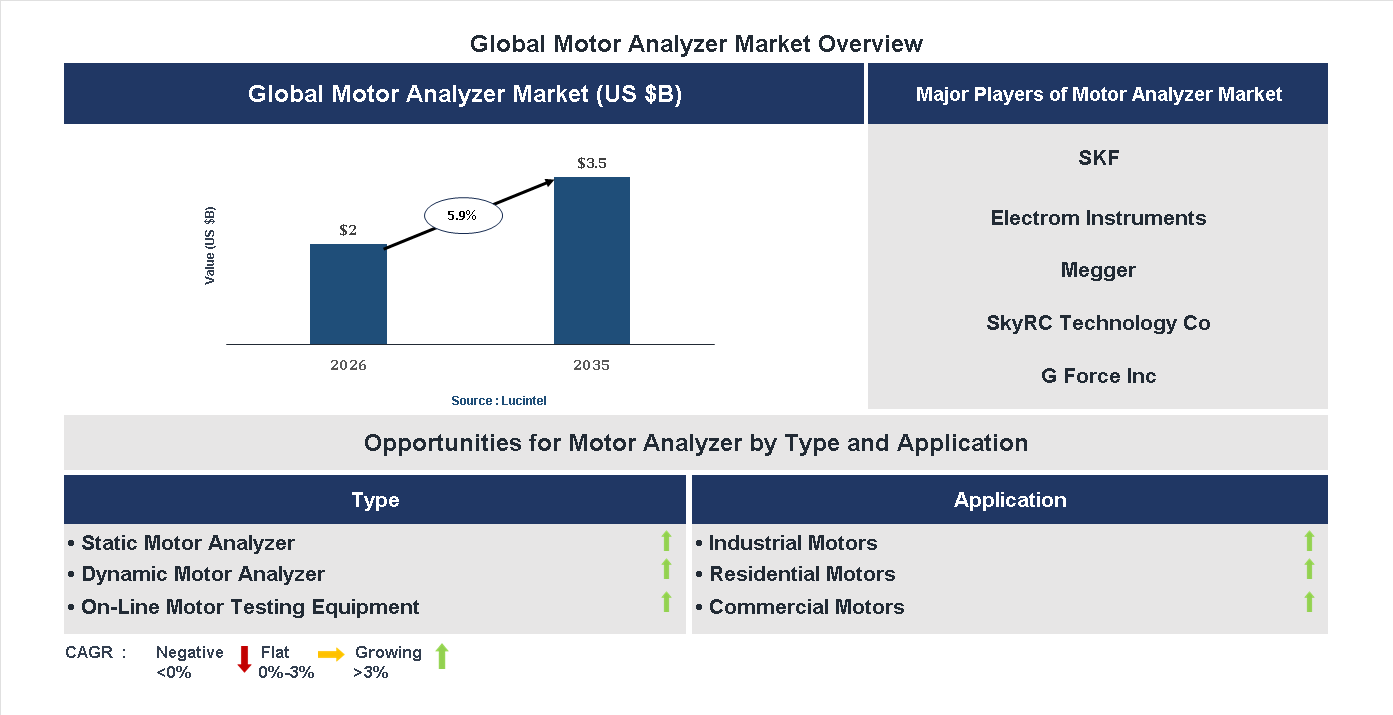
Key data points: The market size in 2035 = $3.5 billion, growth forecast = 5.9% annually for the next 8 years. Scroll below to get more insights. This market report covers trends, opportunities and forecasts in motor analyzer market to 2035 by type (static motor analyzer, dynamic motor analyzer, and on-line motor testing equipment), application (industrial motors, residential motors, and commercial motors), and region (North America, Europe, Asia Pacific, and the Rest of the World)
We'll send your sample report shortly.
• Lucintel forecasts that, within the type category, static motor analyzer is expected to witness the highest growth over the forecast period.
• Within the application category, industrial motor is expected to witness the highest growth.
• In terms of region, APAC is expected to witness the highest growth over the forecast period. Gain valuable insights for your business decisions with our comprehensive 150+ page report. Sample figures with some insights are shown below.
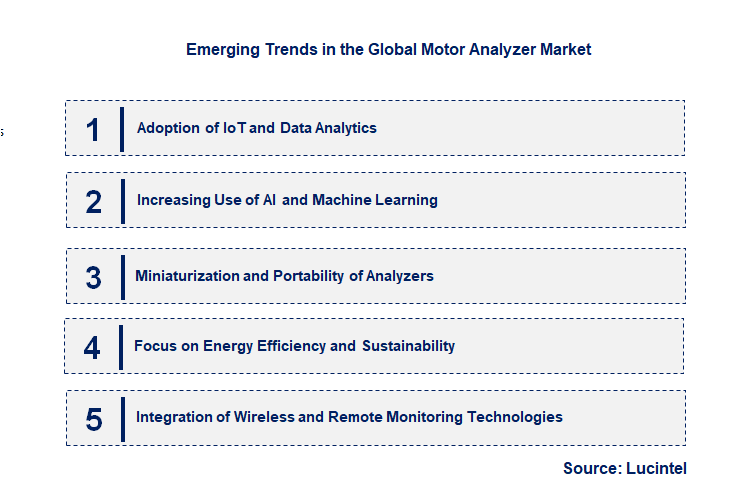
• Adoption of IoT and Data Analytics: The integration of Internet of Things (IoT) devices with motor analyzers allows for real-time data collection and analysis. This trend enhances predictive maintenance capabilities, reduces unexpected failures, and improves operational efficiency. Data analytics tools help interpret large volumes of data, providing actionable insights that optimize motor performance and lifespan. As connectivity becomes more affordable and widespread, industries increasingly rely on IoT-enabled analyzers for smarter, more proactive maintenance strategies.
• Increasing Use of AI and Machine Learning: Artificial Intelligence (AI) and machine learning algorithms are being incorporated into motor analyzers to improve diagnostic accuracy. These technologies enable the detection of subtle anomalies and patterns that might be missed by traditional methods. AI-driven analysis facilitates predictive maintenance, reduces false alarms, and shortens troubleshooting times. This trend is transforming motor analysis from reactive to proactive, leading to more reliable operations and significant cost savings across various industries.
• Miniaturization and Portability of Analyzers: Advances in sensor technology and electronics have led to smaller, more portable motor analyzers. These compact devices are easier to deploy in diverse environments, including hard-to-reach or hazardous locations. Portability enhances on-site diagnostics, reduces downtime, and allows for more frequent monitoring. This trend supports the growing demand for flexible, user-friendly tools that can deliver quick, accurate assessments without the need for extensive setup or specialized training.
• Focus on Energy Efficiency and Sustainability: Market players are emphasizing analyzers that help optimize motor energy consumption, aligning with global sustainability goals. Energy-efficient analyzers enable precise tuning and maintenance, reducing power wastage and extending motor life. This trend is driven by increasing regulatory pressures and corporate sustainability initiatives. As a result, the market is witnessing the development of eco-friendly, energy-conscious solutions that contribute to cost savings and environmental conservation.
• Integration of Wireless and Remote Monitoring Technologies: Wireless connectivity allows motor analyzers to transmit data remotely, facilitating continuous monitoring without physical presence. This trend supports remote diagnostics, real-time alerts, and centralized data management, which are crucial for large-scale or geographically dispersed operations. Wireless analyzers improve operational efficiency, reduce maintenance costs, and enable faster response times. The adoption of remote monitoring is particularly significant in industries where safety and uptime are critical, transforming traditional maintenance practices into more agile, data-driven processes. In summary, these emerging trends are fundamentally reshaping the motor analyzer market by making diagnostics more accurate, accessible, and efficient. The integration of digital technologies, AI, and wireless solutions is fostering a shift toward predictive, proactive maintenance strategies. This evolution not only enhances operational reliability and safety but also supports sustainability goals, ultimately driving growth and innovation in the industry.
• Growing Adoption of IoT-Enabled Motor Analyzers: The integration of IoT technology allows real-time data collection and remote monitoring, enhancing predictive maintenance capabilities. This development reduces downtime and maintenance costs, improving operational efficiency. Industries such as manufacturing, energy, and transportation benefit from increased equipment lifespan and minimized unexpected failures. The market is witnessing a surge in IoT-enabled solutions, driving innovation and competitive advantage for manufacturers and end-users alike.
• Advancements in AI and Machine Learning Algorithms: AI-powered motor analyzers now offer enhanced diagnostic accuracy and predictive analytics. These tools enable early fault detection and maintenance scheduling, preventing costly breakdowns. The impact includes increased reliability of motor systems, optimized maintenance schedules, and reduced operational costs. As AI integration deepens, the market is expected to see more sophisticated, user-friendly solutions that cater to complex industrial environments, fostering smarter maintenance practices.
• Development of Portable and Handheld Analyzers: The introduction of compact, easy-to-use analyzers allows on-the-spot diagnostics and quick assessments in various settings. This portability improves flexibility for field technicians, reduces downtime, and accelerates decision-making processes. The market benefits from increased accessibility to advanced analysis tools, especially in remote or hard-to-reach locations. This trend supports a broader adoption of motor analysis technology across small and large-scale operations.
• Increasing Focus on Energy Efficiency and Sustainability: Motor analyzers now incorporate features that help optimize energy consumption and reduce carbon footprints. These solutions enable industries to identify inefficiencies and implement corrective actions, aligning with global sustainability goals. The impact includes cost savings on energy bills and compliance with environmental regulations. As sustainability becomes a priority, the market is driven to develop eco-friendly, energy-efficient motor analysis tools that support corporate responsibility initiatives.
• Rising Demand for Predictive Maintenance Solutions: The shift from reactive to proactive maintenance strategies is fueling the adoption of advanced motor analyzers. These systems predict failures before they occur, minimizing unplanned outages and extending equipment lifespan. The market benefits from reduced maintenance costs and improved operational uptime. As industries recognize the value of predictive analytics, the market is expanding rapidly, encouraging innovation and integration of comprehensive maintenance platforms. These developments are significantly transforming the motor analyzer market by enhancing diagnostic accuracy, operational efficiency, and sustainability. The integration of IoT, AI, and portable solutions is enabling smarter, more accessible, and eco-friendly maintenance practices. As a result, industries are experiencing reduced costs, increased reliability, and improved safety standards. Overall, these innovations are propelling market growth and shaping the future landscape of motor analysis technology.
• Expansion into Industrial Automation and Manufacturing Sectors: Motor analyzers are increasingly integrated into industrial automation systems to monitor motor health, optimize performance, and prevent failures. The rising adoption of smart factories and Industry 4.0 initiatives drives demand for real-time diagnostics. Companies can leverage this trend by developing tailored solutions for manufacturing plants, enabling predictive maintenance, reducing operational costs, and enhancing overall productivity.
• Development of Portable and Wireless Motor Analyzers for Field Use: The demand for portable, easy-to-use motor analyzers is growing among maintenance teams and field engineers. Wireless connectivity and compact designs facilitate on-site diagnostics without disrupting operations. This opportunity allows manufacturers to target maintenance services, remote monitoring, and quick troubleshooting, expanding market reach. Innovations in battery life and data transmission will further boost adoption in diverse environments.
• Integration of AI and Machine Learning for Advanced Diagnostics: Incorporating AI and machine learning algorithms into motor analyzers enhances fault detection accuracy and predictive capabilities. These intelligent systems analyze vast data sets to identify subtle anomalies and forecast failures before they occur. This technological advancement offers a competitive edge, enabling proactive maintenance strategies, minimizing downtime, and reducing repair costs. Companies investing in AI-driven solutions can differentiate themselves and meet the increasing demand for sophisticated diagnostic tools.
• Focus on Energy Efficiency and Sustainability Solutions: As energy consumption and environmental concerns grow, motor analyzers that promote energy-efficient operations are gaining prominence. These tools help identify inefficiencies, optimize motor performance, and reduce power consumption. Market opportunities exist in developing eco-friendly, energy-saving diagnostic solutions that align with sustainability goals. Such innovations can attract environmentally conscious clients and comply with stricter regulations, fostering long-term growth in the market.
• Expansion into Emerging Markets with Growing Industrial Base: Rapid industrialization in regions like Asia-Pacific and Latin America presents significant growth prospects for motor analyzers. Increasing infrastructure projects, manufacturing activities, and energy sector developments create a demand for reliable motor diagnostics. Companies can capitalize on this by establishing local partnerships, customizing solutions for regional needs, and offering cost-effective products. This expansion will diversify revenue streams and accelerate global market penetration. These strategic growth opportunities are poised to significantly influence the motor analyzer market by fostering innovation, expanding applications, and entering new geographical regions. Embracing these trends will enable market players to enhance their competitive positioning, meet evolving customer demands, and sustain long-term growth in a dynamic industry landscape.
• Technological Innovation: The rapid development of sensor technologies, IoT integration, and data analytics has revolutionized motor analysis. These innovations enable real-time monitoring, predictive maintenance, and enhanced diagnostic capabilities, reducing downtime and operational costs. As industries increasingly adopt automation and smart systems, the demand for advanced motor analyzers grows. The integration of AI and machine learning further enhances predictive accuracy, making motor analyzers indispensable tools for maintenance and performance optimization. This technological evolution is expected to continue, fostering market growth and opening new application avenues.
• Growing Industrial Automation: The surge in industrial automation across manufacturing, energy, and transportation sectors is a significant driver. Automated systems require reliable motor performance, and motor analyzers are critical for ensuring operational efficiency and safety. As industries aim for higher productivity and reduced maintenance costs, the adoption of motor analyzers becomes essential. The expansion of smart factories and Industry 4.0 initiatives accelerates this trend, leading to increased demand for sophisticated diagnostic tools that can seamlessly integrate into automated workflows.
• Increasing Focus on Preventive Maintenance: The shift from reactive to preventive maintenance practices is a key factor fueling market growth. Motor analyzers enable early detection of faults and inefficiencies, preventing costly breakdowns and extending equipment lifespan. This proactive approach reduces downtime and maintenance expenses, making it attractive for industries seeking operational excellence. As companies recognize the financial and safety benefits of preventive maintenance, the adoption of motor analyzers is expected to rise, especially in critical infrastructure and high-value manufacturing sectors.
• Regulatory and Safety Standards: Stringent regulations related to safety, emissions, and equipment reliability are compelling industries to adopt motor analyzers. Compliance with standards such as ISO, OSHA, and environmental regulations necessitates regular motor condition assessments. Motor analyzers help ensure compliance by providing accurate diagnostics and documentation, thereby avoiding penalties and enhancing safety. The evolving regulatory landscape encourages manufacturers and operators to invest in advanced diagnostic tools, fostering market growth and technological advancements.
• Rising Adoption of Predictive Maintenance: The increasing emphasis on predictive maintenance driven by Industry 4.0 and IoT connectivity is a major growth catalyst. Motor analyzers facilitate continuous monitoring and data collection, enabling predictive analytics that forecast failures before they occur. This approach minimizes unplanned downtime, optimizes maintenance schedules, and reduces operational costs. As digital transformation accelerates across industries, the integration of motor analyzers into comprehensive asset management systems is expected to expand, further propelling market growth. The challenges facing this Market include:
• High Initial Investment Costs: Implementing advanced motor analyzers often requires substantial capital expenditure, including equipment purchase, installation, and staff training. Small and medium-sized enterprises may find these costs prohibitive, limiting widespread adoption. Additionally, the return on investment can be long-term, which may deter some organizations from upgrading existing systems. This financial barrier hampers market penetration, especially in developing regions where budget constraints are more pronounced.
• Technological Complexity and Skill Gap: The sophisticated nature of modern motor analyzers demands specialized knowledge for operation, maintenance, and data interpretation. A significant skill gap exists among technicians and engineers, which can lead to improper usage and inaccurate diagnostics. The complexity of integrating analyzers with existing systems also poses challenges, requiring extensive technical expertise. Addressing this gap through training and user-friendly interfaces is essential but can be resource-intensive, potentially slowing market growth.
• Regulatory and Standardization Challenges: Rapid technological advancements often outpace the development of standardized regulations and guidelines. Variability in standards across regions can create compliance complexities for manufacturers and users. Ensuring compatibility and interoperability among different systems and devices remains a challenge, potentially leading to increased costs and delays. Navigating diverse regulatory environments requires significant effort and adaptation, which can hinder the deployment of motor analyzers in certain markets. The motor analyzer market is driven by technological advancements, industrial automation, preventive maintenance focus, regulatory standards, and predictive analytics adoption. However, high costs, technological complexity, and regulatory hurdles present notable challenges. These factors collectively influence the pace and scope of market growth. While opportunities for innovation and expansion are substantial, addressing the barriers is crucial for broader adoption and sustained development. The market's evolution will depend on how effectively stakeholders can leverage technological benefits while overcoming these challenges.
• SKF
• Electrom Instruments
• Megger
• SkyRC Technology Co
• G Force Inc
• SCHLEICH
• PdMA
• Static Motor Analyzer
• Dynamic Motor Analyzer
• On-Line Motor Testing Equipment
• Industrial Motors
• Residential Motors
• Commercial Motors
• North America
• Europe
• Asia Pacific
• The Rest of the World
• United States: The United States leads the motor analyzer market with extensive adoption in manufacturing, energy, and automotive sectors. Innovations in IoT-enabled analyzers and AI-driven diagnostics are prominent, enhancing predictive maintenance capabilities. The U.S. government’s focus on infrastructure modernization and industrial automation further boosts market growth. Major companies are investing in R&D to develop advanced, user-friendly motor analyzers, and there is a rising trend of integrating these systems with cloud platforms for real-time data analysis.
• China: China is experiencing rapid growth in the motor analyzer market, driven by its expanding manufacturing and industrial sectors. The country is focusing on automation and smart manufacturing, which increases demand for sophisticated diagnostic tools. Local companies are increasingly adopting advanced motor analyzers to improve efficiency and reduce operational costs. Government initiatives promoting Industry 4.0 and smart factories are also fueling market expansion. Additionally, China is investing heavily in R&D to develop cost-effective and innovative solutions tailored to its industrial needs.
• Germany: Germany remains a key player in the motor analyzer market, primarily due to its strong automotive and machinery industries. The country emphasizes high-precision diagnostics and energy-efficient solutions. German companies are integrating motor analyzers with Industry 4.0 frameworks, enabling predictive maintenance and reducing downtime. The focus on sustainability and energy conservation is driving the development of eco-friendly and highly accurate analyzers. Moreover, Germany’s robust R&D infrastructure supports continuous innovation in motor analysis technologies.
• India: India’s motor analyzer market is witnessing rapid growth, fueled by increasing industrialization and infrastructure development. The adoption of automation and smart manufacturing practices is rising, with a focus on cost-effective and reliable diagnostic tools. Local manufacturers are expanding their product portfolios to include advanced analyzers suitable for diverse industrial applications. Government initiatives aimed at Make in India and digital transformation are further propelling market growth. The demand for predictive maintenance solutions is increasing, especially in sectors like power, cement, and textiles, contributing to the market’s expansion.
• Japan: Japan’s market is characterized by high technological adoption and a focus on quality and precision. The country’s automotive, electronics, and manufacturing sectors are key drivers of demand for advanced motor analyzers. Japanese companies are investing in AI and IoT integration to enhance diagnostic accuracy and operational efficiency. The emphasis on energy conservation and sustainability is leading to the development of eco-friendly analyzers. Additionally, Japan’s strong R&D ecosystem supports continuous innovation, making it a significant player in the global motor analyzer market.


• SKF
• Electrom Instruments
• Megger
• SkyRC Technology Co
• G Force Inc
• SCHLEICH
• PdMA Q6. Which motor analyzer market segment will be the largest in future? Answer: Lucintel forecasts that, within the type category, static motor analyzer is expected to witness the highest growth over the forecast period. Q7. In motor analyzer market, which region is expected to be the largest in next 5 years? Answer: In terms of region, APAC is expected to witness the highest growth over the forecast period. Q8. Do we receive customization in this report? Answer: Yes, Lucintel provides 10% customization without any additional cost.


Choose a license that fits your team. Instant PDF delivery.
Prices exclude taxes. Instant delivery. Custom licensing available on request.
Market Report · July 31, 2026
Market Report · July 22, 2026
Market Report · July 20, 2026
Trusted partner for strategic intelligence and business growth


Receive a complimentary market analysis tailored to your industry. Our analysts will identify key growth opportunities and competitive dynamics specific to your business.

Market size, growth rate, and key trend analysis for your specific sector.

Top competitor positioning and market share analysis.

Strategic recommendations backed by data-driven insights.
Get curated market intelligence and competitive moves straight to your inbox.
By subscribing, you agree to receive our monthly insights. Unsubscribe anytime.
Receive a complimentary market analysis tailored to your industry. Our analysts will identify key growth opportunities and competitive dynamics specific to your business.
Market size, growth rate, and key trend analysis for your specific sector.
Top competitor positioning and market share analysis.
Strategic recommendations backed by data-driven insights.
Get curated market intelligence, emerging trends, and competitive moves straight to your inbox each month.
By subscribing, you agree to receive our monthly insights. Unsubscribe anytime.
We'll send your sample report shortly.