
Market Report · July 31, 2026

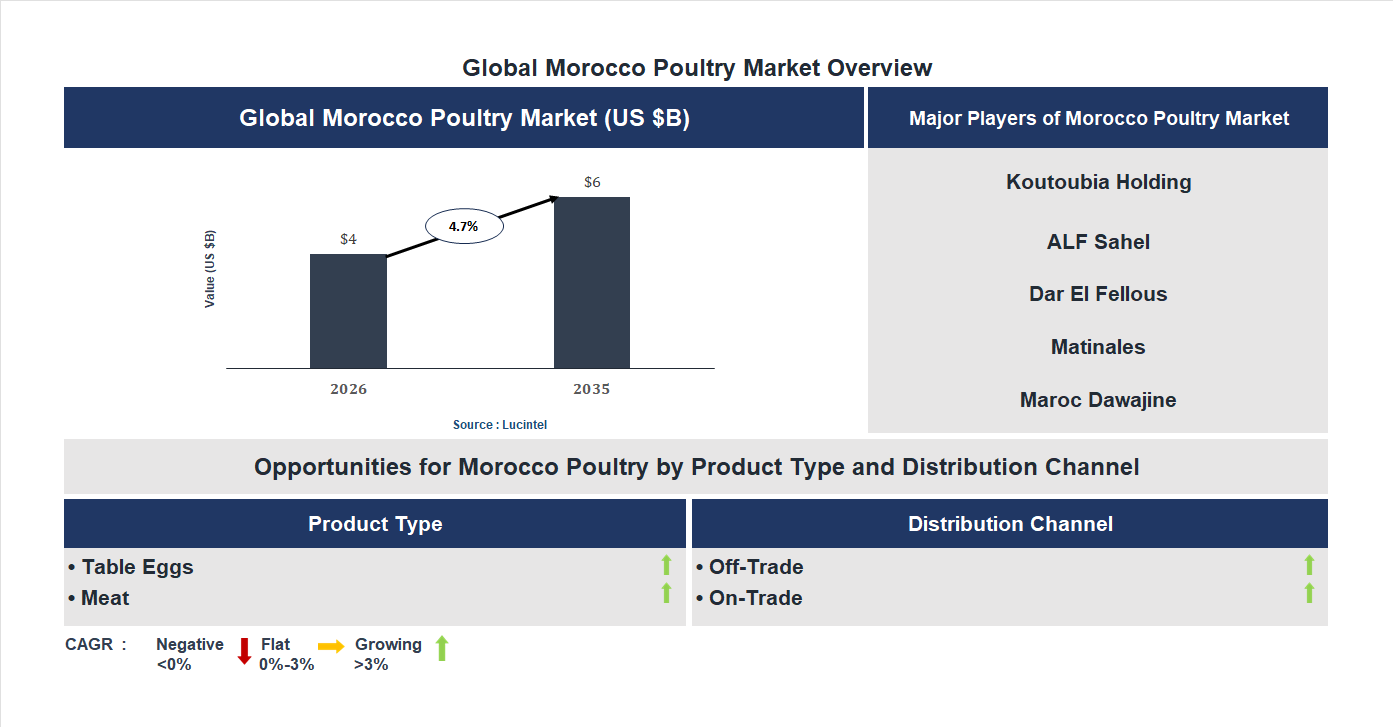
Key data points: The market size in 2035 = $6 billion, growth forecast = 4.7% annually for the next 8 years. Scroll below to get more insights. This market report covers trends, opportunities and forecasts in morocco poultry market to 2035 by product type (table eggs and meat), distribution channel (off-trade and on-trade), and region (North America, Europe, Asia Pacific, and the Rest of the World)
We'll send your sample report shortly.
• Lucintel forecasts that, within the product type category, meat is expected to witness higher growth over the forecast period.
• Within the distribution channel category, off-trade is expected to witness higher growth.
• In terms of region, APAC is expected to witness the highest growth over the forecast period. Gain valuable insights for your business decisions with our comprehensive 150+ page report. Sample figures with some insights are shown below.
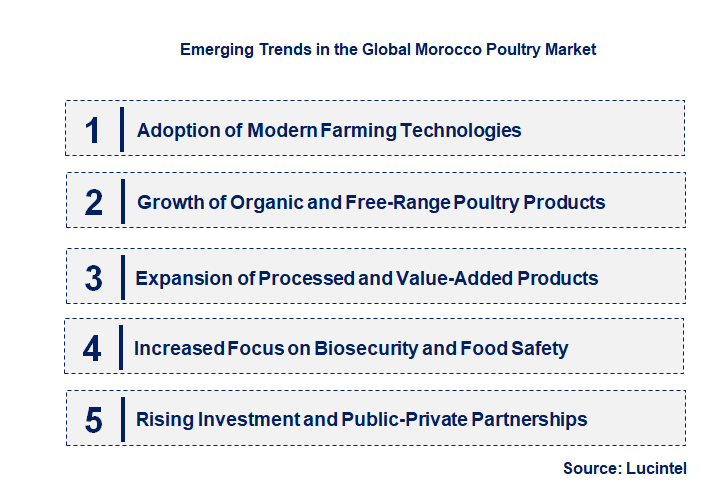
• Adoption of Modern Farming Technologies: The integration of automation, IoT, and data analytics is revolutionizing poultry farming in Morocco. Farmers are increasingly adopting smart systems for monitoring feed, water, and environmental conditions, leading to improved efficiency and productivity. These technologies help reduce waste, optimize resource use, and enhance animal health, ultimately lowering costs and increasing profitability. As technology becomes more accessible, small and large-scale producers are embracing innovation, which boosts overall market competitiveness and sustainability.
• Growth of Organic and Free-Range Poultry Products: Consumers in Morocco are becoming more health-conscious and environmentally aware, driving demand for organic and free-range poultry. This trend reflects a shift towards ethically produced, chemical-free products with perceived superior quality. Producers are responding by expanding organic farms and adopting sustainable practices, which often command premium prices. This segment caters to a niche but growing market segment, encouraging diversification and higher standards within the industry, and influencing mainstream production practices.
• Expansion of Processed and Value-Added Products: There is a rising preference for convenience foods, prompting manufacturers to develop processed poultry products such as marinated cuts, sausages, and ready-to-cook items. This trend caters to busy urban consumers seeking quick meal solutions. The growth of supermarkets and modern retail channels facilitates wider distribution of these products. Value addition enhances product shelf life, profitability, and consumer appeal, fostering innovation and diversification within the market while meeting evolving consumer demands.
• Increased Focus on Biosecurity and Food Safety: Food safety concerns and disease outbreaks have heightened awareness among producers and regulators. Implementing strict biosecurity measures, vaccination programs, and quality control protocols is becoming standard practice. This focus ensures product safety, reduces disease risks, and builds consumer trust. Enhanced safety standards also open export opportunities and align Morocco with international market requirements, fostering a more resilient and reputable poultry industry.
• Rising Investment and Public-Private Partnerships: The Moroccan government and private sector are collaborating to modernize poultry infrastructure, improve supply chains, and promote sustainable practices. Investments are directed toward expanding hatcheries, processing plants, and cold storage facilities. These partnerships aim to increase local production capacity, reduce reliance on imports, and stabilize prices. Such initiatives attract foreign investment, foster technological transfer, and support rural development, positioning Morocco as a competitive player in regional poultry markets. These trends are collectively reshaping the morocco poultry market by fostering innovation, enhancing product quality, and improving industry resilience. They are driving growth, encouraging sustainable practices, and aligning the market with global standards, ultimately creating a more dynamic and competitive landscape.
• Growing Consumer Demand: Expanding middle class and urbanization are increasing poultry consumption, creating a lucrative market for producers.
• Technological Advancements: Adoption of modern farming techniques and automation improves productivity and quality, boosting competitiveness.
• Supply Chain Improvements: Enhanced logistics and cold chain infrastructure reduce wastage and ensure fresh products reach consumers efficiently.
• Government Initiatives: Policies promoting local poultry production and import regulations support industry growth and sustainability.
• Export Potential: Increased production capacity and quality standards open avenues for Morocco to export poultry products to regional and international markets. These developments are significantly transforming morocco poultry market by increasing production efficiency, expanding market reach, and attracting investments. The sectors modernization and growth are fostering economic development, improving food security, and positioning Morocco as a competitive player in regional poultry trade. Overall, these opportunities are driving sustainable growth and innovation within the industry.
• Increasing Demand for Processed Poultry Products: The rising preference for convenience foods among Moroccan consumers is fueling demand for processed poultry products such as ready-to-eat meals, marinated cuts, and frozen items. This shift is driven by busy lifestyles and urbanization, prompting producers to innovate and expand product lines. Investment in processing facilities, quality assurance, and marketing can help capture this growing segment, offering higher margins and brand loyalty.
• Expansion of Poultry Farming Technologies and Modernization: Adoption of advanced farming technologies like automated feeding systems, climate control, and biosecurity measures is transforming poultry production. Modernization improves efficiency, reduces disease risks, and enhances product quality. Opportunities exist for implementing sustainable practices, integrating IoT solutions, and training farmers to increase yields and meet rising domestic and export demands, ultimately strengthening Morocco’s poultry supply chain.
• Development of Export Markets and International Trade: Morocco’s strategic geographic location offers potential to expand poultry exports to Europe, Africa, and the Middle East. Establishing quality standards, obtaining certifications, and building trade partnerships can open new revenue streams. Export growth can help stabilize prices, reduce market volatility, and support local producers, while also positioning Morocco as a key player in regional poultry trade.
• Diversification into Value-Added Poultry Products: Introducing value-added products such as flavored cuts, organic poultry, and specialty items can attract diverse consumer segments. Developing branding, packaging, and marketing strategies tailored to local and international markets can boost sales. This diversification reduces dependency on raw meat sales, increases profit margins, and aligns with consumer trends favoring health-conscious and premium products.
• Investment in Sustainable and Eco-Friendly Poultry Farming: Emphasizing sustainability through waste management, water conservation, and renewable energy use presents growth opportunities. Eco-friendly practices can improve farm efficiency, reduce environmental impact, and meet regulatory standards. Promoting organic and free-range poultry can also appeal to health-conscious consumers, creating a niche market. These initiatives support long-term industry resilience and enhance Morocco’s reputation as a responsible poultry producer. These strategic growth opportunities can significantly enhance Morocco’s poultry market, fostering innovation, expanding market reach, and ensuring sustainable development. By leveraging technological advancements, exploring export potential, and focusing on consumer preferences, stakeholders can capitalize on the market’s promising outlook and achieve competitive advantage in a rapidly evolving industry.
• Increasing Demand for Poultry Products: The rising population and urbanization in Morocco have led to increased consumption of poultry meat and eggs. Consumers prefer affordable, protein-rich foods, which has boosted demand. Additionally, changing dietary habits favor poultry over other meats due to health perceptions and convenience. This sustained demand encourages producers to expand operations, adopt modern farming techniques, and improve supply chains to meet consumer needs efficiently.
• Technological Advancements in Poultry Farming: Adoption of modern technologies such as automated feeding systems, climate-controlled housing, and disease management tools has enhanced productivity and efficiency. These innovations reduce mortality rates, improve feed conversion ratios, and ensure better product quality. As technology becomes more accessible, small and large-scale farmers can optimize operations, leading to increased output and market stability.
• Government Policies and Regulations: Supportive government initiatives, including subsidies, import-export policies, and biosecurity regulations, significantly influence the market. Policies aimed at promoting local poultry production and controlling disease outbreaks help stabilize supply and prices. Regulatory frameworks also ensure food safety standards, boosting consumer confidence and facilitating market expansion both domestically and regionally.
• Economic Growth and Rising Disposable Income: Morocco’s economic development has increased disposable incomes, enabling consumers to spend more on quality poultry products. This economic upliftment encourages higher consumption levels and supports premium product segments. Additionally, increased investment in the poultry sector from both public and private sources fuels market growth and infrastructure development.
• Export Opportunities and Regional Trade: Morocco’s strategic location offers opportunities for poultry exports to neighboring countries. Growing regional trade agreements and demand for Moroccan poultry products expand market reach. Export activities incentivize local producers to meet international standards, invest in quality improvements, and increase production capacity, further strengthening the market. The challenges facing the morocco poultry market include:
• Disease Outbreaks and Biosecurity Risks: Poultry diseases such as avian influenza pose significant threats to the industry. Outbreaks can lead to mass culling, trade restrictions, and financial losses. Maintaining strict biosecurity measures is costly and complex, especially for small-scale farmers. These health risks undermine consumer confidence and can disrupt supply chains, hindering market stability and growth.
• Fluctuations in Feed Prices: The poultry industry heavily depends on feed ingredients like maize and soy, whose prices are volatile due to global market dynamics, weather conditions, and supply chain disruptions. Rising feed costs directly impact profit margins and product pricing, making it challenging for producers to maintain competitiveness. Price volatility can also lead to supply shortages or surpluses, affecting market stability.
• Regulatory and Trade Barriers: While policies support growth, certain regulations and trade barriers can hinder market expansion. Import restrictions, tariffs, and quality standards may limit access to international markets or increase operational costs. Additionally, inconsistent enforcement of regulations can create uncertainties for producers and exporters, affecting investment decisions and overall industry growth. The morocco poultry market is driven by increasing demand, technological progress, supportive policies, economic growth, and regional trade opportunities. However, it faces challenges such as disease risks, feed price volatility, and regulatory barriers. These factors collectively influence the market’s development trajectory, requiring stakeholders to strategically leverage drivers while mitigating challenges. Addressing health risks and regulatory issues will be crucial for sustainable growth, ensuring the market remains resilient and competitive in both local and regional contexts.
• Koutoubia Holding
• ALF Sahel
• Dar El Fellous
• Matinales
• Maroc Dawajine
• Rabat Poultry Dawajine Johara
• King Generation SA
• La Fonda
• Zaime Eggs
• Socavol
• Table Eggs
• Meat
• Off-Trade
• On-Trade
• North America
• Europe
• Asia Pacific
• The Rest of the World
• United States: The US has seen increased adoption of automation and biosecurity measures in poultry farms, improving efficiency and disease control. Innovations in feed technology and sustainable practices are gaining traction, alongside expanding export markets, especially in halal and organic poultry products. The industry is also focusing on reducing environmental impact through waste management and renewable energy use.
• China: China continues to expand its poultry production capacity, emphasizing modernization and biosecurity. The government promotes technological integration, such as smart farming and disease monitoring systems, to enhance productivity. Domestic demand remains high, driven by urbanization and rising incomes, while exports are also growing, especially to neighboring Asian markets.
• Germany: Germanys poultry industry emphasizes animal welfare, sustainability, and quality standards. The adoption of precision farming techniques and eco-friendly practices is increasing. The country is also investing in research for alternative proteins and reducing antibiotic use, aligning with European Union regulations and consumer preferences for ethically produced poultry.
• India: India is witnessing rapid growth in poultry production, driven by increasing demand for affordable protein sources. The sector is adopting modern farming techniques, including integrated poultry farming and biosecurity measures. Government initiatives support smallholder farmers, and exports are gradually expanding, with a focus on halal markets and quality standards.
• Japan: Japans poultry market is characterized by high standards for food safety and quality. The industry is innovating with advanced breeding techniques and sustainable practices to meet consumer expectations. There is also a focus on reducing antibiotic use and improving animal welfare, alongside efforts to diversify poultry products to cater to health-conscious consumers.


• Koutoubia Holding
• ALF Sahel
• Dar El Fellous
• Matinales
• Maroc Dawajine
• Rabat Poultry Dawajine Johara
• King Generation SA
• La Fonda
• Zaime Eggs
• Socavol Q6. Which morocco poultry market segment will be the largest in future? Answer: Lucintel forecasts that, within the product type category, meat is expected to witness higher growth over the forecast period. Q7. In morocco poultry market, which region is expected to be the largest in next 8 years? Answer: In terms of region, APAC is expected to witness the highest growth over the forecast period. Q8. Do we receive customization in this report? Answer: Yes, Lucintel provides 10% customization without any additional cost.


Choose a license that fits your team. Instant PDF delivery.
Prices exclude taxes. Instant delivery. Custom licensing available on request.
Market Report · July 31, 2026
Market Report · July 31, 2026
Market Report · July 31, 2026
Trusted partner for strategic intelligence and business growth


Receive a complimentary market analysis tailored to your industry. Our analysts will identify key growth opportunities and competitive dynamics specific to your business.

Market size, growth rate, and key trend analysis for your specific sector.

Top competitor positioning and market share analysis.

Strategic recommendations backed by data-driven insights.
Get curated market intelligence and competitive moves straight to your inbox.
By subscribing, you agree to receive our monthly insights. Unsubscribe anytime.
Receive a complimentary market analysis tailored to your industry. Our analysts will identify key growth opportunities and competitive dynamics specific to your business.
Market size, growth rate, and key trend analysis for your specific sector.
Top competitor positioning and market share analysis.
Strategic recommendations backed by data-driven insights.
Get curated market intelligence, emerging trends, and competitive moves straight to your inbox each month.
By subscribing, you agree to receive our monthly insights. Unsubscribe anytime.
We'll send your sample report shortly.