
Market Report · September 3, 2026

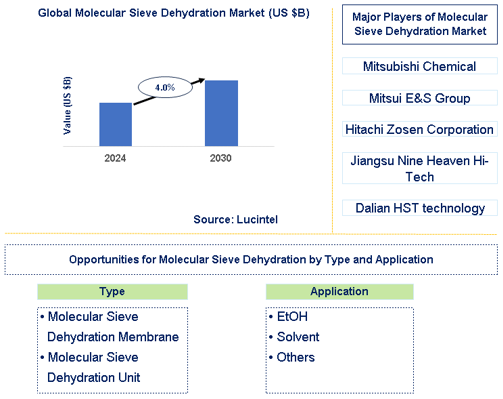
Key data points: The growth forecast = 4.0% annually next 6 years. Scroll below to get more insights. This market report covers trends, opportunities, and forecast in the global molecular sieve dehydration market to 2030 by type (molecular sieve dehydration membrane and molecular sieve dehydration unit), application (etoh, solvent, and others), and region (North America, Europe, Asia Pacific, and the Rest of the World)
We'll send your sample report shortly.
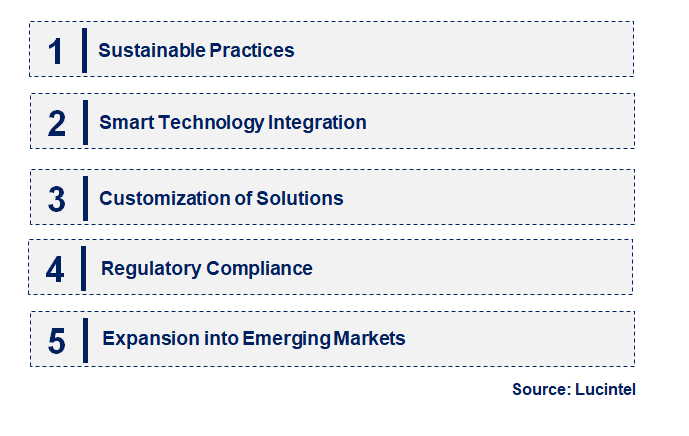
• Sustainable Practices: Companies are increasingly adopting eco-friendly materials and processes. This trend aims to reduce environmental impact while meeting the rising demand for sustainable solutions, promoting cleaner production practices across various industries.
• Smart Technology Integration: The adoption of IoT and smart technologies is revolutionizing dehydration systems. Real-time monitoring and analytics enhance operational efficiency, enabling proactive maintenance and reducing downtime, which is crucial for industries reliant on continuous processes.
• Customization of Solutions: There is a growing trend toward tailored molecular sieve solutions that meet specific industry needs. Customization helps address unique challenges, fosters customer loyalty, and drives innovation in product development to enhance performance.
• Regulatory Compliance: Stricter environmental regulations are pushing industries to adopt advanced dehydration technologies. Compliance with these standards drives investment in innovative solutions, ensuring products meet safety and quality requirements while enhancing brand reputation.
• Expansion into Emerging Markets: Companies are exploring growth opportunities in emerging markets. This trend is driven by industrialization and urbanization, creating demand for efficient dehydration solutions in sectors like water treatment and food processing. These trends are reshaping the molecular sieve dehydration market, promoting innovation and sustainability while responding to evolving regulatory and consumer demands.
• Advanced Material Research: A significant amount of research is being conducted on new materials for molecular sieves, making them more efficient and selective. Innovations in zeolite structures are leading to superior performance and driving demand in this varied industry sphere.
• Increasing Production Capacity: Manufacturers are increasing the capacity of their production units to cater to higher demand. This innovation ensures that high-quality molecular sieves are consistently available for various applications in the chemicals, oil, and gas industries.
• Energy Efficiency: Companies are placing great importance on energy-efficient molecular sieve technologies that help cut operating costs. Innovations in this domain further optimize energy use in dehydration operations, making them a key selling point for manufacturers.
• Hybrid Technologies: Molecular sieves are increasingly being combined with other dehydration techniques. Hybrid technology offers improved functionality and flexibility, fulfilling industry demands and providing enhancements in effectiveness.
• Collaboration and Partnerships: Strategic alliances between producers and research organizations are promoting innovation in molecular sieve technology. Progress is being made through collaborative research on advanced materials and production techniques, thereby improving market competitiveness. Such developments have significantly impacted the molecular sieve dehydration market by enhancing product quality, efficiency, and sustainability, thus satisfying changing needs within the industries.
• Petrochemical Industry: The petrochemical industry presents significant potential for growth, as it requires efficient and effective dehydration processes. Companies can manufacture advanced molecular sieves that are designed and aligned to meet the needs required in chemical production, thereby improving their performance in that sector at reduced costs.
• Food and Beverage Processing: The demand for safe, high-quality food products will further open avenues in the food industry. Molecular sieves may be applied for adequate moisture control and preservation, thus allowing manufacturers to design specialized solutions.
• Water Treatment: The demand for clean water solutions presents enormous opportunities. Companies will focus on molecular sieves to develop efficient water purification processes in both municipal and industrial applications.
• Pharmaceuticals: In the pharmaceutical industry, dehydration standards are critical in determining product quality. Due to such high standards, there is significant opportunity to create specific molecular sieves that can meet the required specifications for a wide range of highly sensitive processes in pharmaceutical manufacturing.
• Electronic Manufacturing: The expansion of the electronics industry has created an increasing demand to control moisture on sensitive components. This is critical for protecting electronic products from moisture damage; thus, it creates demand for more advanced solutions. These growth opportunities are transforming the molecular sieve dehydration market, and companies are expanding their offerings to meet the changing requirements of various industries.
• Technological Advances: Rapid progress is being achieved in molecular sieve technology regarding performance and efficiency. Technological advancements in material science and production processes drive market growth and bring more efficient dehydration solutions within reach for industrial applications.
• Increased Environmental Issues: Growing awareness of environmental concerns compels companies to consider sustainable business operations. There is an increased demand for energy-efficient and environmentally friendly molecular sieve products that are produced and certified to comply with various regulations.
• Growing Industrial Base: Demand is increasing in the petrochemical, pharmaceutical, and food processing sectors. Higher production capacities and the launch of new projects provide added stimulus for molecular sieves.
• Regulatory Compliance: Stricter regulations regarding product quality and environmental standards are compelling companies to invest in advanced dehydration technologies. Compliance with these regulations enhances market credibility and drives innovation. Challenges in the molecular sieve dehydration market include:
• High Initial Investment Cost: Advanced molecular sieve technologies are resource-intensive in terms of investment. This creates a hurdle, as smaller companies may not be able to bear such costs, thus limiting market access in some sectors.
• Overregulation: Confusing rules and regulations may create problems for producers trying to comply. Differing standards across regions consume many resources in adaptation, making it challenging for new entrants in the market.
• Market Competition: The influx of new entrants into the molecular sieve market increases competition. Each firm must continue innovating and differentiating to maintain its market position and capture shares in the market. These drivers and challenges create a landscape that shapes the molecular sieve dehydration market, affecting product development, market positioning, and the overall trajectory of growth.
• Mitsubishi Chemical
• Mitsui E&S Group
• Hitachi Zosen Corporation
• Jiangsu Nine Heaven Hi-Tech
• Dalian HST Technology
• Molecular Sieve Dehydration Membrane
• Molecular Sieve Dehydration Unit
• EtOH
• Solvent
• Others
• North America
• Europe
• Asia Pacific
• The Rest of the World
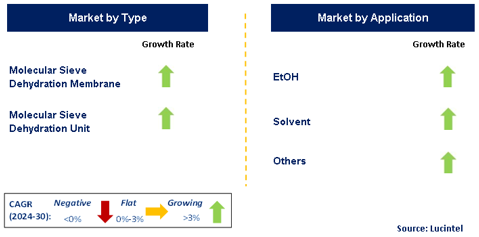
• Lucintel forecasts that the molecular sieve dehydration membrane is expected to witness higher growth over the forecast period.
• Within this market, ethanol (etoh) is expected to witness the highest growth.
• The Asia-Pacific (APAC) region is expected to witness the highest growth over the forecast period.


• Mitsubishi Chemical
• Mitsui E&S Group
• Hitachi Zosen Corporation
• Jiangsu Nine Heaven Hi-Tech
• Dalian HST Technology Q5. Which molecular sieve dehydration market segment will be the largest in future? Answer: Lucintel forecasts that molecular sieve dehydration membrane is expected to witness higher growth over the forecast period. Q6. In molecular sieve dehydration market, which region is expected to be the largest in next 5 years? Answer: APAC is expected to witness the highest growth over the forecast period. Q.7 Do we receive customization in this report? Answer: Yes, Lucintel provides 10% customization without any additional cost.


Choose a license that fits your team. Instant PDF delivery.
Prices exclude taxes. Instant delivery. Custom licensing available on request.
Market Report · September 3, 2026
Market Report · July 22, 2026
Market Report · July 22, 2026
Trusted partner for strategic intelligence and business growth


Receive a complimentary market analysis tailored to your industry. Our analysts will identify key growth opportunities and competitive dynamics specific to your business.

Market size, growth rate, and key trend analysis for your specific sector.

Top competitor positioning and market share analysis.

Strategic recommendations backed by data-driven insights.
Get curated market intelligence and competitive moves straight to your inbox.
By subscribing, you agree to receive our monthly insights. Unsubscribe anytime.
Receive a complimentary market analysis tailored to your industry. Our analysts will identify key growth opportunities and competitive dynamics specific to your business.
Market size, growth rate, and key trend analysis for your specific sector.
Top competitor positioning and market share analysis.
Strategic recommendations backed by data-driven insights.
Get curated market intelligence, emerging trends, and competitive moves straight to your inbox each month.
By subscribing, you agree to receive our monthly insights. Unsubscribe anytime.
We'll send your sample report shortly.