
Market Report · July 31, 2026

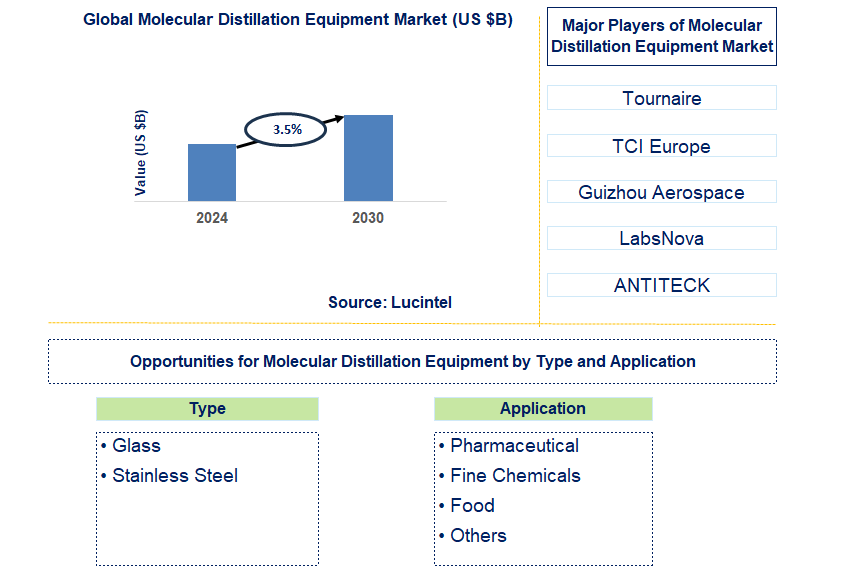
Key data points: The growth forecast = 3.5% annually for the next 6 years. Scroll below to get more insights. This market report covers trends, opportunities, and forecasts in the global molecular distillation equipment market to 2030 by type (glass and stainless steel), application (pharmaceutical, fine chemicals, food, and others), and region (North America, Europe, Asia Pacific, and the Rest of the World)
We'll send your sample report shortly.
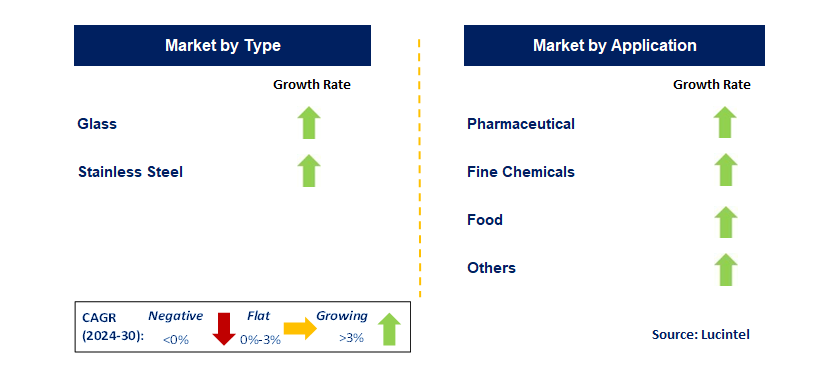
• Lucintel forecasts that, within the type category, glass is expected to witness higher growth over the forecast period.
• Within this application category, pharmaceutical is expected to witness the highest growth.
• In terms of regions, APAC is expected to witness the highest growth over the forecast period. A more than 150-page report is developed to help in your business decisions.
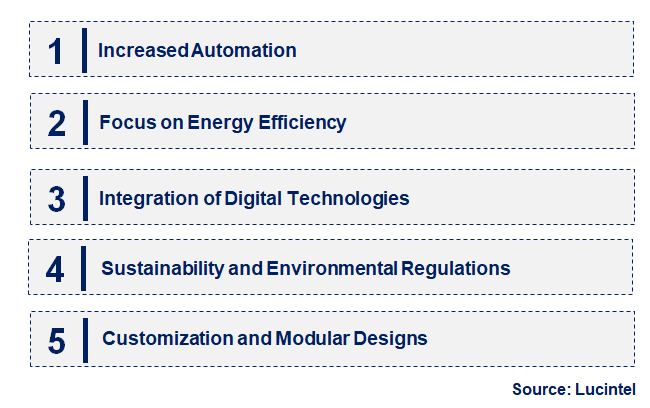
• Increased automation: The trend towards greater automation in molecular distillation equipment is enhancing precision and reducing labor costs. Automated systems offer improved control over separation processes, better process consistency, and operational efficiency.
• Focus on energy efficiency: There is a growing emphasis on developing energy-efficient molecular distillation systems. Innovations in heat recovery and optimized process designs are reducing energy consumption and operational costs, aligning with global sustainability goals.
• Integration of digital technologies: The adoption of digital technologies, including IoT and advanced monitoring systems, is improving process control and data analysis. Digital integration enables real-time monitoring, predictive maintenance, and enhanced operational efficiency.
• Sustainability and environmental regulations: Increasing environmental regulations are driving the development of eco-friendly molecular distillation equipment. Manufacturers are focusing on reducing emissions, waste, and energy consumption to comply with stringent environmental standards.
• Customization and modular designs: The trend towards modular and customizable equipment is providing more flexible solutions for different applications. Modular designs allow for easier upgrades and adaptations to specific process requirements, improving overall versatility. These trends are driving innovation and growth in the molecular distillation equipment market by enhancing automation, energy efficiency, and digital integration while addressing sustainability concerns and providing flexible solutions for various applications.
• Advancements in Separation Technology: New technologies are improving the efficiency of molecular separation processes. Innovations in distillation columns and heat exchange systems are enhancing the purity and yield of separated products, driving better performance in high-value applications.
• Enhanced Automation Features: The introduction of advanced automation features is streamlining operations and reducing human intervention. Automated control systems and real-time monitoring capabilities are improving process accuracy and efficiency, leading to cost savings and increased productivity.
• Development of Energy-efficient Models: Energy efficiency is becoming a major focus, with new models incorporating heat recovery systems and optimized process designs. These developments are reducing energy consumption and lowering operational costs, aligning with sustainability goals.
• Integration with Digital Technologies: The integration of digital technologies, such as IoT and AI, is enhancing process control and data analysis. These technologies are enabling predictive maintenance, real-time performance monitoring, and improved process optimization.
• Regulatory Compliance and Sustainability: Manufacturers are developing equipment that meets stringent environmental regulations and sustainability standards. Innovations include eco-friendly materials, reduced emissions, and waste management solutions to comply with global regulatory requirements. These key developments are driving improvements in efficiency, automation, energy use, and regulatory compliance in the molecular distillation equipment market. The focus on technological advancements and sustainability is shaping the future of the industry.
• Pharmaceutical Industry: The pharmaceutical sector presents significant growth opportunities due to the need for high-purity and efficient separation processes. Developing advanced equipment that meets stringent purity standards can address the growing demand for pharmaceutical products.
• Nutraceuticals: The nutraceutical industry is expanding, creating demand for molecular distillation equipment that can efficiently process natural extracts and concentrates. Opportunities exist in developing cost-effective solutions tailored to this growing market segment.
• Food and Beverage: In the food and beverage industry, there is a need for equipment that can handle diverse processing requirements, including flavor extraction and purification. Growth opportunities include developing versatile and high-efficiency systems for this sector.
• Chemical Processing: The chemical industry requires advanced distillation technologies for separating complex chemical mixtures. Innovations in equipment design and process optimization can provide growth opportunities in this application.
• Cosmetics and Personal Care: The cosmetics industry is seeking high-precision distillation equipment for producing high-quality essential oils and extracts. Developing equipment that meets the specific needs of this industry can capture new market segments. These strategic growth opportunities highlight the potential for market expansion across various applications, including pharmaceuticals, nutraceuticals, food and beverage, chemical processing, and cosmetics. Tailoring equipment to meet specific industry needs can drive future growth.
• Technological Advancements: Innovations in separation technology, automation, and energy efficiency are enhancing the performance and appeal of molecular distillation equipment. These advancements are driving market growth by improving process efficiency and reducing operational costs.
• Increased Demand for High-purity Products: The growing need for high-purity products in industries like pharmaceuticals and nutraceuticals is fueling demand for advanced molecular distillation equipment. This trend is driving innovation and market expansion.
• Regulatory Pressures: Stringent environmental and safety regulations are pushing manufacturers to develop equipment that meets higher standards for emissions, waste management, and energy efficiency, driving market growth and innovation.
• Focus on Sustainability: The emphasis on sustainable practices is encouraging the development of eco-friendly molecular distillation equipment. Manufacturers are adopting green technologies and materials to align with global sustainability goals.
• Growing Applications: Expanding applications in various industries, including food and beverage, chemicals, and cosmetics, are creating new growth opportunities for molecular distillation equipment, driving market demand. Challenges in the molecular distillation equipment market are:
• High Costs: The cost of advanced molecular distillation equipment can be high, posing a challenge for smaller companies and limiting market access. This can impact market growth and adoption rates.
• Complexity of Technology: The complexity of advanced distillation technologies can lead to challenges in operation and maintenance. Ensuring ease of use and support is essential for widespread adoption.
• Regulatory Compliance: Meeting stringent regulatory requirements can be challenging and costly for manufacturers. Compliance with evolving standards requires continuous investment in technology and process improvements.
• Energy Consumption: Despite advancements, energy consumption remains a concern for molecular distillation equipment. Reducing energy use while maintaining performance is an ongoing challenge.
• Market Competition: Intense competition among manufacturers can lead to pricing pressures and margin reductions. Staying competitive requires continuous innovation and differentiation in equipment offerings. The molecular distillation equipment market is driven by technological advancements, regulatory pressures, and growing demand for high-purity products, but faces challenges related to cost, complexity, compliance, and competition. Addressing these factors is essential for market success and growth.
• Tournaire
• TCI Europe
• Guizhou Aerospace Wujiang Electro-Mechanical Equipment
• LabsNova
• ANTITECK
• WKIE Lab
• TOPTION INSTRUMENT
• Polaris
• Pope Scientific
• Cedarstone Industry
• Glass
• Stainless Steel
• Pharmaceutical
• Fine Chemicals
• Food
• Others
• North America
• Europe
• Asia Pacific
• The Rest of the World
• United States: In the U.S., advancements in molecular distillation equipment focus on enhancing efficiency and scalability. Innovations include the development of advanced separation technologies and automation features that improve process control and reduce operational costs. The focus is also on meeting stringent environmental regulations and enhancing product purity.
• China: The Chinese market is witnessing growth in molecular distillation equipment due to increased investments in the pharmaceutical and food processing industries. New technologies are being introduced to enhance separation efficiency and energy consumption. Chinese manufacturers are also expanding their product lines to cater to a diverse range of applications.
• Germany: Germany is emphasizing the development of high-precision molecular distillation equipment with a strong focus on sustainability and energy efficiency. Recent advancements include integration with digital technologies for improved process monitoring and control. German firms are also pushing for innovations in equipment design to meet EU regulatory standards.
• India: In India, there is a growing adoption of molecular distillation equipment driven by the expansion of the pharmaceutical and nutraceutical industries. New developments include cost-effective solutions and improved efficiency in separation processes. Indian companies are also focusing on scaling up production capabilities to meet increasing domestic demand.
• Japan: Japan is advancing its molecular distillation technology with a focus on high-purity applications in the chemical and pharmaceutical sectors. Innovations include compact, high-efficiency units designed for precise separation and minimal energy consumption. Japanese manufacturers are also integrating advanced automation and monitoring systems into their equipment.


• Tournaire
• TCI Europe
• Guizhou Aerospace Wujiang Electro-Mechanical Equipment
• LabsNova
• ANTITECK
• WKIE Lab
• TOPTION INSTRUMENT
• Polaris
• Pope Scientific
• Cedarstone Industry Q5. Which molecular distillation equipment market segment will be the largest in future? Answer: Lucintel forecasts that glass is expected to witness higher growth over the forecast period. Q6. In molecular distillation equipment market, which region is expected to be the largest in next 5 years? Answer: APAC is expected to witness the highest growth over the forecast period. Q.7 Do we receive customization in this report? Answer: Yes, Lucintel provides 10% customization without any additional cost.


Choose a license that fits your team. Instant PDF delivery.
Prices exclude taxes. Instant delivery. Custom licensing available on request.
Market Report · July 31, 2026
Market Report · July 22, 2026
Market Report · July 20, 2026
Trusted partner for strategic intelligence and business growth


Receive a complimentary market analysis tailored to your industry. Our analysts will identify key growth opportunities and competitive dynamics specific to your business.

Market size, growth rate, and key trend analysis for your specific sector.

Top competitor positioning and market share analysis.

Strategic recommendations backed by data-driven insights.
Get curated market intelligence and competitive moves straight to your inbox.
By subscribing, you agree to receive our monthly insights. Unsubscribe anytime.
Receive a complimentary market analysis tailored to your industry. Our analysts will identify key growth opportunities and competitive dynamics specific to your business.
Market size, growth rate, and key trend analysis for your specific sector.
Top competitor positioning and market share analysis.
Strategic recommendations backed by data-driven insights.
Get curated market intelligence, emerging trends, and competitive moves straight to your inbox each month.
By subscribing, you agree to receive our monthly insights. Unsubscribe anytime.
We'll send your sample report shortly.