
Market Report · July 22, 2026

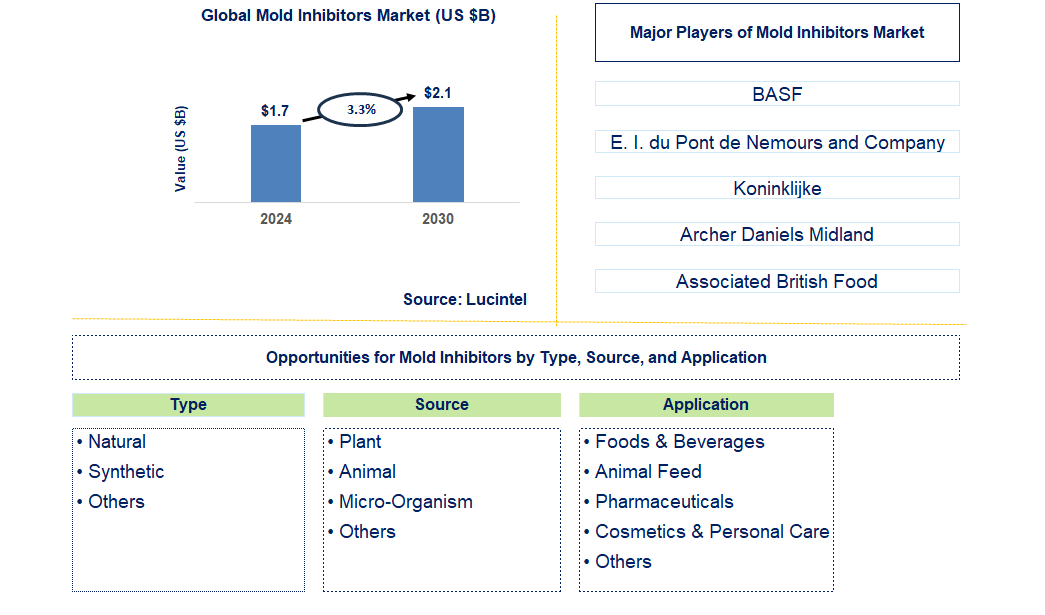
Key data points: The market size in 2030 = $2.1 billion, growth forecast = 3.3% annually for the next 6 years. Scroll below to get more insights. This market report covers trends, opportunities, and forecasts in the global mold inhibitors market to 2030 by type (natural, synthetic, and others), source (plant, animal, micro-organism, and others), application (foods & beverages, animal feed, pharmaceuticals, cosmetics & personal care, and others), and region (North America, Europe, Asia Pacific, and the Rest of the World)
We'll send your sample report shortly.
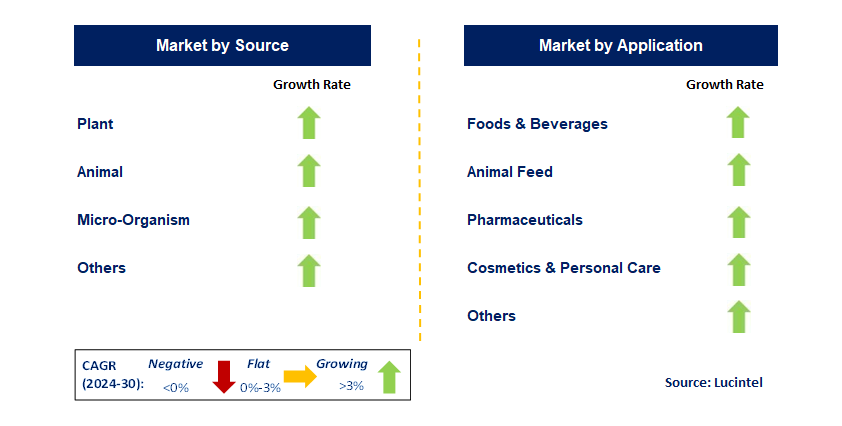
• Lucintel forecasts that, within the source category, micro-organisms will remain the largest segment over the forecast period because of their all-natural and ecologically friendly properties.
• In terms of regions, APAC is expected to witness the highest growth over the forecast period due to growing concern about the health impacts of mycotoxins generated by mold, as well as increased use of convenience or processed foods in this region. A more than 150-page report is developed to help in your business decisions.
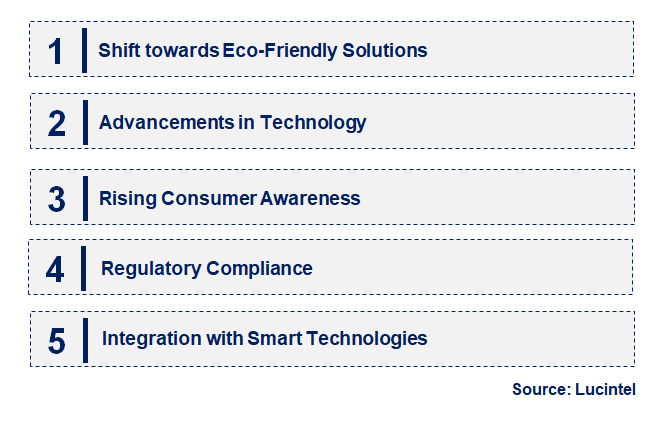
• Shift towards Eco-Friendly Solutions: The market for products with minimal impact on the environment is anticipated to grow due to the rising use of safe and biodegradable mold inhibitors.
• Advancements in Technology: The development of new technologies is increasing the range of mold inhibition products and efficiency-enhancing features.
• Rising Consumer Awareness: The awareness of the dangers that mold poses to health is driving the demand for effective mold inhibitors in the residential and commercial markets.
• Regulatory Compliance: Market determinants will include a variety of regulations on chemicals and their potential environmental impact, hence the shift to more environmentally friendly and safer mold control products.
• Integration with Smart Technologies: Real-time action against mold is being achieved through the incorporation of new technologies such as smart sensors and monitoring systems in the use of mold inhibitors. These trends are reshaping the mold inhibitors market by promoting sustainability, driving technological innovation, and expanding applications across various sectors.
• Introduction of Eco-Friendly Products: As a result, the increase in the number of non-toxic and biodegradable products is boosting the availability of mold inhibitors.
• Technological Innovations: Improvements in formulation and delivery technologies are enhancing the efficiency and longevity of mold inhibitors.
• Enhanced Regulatory Standards: New regulatory policies are shaping the creation and use of safer and more efficient solutions to control mold.
• Growing Market Demand: Increased awareness of the dangers posed by mold is creating a favorable environment for the use of mold-inhibiting agents in residential, commercial, and industrial markets.
• Expansion in Emerging Markets: Mold control measures are gaining traction in growing economies like India and China, leading to growth and developments in the mold market. These developments are influencing the mold inhibitors market through improvements in product offerings, regulatory compliance, and meeting the high consumer demand for appropriate and sustainable mold control technologies.
• Residential Applications: Increased health concerns and awareness of indoor air quality are leading to greater usage of mold inhibitors in homes, offering significant growth opportunities.
• Commercial Buildings: Widespread use of mold inhibitors to protect buildings and the well-being of occupants in commercial properties, including offices and retail facilities.
• Industrial Applications: In the industrial sector, there are opportunities to advance mold control technologies to safeguard structures and equipment from mold regrowth.
• Construction Industry: The growing use of antifungal agents in building materials and finishes to prevent fungal spores in the construction and renovation of buildings.
• Smart Home Integration: The use of mold inhibitors in synergy with smart home technologies for the real-time management of mold growth presents a new growth opportunity. These opportunities are shaping the mold inhibitors market by expanding application areas, driving innovations, and facilitating growth across various industries.
• Health and Safety Awareness: The rise in health effects from mold exposure has created a demand for mold inhibitors in the residential and commercial sectors.
• Technological Advancements: New technologies are changing how anti-fungal products are formulated and marketed.
• Regulatory Requirements: Increased emphasis on regulatory compliance regarding chemical use and environmental concerns is driving the production of less toxic and more environmentally friendly solutions for mold control.
• Expansion of Construction and Renovation Activities: The growth of construction and renovation activities is leading to increased demand for mold inhibitors.
• Consumer Demand for Green Products: The introduction of new and innovative products under the category of mold inhibitors is driven by increasing consumer preference for green, non-toxic products. Challenges in the mold inhibitors market include:
• Costs of Advanced Products: Although advanced environmentally friendly mold inhibitors are available, their high costs may limit market reach for certain clients.
• Regulatory Approvals: Compliance with various regulatory requirements for mold inhibitors, which are complicated and dynamic, is a challenge manufacturers face.
• Intense Competition: Manufacturers of mold inhibitors face tough competition from one another, which may lead to price changes and profit margin pressure.
• Lack of Awareness in Developing Countries: The lack of market growth in some developing countries is due to limited awareness of mold-related health problems and mold inhibitors.
• Effectiveness and Durability: Achieving the effectiveness and durability of mold inhibitors under various environmental factors is a challenge. These drivers and challenges influence the development of products, market composition, and market compliance, affecting the overall rate of growth and evolution of the mold inhibitors market.
• BASF
• E. I. du Pont de Nemours and Company
• Koninklijke
• Archer Daniels Midland
• Associated British Food
• Handary
• Hawkins Watts
• Kemin
• Niacet
• Pacific Coast Chemicals
• Natural
• Synthetic
• Others
• Plant
• Animal
• Micro-Organism
• Others
• Foods & Beverages
• Animal Feed
• Pharmaceuticals
• Cosmetics & Personal Care
• Others
• North America
• Europe
• Asia Pacific
• The Rest of the World
• United States: Growth in the U.S. market is also driven by rising health awareness regarding the effects of mold and the availability of new, green mold inhibitors. These include the use of non-toxic and biodegradable preservatives for both residential and commercial construction to coat mold surfaces. Additionally, regulatory requirements and growing concerns over indoor air quality are further spurring market growth.
• China: The demand for mold inhibitors in China is increasing as the country addresses a growing mold problem in its expanding urban areas. Accordingly, the use of construction materials and household products with innovative mold inhibitors has recently increased. Regulations affecting the market are becoming more stringent, while consumer awareness is shifting toward more advanced and safe products.
• Germany: Germany is at the forefront of researching creative and sustainable mold solutions. Recent developments include advancements in biodegradable packaging items and mold inhibitors. In addition, Germany’s focus on green technology standards is pushing the eco-friendly mold inhibitors market forward.
• India: The mold inhibitors market in India is evolving as there is more focus on tackling mold issues, particularly in wet environments. Recent developments include the introduction of cost-effective mold management mechanisms for both domestic and industrial use. The market is also driven by growing awareness of health effects and the need for better indoor air quality.
• Japan: The mold inhibitors market in Japan is defined by high technology and quality standards. Current advances include the development of progressive polymer material coatings and easy-to-apply ones with improved performance characteristics. The precision and effectiveness of Japanese manufacturers are driving the use of new technologies in mold control techniques.
• BASF
• E. I. du Pont de Nemours and Company
• Koninklijke
• Archer Daniels Midland
• Associated British Food
• Handary
• Hawkins Watts
• Kemin
• Niacet
• Pacific Coast Chemicals Q6. Which mold inhibitors market segment will be the largest in future? Answer: Lucintel forecasts that micro-organism will remain the largest segment over the forecast period because of their all-natural and ecologically friendly properties. Q7. In mold inhibitors market, which region is expected to be the largest in next 5 years? Answer: APAC is expected to witness the highest growth over the forecast period due to growing concern about the health impacts of mycotoxins generated by mold, as well as increased use of convenience or processed foods in this region. Q.8 Do we receive customization in this report? Answer: Yes, Lucintel provides 10% customization without any additional cost.


Choose a license that fits your team. Instant PDF delivery.
Prices exclude taxes. Instant delivery. Custom licensing available on request.
Market Report · July 22, 2026
Market Report · July 22, 2026
Market Report · July 22, 2026
Trusted partner for strategic intelligence and business growth


Receive a complimentary market analysis tailored to your industry. Our analysts will identify key growth opportunities and competitive dynamics specific to your business.

Market size, growth rate, and key trend analysis for your specific sector.

Top competitor positioning and market share analysis.

Strategic recommendations backed by data-driven insights.
Get curated market intelligence and competitive moves straight to your inbox.
By subscribing, you agree to receive our monthly insights. Unsubscribe anytime.
Receive a complimentary market analysis tailored to your industry. Our analysts will identify key growth opportunities and competitive dynamics specific to your business.
Market size, growth rate, and key trend analysis for your specific sector.
Top competitor positioning and market share analysis.
Strategic recommendations backed by data-driven insights.
Get curated market intelligence, emerging trends, and competitive moves straight to your inbox each month.
By subscribing, you agree to receive our monthly insights. Unsubscribe anytime.
We'll send your sample report shortly.