
Market Report · July 31, 2026

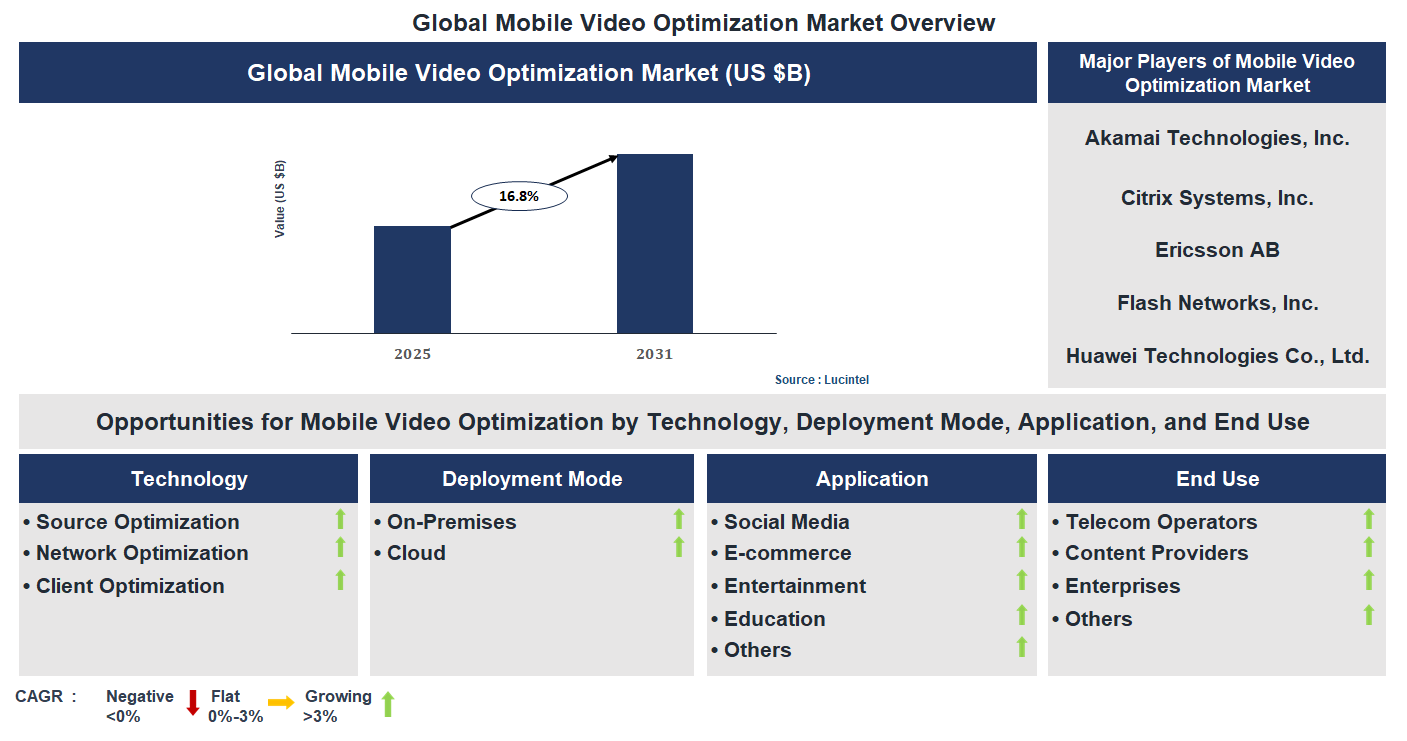
Key data points: The growth forecast = 16.8% annually for the next 7 years. Scroll below to get more insights. This market report covers trends, opportunities and forecasts in mobile video optimization market to 2031 by technology (source optimization, network optimization, and client optimization), deployment mode (on-premises and cloud), application (social media, E-commerce, entertainment, education, and others), end use (telecom operators, content providers, enterprises, and others), and region (North America, Europe, Asia Pacific, and the Rest of the World)
We'll send your sample report shortly.
• Lucintel forecasts that, within the technology category, source optimization is expected to witness the highest growth over the forecast period.
• Within the end use category, telecom operator is expected to witness the highest growth.
• In terms of region, North America is expected to witness the highest growth over the forecast period. Gain valuable insights for your business decisions with our comprehensive 150+ page report. Sample figures with some insights are shown below.
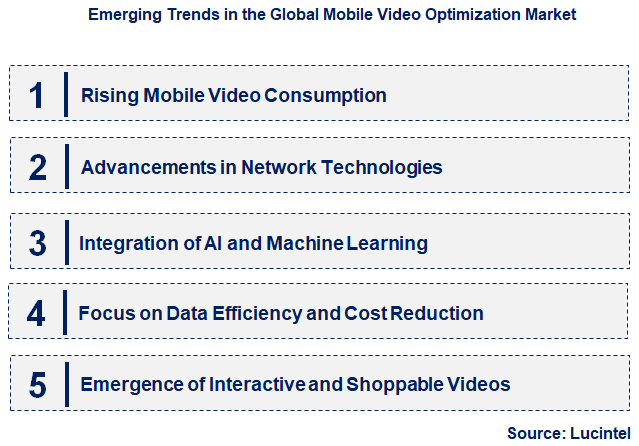
• Rising Mobile Video Consumption: The exponential increase in mobile video viewing is a key driver. Consumers prefer on-the-go content, leading to higher demand for optimized videos that load quickly and play smoothly. This trend compels content providers and advertisers to prioritize mobile-friendly formats and efficient delivery methods to retain user engagement and reduce bounce rates.
• Advancements in Network Technologies: The deployment of 4G, 5G, and Wi-Fi 6 networks enhances streaming quality and reduces latency. These technological improvements enable higher resolution videos and seamless playback, encouraging providers to adopt advanced optimization techniques. As network capabilities expand, the market for sophisticated video optimization solutions is expected to grow significantly.
• Integration of AI and Machine Learning: AI-driven tools are increasingly used to personalize content, optimize video compression, and predict user preferences. Machine learning algorithms analyze viewing patterns to deliver tailored content, improve buffering times, and reduce data consumption. This integration enhances user experience and provides competitive advantages for content providers.
• Focus on Data Efficiency and Cost Reduction: With rising data costs and bandwidth limitations, there is a strong emphasis on reducing data consumption without compromising quality. Compression technologies and adaptive streaming protocols help deliver high-quality videos efficiently, lowering operational costs for service providers and improving accessibility for users with limited bandwidth.
• Emergence of Interactive and Shoppable Videos: Interactive videos, including shoppable content, are gaining popularity. These formats require optimized delivery to ensure smooth interactivity and engagement. As brands leverage these innovative formats for marketing, the need for specialized optimization solutions increases, transforming the way consumers interact with video content on mobile devices. In summary, these trends are reshaping the mobile video optimization market by fostering more efficient, personalized, and engaging video experiences. They are driving technological innovation, influencing consumer behavior, and enabling content providers to deliver high-quality videos across diverse mobile environments, ultimately transforming the landscape of mobile content consumption.
• Adoption of AI and Machine Learning: AI-driven algorithms now enable real-time video optimization, improving load times and reducing data consumption. This enhances user experience and increases viewer retention, giving companies a competitive edge. The integration of AI also allows for personalized content delivery, boosting engagement metrics and advertising revenue.
• Growth of 5G Networks: The rollout of 5G has significantly increased bandwidth and reduced latency, allowing for higher quality video streaming on mobile devices. This development supports 4K and even 8K video content, attracting more users and content providers. It also enables new applications like live streaming and augmented reality, expanding market opportunities.
• Emergence of Cloud-Based Solutions: Cloud platforms facilitate scalable and flexible video optimization services, reducing infrastructure costs for providers. They enable seamless content delivery across diverse devices and networks, improving overall user experience. This shift also accelerates deployment times and supports rapid innovation in video services.
• Focus on Data Privacy and Security: As video optimization involves extensive data processing, market players are prioritizing security measures and compliance with privacy regulations. This focus builds consumer trust and mitigates risks associated with data breaches. It also influences the development of secure, privacy-centric optimization technologies.
• Increasing Adoption of Adaptive Bitrate Streaming: Adaptive bitrate technology dynamically adjusts video quality based on network conditions, ensuring smooth playback. This reduces buffering and enhances user satisfaction, especially in areas with inconsistent connectivity. It also helps content providers reach a broader audience by accommodating varying network speeds. In summary, these developments are significantly impacting the mobile video optimization market by enhancing user experience, expanding content delivery capabilities, and fostering innovation. The integration of AI, the advent of 5G, cloud solutions, security focus, and adaptive streaming are collectively driving growth, increasing market competitiveness, and opening new revenue streams for industry players.
• Enhanced mobile shopping experiences : Optimizing video content for faster load times and higher quality improves customer engagement and conversion rates, leading to increased sales and brand loyalty.
• Streaming service optimization : Tailoring video delivery for mobile platforms ensures smooth streaming, reduces buffering, and enhances viewer satisfaction, thereby boosting subscription retention.
• Network infrastructure upgrades : Investing in advanced network solutions supports higher data throughput and lower latency, facilitating superior video quality and expanding user base.
• Mobile ad video optimization : Improving ad video quality and load times increases click-through rates and ad effectiveness, driving higher advertising revenues.
• Interactive video content enhancement : Optimized videos enable more engaging and accessible online learning, expanding reach and improving educational outcomes. These growth opportunities are significantly impacting the mobile video optimization market by driving innovation, increasing user satisfaction, and expanding application scope. As businesses leverage these strategies, the market is poised for sustained expansion, with heightened competition and technological advancements shaping future developments.
• Technological Advancements: The continuous evolution of mobile network infrastructure, such as 4G and 5G, enables faster data transfer and improved video quality. These advancements facilitate seamless streaming experiences, encouraging service providers to adopt video optimization solutions. Moreover, developments in AI and machine learning enhance content delivery efficiency, reducing buffering and latency issues. As technology progresses, the ability to deliver high-resolution videos on mobile devices becomes more feasible, fueling market growth and expanding user engagement.
• Rising Mobile Video Consumption: The surge in mobile video consumption driven by social media, OTT platforms, and digital marketing is a significant market driver. Consumers increasingly prefer on-the-go content, demanding high-quality, buffer-free videos. This trend compels content providers and network operators to optimize video delivery to meet user expectations. The proliferation of smartphones and affordable data plans further accelerates consumption, making video optimization essential for maintaining competitive advantage and ensuring customer satisfaction.
• Increasing Adoption of 5G Technology: The rollout of 5G networks offers higher bandwidth, lower latency, and enhanced connectivity, which are critical for high-quality video streaming. This technological leap allows for richer, more immersive video experiences, including 4K and 8K content. As 5G adoption expands globally, service providers are investing in video optimization solutions to leverage these capabilities fully. This trend is expected to significantly boost market growth by enabling more efficient and scalable video delivery across diverse mobile devices.
• Growing Focus on Data Privacy and Security Regulations: Stringent regulatory frameworks such as GDPR and CCPA influence how video data is managed and optimized. Companies must ensure compliance while delivering personalized, high-quality content. These regulations impact data collection, storage, and processing practices, necessitating advanced security measures. Navigating these legal requirements adds complexity to market operations but also encourages innovation in secure video optimization solutions, ultimately shaping the market landscape. The challenges facing this mobile video optimization market include:-
• Regulatory and Data Privacy Concerns: Increasing regulations around data privacy and security pose significant hurdles for market players. Compliance requires substantial investment in secure infrastructure and data management practices, which can increase operational costs. Additionally, restrictions on data sharing and user tracking limit the ability to personalize content effectively, potentially impacting user engagement and revenue streams. Balancing regulatory compliance with the need for efficient video optimization remains a critical challenge for industry stakeholders.
• Network Infrastructure Limitations: Despite advancements, many regions still face inadequate network infrastructure, which hampers the deployment of advanced video optimization solutions. Limited bandwidth, high latency, and inconsistent connectivity can lead to subpar user experiences, reducing the effectiveness of optimization techniques. Overcoming these infrastructural challenges requires significant investment and collaboration among telecom providers, content creators, and technology vendors, making widespread adoption more complex and slower in certain markets.
• Rapid Technological Changes and Competition: The fast-paced nature of technological innovation creates a highly competitive environment. Companies must continuously update their solutions to stay ahead of evolving standards and consumer expectations. This constant innovation demands substantial R&D investment and agility, which can strain resources. Additionally, the entry of new players and the emergence of alternative technologies intensify competition, pressuring existing providers to differentiate their offerings and maintain market share. In summary, the mobile video optimization market is shaped by rapid technological progress, increasing consumer demand, and regulatory developments. While these drivers present significant growth opportunities, challenges such as infrastructure limitations, regulatory compliance, and intense competition pose hurdles. The markets future will depend on how effectively stakeholders navigate these dynamics, leveraging technological innovations while addressing regulatory and infrastructural challenges. Successful adaptation will determine the pace of growth and the ability to deliver high-quality, secure, and efficient mobile video experiences.
• Akamai Technologies, Inc.
• Citrix Systems, Inc.
• Ericsson AB
• Flash Networks, Inc.
• Huawei Technologies Co., Ltd.
• Nokia Corporation
• Opera Software ASA
• Qwilt
• Vantrix Corporation
• Allot Communications Ltd.
• Source Optimization
• Network Optimization
• Client Optimization
• On-Premises
• Cloud
• Social Media
• E-commerce
• Entertainment
• Education
• Others
• Telecom Operators
• Content Providers
• Enterprises
• Others
• North America
• Europe
• Asia Pacific
• The Rest of the World
• United States: The US market has seen significant advancements in AI-powered video optimization tools, improving adaptive streaming and reducing latency. Major tech companies are investing in 5G infrastructure to support high-quality mobile video delivery. Additionally, partnerships between content providers and network operators are enhancing user experiences through personalized content and efficient bandwidth management. The adoption of edge computing is also accelerating, enabling real-time video processing closer to users. Regulatory frameworks around data privacy are influencing how companies handle user data in video optimization solutions. Overall, innovation and infrastructure development are key drivers.
• China: China has rapidly expanded its mobile video market, focusing on integrating AI and big data analytics for personalized content delivery. Major domestic players like Tencent and Baidu are deploying advanced compression algorithms to optimize video streaming over 4G and 5G networks. The government’s push for 5G adoption has facilitated faster, more reliable mobile video services. Local content platforms are experimenting with immersive formats such as AR and VR to enhance user engagement. Investments in cloud infrastructure and edge computing are also prominent, supporting seamless video experiences. Regulatory policies are shaping content distribution and data security practices within the industry.
• Germany: The German market emphasizes high-quality video streaming with a focus on sustainability and data privacy. Companies are adopting adaptive bitrate streaming technologies to ensure smooth playback across diverse devices and network conditions. There is a growing trend toward integrating AI-driven analytics to optimize content delivery and reduce bandwidth consumption. Germany’s strong regulatory environment around GDPR influences data handling practices in video optimization solutions. The adoption of 5G is progressing steadily, enabling improved mobile video experiences. Additionally, collaborations between telecom providers and media companies are fostering innovative solutions for personalized and efficient video delivery.
• India: India’s mobile video optimization market is characterized by rapid growth driven by increasing smartphone penetration and affordable data plans. Companies are deploying lightweight compression algorithms suitable for low-bandwidth environments to improve streaming quality. The expansion of 4G and 5G networks is facilitating higher resolution videos and live streaming services. Local content creators are leveraging AI and machine learning to personalize content and enhance user engagement. Cloud-based solutions are gaining popularity for scalable video delivery. Government initiatives promoting digital infrastructure are further accelerating market growth, making mobile video more accessible across urban and rural areas.
• Japan: Japan’s market is focused on delivering high-definition and 4K mobile videos, supported by advanced network infrastructure. Companies are investing in AI-driven optimization techniques to enhance streaming efficiency and reduce buffering. The adoption of 5G technology is enabling ultra-fast, low-latency video experiences, especially for gaming and AR applications. Japanese firms are also exploring edge computing to facilitate real-time video processing. Regulatory standards around data privacy and security influence the deployment of optimization solutions. The market is characterized by innovation in immersive video formats and a strong emphasis on user experience, driven by consumer demand for premium content.


• Akamai Technologies, Inc.
• Citrix Systems, Inc.
• Ericsson AB
• Flash Networks, Inc.
• Huawei Technologies Co., Ltd.
• Nokia Corporation
• Opera Software ASA
• Qwilt
• Vantrix Corporation
• Allot Communications Ltd. Q5. Which mobile video optimization market segment will be the largest in future? Answer: Lucintel forecasts that, within the technology category, source optimization is expected to witness the highest growth over the forecast period. Q6. In mobile video optimization market, which region is expected to be the largest in next 5 years? Answer: In terms of region, North America is expected to witness the highest growth over the forecast period. Q7. Do we receive customization in this report? Answer: Yes, Lucintel provides 10% customization without any additional cost.


Choose a license that fits your team. Instant PDF delivery.
Prices exclude taxes. Instant delivery. Custom licensing available on request.
Market Report · July 31, 2026
Market Report · July 31, 2026
Market Report · July 31, 2026
Trusted partner for strategic intelligence and business growth


Receive a complimentary market analysis tailored to your industry. Our analysts will identify key growth opportunities and competitive dynamics specific to your business.

Market size, growth rate, and key trend analysis for your specific sector.

Top competitor positioning and market share analysis.

Strategic recommendations backed by data-driven insights.
Get curated market intelligence and competitive moves straight to your inbox.
By subscribing, you agree to receive our monthly insights. Unsubscribe anytime.
Receive a complimentary market analysis tailored to your industry. Our analysts will identify key growth opportunities and competitive dynamics specific to your business.
Market size, growth rate, and key trend analysis for your specific sector.
Top competitor positioning and market share analysis.
Strategic recommendations backed by data-driven insights.
Get curated market intelligence, emerging trends, and competitive moves straight to your inbox each month.
By subscribing, you agree to receive our monthly insights. Unsubscribe anytime.
We'll send your sample report shortly.