
Market Report · May 18, 2026

This market report covers trends, opportunities, and forecasts in the global mobile substation on wheel market to 2031 by technology (high voltage and medium voltage), end use industry (utilities, industrial, energy, and others), and region (North America, Europe, Asia Pacific, and the Rest of the World)
We'll send your sample report shortly.
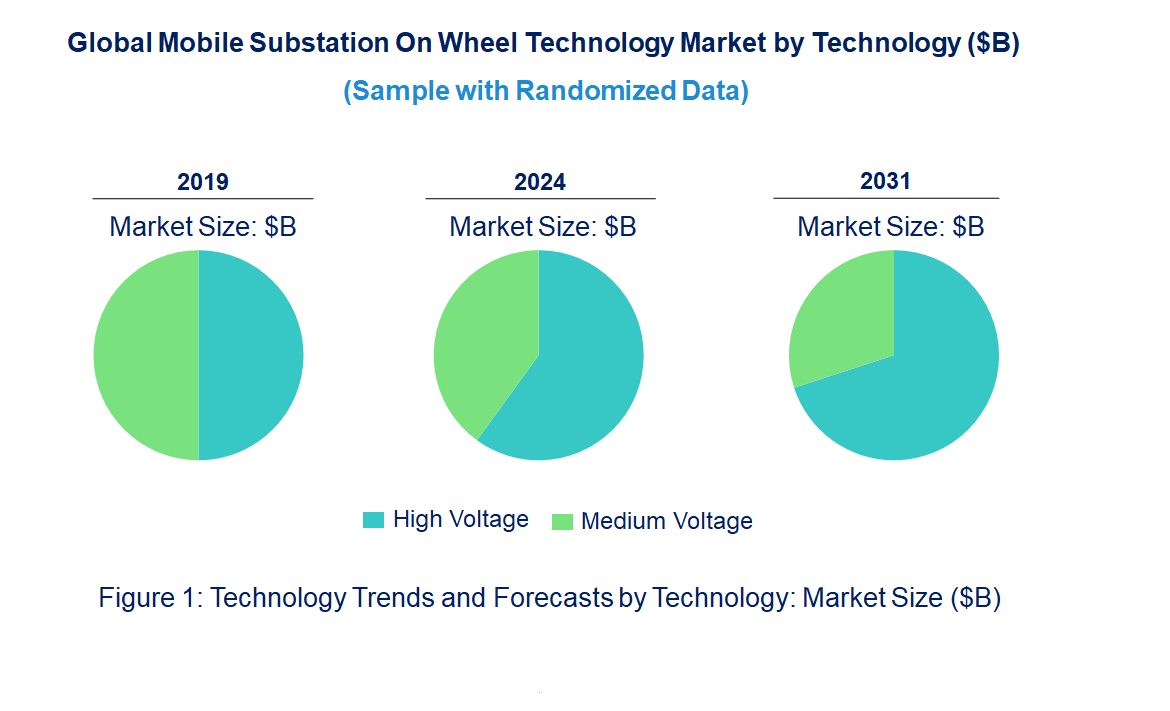
![Mobile Substation On Wheel Market Trend and Forecast by End Use Industry [Value from 2019 to 2031]:](https://lucintel.com/images/Mobile-Substation-On-Wheel-Technology-Market-Segment.png "Mobile Substation On Wheel Market Trend and Forecast by End Use Industry [Value from 2019 to 2031]:")
• Adoption of Modular Designs: The modular design enables mobile substations to be easily assembled and installed quickly, reducing the setup time and allowing for scaleability in meeting various power demands. These designs also make mobile substations versatile in applications ranging from temporary industrial and commercial energy supplies to utility applications.
• Incorporation of Digital Monitoring Systems: Mobile substations are getting digitized with advanced monitoring and control systems that would help to track real-time performance. These improved systems also help boost operational efficiency, predict maintenance, and remote management abilities, which also help in lessening downtime and achieving more reliable grids.
• Eco-friendly Insulating Materials: Eco-friendly materials, like SF6-free gases, which reduce greenhouse gas emissions with similar high performance, comply with international regulations and sustainability policies.
• Hybrid Power Systems: Mobile substations are increasingly integrating renewable energy sources, such as solar panels and battery storage, to create hybrid systems. These systems ensure energy availability in remote areas while reducing reliance on fossil fuels, promoting greener energy solutions.
• Compact and High-Capacity Transformers: Mobile substations can now deal with greater loads because compact, high-capacity transformers are being developed. Compact transformers are excellent for both urban and emergency applications in which space availability and the speed of deployment are critical factors. In response to the advancement of modern concepts such as modularity, digitalization, sustainability, and performance, the concept of Mobile Substation on Wheel Technology is evolving rapidly and is becoming a crucial ingredient in reshaping how the new energy is managed and delivered within both developed and developing regions.
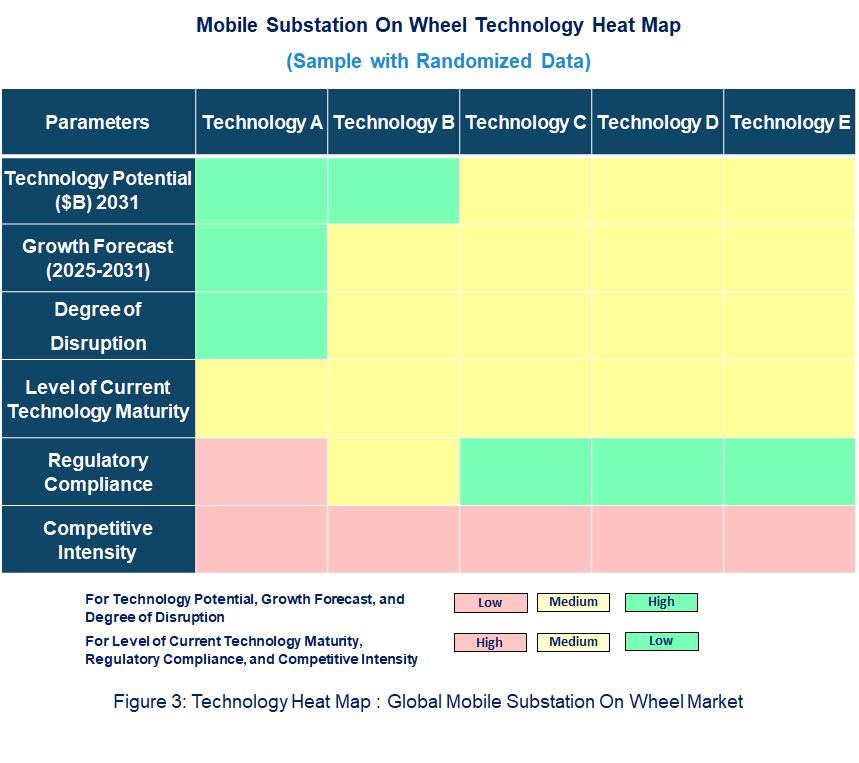
• Technological Potential: The technology is of great potential because it will address power outages, support renewable energy integration, and provide a temporary power supply during maintenance or emergencies. It is a vital asset for utilities and industries due to its flexibility, especially in developing regions experiencing growing energy demand.
• Degree of Disruption: The advanced features of mobile monitoring, modular designs, and the use of eco-friendly materials are challenging the traditional models of substations. The reduction in downtime, savings on installation costs, and increased sustainability of mobile solutions are transforming the energy sector.
• Current Technology Maturity Level: Mobile substations have reached a mature stage in terms of functionality. Further advancements in their capacity, portability, and efficiency continue to occur. Hybrid systems that integrate renewable energy make them even more prepared for the modern grid.
• Regulatory Compliance: The adoption of sustainable materials is being hastened by tight environmental regulations, such as the restriction on SF6 gases. The previous compliance of these materials with safety and energy standards also makes them future-proof in power management.
• ABB: ABB has developed modular mobile substations with integrated digital control systems. These systems allow for real-time performance monitoring and remote management, thereby enhancing the reliability of the grid and its operational efficiency. ABB's solutions are designed to integrate seamlessly with renewable energy sources, supporting sustainability goals.
• Hitachi Energy: Hitachi Energy has also released compact and hybrid-ready mobile substations with advanced power electronics. These solutions ensure smooth transfer of conventional and renewable power without interruption, making them suitable for those transitioning to greener grids.
• Siemens: Siemens relies on the use of modern insulation materials and SF6-free technologies to create environmentally friendly mobile substations. These technological improvements have reduced greenhouse emissions yet retain high performance ratings; they are in line with world standards for sustainability regulations. GE is committed to the development of lighter, more compact mobile substations for easier portability. Urban applications and emergency deployments make this possible, ensuring speedy resumption of power supply when necessary.
• Aktif Group: Aktif Group's mobile substation solutions have turnkey configurations that may be customised. The diversity in applications ranges from the extension of industrial operations to the revival of disaster-stricken power supply systems, where scale and adaptability must keep pace with changing needs for power.
• Matelec: Matelec's mobile substations are designed for harsh environments. It has improved thermal resistance with rugged construction. This gives better performance in extreme conditions to suit remote locations and industrial applications.
• Efacec: Efacec has also added renewable energy capabilities in its mobile substations that enable hybrid power systems. Such innovation supports grid resilience while reducing dependency on traditional sources of energy, which matches the global shift toward sustainable energy solutions.
• Eaton: Eaton has developed mobile substations equipped with energy storage systems, enabling uninterrupted power supply during outages. These systems also allow for load balancing in grids with high renewable energy penetration, enhancing grid stability.
• Delta Star: Delta Star is focusing on high-capacity transformers in its mobile substations, allowing for greater load handling. These developments address the growing demand for scalable solutions in urban areas and large-scale industrial projects.
• WEG: WEG has developed portable substation units with modular construction and smart grid integration. These innovations enable efficient power distribution in temporary and remote installations, which enhances operational efficiency. These developments point to the growing importance of mobile substation on wheel technology in addressing modern energy challenges. By focusing on modularity, sustainability, and advanced digital integration, key players are reshaping the landscape of power distribution.
• Increased Demand for Reliable Power Supply: Urbanization, as well as rapid industrial expansion, requires a reliable power supply. The use of mobile substations quickly responds to needs and facilitates quick deployment to provide a steady power source in cases where it becomes critical.
• Renewable Integration: With the global energy shift towards renewable sources, comes the need for hybrid mobile substations. Such systems add stability to the grid, and ensure an easier transition to more sustainable, cleaner sources of energy.
• Disaster Management and Emergency Response: Mobile substations are critical in disaster-prone areas where immediate power is restored during disruptions. Their mobility and scalability provide excellent backup for emergency applications to limit the effects of a disruption.
• Grid Modernization Projects: Grid modernization involves smart grids, digital substations, and similar projects in which governments and utilities are investing. Mobile substations, with advanced monitoring systems, support grid modernization and hence their implementation.
• Mobile substations: There are becoming more efficient and environment-friendly through compact transformer designs, SF6-free insulation, and digital control systems. Such improvements help decrease operation costs and improve compliance with sustainability standards. The mobile substation on wheel technology market is shaped by its ability to address critical power needs in various scenarios, from renewable energy integration to disaster recovery. As technology advances and market demand grows, mobile substations are becoming indispensable for modernizing energy distribution and ensuring grid resilience.
• ABB
• Hitachi
• Siemens
• GE
• Aktif Group
• Matelec
• Technology Readiness: Both HV and MV technologies have high levels of readiness and are supported by advances in digitalization, portability, and eco-friendly materials. HV offers use cases in large power grids, renewable energy integration, and inter-regional transmission systems. Meanwhile, MV is best suited for industrial-scale operation, temporary power restoration, and urban energy solutions. With continuous innovation in compact designs and hybrid configurations, these technologies are well-positioned to address diverse energy demands across developed and developing markets, ensuring reliability and flexibility in power distribution.
• Competitive Intensity and Regulatory Compliance: In mobile substation on wheel market segmentation and application-specific requirements drive the competitive intensity between High Voltage and Medium Voltage technologies. HV systems compete more in industrial and utility-scale deployments, while MV technologies are gaining traction in urban and decentralized applications. Regulatory compliance adds another layer of complexity, with stricter environmental policies pushing for SF6-free insulation and eco-friendly materials. Market players are innovating to meet global standards, improving product efficiency while also meeting regional energy and environmental standards, which creates a competitive yet sustainable landscape.
• Disruptive Potential: High Voltage (HV) and Medium Voltage (MV) mobile substation technologies have high disruption potential in the modern power system. HV technologies are necessary for large grid applications, offering the capabilities to handle heavy loads and long-distance power transmission, while MV solutions are more appropriate for localized, industrial, or urban settings. Modular HV systems and hybrid MV units with renewable integration are changing the way energy reliability and sustainability are achieved. These developments can challenge the conventional fixed substations since they allow quick deployment, scalability, and cost-effective operation, particularly in emergency or remote conditions.
• High Voltage
• Medium Voltage
• Utilities
• Industrial
• Energy
• Others
• North America
• Europe
• Asia Pacific
• The Rest of the World
• Latest Developments and Innovations in the Mobile Substation On Wheel Technologies
• Companies / Ecosystems
• Strategic Opportunities by Technology Type


Choose a license that fits your team. Instant PDF delivery.
Prices exclude taxes. Instant delivery. Custom licensing available on request.
Market Report · May 18, 2026
Market Report · May 18, 2026
Market Report · May 18, 2026
Trusted partner for strategic intelligence and business growth


Receive a complimentary market analysis tailored to your industry. Our analysts will identify key growth opportunities and competitive dynamics specific to your business.

Market size, growth rate, and key trend analysis for your specific sector.

Top competitor positioning and market share analysis.

Strategic recommendations backed by data-driven insights.
Get curated market intelligence and competitive moves straight to your inbox.
By subscribing, you agree to receive our monthly insights. Unsubscribe anytime.
Receive a complimentary market analysis tailored to your industry. Our analysts will identify key growth opportunities and competitive dynamics specific to your business.
Market size, growth rate, and key trend analysis for your specific sector.
Top competitor positioning and market share analysis.
Strategic recommendations backed by data-driven insights.
Get curated market intelligence, emerging trends, and competitive moves straight to your inbox each month.
By subscribing, you agree to receive our monthly insights. Unsubscribe anytime.
We'll send your sample report shortly.