
Market Report · May 18, 2026

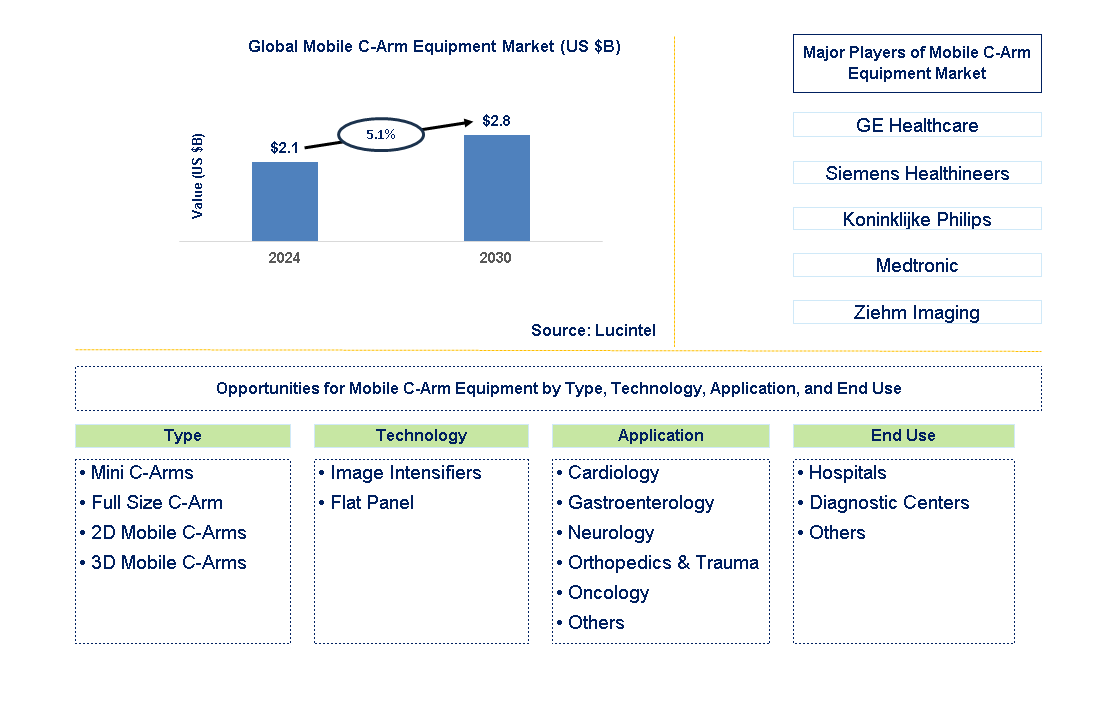
Key data points: The market size in 2030 = $2.8 billion, growth forecast = 5.1% annually for the next 6 years. Scroll below to get more insights. This market report covers trends, opportunities, and forecasts in the global mobile C-arm equipment market to 2030 by type (mini C-arms, full size C-arm, 2D mobile C-arms, and 3D mobile C-arms), technology (image intensifiers and flat panel), application (cardiology, gastroenterology, neurology, orthopedics & trauma, oncology, and others), end use (hospitals, diagnostic centers, and others), and region (North America, Europe, Asia Pacific, and the Rest of the World)
We'll send your sample report shortly.
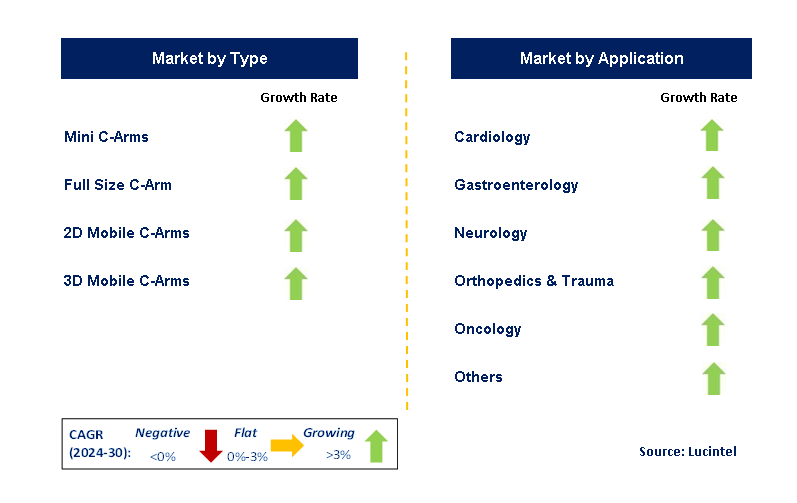
• Lucintel forecasts that, within the application category, cardiology will remain the largest segment due to the increasing heart related surgies being performed by the help of C-arms and on-going technological advancement and medical innovation in the field of imaging.
• Within the end use category, hospital is expected to witness the highest growth over the forecast period due to growing demand of well equipped hospital infrastructure for surgies, diagnosis and treatment and increasing incidence of chronic diseases.
• In terms of regions, North America will remain the largest region due to increasing chronic and acute injuries incidences and commending healthcare reimbursement policies in the region. Gain valuable insights for your business decisions with our comprehensive 150+ page report.
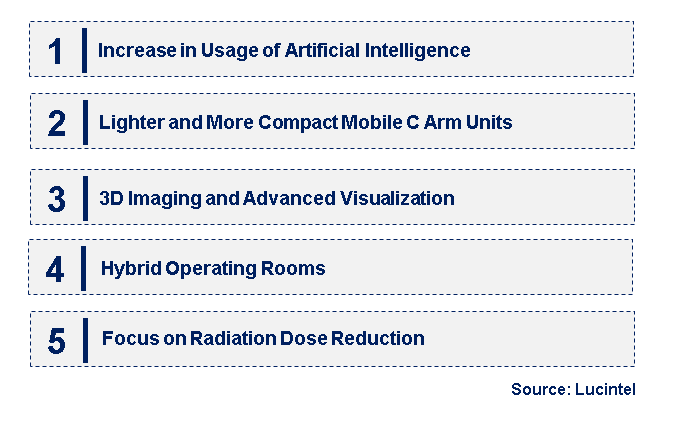
• Increase in Usage of Artificial Intelligence: The incorporation of artificial intelligence in mobile C-arm systems is a game changer regarding image quality. It reduces the amount of radiation absorbed by the operator and enhances the level of diagnostics. Such capabilities greatly increase the effectiveness of surgeries, which is typically reflected in features such as automatic image adjustment and immediate image processing. This trend has proven to be especially useful during interventions where real-time alterations can significantly improve patient health outcomes.
• Lighter and More Compact Mobile C-arm Units: Particularly in outpatient surgery centers and smaller clinics, there is increasing demand for more portable and miniaturized mobile C-arm units. These units are designed to be lightweight and easy to use, making them suitable for cramped areas. Miniaturization also allows for greater versatility in practice, thus increasing the variety of procedures in which mobile C-arms can be utilized.
• 3D Imaging and Advanced Visualization: Mobile C-arms are increasingly equipped with 3D imaging capabilities, providing surgeons with better views of the anatomy being worked on. This is especially pronounced in orthopedic and spinal surgeries, where accurate imaging is paramount. These advancements in visualization technologies positively impact surgeries and create a market for mobile C-arms capable of performing 3D imaging.
• Hybrid Operating Rooms: The emergence of hybrid operating rooms, which integrate surgical and imaging procedures, has created a broader market for mobile C-arms. Such rooms are designed for multifaceted processes, such as cardiovascular procedures, which require various imaging techniques and the use of mobile C-arms and other imaging devices. The hybrid operating room concept is also fueling the development of mobile C-arm systems, enabling enhancements that improve the operational and functional capabilities of the devices.
• Focus on Radiation Dose Reduction: With the aversion to patient exposure to radiation during mobile C-arm procedures, efforts are being made to lower radiation dosage. Additionally, low-dose imaging technology and accessories for radiation protection are increasingly incorporated into the design of new C-arm equipment. This trend is particularly strong in pediatric and orthopedic surgeries, where radiation exposure is discouraged. Therefore, in the development of systems, high-quality images at lower doses are sought. The mobile C-arm equipment market is impacted by these growing trends, enhancing technology and the scope of applications. Market advancements continue with AI infusion, portability, advanced 3D imaging, hybrid operating theaters, and reduced radiation doses. These changes are making this particular market responsive to the current health needs of society.
• AI Imaging Systems: The advent of AI-aided mobile C-arm systems has improved the quality of intraoperative imaging, making it more precise. Such systems enhance imaging outcomes and increase the level of automation for various tasks, thus reducing the degree of intervention required. AI systems are particularly useful in complicated surgeries where timely reactions are necessary rather than waiting for the operator. This leads to increased use of mobile C-arms for more sophisticated surgical interventions.
• FDA Approvals for New Products: Recently, the Accura Depuy C-arm model was cleared for introduction into the American market. These approvals are crucial for firms developing advanced imaging systems that feature low radiation doses and efficient imaging qualities. Efforts by regulatory authorities instill confidence in the market, motivating further developments in the mobile C-arm sector.
• Infrastructural Developments in Emerging Markets: One notable development is the move by mobile C-arm manufacturers into emerging markets such as India and Southeast Asia. They are not only building manufacturing plants but also creating synergy alliances to tap into the increasing demand in these areas. This expansion is relevant as it seeks to fill existing gaps in these markets, especially in less urbanized regions that lack advanced imaging technologies.
• Partnerships Towards Hybrid OR Solutions: There is a trend where surgical equipment manufacturers and mobile C-arm companies are teaming up to develop hybrid operating room (OR) solutions. These collaborations aim to merge mobile C-arms with surgical devices to build a more inclusive imaging and operating system. This advancement promotes the use of hybrid ORs, which are becoming the norm in dedicated surgical centers.
• Radiation Protection Focus: In recent years, technological improvements such as low radiation dose imaging or enhanced physical barriers are addressing concerns raised during the use of mobile C-arms. Efforts have focused on producing systems that generate excellent images while minimizing patient and occupational radiation exposure. There is high demand for this aspect of safety in mobile C-arms from healthcare facilities, particularly those involved in pediatric and orthopedic surgeries. These new trends are making a significant difference in the mobile C-arm equipment market; these innovations create new opportunities, expand the target market, and enhance measures toward patient safety. These trends will be crucial in directing the current and future movement of mobile C-arms.
• Orthopedic Surgery: Due to the growing preference for minimally invasive orthopedic surgical procedures, mobile C-arms are expected to experience tremendous growth. Their incorporation facilitates real-time imaging during operations, such as fracture fixations and joint replacements. This trend is particularly shaping the orthopedic segment, as mobile C-arms are now being manufactured with enhanced 3-dimensional imaging capabilities, allowing for more accurate and effective surgeries.
• Cardiovascular Procedures: Mobile C-arms have become essential in cardiology surgery procedures. As the need for real-time imaging is fulfilled by mobile C-arms, their use is most appreciated in catheterization labs and hybrid ORs. Recent developments in mobile C-arms include high-resolution imaging modes and minimal radiation doses, enabling their use in both non-vascular and cardiovascular applications.
• Emergency and Trauma Care: There is an increasing trend in the use of mobile C-arms in emergency and trauma care, attributed to the need for rapid and accurate imaging in emergency situations. Such equipment allows an operating surgeon to conduct instant imaging and guide minimally traumatic surgery, which is crucial in emergencies. The increasing availability of lightweight and mobile C-arms facilitates their application in emergency and trauma departments.
• Outpatient Surgical Centers: Flexibility is quickly making mobile C-arms the preferred choice among outpatient surgical centers. Surgical centers typically demand imaging systems that are easy to maneuver and adaptable to the procedures performed. Mobile C-arms are in high demand due to the ever-increasing popularity of outpatient minimally invasive surgical procedures, which would otherwise not be feasible with stationary C-arms.
• Pediatric Surgery: There are perceived cancer risks associated with pediatric surgery that specifically call for minimal exposure. In pediatric surgery, where radiation safety is a major concern, low-dose imaging mobile C-arms are becoming standard equipment. At the same time, the design of specific mobile C-arms for pediatrics is spurring entry into this market as healthcare providers increasingly seek safer and more efficient imaging techniques for children. All these target growth areas are propelling the growth of the mobile C-arm equipment market across different applications. Additionally, such growth opportunities will be fundamental to the mobility of the marketplace amidst the growing preference for minimally invasive procedures accompanied by real-time imaging.
• Technological Advancements: One of the key factors that has helped the mobile C-arm market evolve is technology, including models that withstand the test of time. Innovative imaging technologies, including artificial intelligence and 3-dimensional imaging, will be omnipresent in the advancement of mobile C-arm devices. Such innovations improve surgical techniques, enhancing the quality of surgeries and making mobile C-arms essential in many modern surgical units. The launch of lightweight and compact devices is also boosting the market, as such units can be utilized even in small clinics and outpatient centers.
• Growing Opportunities for Mobile C-arms: Globally, minimally invasive surgery is becoming the norm. Mobile C-arms, which offer the ability to view images essential for these surgical procedures, are increasingly in demand. The success of minimally invasive surgery now fully depends on imaging techniques, and mobile C-arms are becoming more popular due to their adaptability and operability in various surgical environments. This is particularly true for orthopedics, cardiovascular surgery, and emergency care.
• Technology Investment Growth: There is an escalating trend among both government and private healthcare players to increase spending on new mobile C-arm imaging systems and other advanced medical imaging technologies. This pattern is especially observable in emerging markets that show trends of advancing health systems or improving health infrastructure. These improvements enhance market growth by providing hospitals and clinics with the necessary capacity to install modern imaging equipment, satisfying patient needs.
• Approvals from Government Agencies: Mobile C-arm technology approvals by regulatory agencies are vital for the mobile C-arm market. Recent marketing approvals, such as those from the FDA for new products, are easing the introduction of new imaging systems into the market. Support from regulatory agencies enhances investor confidence, encouraging manufacturers to commit time and resources to develop newer technologies under safety and efficacy guidelines.
• Aging Population and Rising Surgical Procedures: An increasing number of surgical procedures, such as orthopedic and cardiovascular treatments, are being performed due to the rising elderly population. This demographic trend raises the need for mobile C-arms, which provide imaging systems used during surgeries where real-time images are required. As more individuals belong to the elderly category, demand for sophisticated imaging equipment that facilitates more complicated surgeries will continue to grow, enhancing market growth. Challenges in the mobile C-arm equipment market include:
• High Costs of Advanced Mobile C-arms: One significant challenge facing the mobile C-arm market is the high price of the most advanced models. These devices do not come cheap due to the technological and manufacturing inputs required. Such prices can create a threshold that hinders some healthcare providers, particularly smaller ones in developing economies, from incorporating high-tech mobile C-arms.
• Operational Complexity and Training Requirements: Advanced mobile C-arm systems necessitate health practitioners’ training to facilitate seamless health imaging. These factors can pose challenges, as not every facility has the medical staff or funds to operate such advanced systems. The healthcare industry requires skilled professionals to provide necessary training, which may limit the widespread use of these systems.
• Economic Constraints in Emerging Markets: Despite healthy interest in mobile C-arms in emerging markets, budgetary constraints prevent healthcare providers from adopting these technologies. Limited resources and the high costs of advanced mobile C-arms restrict market growth in these areas. Additionally, fluctuations in currency pairs and economic conditions may erode purchasing power, further limiting market expansion. The mobile C-arm equipment market is influenced by strong market drivers and significant restraints. High costs, complex operations, and economic factors that fuel market expansion must be addressed. The interplay of these factors will define the market's future, with continuous technological developments and investment strategies being critical.
• GE Healthcare
• Siemens Healthineers
• Koninklijke Philips
• Medtronic
• Ziehm Imaging
• Shimadzu Corporation
• Hologic Corporation
• Canon Medical Systems
• Fujifilm
• Eurocolumbus
• Mini C-Arms
• Full Size C-Arm
• 2D Mobile C-Arms
• 3D Mobile C-Arms
• Image Intensifiers
• Flat Panel
• Cardiology
• Gastroenterology
• Neurology
• Orthopedics & Trauma
• Oncology
• Others
• Hospitals
• Diagnostic Centers
• Others
• North America
• Europe
• Asia Pacific
• The Rest of the World
• United States: In the United States, the mobile C-arm market is growing through the use of artificial intelligence and machine learning in imaging techniques. There is an emphasis on enhancing image quality while reducing radiation exposure. The increase in outpatient surgeries and funding for hybrid operating theaters are driving demand. New mobile C-arm systems recently approved by the FDA are also widening market opportunities.
• China: In China, immense growth in the mobile C-arm equipment market is driven by improvements in healthcare infrastructure and the adoption of new imaging technologies. Thanks to the government's efforts to enhance healthcare services for remote populations, there has been increased demand for mobile C-arms. Domestic manufacturers are also emerging, producing affordable models and leading to stiff competition and technological advancements in the region.
• Germany: In Germany, the demand for mobile C-arms is rising due to the robust health system and a strong emphasis on accuracy in surgical procedures. The country is also leading in incorporating 3D imaging capabilities into C-arms, expected to enhance the precision of surgeries. Additionally, German companies are producing fast and cost-effective C-arm systems that are compact enough for use in small clinics and ambulatory surgical centers.
• India: In India, the mobile C-arm market is expanding due to the increasing number of hospitals and the state’s efforts to improve health services. In tier-2 and tier-3 cities, service providers seek low-cost options for advanced imaging modalities. Indian manufacturers are collaborating with global suppliers to produce quality mobile C-arms that are reasonably priced.
• Japan: Japan’s mobile C-arm market represents a blend of sophisticated and integrated technology with affordability. The advancement of mini C-arm technologies used in orthopedic and sports medicine is increasing. Japanese companies are testing AI technology to improve imaging technologies. Factors fueling the market further include the country's demographics and the rise in minimally invasive surgeries.


• GE Healthcare
• Siemens Healthineers
• Koninklijke Philips
• Medtronic
• Ziehm Imaging
• Shimadzu Corporation
• Hologic Corporation
• Canon Medical Systems
• Fujifilm
• Eurocolumbus Q6. Which mobile C-arm equipment market segment will be the largest in future? Answer: Lucintel forecasts that cardiology will remain the largest segment due to the increasing heart related surgies being performed by the help of C-arms and on-going technological advancement and medical innovation in the field of imaging. Q7. In mobile C-arm equipment market, which region is expected to be the largest in next 5 years? Answer: North America will remain the largest region due to increasing chronic and acute injuries incidences and commending healthcare reimbursement policies in the region. Q.8 Do we receive customization in this report? Answer: Yes, Lucintel provides 10% customization without any additional cost.


Choose a license that fits your team. Instant PDF delivery.
Prices exclude taxes. Instant delivery. Custom licensing available on request.
Market Report · May 18, 2026
Market Report · May 18, 2026
Market Report · May 18, 2026
Trusted partner for strategic intelligence and business growth


Receive a complimentary market analysis tailored to your industry. Our analysts will identify key growth opportunities and competitive dynamics specific to your business.

Market size, growth rate, and key trend analysis for your specific sector.

Top competitor positioning and market share analysis.

Strategic recommendations backed by data-driven insights.
Get curated market intelligence and competitive moves straight to your inbox.
By subscribing, you agree to receive our monthly insights. Unsubscribe anytime.
Receive a complimentary market analysis tailored to your industry. Our analysts will identify key growth opportunities and competitive dynamics specific to your business.
Market size, growth rate, and key trend analysis for your specific sector.
Top competitor positioning and market share analysis.
Strategic recommendations backed by data-driven insights.
Get curated market intelligence, emerging trends, and competitive moves straight to your inbox each month.
By subscribing, you agree to receive our monthly insights. Unsubscribe anytime.
We'll send your sample report shortly.