
Report Feature
Mineral Wool Ceiling Tile Market Trends and Forecast
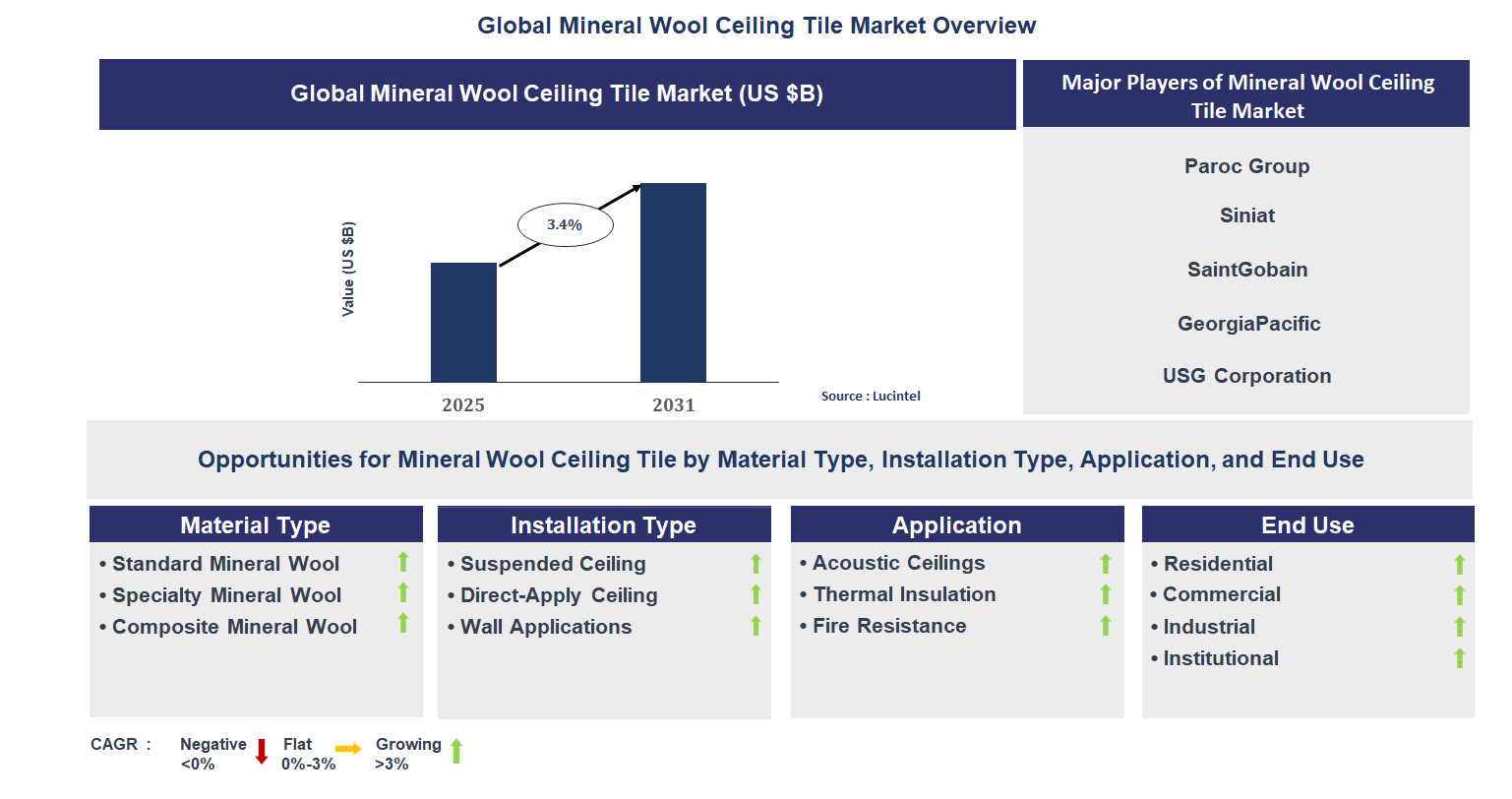
The future of the global mineral wool ceiling tile market looks promising with opportunities in the residential, commercial, industrial, and institutional markets. The global mineral wool ceiling tile market is expected to grow with a CAGR of 3.4% from 2025 to 2031. The major drivers for this market are the increasing demand for energy-efficient building materials, the rising adoption of sustainable construction practices, and the growing need for noise control in spaces.• Lucintel forecasts that, within the material type category, standard mineral wool is expected to witness the highest growth over the forecast period.
• Within the end use category, residential is expected to witness the highest growth.
• In terms of region, APAC is expected to witness the highest growth over the forecast period. Gain valuable insights for your business decisions with our comprehensive 150+ page report. Sample figures with some insights are shown below.
Emerging Trends in the Mineral Wool Ceiling Tile Market
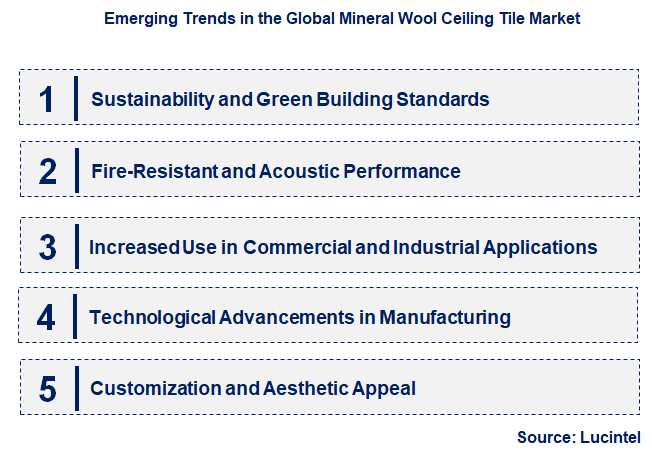
The mineral wool ceiling tile market is shaped by several emerging trends. These trends are focused on technological innovation, sustainability, and the demand for high-performance building materials. As global construction markets evolve, these trends are setting the stage for future growth and innovation in the market.• Sustainability and Green Building Standards: Sustainability is a key driver in the mineral wool ceiling tile market. Increasing demand for eco-friendly materials is pushing manufacturers to create products that contribute to green building certifications like LEED. Mineral wool tiles, which are made from natural or recycled materials, fit into these standards due to their energy efficiency, recyclability, and low environmental impact.
• Fire-Resistant and Acoustic Performance: The need for fire-resistant and soundproofing materials is growing in both residential and commercial spaces. Mineral wool ceiling tiles offer superior fire resistance and excellent acoustic performance, which is increasingly important in high-density environments. These features are driving the market’s growth, especially in sectors such as healthcare, education, and office buildings where safety and comfort are priorities.
• Increased Use in Commercial and Industrial Applications: Mineral wool ceiling tiles are gaining traction in commercial and industrial sectors due to their thermal insulation and noise reduction properties. As the demand for high-quality indoor environments rises, the use of these tiles in office spaces, factories, and public buildings is growing. The tiles help meet regulatory requirements for energy efficiency and building safety.
• Technological Advancements in Manufacturing: Innovative manufacturing techniques are enhancing the performance and cost-effectiveness of mineral wool ceiling tiles. New technologies are making it possible to produce more lightweight, durable, and efficient tiles. These advancements allow manufacturers to meet evolving consumer demands while reducing production costs, thereby making mineral wool tiles more accessible to a wider range of industries.
• Customization and Aesthetic Appeal: As design preferences evolve, there is an increasing demand for customized mineral wool ceiling tiles. Consumers are looking for aesthetically pleasing products that complement their interior designs. Manufacturers are responding with a variety of textures, patterns, and colors that can be tailored to different architectural styles, making mineral wool ceiling tiles an attractive option for modern interiors. Emerging trends in the mineral wool ceiling tile market are largely driven by sustainability, technological innovation, and the need for enhanced building performance. As the market continues to prioritize fire resistance, soundproofing, and energy efficiency, these trends will shape future developments, helping manufacturers meet the growing demands of both commercial and residential markets worldwide.
Recent Development in the Mineral Wool Ceiling Tile Market
The mineral wool ceiling tile market has seen several important developments, including innovations in materials, production techniques, and product offerings. These developments reflect the industrys response to the growing demand for sustainable, fire-resistant, and high-performance materials in construction. Here are five key developments driving the market forward.• Development of Fire-Resistant Tiles: One of the most notable developments in the mineral wool ceiling tile market is the increased focus on fire-resistant properties. Manufacturers are enhancing the fire resistance of mineral wool tiles to meet stringent building safety codes. These improvements make mineral wool tiles a popular choice in high-risk sectors like healthcare and hospitality, where fire safety is paramount.
• Introduction of Eco-Friendly Manufacturing Processes: In response to the growing demand for sustainable products, manufacturers are adopting eco-friendly production processes. These processes reduce energy consumption, waste, and emissions during production. Using recycled materials in mineral wool tiles and focusing on energy-efficient production techniques are key steps toward meeting global sustainability goals and increasing the tiles’ appeal in green building markets.
• Enhanced Acoustic Performance: Advancements in acoustic technology have significantly improved the performance of mineral wool ceiling tiles. New product formulations offer superior sound absorption, making these tiles highly effective in reducing noise in open office environments, schools, hospitals, and other high-traffic spaces. As demand for noise-reducing materials increases, this development positions mineral wool tiles as an essential component in acoustically optimized buildings.
• Integration of Smart Technologies: Smart technologies are being integrated into mineral wool ceiling tiles to enhance their functionality. These innovations include tiles equipped with sensors that monitor air quality, humidity, or temperature, providing valuable data for building management systems. This integration offers an additional layer of convenience and performance monitoring, making mineral wool tiles even more appealing in modern smart buildings.
• Customization in Design and Aesthetics: Manufacturers are increasingly offering mineral wool ceiling tiles in a wide range of designs, colors, and finishes. The trend toward customized and aesthetically pleasing ceiling solutions is being met by tiles that offer both functionality and visual appeal. This development caters to the growing demand for stylish interiors in both commercial and residential settings, particularly in the hospitality and retail sectors. Recent developments in the mineral wool ceiling tile market reflect the industrys responsiveness to evolving consumer demands for sustainability, fire safety, soundproofing, and aesthetics. Technological advancements in manufacturing, along with the integration of smart features, are improving the performance and functionality of mineral wool tiles. These developments position the market for continued growth, driven by both innovation and design flexibility.
Strategic Growth Opportunities in the Mineral Wool Ceiling Tile Market
The mineral wool ceiling tile market presents several strategic growth opportunities, particularly in sectors where energy efficiency, soundproofing, and fire safety are priorities. As construction trends evolve, there are key applications where these opportunities can be capitalized upon. Below are five growth opportunities across different sectors of the market.• Green Building Applications: With increasing demand for sustainable construction materials, mineral wool ceiling tiles are becoming a crucial component in green building designs. These tiles contribute to energy efficiency and acoustic performance, making them ideal for LEED-certified projects. Manufacturers can tap into this growing trend by offering eco-friendly, recyclable tiles that align with green building standards.
• Commercial Office Spaces: The demand for mineral wool ceiling tiles in commercial office spaces is growing due to their superior acoustic and thermal properties. As companies increasingly prioritize employee comfort and productivity, these tiles can help improve noise control and energy efficiency in open-plan offices, making them a must-have in modern corporate environments.
• Healthcare Facilities: In healthcare environments, safety, hygiene, and comfort are paramount. Mineral wool ceiling tiles, known for their fire resistance and acoustic properties, are well-suited for hospitals and clinics. The market can benefit from increasing the adoption of these tiles in both new healthcare constructions and renovations, where noise control and fire safety are top priorities.
• Retail and Hospitality Sector: The retail and hospitality sectors are seeing increased demand for high-performance, aesthetically pleasing ceiling tiles. Mineral wool tiles, with their range of designs and acoustic properties, are ideal for hotels, restaurants, and retail outlets. By focusing on the design and customization aspects, manufacturers can capture this growing market for visually attractive and functional ceiling solutions.
• Smart Buildings and Technology Integration: As smart building technology becomes more widespread, there is an opportunity to integrate mineral wool ceiling tiles with sensors and other smart devices. These tiles can monitor environmental factors such as air quality, humidity, and temperature, providing real-time data for building management systems. This offers a competitive advantage for manufacturers in the growing smart building market. Strategic growth opportunities in the mineral wool ceiling tile market are abundant, particularly in sustainable construction, commercial offices, healthcare, retail, and smart buildings. Manufacturers can capitalize on these opportunities by focusing on the unique benefits of mineral wool tiles, such as soundproofing, fire resistance, and energy efficiency. As demand grows for both functional and aesthetically pleasing materials, the market’s potential continues to expand.
Mineral Wool Ceiling Tile Market Driver and Challenges
The mineral wool ceiling tile market is driven by technological advancements, demand for sustainability, and the growing need for high-performance building materials. However, challenges related to production costs, market competition, and regulatory pressures also impact the industry. Below are the key drivers and challenges shaping the mineral wool ceiling tile market. The factors responsible for driving the mineral wool ceiling tile market include: 1. Sustainability Demand: The growing emphasis on sustainability in the construction industry is driving the demand for eco-friendly mineral wool ceiling tiles. These products are made from recyclable materials and contribute to energy efficiency, making them ideal for green building projects. As governments and organizations push for environmentally responsible construction, the demand for sustainable materials like mineral wool is expected to rise. 2. Fire and Soundproofing Requirements: Mineral wool ceiling tiles are highly valued for their fire-resistant and sound-absorbing qualities. As building codes become stricter and demand for safer, more comfortable indoor environments rises, these tiles are becoming a preferred choice. In sectors such as healthcare, hospitality, and education, the need for effective fire and soundproofing solutions is a significant driver for the market. 3. Technological Advancements in Production: Innovative production technologies are improving the quality, efficiency, and cost-effectiveness of mineral wool ceiling tiles. Advancements in manufacturing techniques allow for the creation of more durable, lightweight, and aesthetically pleasing tiles. These innovations are lowering production costs and increasing the availability of high-performance tiles at competitive prices, boosting the market’s growth. 4. Urbanization and Commercial Construction: The rapid urbanization and expansion of commercial infrastructure worldwide are driving the demand for high-quality building materials, including mineral wool ceiling tiles. In urban areas, the need for energy-efficient and noise-reducing solutions in commercial buildings, offices, and residential complexes is pushing growth in this market, as mineral wool tiles meet these specific requirements. 5. Energy Efficiency Trends: As energy efficiency becomes a priority in building design, mineral wool ceiling tiles, with their insulation properties, offer an effective solution. These tiles help maintain temperature control and reduce energy consumption in buildings, making them an attractive choice for builders and property owners focused on reducing energy costs and complying with energy-efficient building standards. Challenges in the mineral wool ceiling tile market are: 1. High Production Costs: The production of high-quality mineral wool ceiling tiles can be costly, particularly in terms of raw materials and manufacturing processes. The prices of raw materials such as basalt or glass can fluctuate, leading to increased production costs. This can make it challenging for manufacturers to offer competitive pricing while maintaining product quality. 2. Intense Market Competition: The mineral wool ceiling tile market is becoming increasingly competitive, with numerous players offering similar products. Companies are under pressure to differentiate themselves through quality, price, and innovation. Increased competition can lead to price wars, reducing profit margins and making it difficult for smaller companies to thrive. 3. Regulatory Compliance: Meeting regulatory standards for safety, fire resistance, and environmental sustainability can be challenging for manufacturers. The mineral wool ceiling tile market is subject to strict regulations, particularly regarding fire safety and the use of non-toxic materials. Ensuring compliance with these regulations while keeping costs under control can be a barrier for some companies. The mineral wool ceiling tile market is shaped by key drivers like sustainability, fire safety, and technological innovations, alongside challenges such as high production costs and regulatory pressures. Manufacturers must address these challenges while capitalizing on emerging opportunities in green building projects, urbanization, and energy efficiency. The evolving market landscape presents both challenges and significant growth prospects for the industry.List of Mineral Wool Ceiling Tile Companies
Companies in the market compete on the basis of product quality offered. Major players in this market focus on expanding their manufacturing facilities, R&D investments, infrastructural development, and leverage integration opportunities across the value chain. With these strategies mineral wool ceiling tile companies cater increasing demand, ensure competitive effectiveness, develop innovative products & technologies, reduce production costs, and expand their customer base. Some of the mineral wool ceiling tile companies profiled in this report include-• Paroc Group
• Siniat
• SaintGobain
• GeorgiaPacific
• USG Corporation
• KNAUF
• Armstrong World Industries
• Ecophon
• Vicoustic
• PABCO Gypsum
Mineral Wool Ceiling Tile Market by Segment
The study includes a forecast for the global mineral wool ceiling tile market by material type, installation type, application, end use, and region.Mineral Wool Ceiling Tile Market by Material Type [Value from 2019 to 2031]:
• Standard Mineral Wool
• Specialty Mineral Wool
• Composite Mineral Wool
Mineral Wool Ceiling Tile Market by Installation Type [Value from 2019 to 2031]:
• Suspended Ceiling
• Direct-Apply Ceiling
• Wall Applications
Mineral Wool Ceiling Tile Market by Application [Value from 2019 to 2031]:
• Acoustic Ceilings
• Thermal Insulation
• Fire Resistance
Mineral Wool Ceiling Tile Market by End Use [Value from 2019 to 2031]:
• Residential
• Commercial
• Industrial
• Institutional
Mineral Wool Ceiling Tile Market by Region [Value from 2019 to 2031]:
• North America
• Europe
• Asia Pacific
• The Rest of the World
Country Wise Outlook for the Mineral Wool Ceiling Tile Market
The mineral wool ceiling tile market is evolving rapidly, driven by advancements in acoustic insulation, sustainability, and architectural design trends. As construction demand rises globally, this market is seeing key developments in the United States, China, Germany, India, and Japan. The need for energy-efficient, soundproofing, and fire-resistant materials is also playing a pivotal role in shaping the market.• United States: In the U.S., the mineral wool ceiling tile market is expanding due to the rising demand for sustainable building materials and improved indoor air quality. Technological advancements in fire and soundproofing properties are key developments. As green building standards become more stringent, the use of mineral wool ceiling tiles has increased in commercial and residential buildings, aligning with energy-efficient trends.
• China: In China, the mineral wool ceiling tile market has experienced growth, driven by rapid urbanization and a booming construction sector. The government’s focus on eco-friendly construction materials has increased demand for fire-resistant, soundproofing, and energy-efficient products. Chinese manufacturers are increasingly focusing on innovative production methods to reduce costs and meet rising consumer demand for high-quality ceiling tiles.
• Germany: Germany’s mineral wool ceiling tile market is influenced by stringent environmental regulations and high demand for energy-efficient and sustainable building materials. The market is driven by growing trends in green building certifications and acoustic optimization. Companies are focusing on high-performance mineral wool tiles with enhanced soundproofing and insulation capabilities to meet the needs of commercial and industrial spaces.
• India: India’s market for mineral wool ceiling tiles is growing as the construction industry expands in urban centers. The demand for energy-efficient, fire-resistant materials is rising, with mineral wool products increasingly being used in both residential and commercial buildings. This growth is driven by the need for improved acoustics and thermal insulation in growing cities across the country.
• Japan: In Japan, the mineral wool ceiling tile market is evolving with an emphasis on high-performance acoustics, fire resistance, and sustainability. The Japanese construction industry is increasingly adopting mineral wool tiles due to their ability to meet the stringent seismic regulations and environmental standards in the region. Additionally, technological advancements in the manufacturing process are enabling more cost-effective solutions.

Features of the Global Mineral Wool Ceiling Tile Market
Market Size Estimates: Mineral wool ceiling tile market size estimation in terms of value ($B). Trend and Forecast Analysis: Market trends (2019 to 2024) and forecast (2025 to 2031) by various segments and regions. Segmentation Analysis: Mineral wool ceiling tile market size by various segments, such as by material type, installation type, application, end use, and region in terms of value ($B). Regional Analysis: Mineral wool ceiling tile market breakdown by North America, Europe, Asia Pacific, and Rest of the World. Growth Opportunities: Analysis of growth opportunities in different material types, installation types, applications, end uses, and regions for the mineral wool ceiling tile market. Strategic Analysis: This includes M&A, new product development, and competitive landscape of the mineral wool ceiling tile market. Analysis of competitive intensity of the industry based on Porter’s Five Forces model.
FAQ
Q1. What is the growth forecast for mineral wool ceiling tile market? Answer: The global mineral wool ceiling tile market is expected to grow with a CAGR of 3.4% from 2025 to 2031. Q2. What are the major drivers influencing the growth of the mineral wool ceiling tile market? Answer: The major drivers for this market are the increasing demand for energy-efficient building materials, the rising adoption of sustainable construction practices, and the growing need for noise control in spaces. Q3. What are the major segments for mineral wool ceiling tile market? Answer: The future of the mineral wool ceiling tile market looks promising with opportunities in the residential, commercial, industrial, and institutional markets. Q4. Who are the key mineral wool ceiling tile market companies? Answer: Some of the key mineral wool ceiling tile companies are as follows:• Paroc Group
• Siniat
• SaintGobain
• GeorgiaPacific
• USG Corporation
• KNAUF
• Armstrong World Industries
• Ecophon
• Vicoustic
• PABCO Gypsum Q5. Which mineral wool ceiling tile market segment will be the largest in future? Answer: Lucintel forecasts that, within the material type category, standard mineral wool is expected to witness the highest growth over the forecast period. Q6. In mineral wool ceiling tile market, which region is expected to be the largest in next 5 years? Answer: In terms of region, APAC is expected to witness the highest growth over the forecast period. Q7. Do we receive customization in this report? Answer: Yes, Lucintel provides 10% customization without any additional cost.
Table of Contents
List of Figures
List of Tables
Methodology
- In-depth interviews of the major players in this market
- Detailed secondary research from competitors’ financial statements and published data
- Extensive searches of published works, market, and database information pertaining to industry news, company press releases, and customer intentions
- A compilation of the experiences, judgments, and insights of Lucintel’s professionals, who have analyzed and tracked this market over the years.


Buy Now
Choose a license that fits your team. Instant PDF delivery.
Prices exclude taxes. Instant delivery. Custom licensing available on request.
Key Questions
- • What are some of the most promising, high-growth opportunities for the mineral wool ceiling tile market by material type (standard mineral wool, specialty mineral wool, and composite mineral wool), installation type (suspended ceiling, direct-apply ceiling, and wall applications), application (acoustic ceilings, thermal insulation, and fire resistance), end use (residential, commercial, industrial, and institutional), and region (North America, Europe, Asia Pacific, and the Rest of the World)?
- • Which segments will grow at a faster pace and why?
- • Which region will grow at a faster pace and why?
- • What are the key factors affecting market dynamics? What are the key challenges and business risks in this market?
- • What are the business risks and competitive threats in this market?
- • What are the emerging trends in this market and the reasons behind them?
- • What are some of the changing demands of customers in the market?
- • What are the new developments in the market? Which companies are leading these developments?
- • Who are the major players in this market? What strategic initiatives are key players pursuing for business growth?
- • What are some of the competing products in this market and how big of a threat do they pose for loss of market share by material or product substitution?
- • What M&A activity has occurred in the last 5 years and what has its impact been on the industry? For any questions related to Mineral Wool Ceiling Tile Market, Mineral Wool Ceiling Tile Market Size, Mineral Wool Ceiling Tile Market Growth, Mineral Wool Ceiling Tile Market Analysis, Mineral Wool Ceiling Tile Market Report, Mineral Wool Ceiling Tile Market Share, Mineral Wool Ceiling Tile Market Trends, Mineral Wool Ceiling Tile Market Forecast, Mineral Wool Ceiling Tile Companies, write Lucintel analyst at email: helpdesk@lucintel.com. We will be glad to get back to you soon.


