
Market Report · July 29, 2026

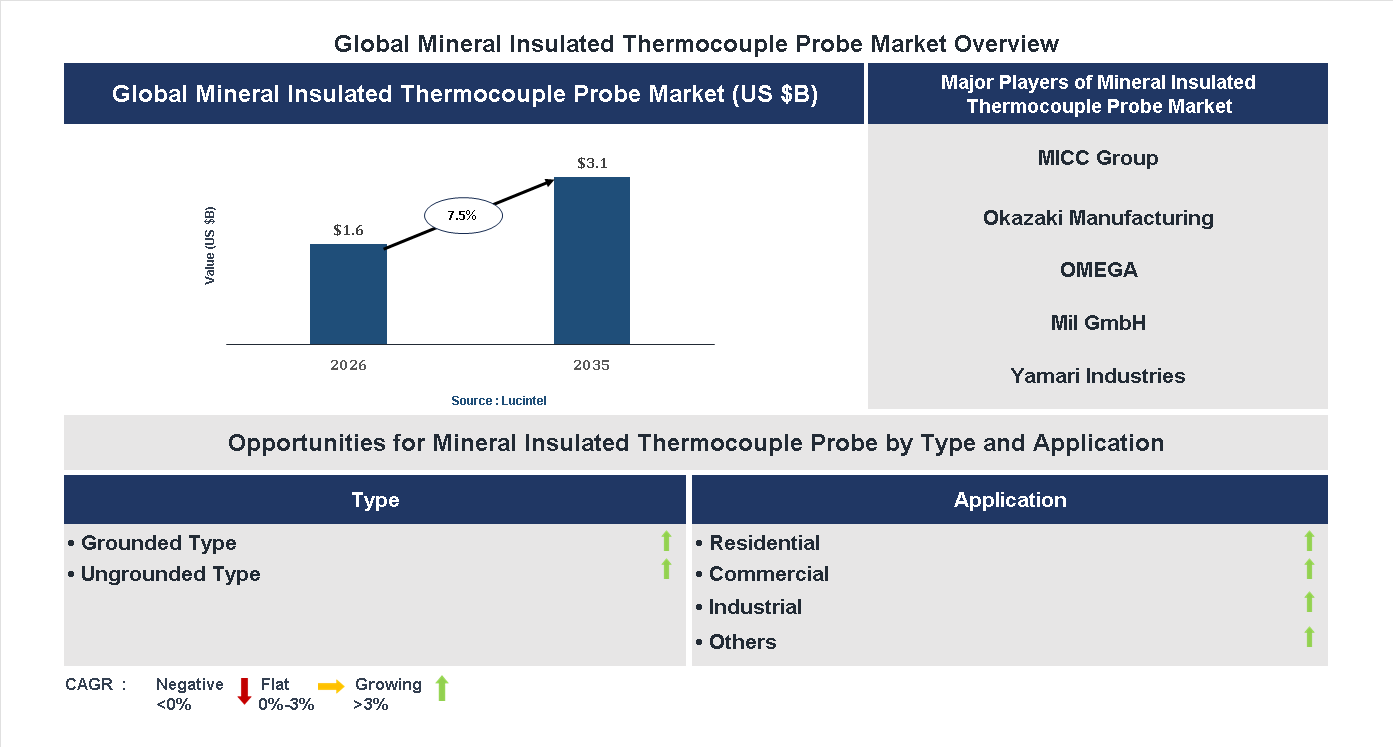
Key data points: The market size in 2035 = $3.1 billion, growth forecast = 7.5% annually for the next 8 years. Scroll below to get more insights. This market report covers trends, opportunities and forecasts in mineral insulated thermocouple probe market to 2035 by type (grounded type and ungrounded type), application (residential, commercial, industrial, and others), and region (North America, Europe, Asia Pacific, and the Rest of the World)
We'll send your sample report shortly.
• Lucintel forecasts that, within the type category, grounded type is expected to witness higher growth over the forecast period.
• Within the application category, industrial is expected to witness the highest growth.
• In terms of region, APAC is expected to witness the highest growth over the forecast period. Gain valuable insights for your business decisions with our comprehensive 150+ page report. Sample figures with some insights are shown below.
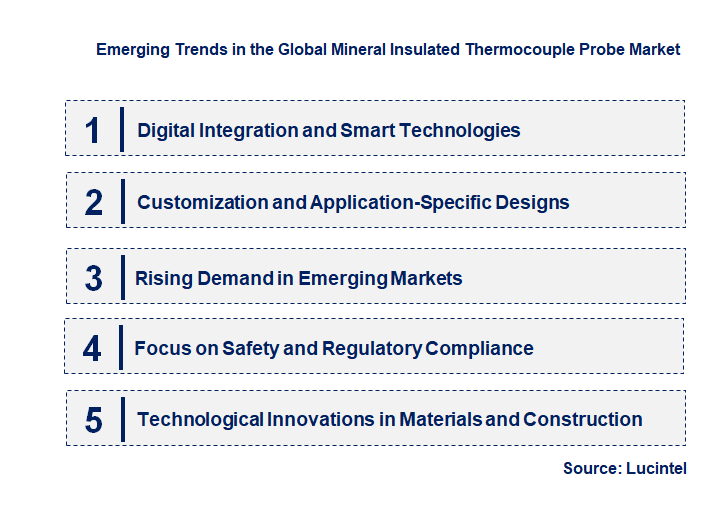
• Digital Integration and Smart Technologies: The integration of digital and IoT technologies into mineral insulated thermocouples is transforming the market. Smart thermocouples equipped with wireless connectivity and real-time data monitoring enable more accurate, efficient, and remote temperature management. This trend enhances predictive maintenance, reduces downtime, and improves safety protocols. As industries move toward automation, the demand for intelligent temperature sensing solutions is expected to surge, making digital integration a critical factor in product development and market competitiveness.
• Customization and Application-Specific Designs: Increasingly, manufacturers are offering customized thermocouple probes tailored to specific industrial applications. This trend addresses the need for probes that can withstand extreme conditions such as high pressure, corrosive environments, and rapid temperature fluctuations. Customization improves performance, longevity, and safety, thereby expanding the application scope across diverse sectors like aerospace, chemical processing, and energy. The ability to design application-specific solutions is driving market growth and fostering stronger customer relationships.
• Rising Demand in Emerging Markets: Rapid industrialization and infrastructure development in emerging economies such as India, China, and Southeast Asia are fueling demand for mineral insulated thermocouple probes. These regions require reliable temperature measurement tools for expanding industries like power plants, refineries, and manufacturing units. The market is witnessing increased investments and local manufacturing initiatives, which are reducing costs and improving accessibility. This trend is expected to significantly boost market size and diversify the customer base in the coming years.
• Focus on Safety and Regulatory Compliance: Stringent safety standards and environmental regulations are compelling industries to adopt more robust temperature measurement solutions. Mineral insulated thermocouples, known for their durability and accuracy, are increasingly preferred to meet compliance requirements. Manufacturers are innovating to develop probes that adhere to international safety standards, thereby gaining a competitive edge. This focus on safety not only enhances operational reliability but also minimizes legal and environmental risks, making it a pivotal trend shaping product development and market strategies.
• Technological Innovations in Materials and Construction: Advances in materials science are leading to the development of thermocouples with enhanced resistance to corrosion, high temperatures, and mechanical stress. Innovations such as new insulation materials and improved sheath designs extend the lifespan and performance of probes in extreme environments. These technological improvements enable applications in more challenging settings, opening new markets and increasing the reliability of temperature measurements. Continuous R&D efforts are expected to sustain this trend, fostering innovation and differentiation among market players. In summary, these emerging trends are collectively reshaping the mineral insulated thermocouple probe market by driving innovation, expanding application areas, and emphasizing safety and customization. They are enabling manufacturers to meet evolving industry demands more effectively, fostering growth, and ensuring the market remains competitive and resilient in the face of technological and economic changes.
• Growing Industrial Automation: Expansion in manufacturing and processing industries is driving demand for reliable temperature sensors, leading to increased adoption of mineral insulated thermocouple probes for their durability and accuracy in harsh environments.
• Technological Advancements in Materials: New high-performance insulation and sheath materials improve probe longevity and temperature range, enabling applications in extreme conditions and expanding market reach into new sectors.
• Customization and Design Innovation: Manufacturers are offering tailored solutions with flexible designs, enhancing compatibility with diverse industrial setups, which boosts customer satisfaction and widens application scope.
• Rising Demand in Oil & Gas Sector: The need for precise temperature monitoring in exploration and refining processes is fueling market growth, as mineral insulated probes provide stability and resistance to corrosive environments.
• Increasing Focus on Safety and Compliance: Stringent safety standards and quality regulations are encouraging industries to adopt high-quality mineral insulated thermocouples, fostering market expansion and technological improvements. Conclusion: These developments are significantly impacting the mineral insulated thermocouple probe market by enhancing product reliability, expanding application areas, and driving innovation. As industries prioritize safety, durability, and precision, the market is poised for sustained growth, with manufacturers investing in advanced materials and customized solutions to meet evolving demands.
• Expansion Into Oil & Gas Industry: The oil and gas sector requires reliable, high-temperature thermocouples for exploration, drilling, and refining processes. Mineral insulated thermocouples offer excellent resistance to harsh environments, making them ideal for these applications. Growing offshore and onshore activities are increasing the demand for durable temperature sensors. Companies can leverage this opportunity by developing customized solutions that meet industry-specific standards, ensuring safety and efficiency in challenging conditions.
• Adoption in Power Generation Plants: Power plants, especially nuclear and thermal facilities, demand precise temperature monitoring for safety and operational efficiency. Mineral insulated thermocouples provide high accuracy and stability under extreme conditions. The rising focus on safety regulations and efficiency improvements drives adoption. Manufacturers can innovate by offering probes with enhanced response times and longer service life, catering to the needs of modern power generation infrastructure.
• Growing Use in Manufacturing and Industrial Automation: Manufacturing industries require robust temperature measurement tools for process control, quality assurance, and automation. Mineral insulated thermocouples are favored for their durability and resistance to vibration and corrosion. The trend toward Industry 4.0 and smart factories presents opportunities for integrating these probes with IoT systems. Companies can develop smart, wireless thermocouples to meet the evolving needs of automated manufacturing environments.
• Increasing Demand in Chemical and Petrochemical Industries: Chemical processing and petrochemical plants operate under highly corrosive and high-temperature conditions. Mineral insulated thermocouples are ideal due to their chemical resistance and stability. The expansion of chemical manufacturing facilities globally offers growth prospects. Innovating with corrosion-resistant sheath materials and miniaturized designs can help companies capture a larger market share in this sector.
• Rising Focus on Safety and Regulatory Compliance: Stringent safety standards across industries necessitate reliable temperature measurement solutions. Mineral insulated thermocouples meet rigorous safety and performance criteria, making them essential for compliance. The increasing emphasis on workplace safety and environmental regulations encourages adoption. Market players can benefit by offering certified, high-performance probes that help clients meet regulatory requirements efficiently, thereby strengthening their market position. The overall market is poised for substantial growth as industries seek durable, accurate, and compliant temperature measurement solutions. These opportunities enable companies to innovate, expand their applications, and strengthen their competitive edge in a rapidly evolving landscape.
• Technological Advancements: The continuous development of high-performance insulation materials and miniaturization techniques enhances the durability, accuracy, and application range of mineral insulated thermocouples. Innovations such as improved thermal stability and corrosion resistance enable their use in extreme environments like high-temperature furnaces and chemical processing plants. These technological improvements meet the increasing demand for precise temperature measurement in complex industrial processes, thereby expanding market opportunities and encouraging manufacturers to invest in R&D.
• Growing Industrial Automation: The surge in automation across industries such as oil & gas, power generation, and manufacturing necessitates reliable temperature sensing solutions. Mineral insulated thermocouples offer high accuracy, stability, and longevity, making them ideal for critical process control. As industries aim to optimize efficiency and safety, the demand for robust temperature sensors increases, fueling market growth. This trend is further supported by the adoption of Industry 4.0 practices, which require advanced sensor technologies for real-time monitoring and data collection.
• Increasing Investment in Energy and Power Sectors: The expansion of renewable energy projects, nuclear power plants, and conventional power generation facilities drives the need for precise temperature monitoring. Mineral insulated thermocouples are preferred in these sectors due to their ability to withstand extreme conditions and provide accurate readings over long periods. Government initiatives promoting clean energy and infrastructure development further boost investments, creating a favorable environment for market expansion and technological innovation.
• Stringent Safety and Environmental Regulations: Regulatory frameworks aimed at ensuring safety and environmental compliance compel industries to adopt high-quality temperature measurement devices. Mineral insulated thermocouples, with their superior insulation and durability, meet these stringent standards. Compliance with safety protocols in hazardous environments such as chemical plants and refineries necessitates reliable sensors, thereby increasing demand. These regulations also encourage manufacturers to innovate and improve product standards, positively impacting the market.
• Rising Demand for Customized Solutions: Industries increasingly require tailored temperature sensing solutions to meet specific operational needs. Mineral insulated thermocouples can be customized in terms of length, diameter, and connector types, making them suitable for diverse applications. This flexibility allows manufacturers to cater to niche markets and complex industrial processes, thereby expanding market reach. The trend towards personalized instrumentation solutions supports market growth by enabling better process control and safety. The challenges facing this mineral insulated thermocouple probe market include:
• High Manufacturing and Installation Costs: Producing mineral insulated thermocouples involves complex processes such as precise insulation and sealing, which contribute to high manufacturing costs. Additionally, installation in harsh environments requires specialized skills and equipment, further increasing expenses. These costs can limit adoption, especially among small and medium-sized enterprises, and may hinder market growth. Manufacturers need to balance quality with cost-effectiveness to remain competitive while meeting stringent performance standards.
• Regulatory Compliance Complexities: Navigating diverse international safety and environmental standards poses significant challenges. Different regions have varying certification requirements, which can delay product approval and increase compliance costs. Keeping up with evolving regulations demands continuous R&D and certification efforts, straining resources. Non-compliance risks penalties and market restrictions, making regulatory adherence a critical but challenging aspect for manufacturers operating globally.
• Competition from Alternative Technologies: Emerging sensing technologies such as fiber optic sensors, infrared thermometers, and wireless temperature monitoring systems offer alternative solutions that can be more cost-effective or easier to install. These alternatives may provide comparable accuracy in certain applications, threatening the market share of mineral insulated thermocouples. Staying ahead requires continuous innovation and differentiation, which can be resource-intensive, especially for smaller players. In summary, the mineral insulated thermocouple probe market is driven by technological innovations, industrial growth, and regulatory demands, which collectively foster market expansion. However, high costs, regulatory hurdles, and competition from alternative sensing solutions pose significant challenges. The interplay of these factors influences market dynamics, requiring stakeholders to innovate and adapt to sustain growth. Overall, the markets future hinges on balancing technological progress with cost management and regulatory compliance to meet evolving industrial needs.
• MICC Group
• Okazaki Manufacturing
• OMEGA
• Mil GmbH
• Yamari Industries
• Watlow
• Tempsens Instrument
• Sensymic
• ThermCable GmbH
• Tempco
• Grounded Type
• Ungrounded Type
• Residential
• Commercial
• Industrial
• Others
• North America
• Europe
• Asia Pacific
• The Rest of the World
• United States: The U.S. market has seen increased adoption of mineral insulated thermocouple probes in the oil and gas, aerospace, and power generation sectors. Innovations focus on improving probe lifespan and temperature range, with significant investments in R&D. The rise of automation and smart manufacturing has driven demand for high-precision sensors, leading to the integration of wireless and digital thermocouples. Regulatory standards emphasizing safety and environmental compliance have also influenced product development, making the U.S. a leader in technological advancements and market expansion.
• China: China remains the largest consumer and producer of mineral insulated thermocouple probes, fueled by rapid industrialization and infrastructure development. The market benefits from government initiatives supporting manufacturing upgrades and energy projects. Chinese companies are increasingly focusing on cost-effective, durable solutions suitable for high-temperature applications in steel, cement, and chemical industries. The country is also investing in local R&D to develop innovative products that meet international standards, boosting exports and global competitiveness.
• Germany: Germanys market is characterized by high-quality, precision-engineered thermocouple probes used predominantly in automotive, chemical, and manufacturing industries. The emphasis on safety, reliability, and compliance with stringent European standards has driven technological innovation. German firms are adopting advanced materials and manufacturing techniques to enhance probe performance in extreme conditions. The focus on sustainable practices and energy efficiency has also led to the development of environmentally friendly thermocouple solutions, reinforcing Germanys position as a leader in industrial instrumentation.
• India: The Indian market is witnessing rapid growth due to expanding power plants, refineries, and manufacturing sectors. Increasing infrastructure projects and government initiatives like Make in India are boosting demand for durable, high-performance thermocouple probes. Local manufacturers are expanding their product portfolios to include cost-effective solutions tailored for diverse industrial applications. The focus on quality standards and technological upgrades is helping Indian companies compete globally, while rising investments in renewable energy and petrochemical sectors further fuel market growth.
• Japan: Japans market is driven by advanced manufacturing, robotics, and energy sectors requiring precise temperature measurement solutions. Japanese companies emphasize innovation, integrating IoT and automation technologies into thermocouple probes for enhanced data collection and process control. The focus on high-temperature resistance, durability, and miniaturization aligns with Japans industrial standards. The country also invests heavily in R&D to develop probes capable of operating in extreme environments, supporting its reputation for technological excellence and maintaining a competitive edge in the global market.


• MICC Group
• Okazaki Manufacturing
• OMEGA
• Mil GmbH
• Yamari Industries
• Watlow
• Tempsens Instrument
• Sensymic
• ThermCable GmbH
• Tempco Q6. Which mineral insulated thermocouple probe market segment will be the largest in future? Answer: Lucintel forecasts that, within the type category, grounded type is expected to witness higher growth over the forecast period. Q7. In mineral insulated thermocouple probe market, which region is expected to be the largest in next 5 years? Answer: In terms of region, APAC is expected to witness the highest growth over the forecast period. Q8. Do we receive customization in this report? Answer: Yes, Lucintel provides 10% customization without any additional cost.


Choose a license that fits your team. Instant PDF delivery.
Prices exclude taxes. Instant delivery. Custom licensing available on request.
Market Report · July 29, 2026
Market Report · July 20, 2026
Market Report · July 20, 2026
Trusted partner for strategic intelligence and business growth


Receive a complimentary market analysis tailored to your industry. Our analysts will identify key growth opportunities and competitive dynamics specific to your business.

Market size, growth rate, and key trend analysis for your specific sector.

Top competitor positioning and market share analysis.

Strategic recommendations backed by data-driven insights.
Get curated market intelligence and competitive moves straight to your inbox.
By subscribing, you agree to receive our monthly insights. Unsubscribe anytime.
Receive a complimentary market analysis tailored to your industry. Our analysts will identify key growth opportunities and competitive dynamics specific to your business.
Market size, growth rate, and key trend analysis for your specific sector.
Top competitor positioning and market share analysis.
Strategic recommendations backed by data-driven insights.
Get curated market intelligence, emerging trends, and competitive moves straight to your inbox each month.
By subscribing, you agree to receive our monthly insights. Unsubscribe anytime.
We'll send your sample report shortly.