
Market Report · July 31, 2026

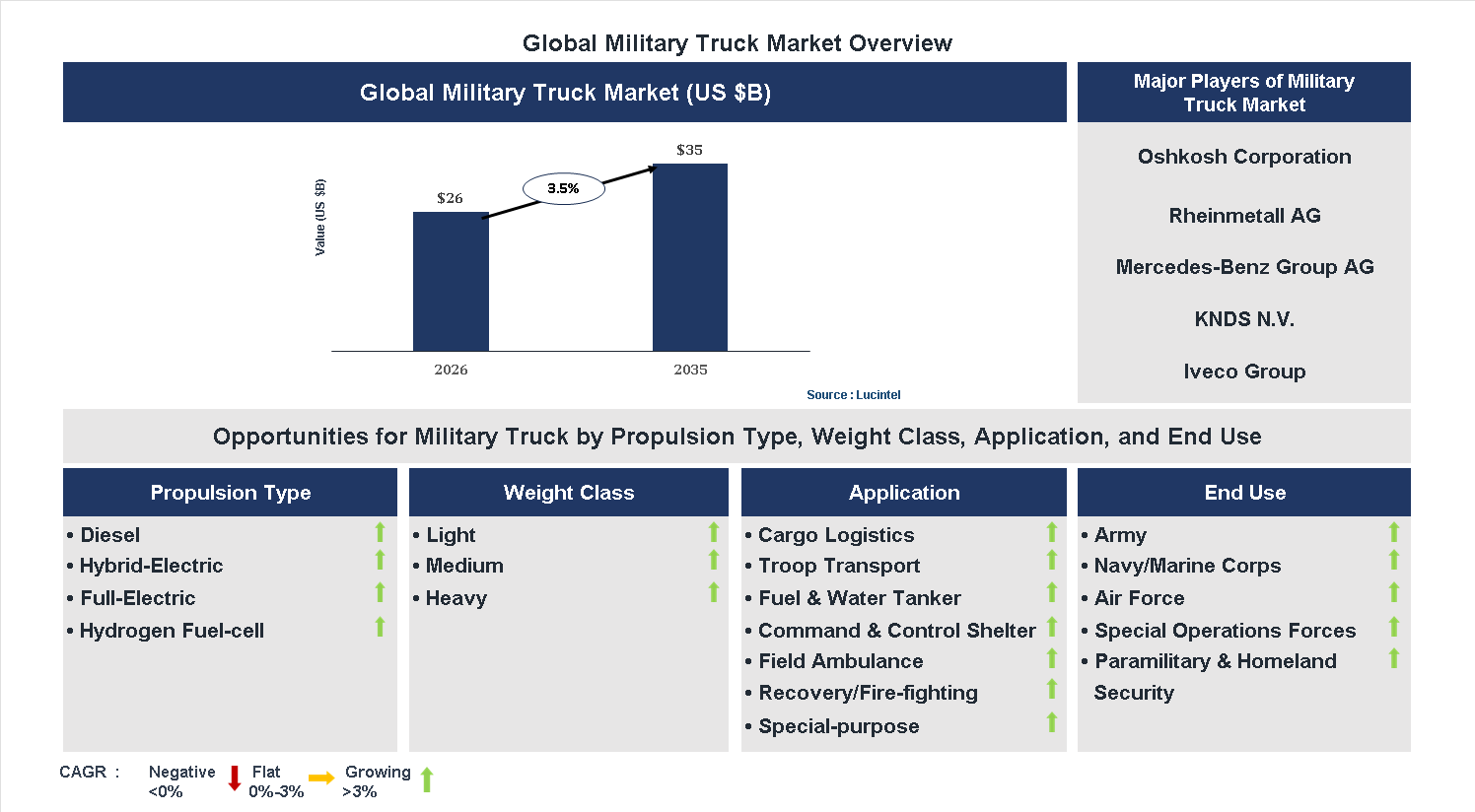
Key data points: The market size in 2035 = $35 billion, growth forecast = 3.5% annually for the next 8 years. Scroll below to get more insights. This market report covers trends, opportunities and forecasts in military truck market to 2035 by propulsion type (diesel, hybrid-electric, full-electric, and hydrogen fuel-cell), weight class (light, medium, and heavy), application (cargo logistics, troop transport, fuel & water tanker, command & control shelter, field ambulance, recovery/fire-fighting, and special-purpose), end use (army, navy/marine corps, air force, special operations forces, and paramilitary & homeland security), and region (North America, Europe, Asia Pacific, and the Rest of the World)
We'll send your sample report shortly.
• Lucintel forecasts that, within the propulsion type category, diesel is expected to witness the highest growth over the forecast period.
• Within the end use category, army is expected to witness the highest growth.
• In terms of region, APAC is expected to witness the highest growth over the forecast period. Gain valuable insights for your business decisions with our comprehensive 150+ page report. Sample figures with some insights are shown below.
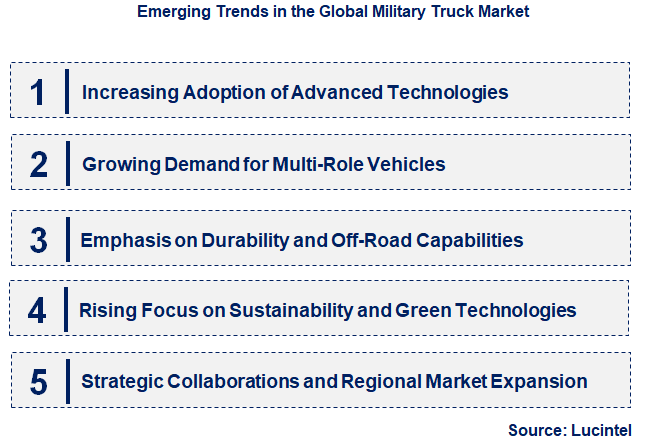
• Increasing Adoption of Advanced Technologies: Integration of AI, IoT, and automation is transforming military trucks into smarter, more efficient vehicles. These technologies enable real-time data collection, autonomous operation, and enhanced communication capabilities, improving battlefield responsiveness and safety. The trend is driven by the need for rapid decision-making and operational precision, making military trucks more adaptable to complex combat scenarios.
• Growing Demand for Multi-Role Vehicles: Modern military operations require versatile vehicles capable of performing multiple functions such as troop transport, logistics, and reconnaissance. Manufacturers are developing multi-role trucks with modular designs, allowing quick reconfiguration for different missions. This trend reduces procurement costs and logistical complexity, providing armed forces with flexible, cost-effective solutions that can adapt to evolving threats and operational needs.
• Emphasis on Durability and Off-Road Capabilities: Military trucks are increasingly designed to operate in extreme environments, including rugged terrains, deserts, and arctic conditions. Enhanced durability, high ground clearance, and advanced suspension systems are prioritized to ensure reliability and performance in diverse operational theaters. This focus on off-road capabilities ensures that military logistics and troop movements are maintained even in challenging terrains, boosting operational resilience.
• Rising Focus on Sustainability and Green Technologies: Environmental concerns and operational cost reductions are prompting the integration of eco-friendly technologies such as hybrid powertrains and alternative fuels. These innovations aim to reduce emissions, improve fuel efficiency, and lower the logistical burden of fuel supply in remote areas. The trend aligns with broader defense sector commitments to sustainability and operational sustainability in prolonged missions.
• Strategic Collaborations and Regional Market Expansion: Countries are increasingly engaging in joint ventures, technology sharing, and regional manufacturing to strengthen their military capabilities. This trend is driven by geopolitical alliances and the need for rapid deployment of advanced military trucks. Regional market expansion, especially in Asia-Pacific and the Middle East, is fueling growth, fostering innovation, and creating a competitive landscape that benefits global defense modernization efforts. These trends are collectively reshaping the military truck market by fostering innovation, enhancing operational versatility, and promoting sustainable practices. They are enabling armed forces worldwide to adopt more advanced, reliable, and adaptable vehicles, ultimately strengthening defense capabilities and strategic readiness in an evolving global security environment.
• Growing Defense Budgets: Increased government spending on defense enhances procurement of military trucks, expanding market size and encouraging innovation in vehicle technology and customization options.
• Technological Advancements: Integration of automation, GPS, and communication systems improves operational efficiency, safety, and battlefield effectiveness, making modern military trucks more adaptable and reliable.
• Focus on Versatility and Durability: Demand for multi-purpose vehicles capable of handling diverse terrains and combat scenarios drives development of rugged, adaptable trucks with enhanced payload and endurance.
• Customization and Modular Design: The need for tailored solutions for different military operations encourages manufacturers to offer customizable and modular truck platforms, increasing market competitiveness.
• Environmental and Fuel Efficiency Initiatives: Emphasis on reducing carbon footprint and operational costs leads to the adoption of alternative fuels and energy-efficient technologies in military truck manufacturing. The overall impact of these developments is a dynamic, innovative market characterized by increased competition, improved vehicle capabilities, and expanded global demand. Countries are prioritizing advanced, versatile, and sustainable military trucks, which drives manufacturers to innovate continuously. This evolution enhances military operational efficiency and readiness, fostering growth opportunities and shaping the future landscape of the military truck industry.
• Increasing Defense Budgets and Modernization Initiatives: Countries worldwide are allocating more funds to modernize their armed forces, leading to higher procurement of advanced military trucks. This trend supports the development of specialized vehicles with enhanced payload capacity, durability, and technological integration. Governments focus on upgrading logistics and tactical mobility, creating a steady demand for new and upgraded military trucks. The emphasis on national security and strategic readiness further accelerates procurement activities, fostering market growth.
• Technological Advancements in Vehicle Design and Capabilities: Innovations such as autonomous driving, improved armor, and advanced communication systems are transforming military trucks. These technological improvements enhance operational efficiency, safety, and battlefield effectiveness. Integration of GPS, IoT, and AI enables smarter logistics and real-time monitoring. As defense organizations seek cutting-edge solutions, manufacturers invest in R&D to develop next-generation vehicles, opening new avenues for market expansion and competitive differentiation.
• Growing Demand for Specialized Military Vehicles for Diverse Missions: The need for versatile vehicles tailored to specific operational roles is increasing. This includes armored personnel carriers, tactical trucks, and recovery vehicles designed for different terrains and combat scenarios. Customization and modular designs allow military forces to adapt vehicles for reconnaissance, logistics, or combat support. The rising complexity of modern warfare and asymmetric threats drive demand for specialized, mission-specific trucks, expanding market opportunities.
• Strategic Alliances and International Collaborations: Partnerships between defense contractors and governments facilitate technology transfer, joint development, and procurement efficiencies. International collaborations help standardize vehicle platforms, reduce costs, and accelerate deployment timelines. Such alliances also enable access to new markets and foster innovation through shared expertise. As countries seek cost-effective solutions, these collaborations are crucial for expanding the global footprint of military truck manufacturers.
• Regional Expansion and Emerging Market Opportunities: Developing regions such as Asia-Pacific, Middle East, and Africa are witnessing increased military spending and modernization efforts. Growing geopolitical tensions and regional conflicts drive demand for military logistics and support vehicles. Local manufacturing, government incentives, and strategic partnerships facilitate market entry and expansion. These regions offer significant growth potential due to increasing procurement activities, infrastructure development, and the need for durable, reliable military trucks tailored to local terrains and operational needs. The overall impact of these opportunities is a robust, expanding market characterized by innovation, strategic collaborations, and regional growth. As defense priorities evolve, the military truck market is poised for sustained development, driven by technological progress and increasing global security concerns. This dynamic environment offers substantial prospects for manufacturers, suppliers, and stakeholders to capitalize on emerging trends and secure long-term growth.
• Technological Innovation: The integration of advanced technologies such as autonomous systems, GPS navigation, and improved communication tools enhances operational efficiency and safety. Governments are investing heavily in upgrading their military logistics, which drives demand for modernized trucks capable of supporting complex missions. These innovations enable better troop mobility, cargo handling, and battlefield support, making military trucks more adaptable to diverse combat scenarios. As technology continues to evolve, manufacturers are compelled to develop cutting-edge solutions, fueling market growth and competitiveness.
• Increasing Defense Budgets: Many countries are increasing their defense spending to bolster national security amid rising geopolitical tensions. This surge in budgets allows for procurement of new military vehicles, including trucks designed for various terrains and combat situations. Governments prioritize modernization programs, which include replacing aging fleets with advanced, durable vehicles. The steady flow of defense funding ensures sustained demand for military trucks, supporting industry expansion and innovation. This financial commitment reflects a strategic focus on maintaining military readiness and technological superiority.
• Geopolitical Tensions and Conflicts: Ongoing regional conflicts and global tensions drive countries to enhance their military logistics capabilities. The need for reliable transportation of troops, weapons, and supplies in challenging environments prompts increased procurement of specialized military trucks. These vehicles are crucial for rapid deployment and sustainment of military operations, especially in remote or hostile areas. As conflicts persist or escalate, the demand for rugged, versatile trucks that can operate under extreme conditions continues to grow, directly impacting market growth and product development.
• Focus on Modernization and Upgradation: Many armed forces are actively modernizing their existing fleets to incorporate new technologies and improve operational efficiency. Upgrading older trucks with advanced armor, communication systems, and fuel efficiency features prolongs vehicle lifespan and enhances battlefield performance. This trend stimulates the market for retrofit solutions and new vehicle procurement. Modernization efforts also align with strategic objectives to improve interoperability and logistical support, thereby expanding market opportunities for manufacturers specializing in military vehicle upgrades.
• Strategic Alliances and Defense Contracts: Collaborations between defense contractors and government agencies facilitate the development and procurement of advanced military trucks. Strategic alliances enable sharing of technological expertise, reducing development costs and accelerating deployment timelines. Large defense contracts awarded through competitive bidding further stimulate market activity, encouraging innovation and capacity expansion among manufacturers. These partnerships are vital for meeting the evolving needs of armed forces and maintaining technological edge, ultimately driving market growth. The challenges facing the military truck market include:
• Regulatory and Compliance Issues: Strict safety, environmental, and export regulations pose significant hurdles for manufacturers. Compliance with international standards such as NATO specifications and local government regulations requires substantial investment in R&D and certification processes. These regulatory frameworks can delay product launches and increase costs, impacting profitability. Additionally, export restrictions and arms control treaties limit market access to certain regions, constraining growth opportunities and complicating global supply chains.
• High Development and Maintenance Costs: Developing advanced military trucks involves substantial capital investment in research, testing, and manufacturing. Once deployed, these vehicles require ongoing maintenance, spare parts, and upgrades, which can be financially burdensome for defense budgets. The high costs may limit procurement, especially for smaller nations or those with constrained defense spending. Cost overruns and budget cuts can also delay or reduce procurement plans, affecting overall market stability and growth prospects.
• Rapid Technological Obsolescence: The fast pace of technological change in military vehicles creates challenges in keeping products up-to-date. Vehicles quickly become outdated as new systems and features emerge, necessitating frequent upgrades or replacements. This rapid obsolescence increases lifecycle costs and complicates long-term planning for defense agencies. Manufacturers must continuously innovate to stay competitive, which can strain resources and lead to increased R&D expenses, impacting profitability and market sustainability. The military truck market is driven by technological advancements, increased defense spending, geopolitical tensions, modernization efforts, and strategic partnerships. However, regulatory complexities, high costs, and rapid technological changes pose significant challenges. These factors collectively influence market growth, requiring stakeholders to balance innovation with compliance and cost management. The evolving landscape offers substantial opportunities for innovation and expansion, but navigating regulatory and financial hurdles remains critical for sustained success. Overall, the market's future will depend on how effectively these drivers and challenges are managed to meet the dynamic needs of modern military operations.
• Oshkosh Corporation
• Rheinmetall AG
• Mercedes-Benz Group AG
• KNDS N.V.
• Iveco Group
• Renault Trucks Defense
• Ashok Leyland Limited
• Tata Advanced Systems Limited
• Scania AB
• KAMAZ PTC
• Diesel
• Hybrid-Electric
• Full-Electric
• Hydrogen Fuel-cell
• Light
• Medium
• Heavy
• Cargo Logistics
• Troop Transport
• Fuel & Water Tanker
• Command & Control Shelter
• Field Ambulance
• Recovery/Fire-fighting
• Special-purpose
• Army
• Navy/Marine Corps
• Air Force
• Special Operations Forces
• Paramilitary & Homeland Security
• North America
• Europe
• Asia Pacific
• The Rest of the World
• United States: The US military has prioritized modernization, investing in autonomous and hybrid military trucks to improve operational efficiency and reduce logistical vulnerabilities. Recent contracts focus on integrating advanced communication systems and enhanced armor for better protection. The development of all-terrain vehicles capable of supporting diverse missions has also gained momentum, with a focus on sustainability and reduced maintenance costs.
• China: China has accelerated its military truck development, emphasizing indigenous technology and increased payload capacity. Recent innovations include the integration of advanced navigation and communication systems, along with the deployment of all-terrain, high-mobility vehicles suited for diverse terrains. The country is also focusing on expanding its logistical capabilities to support rapid deployment and sustainment operations.
• Germany: Germany's defense sector has advanced its military truck offerings by incorporating cutting-edge technology such as hybrid powertrains and improved payload efficiency. Recent developments include modular vehicle designs for versatile mission profiles and enhanced safety features. The focus remains on interoperability within NATO and aligning with European defense modernization initiatives.
• India: India has made significant strides in indigenizing its military truck fleet, with recent developments emphasizing increased payload capacity, durability, and off-road performance. The country is investing in modernizing its logistics vehicles with advanced telematics and communication systems. Indigenous manufacturing and technology transfer initiatives are central to its strategy to reduce dependency on foreign suppliers.
• Japan: Japan continues to enhance its military logistics capabilities by developing lightweight, highly maneuverable trucks with advanced electronic systems. Recent innovations include integration of stealth features and improved fuel efficiency. The focus is on supporting rapid deployment and maintaining operational readiness in the Asia-Pacific region, with an emphasis on technological self-reliance.


• Oshkosh Corporation
• Rheinmetall AG
• Mercedes-Benz Group AG
• KNDS N.V.
• Iveco Group
• Renault Trucks Defense
• Ashok Leyland Limited
• Tata Advanced Systems Limited
• Scania AB
• KAMAZ PTC Q6. Which military truck market segment will be the largest in future? Answer: Lucintel forecasts that, within the propulsion type category, diesel is expected to witness the highest growth over the forecast period. Q7. In military truck market, which region is expected to be the largest in next 8 years? Answer: In terms of region, APAC is expected to witness the highest growth over the forecast period. Q8. Do we receive customization in this report? Answer: Yes, Lucintel provides 10% customization without any additional cost.


Choose a license that fits your team. Instant PDF delivery.
Prices exclude taxes. Instant delivery. Custom licensing available on request.
Market Report · July 31, 2026
Market Report · July 31, 2026
Market Report · July 22, 2026
Trusted partner for strategic intelligence and business growth


Receive a complimentary market analysis tailored to your industry. Our analysts will identify key growth opportunities and competitive dynamics specific to your business.

Market size, growth rate, and key trend analysis for your specific sector.

Top competitor positioning and market share analysis.

Strategic recommendations backed by data-driven insights.
Get curated market intelligence and competitive moves straight to your inbox.
By subscribing, you agree to receive our monthly insights. Unsubscribe anytime.
Receive a complimentary market analysis tailored to your industry. Our analysts will identify key growth opportunities and competitive dynamics specific to your business.
Market size, growth rate, and key trend analysis for your specific sector.
Top competitor positioning and market share analysis.
Strategic recommendations backed by data-driven insights.
Get curated market intelligence, emerging trends, and competitive moves straight to your inbox each month.
By subscribing, you agree to receive our monthly insights. Unsubscribe anytime.
We'll send your sample report shortly.