
Market Report · July 31, 2026

Key data points: The market size in 2035 = $1,318 million, growth forecast = 2.8% annually for the next 8 years. Scroll below to get more insights. This market report covers trends, opportunities and forecasts in military shelter market to 2035 by type (hard wall shelter and soft wall shelter), material type (composite materials and conventional materials), application (military shelter camp, vehicle mounted shelter, containers, command & control shelter, and other shelters), and region (North America, Europe, Asia Pacific, and the Rest of the World)
We'll send your sample report shortly.
• Lucintel forecasts that, within the type category, hard wall shelter is expected to witness higher growth over the forecast period.
• Within the application category, command & control shelter is expected to witness the highest growth.
• In terms of region, APAC is expected to witness the highest growth over the forecast period.
Gain valuable insights for your business decisions with our comprehensive 150+ page report. Sample figures with some insights are shown below.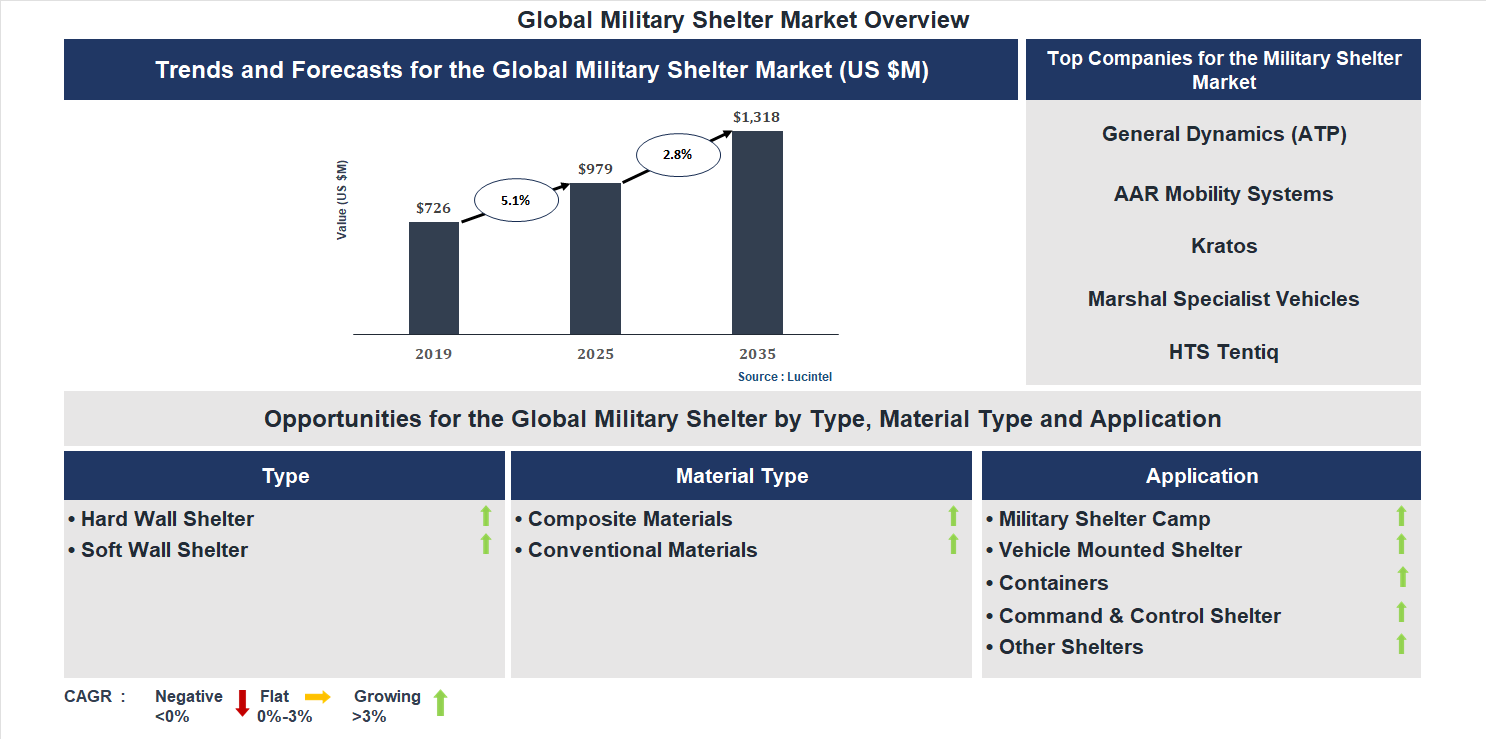
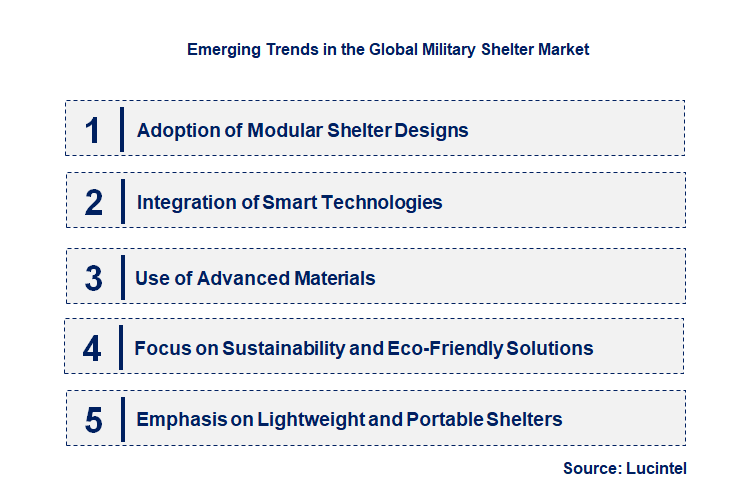
• Adoption of Modular Shelter Designs: Modular shelters are gaining popularity due to their flexibility and ease of deployment. These structures can be quickly assembled, disassembled, and reconfigured to suit different operational needs, reducing setup time and logistical burdens. Modular designs also allow for scalable solutions, enabling military units to expand or modify their shelters based on mission requirements. This trend enhances operational efficiency, reduces costs, and provides adaptable solutions for diverse environments, from remote field operations to urban settings.
• Integration of Smart Technologies: The incorporation of IoT, sensors, and automation into military shelters is transforming their functionality. Smart shelters can monitor environmental conditions, structural integrity, and security parameters in real-time, enabling proactive maintenance and enhanced safety. These features improve operational efficiency, reduce downtime, and provide better resource management. The integration of communication systems also ensures seamless connectivity, which is critical for modern military operations, making shelters more than just protective structures but also command and control hubs.
• Use of Advanced Materials: The market is witnessing a shift towards lightweight, durable, and sustainable materials such as composites, advanced polymers, and insulated panels. These materials improve the structural strength of shelters while reducing weight, making transportation and deployment easier. Additionally, sustainable materials contribute to environmental goals and reduce the carbon footprint of manufacturing processes. The use of advanced materials enhances the longevity and resilience of shelters against extreme weather conditions, chemical exposure, and ballistic threats.
• Focus on Sustainability and Eco-Friendly Solutions: Environmental considerations are increasingly influencing market trends. Manufacturers are developing eco-friendly shelters that utilize renewable energy sources like solar panels, incorporate water recycling systems, and use biodegradable materials. These sustainable solutions reduce the logistical footprint and operational costs while aligning with global environmental standards. The focus on sustainability also appeals to military organizations aiming to minimize their environmental impact during prolonged deployments and peacekeeping missions.
• Emphasis on Lightweight and Portable Shelters: The demand for lightweight, portable shelters is rising, driven by the need for rapid deployment and mobility. These shelters are designed to be easily transported via air, land, or sea, enabling quick setup in remote or hostile environments. Innovations include collapsible designs, inflatable structures, and lightweight framing materials. This trend enhances tactical flexibility, reduces transportation costs, and allows military units to establish operational bases swiftly, thereby increasing overall mission effectiveness and responsiveness.
• Growing Demand for Mobile and Lightweight Shelters: The need for easily deployable, portable structures is increasing, driven by rapid military operations and disaster response requirements. These shelters offer quick setup, durability, and ease of transportation, enabling military units to establish operational bases swiftly in diverse terrains. The market benefits from innovations in lightweight materials and modular designs, which improve operational efficiency and reduce logistical burdens. This trend is expected to continue, expanding the scope of mobile shelter applications globally.
• Adoption of Smart and Connected Shelter Solutions: Integration of IoT and automation technologies into military shelters enhances operational efficiency, safety, and maintenance. Smart shelters can monitor environmental conditions, security breaches, and structural integrity in real-time, providing critical data to commanders. These connected solutions facilitate remote management, reduce downtime, and improve resource allocation. As defense agencies prioritize technological modernization, the demand for intelligent shelters is set to grow, fostering innovation and creating new market segments.
• Emphasis on Sustainable and Eco-Friendly Materials: Environmental concerns and regulatory pressures are prompting the adoption of sustainable materials in shelter construction. Use of recyclable, biodegradable, and energy-efficient materials reduces the ecological footprint of military structures. These eco-friendly shelters also offer benefits such as improved insulation, lower energy costs, and enhanced durability. The shift towards sustainability aligns with broader defense strategies focused on environmental responsibility, opening avenues for eco-conscious manufacturers and expanding market reach.
• Increased Focus on Protection Against Chemical, Biological, Radiological, and Nuclear (CBRN) Threats: Modern military shelters are being designed with advanced CBRN protection features to safeguard personnel from hazardous agents. These shelters incorporate specialized filtration systems, sealed structures, and decontamination facilities, ensuring operational continuity in contaminated environments. The rising threat of CBRN attacks and the need for survivability in hostile zones drive innovation in protective shelter design. This focus enhances military readiness and resilience, significantly impacting market growth and technological development.
• Expansion of Modular and Customizable Shelter Systems: Modular shelters offer flexibility to adapt to various operational needs, terrains, and climates. Customizable options allow military forces to tailor shelters for specific functions such as command centers, medical units, or housing. The modular approach reduces construction time and costs while increasing scalability. This trend supports rapid deployment and versatile use, making shelters more adaptable to evolving military strategies. The market benefits from increased demand for personalized, efficient, and scalable shelter solutions across different defense sectors.
• Expansion of Modular Shelter Systems for Rapid Deployment: Modular military shelters offer flexible, scalable solutions that can be quickly assembled and customized to meet diverse operational needs. These systems improve deployment speed, reduce logistical burdens, and enhance adaptability in various terrains and climates. As militaries prioritize rapid response capabilities, the demand for lightweight, durable, and easy-to-transport modular shelters is expected to grow significantly, supporting diverse applications from field hospitals to command posts.
• Integration of Smart Technology for Enhanced Operational Efficiency: Incorporating IoT, automation, and sensor technologies into military shelters enhances security, monitoring, and maintenance. Smart shelters enable real-time data collection on environmental conditions, structural integrity, and energy consumption, facilitating proactive management. This integration improves safety, reduces downtime, and optimizes resource utilization, making shelters more effective in complex operational environments. The adoption of smart solutions is a key driver for modernization in the military shelter market.
• Development of Environmentally Sustainable Shelter Solutions: The focus on sustainability is prompting innovations in eco-friendly materials, energy-efficient designs, and renewable energy integration within military shelters. These environmentally conscious solutions reduce logistical footprints, lower operational costs, and align with global sustainability goals. Governments and defense agencies are increasingly prioritizing green initiatives, creating opportunities for manufacturers to develop sustainable shelters that meet both operational and environmental standards.
• Growing Demand for Specialized Shelters for Extreme Environments: Military operations in Arctic, desert, and jungle conditions require specialized shelters capable of withstanding harsh climates. These shelters feature advanced insulation, climate control, and durability enhancements. The rising frequency of extreme weather events and strategic deployments in challenging terrains drive demand for such tailored solutions. Manufacturers focusing on rugged, climate-resilient shelters will benefit from this expanding niche, supporting military readiness worldwide.
• Increasing SD option of Lightweight, Portable Shelters for Rapid Deployment: The need for quick, mobile solutions is fueling demand for lightweight, portable military shelters. These shelters facilitate rapid deployment in emergency situations, peacekeeping missions, and disaster relief efforts. Innovations in materials and design enable easy transportation and quick setup, reducing logistical complexities. As military operations become more dynamic and dispersed, portable shelters are essential for maintaining operational flexibility and responsiveness in diverse environments.
• Technological Innovation: The development of lightweight, durable, and modular materials has revolutionized military shelter design. Advanced composites and insulation materials improve shelter resilience against harsh environments, while modular systems allow rapid deployment and customization. These innovations enable military forces to enhance operational efficiency, reduce logistics costs, and adapt quickly to diverse mission requirements, thereby expanding market opportunities.
• Increasing Defense Budgets: Governments worldwide are allocating substantial funds toward military modernization and infrastructure. Rising defense budgets facilitate procurement of advanced shelters for troop accommodation, command centers, and field operations. This financial support encourages manufacturers to invest in R&D, expand production capacities, and develop innovative solutions, ultimately driving market growth.
• Geopolitical Tensions and Security Concerns: Escalating geopolitical conflicts and regional tensions necessitate the deployment of robust, secure, and mobile shelters. Military shelters provide protection against chemical, biological, radiological, and nuclear threats, making them vital in conflict zones. The increasing frequency and intensity of conflicts boost demand for specialized shelters, fueling market expansion.
• Regulatory Standards and Compliance: Strict safety, environmental, and military standards influence shelter design and manufacturing processes. Compliance with these regulations ensures product reliability and safety, fostering trust among military clients. Regulatory frameworks also drive innovation to meet evolving standards, thereby shaping market offerings and encouraging industry growth.
• High Production and Material Costs: Manufacturing advanced military shelters involves expensive materials and sophisticated construction techniques, leading to high costs. These expenses can limit affordability and procurement, especially for countries with constrained defense budgets. Cost pressures may hinder rapid adoption and limit market penetration, posing a significant challenge for manufacturers.
• Rapid Technological Obsolescence: The fast pace of technological advancements can render existing shelter designs obsolete quickly. Keeping up with innovations requires continuous R&D investment, which can be resource-intensive. This rapid obsolescence risks inventory obsolescence and increased costs for military agencies, complicating long-term planning and procurement strategies.
• Regulatory and Environmental Challenges: Stringent environmental regulations and safety standards can delay product development and approval processes. Compliance costs and lengthy certification procedures may slow down market entry for new products. Additionally, environmental concerns about materials and disposal methods pose challenges for sustainable manufacturing practices, impacting overall market agility.
• General Dynamics (ATP)
• AAR Mobility Systems
• Kratos
• Marshal Specialist Vehicles
• HTS Tentiq
• DHS System (DRASH)
• Ramim
• Zeppelin Mobile Shelters
• MMIC
• Weatherhaven
• Hard Wall Shelter
• Soft Wall Shelter
• Composite Materials
• Conventional Materials
• Military Shelter Camp
• Vehicle Mounted Shelter
• Containers
• Command & Control Shelter
• Other Shelters
• North America
• Europe
• Asia Pacific
• The Rest of the World
• United States: The US military has prioritized the development of advanced, modular shelters that support rapid deployment and sustainability. Recent investments include climate-resistant structures and integrated systems for communication and power supply. The US has also increased procurement of lightweight, portable shelters to enhance operational flexibility in diverse environments. Additionally, there is a focus on incorporating smart technology for better monitoring and maintenance, reflecting a push toward modernization and efficiency.
• China: China has rapidly expanded its military infrastructure, emphasizing the production of durable, cost-effective shelters suitable for various terrains. Recent developments include the deployment of prefabricated, easily transportable structures that support rapid troop mobilization and logistics. The Chinese military is also investing in environmentally resilient shelters capable of withstanding extreme weather conditions, aligning with its broader strategic modernization efforts. The focus remains on increasing domestic manufacturing capabilities to reduce reliance on foreign suppliers.
• Germany: Germany‘s military shelter market has seen a shift toward sustainable and energy-efficient solutions, driven by NATO standards and environmental policies. Recent advancements include the integration of renewable energy sources and modular designs that allow for quick assembly and disassembly. Germany is also emphasizing the development of shelters that provide enhanced protection against chemical, biological, radiological, and nuclear threats, reflecting a focus on comprehensive defense readiness. The country is investing in innovative materials to improve durability and reduce maintenance costs.
• India: India has accelerated its military infrastructure development, focusing on lightweight, portable shelters suitable for diverse terrains such as deserts, mountains, and coastal areas. Recent initiatives include the deployment of prefabricated structures that can be quickly assembled and disassembled, supporting rapid troop deployment and logistics. The Indian military is also emphasizing eco-friendly and sustainable shelter solutions, aligning with its broader strategic and environmental goals. Domestic manufacturing is being promoted to ensure self-reliance and reduce dependency on imports.
• Japan: Japan‘s military shelter market is characterized by a focus on disaster resilience and adaptability, reflecting its geographic vulnerability to natural calamities. Recent developments include the integration of earthquake-resistant and weatherproof features into shelter designs. Japan is also investing in modular, quickly deployable structures that support humanitarian assistance and disaster relief operations. The country is exploring innovative materials and construction techniques to enhance durability, sustainability, and operational efficiency in challenging environments.


• General Dynamics (ATP)
• AAR Mobility Systems
• Kratos
• Marshal Specialist Vehicles
• HTS Tentiq
• DHS System (DRASH)
• Ramim
• Zeppelin Mobile Shelters
• MMIC
• Weatherhaven
Q6. Which military shelter market segment will be the largest in future?

Choose a license that fits your team. Instant PDF delivery.
Prices exclude taxes. Instant delivery. Custom licensing available on request.
Market Report · July 31, 2026
Market Report · July 31, 2026
Market Report · July 31, 2026
Trusted partner for strategic intelligence and business growth


Receive a complimentary market analysis tailored to your industry. Our analysts will identify key growth opportunities and competitive dynamics specific to your business.

Market size, growth rate, and key trend analysis for your specific sector.

Top competitor positioning and market share analysis.

Strategic recommendations backed by data-driven insights.
Get curated market intelligence and competitive moves straight to your inbox.
By subscribing, you agree to receive our monthly insights. Unsubscribe anytime.
Receive a complimentary market analysis tailored to your industry. Our analysts will identify key growth opportunities and competitive dynamics specific to your business.
Market size, growth rate, and key trend analysis for your specific sector.
Top competitor positioning and market share analysis.
Strategic recommendations backed by data-driven insights.
Get curated market intelligence, emerging trends, and competitive moves straight to your inbox each month.
By subscribing, you agree to receive our monthly insights. Unsubscribe anytime.
We'll send your sample report shortly.