
Market Report · July 29, 2026

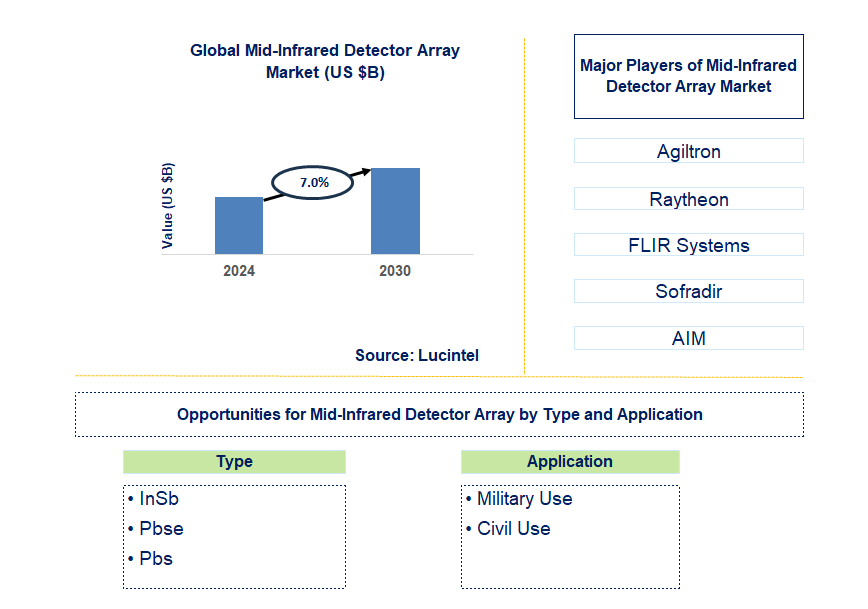
Key data points: The growth forecast = 7.0% annually next 6 years. Scroll below to get more insights. This market report covers trends, opportunities, and forecast in the global mid-infrared detector array market to 2030 by type (insb, pbse, and pbs), application (military use and civil use), and region (North America, Europe, Asia Pacific, and the Rest of the World)
We'll send your sample report shortly.
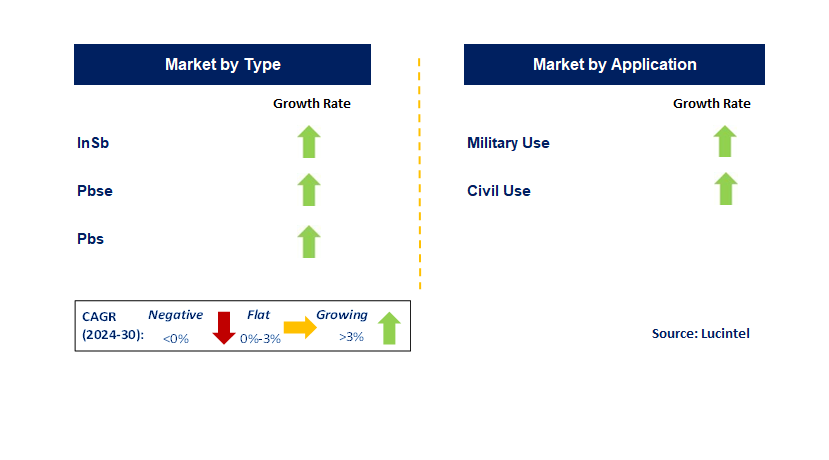
• Lucintel forecasts that insb is expected to witness the highest growth over the forecast period.
• Within this market, military use will remain the larger segment.
• APAC is expected to witness highest growth over the forecast period. A more than 150-page report is developed to help in your business decisions.
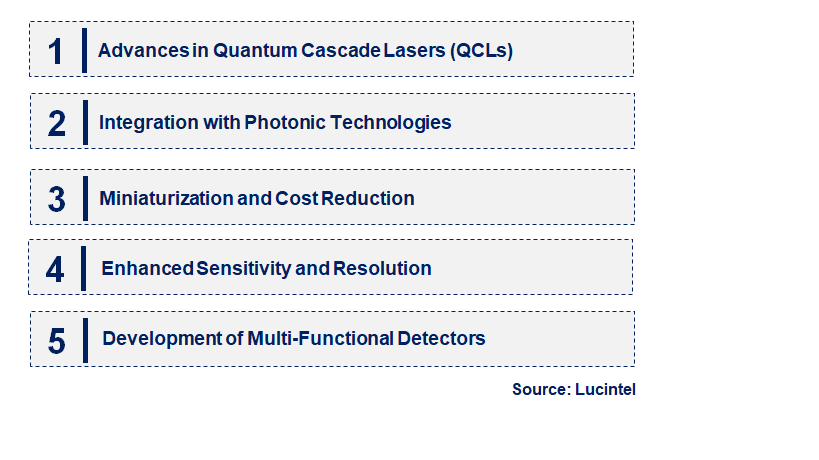
• Advances in Quantum Cascade Lasers (QCLs): Quantum cascade lasers (QCLs) are driving significant advancements in mid infrared detector array, offering improved performance in terms of wavelength coverage and output power. Innovations in QCL technology are enhancing the sensitivity and resolution of mid infrared detector array, making them suitable for applications ranging from environmental monitoring to medical diagnostics. The development of QCLs with broader tunability and higher efficiency is expanding the functional capabilities of mid infrared detector array systems, leading to more precise and versatile detection solutions.
• Integration with Photonic Technologies: The integration of mid infrared detector array with photonic technologies is revolutionizing the field, enabling more complex and accurate sensing applications. Photonic integration enhances the performance of mid infrared detector array systems by improving resolution, reducing noise, and enabling compact designs. This trend is particularly evident in applications such as spectroscopy and imaging, where advanced photonic techniques are used to achieve high-performance results in a smaller form factor.
• Miniaturization and Cost Reduction: Miniaturization and cost reduction are key trends driving the mid infrared detector array market. Advances in fabrication techniques and materials are allowing for the production of smaller, more affordable mid infrared detector array without compromising performance. By reducing the size and cost of mid infrared detector array, manufacturers are making this technology accessible to a broader range of applications and markets.
• Enhanced Sensitivity and Resolution: Improved sensitivity and resolution are crucial trends in mid infrared detector array technology. Advances in materials and design are leading to detectors with higher sensitivity to low-intensity signals and greater resolution for detailed imaging and spectroscopy. This trend is particularly important for applications in scientific research, medical diagnostics, and environmental monitoring, where precise measurements are critical.
• Development of Multi-Functional Detectors: The development of multi-functional mid infrared detector array is emerging as a significant trend, as these detectors combine various sensing capabilities into a single device. Multi-functional detectors can perform tasks such as imaging, spectroscopy, and environmental monitoring simultaneously, increasing their utility and efficiency. These emerging trends are reshaping the mid infrared detector array market by enhancing performance, reducing costs, and expanding application possibilities. Advances in QCLs, photonic integration, miniaturization, and multi-functional capabilities are driving innovation and broadening the use of mid infrared detector array across various industries. As these trends continue to evolve, they are expected to further influence market dynamics, leading to more sophisticated and accessible mid infrared detector array technologies.
• Improved Material Technologies: Recent developments in material technologies for mid-infrared detector arrays have led to enhanced performance and capabilities. Advances in materials such as mercury cadmium telluride (MCT) and indium antimonide (InSb) are improving detector sensitivity and wavelength coverage. New material compositions and processing techniques are enabling the production of detectors with better resolution, lower noise, and increased reliability. These improvements are expanding the range of applications for mid-infrared detector arrays, from environmental monitoring to medical imaging.
• Development of Advanced Quantum Cascade Detectors: Quantum Cascade Detectors (QCDs) are undergoing significant advancements, offering improved performance and versatility. Recent innovations include the development of QCDs with extended wavelength ranges, higher efficiency, and better thermal management. These advancements are making QCDs more effective for a variety of applications, including gas sensing and spectroscopy. The enhanced capabilities of QCDs are contributing to more precise and reliable measurements in both research and industrial settings.
• Integration with Semiconductor Technologies: The integration of mid-infrared detector arrays with semiconductor technologies is a key development, enhancing the performance and functionality of these devices. Advances in semiconductor fabrication techniques are allowing for the creation of highly efficient, low-cost mid-infrared detector arrays with improved sensitivity and resolution. This integration is also enabling the development of compact and portable mid-infrared detector arrays systems, expanding their use in applications such as consumer electronics and portable sensors.
• Advances in Packaging and Integration: Recent improvements in packaging and integration technologies are enhancing the performance and durability of mid-infrared detector arrays. Innovations in packaging materials and techniques are reducing thermal noise and improving the stability of detectors under various operating conditions. This development is particularly important for high-precision applications, where maintaining detector performance over time is critical. Enhanced packaging and integration are also facilitating the deployment of mid-infrared detector arrays in challenging environments.
• Expansion into New Applications: The expansion of mid-infrared detector arrays into new applications is a significant development, driven by their increasing capabilities and versatility. Recent advancements are enabling the use of mid-infrared detector arrays in emerging fields such as autonomous vehicles, smart manufacturing, and advanced medical diagnostics. The ability of mid-infrared detector arrays to provide high-resolution and accurate data is opening new opportunities in these areas, driving growth and innovation in the market. These recent developments are shaping the future of the mid-infrared detector array market by improving performance, expanding applications, and driving innovation. Advancements in materials, quantum cascade technologies, semiconductor integration, and packaging are enhancing the capabilities of mid-infrared detector arrays, making them more versatile and accessible. As these developments continue to progress, they are expected to further influence market dynamics and application possibilities in the mid-infrared detector array sector.
• Environmental Monitoring: Mid infrared detectors are crucial for detecting and analyzing pollutants and greenhouse gases in the environment. Advanced mid infrared technology allows for more sensitive and accurate measurements of atmospheric components, improving environmental protection efforts. Growth opportunities in this sector include expanding the deployment of portable and remote sensing systems for real-time monitoring of air and water quality. Enhanced detection capabilities can help in regulatory compliance and addressing environmental challenges.
• Medical Diagnostics: In medical diagnostics, mid infrared detectors are used for imaging and spectroscopy, enabling early detection of diseases and monitoring of physiological conditions. The development of high-resolution and sensitive mid infrared detectors offers growth opportunities in areas like non-invasive diagnostics and disease screening. Applications such as cancer detection, glucose monitoring, and respiratory analysis can benefit from mid infrared technology, leading to more accurate and accessible healthcare solutions.
• Defense and Security: The defense sector benefits from mid infrared detectors for applications such as surveillance, threat detection, and chemical agent identification. There are opportunities for growth in enhancing the performance of mid infrared sensors used in reconnaissance systems, missile defense, and border security. Innovations in mid infrared detector technology, such as increased sensitivity and miniaturization, can improve operational effectiveness and safety in defense applications.
• Automotive Industry: The automotive sector is increasingly integrating mid infrared detectors into advanced driver-assistance systems (ADAS) for improved safety and functionality. Applications include collision avoidance, lane-keeping, and automated driving. Growth opportunities lie in developing compact, high-performance mid infrared sensors that can operate effectively in various environmental conditions. Enhancing these sensors' capabilities can contribute to the advancement of autonomous vehicles and smart transportation systems.
• Industrial Automation: In industrial automation, mid infrared detectors are used for quality control, process monitoring, and material analysis. Growth opportunities include the implementation of mid infrared technology in real-time monitoring systems to ensure product quality and optimize manufacturing processes. Advanced mid infrared detectors can provide precise measurements and early detection of process deviations, leading to increased efficiency and reduced waste in industrial operations. The strategic growth opportunities in the mid infrared detector array market are significantly impacting various applications. By advancing technology and expanding use cases in environmental monitoring, medical diagnostics, defense, automotive, and industrial automation, stakeholders can capitalize on emerging trends.
• Agiltron
• Raytheon
• FLIR Systems
• Sofradir
• AIM
• L-3
• N.E.P
• InSb
• Pbse
• Pbs
• Military Use
• Civil Use
• North America
• Europe
• Asia Pacific
• The Rest of the World
• United States: The U.S. has been at the forefront of mid infrared detector arrays array innovations, with significant investments in research and development. Advances include the development of high-resolution, low-noise detector arrays that enhance imaging and spectroscopy capabilities. Key players are focusing on improving the sensitivity and integration of mid infrared detector arrays in autonomous vehicles and medical imaging systems.
• China: China has made substantial progress in mid infrared detector arrays technology through state-supported research initiatives and growing domestic demand. Recent developments include the production of high-performance quantum cascade lasers and focal plane arrays, which are essential for advanced sensing and imaging. The government’s strategic investments in space and defense applications have led to the development of cost-effective, high-resolution mid infrared detector arrays. China’s expanding manufacturing capabilities and emphasis on technological self-sufficiency are expected to further drive growth in this sector.
• Germany: Germany continues to be a leader in high-precision mid infrared detector arrays technology, driven by its strong industrial base and focus on innovation. Recent advancements include the integration of mid infrared detector arrays with emerging photonics technologies for improved resolution and accuracy. German companies are also developing detectors with enhanced thermal sensitivity and reduced power consumption, catering to both aerospace and automotive industries. Collaborative projects between German firms and European research institutions are pushing the envelope in mid infrared detector arrays performance and application.
• India: India is emerging as a significant player in the mid infrared detector arrays market, with notable advancements driven by government-led initiatives and increasing industrial demand. Recent developments include the production of cost-effective mid infrared detector arrays for environmental monitoring and defense applications. Indian research institutions are working on enhancing the sensitivity and integration of mid infrared detector arrays with other sensor technologies. The country’s growing emphasis on space exploration and surveillance technologies is fostering innovation and expansion in the mid infrared detector arrays sector.
• Japan: Japan is advancing mid infrared detector arrays technology with a focus on high-efficiency and miniaturized detectors. Recent developments include the creation of compact, high-resolution mid infrared detector arrays for use in robotics and medical diagnostics. Japanese firms are also exploring new materials and fabrication techniques to improve the performance and longevity of mid infrared detector arrays. The country's strong emphasis on electronics and precision engineering continues to drive innovations, positioning Japan as a key player in the global mid infrared detector arrays market.


• Agiltron
• Raytheon
• FLIR Systems
• Sofradir
• AIM
• L-3
• N.E.P Q5. Which mid-infrared detector array market segment will be the largest in future? Answer: Lucintel forecasts that insb is expected to witness the highest growth over the forecast period. Q6. In mid-infrared detector array market, which region is expected to be the largest in next 5 years? Answer: APAC is expected to witness highest growth over the forecast period. Q.7 Do we receive customization in this report? Answer: Yes, Lucintel provides 10% customization without any additional cost.


Choose a license that fits your team. Instant PDF delivery.
Prices exclude taxes. Instant delivery. Custom licensing available on request.
Market Report · July 29, 2026
Market Report · July 20, 2026
Market Report · July 20, 2026
Trusted partner for strategic intelligence and business growth


Receive a complimentary market analysis tailored to your industry. Our analysts will identify key growth opportunities and competitive dynamics specific to your business.

Market size, growth rate, and key trend analysis for your specific sector.

Top competitor positioning and market share analysis.

Strategic recommendations backed by data-driven insights.
Get curated market intelligence and competitive moves straight to your inbox.
By subscribing, you agree to receive our monthly insights. Unsubscribe anytime.
Receive a complimentary market analysis tailored to your industry. Our analysts will identify key growth opportunities and competitive dynamics specific to your business.
Market size, growth rate, and key trend analysis for your specific sector.
Top competitor positioning and market share analysis.
Strategic recommendations backed by data-driven insights.
Get curated market intelligence, emerging trends, and competitive moves straight to your inbox each month.
By subscribing, you agree to receive our monthly insights. Unsubscribe anytime.
We'll send your sample report shortly.