
Market Report · July 29, 2026

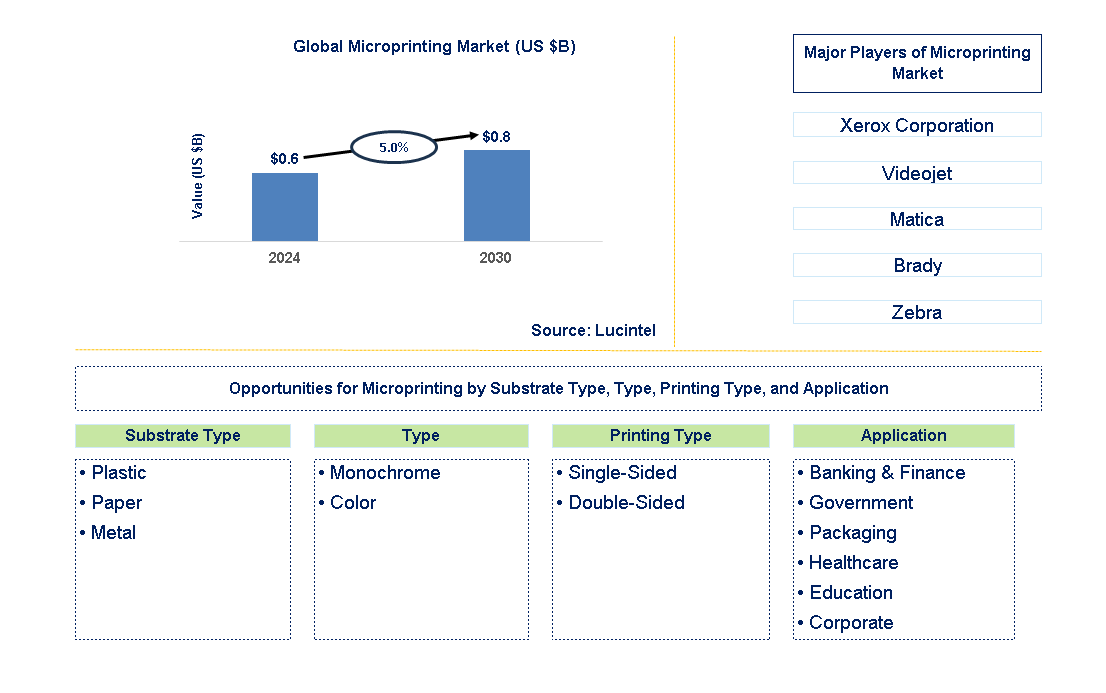
Key data points: The market size in 2030 = $0.8 billion, growth forecast = 5.0% annually for the next 6 years. Scroll below to get more insights. This market report covers trends, opportunities, and forecasts in the global microprinting market to 2030 by substrate type (plastic, paper, and metal), type (monochrome and color), printing type (single-sided and double-sided), application (banking & finance, government, packaging, healthcare, education, and corporate), and region (North America, Europe, Asia Pacific, and the Rest of the World)
We'll send your sample report shortly.
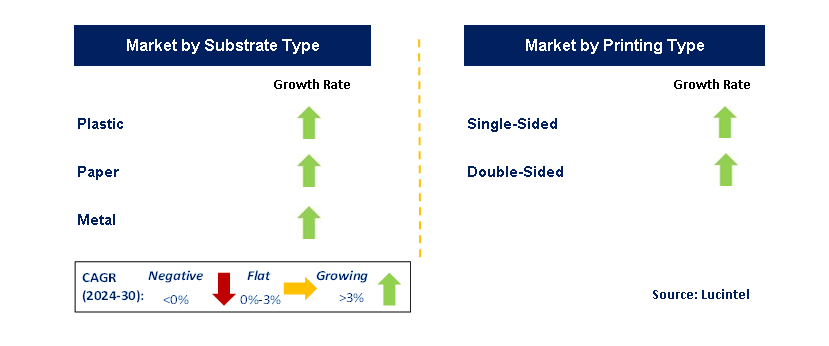
• Lucintel forecasts that, within the substrate type category, paper is expected to witness the highest growth over the forecast period due to high adaption of microprinting technology in paper-based banknotes, check slips, and postage stamps.
• Within the printing type category, single-sided will remain a larger segment due to high adaption in government, education, and corporate applications.
• In terms of regions, APAC is expected to witness the highest growth over the forecast period due to presence of a large number of banking and finance organizations, government agencies, and corporate companies. Gain valuable insights for your business decisions with our comprehensive 150+ page report.
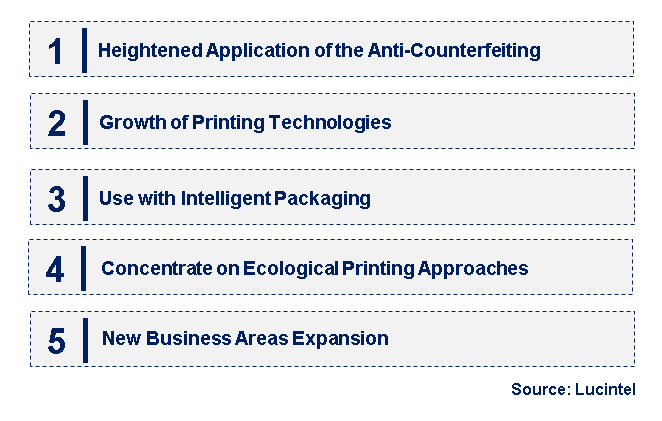
• Heightened Application of Anti-Counterfeiting Measures: The increasing counterfeiting in different sectors is driving the use of microprinting in anti-counterfeiting technology. Complex micro-picture drawings offer maximum safety, as they can hardly be copied. Such situations are mostly observed in the biopharmaceuticals, high-end glazed wares, and expensive electrical gadgets markets, where authenticity is crucial.
• Growth of Printing Technologies: New technologies in digitization and laser microprinting enable these processes to achieve higher resolution and shorter duration. New features, such as improved inks and control systems for accurate printing, enhance the overall quality and cost-effectiveness. These advancements make microprinting applicable to a variety of fields, from security papers and cards to industrial parts.
• Use with Intelligent Packaging: Microprinting is also being applied in smart packaging systems to improve product tracking and interaction with consumers. Layering microformats with QR codes and NFC tags enhances the value, security, and interaction that packages offer to consumers.
• Focus on Ecological Printing Approaches: Sustainability issues are gaining traction in microprinting practices due to increased ecological awareness and legal concerns. Advancements include the incorporation of green inks and substrate materials and the downsizing of printing machines to lower energy usage. This trend is part of a larger movement towards sustainable practices in manufacturing, responding to customer and legal demands for more environmentally friendly options.
• New Business Areas Expansion: New areas of microprinting are emerging, including but not limited to textile and medical microprinting. The significant advantages of printing on such a small scale are being utilized in these markets, such as applying labels and improving counterfeiting capabilities. This trend is creating new opportunities for the application of microprinting technologies in untapped and fast-growing industries. The trends mentioned above are revolutionizing the microprinting market infrastructure by enhancing innovation, improving security, and widening end-use applications. It is expected that technological enhancements, the incorporation of smart technologies, and sustainability policies will be the key determinants of future market evolution.
• Development of Ultra-High-Resolution Printers: Ubiquitous microprinters have revolutionized the efficiency and accuracy of microprinting by introducing low-cost ultra-high-resolution printers. These features increase the attractiveness of these printers for high-security and advanced manufacturing requirements, as fine details can be reproduced with great precision. Such advancements respond to the increased demand for accurate and finer micro-printed outputs.
• Advancements in Microprinting Materials: Ongoing research is leading to changes in microprinting materials and structures, such as inks and substrates, enhancing the features of printed elements. Innovations in ink materials and stronger substrates may improve efficiency in more extreme conditions, thereby enhancing the impact of microprinting technologies.
• Integration with Blockchain Technology: Recently, concerns have been raised regarding the security of microprinting when integrated with product tracing systems such as blockchain. Micro-printed codes are embedded in photographs, connecting with blockchain records that track information secured by the manufacturer, making it possible to provide information without the risk of tampering.
• Expansion into Healthcare and Pharmaceuticals: The application of microprinting technologies is dominating product labeling and security in the healthcare and pharmaceutical fields. New uses include microprinting security features, product labels, and informational text for patients, reflecting the need for greater security and accuracy in these industries.
• Improvements in Printing Speed and Efficiency: Over the past few years, faster and more efficient printing processes have been observed. New methods and devices reduce production time without compromising quality, making microprinting cheaper and more applicable in large quantities. These developments influence the microprinting industry by enhancing technological competence, increasing performance range, and improving efficiency. They illustrate the market’s tendency to meet changing demands for safety, accuracy, and efficiency in various fields.
• Pharmaceutical and Healthcare Labeling: Microprinting is expected to thrive in the pharmaceutical and healthcare sectors due to the high demand for safe and informative labeling. This type of microprinting helps safeguard packaging, prevent counterfeiting, and provide necessary details. Regulatory agencies and the need for safer drugs for patients drive this requirement.
• Anti-Counterfeiting Solutions: Microprinting is gaining popularity for anti-counterfeiting solutions in luxury goods and electronics, among others. It is protective due to the embedding of micro-details that are difficult to replicate. This opportunity is motivated by the increasing number of regulations targeting anti-counterfeiting measures.
• Smart Packaging Integration: The combination of microprinting and smart packaging technologies presents opportunities for better tracking of products and interaction with customers. Microprinting can be integrated with QR codes, NFC tags, and other technologies to enhance packaging capabilities and augment security that is desirable to both producers and consumers.
• Advanced Manufacturing Applications: Microprinting is advancing in the manufacturing sector, particularly in automotive and electronics. Fine, stable marks on components assist brands in quality control, brand protection, and performance monitoring. This opportunity is driven by increasing demand for security and precision in the manufacturing process.
• Consumer Electronics and Wearables: The integration of microprinting technology into consumer electronics and wearables presents a major opportunity for growth. Microprinting is useful for engraving, addressing design challenges in small and complex devices, thereby creating a market for next-generation consumer goods. This strategic growth opportunity focuses on new application areas and rising needs for microprinting across different industries. It illustrates the potential available in the market characterized by technological development.
• Technological Advancements: Advances in microprinting technology, such as enhanced resolution, printing speed, and material usage, propel the market forward. Issues in micro- to nano-ink-jetted printed antennas have been mitigated by innovations in laser and digital printers, which have improved regional micromachining processes. These advancements support the performance of new products in security, packaging, and electronics, broadening the market’s geographical reach.
• Rise in Demand for Security Infrastructure: The threat of counterfeiting and fraud increases the demand for enhanced security measures, with microprinting being crucial. Microprinting offers high-level security for products by including complex and hard-to-copy details, which are essential in industries such as pharmaceuticals, luxury brands, and electronics. This rising concern for security and authentication drives the development and use of microprinting technologies to protect products and build consumer loyalty.
• Increase in Packaging and Labeling Applications: The growing desire for effective and safe packaging and labeling solutions is a major factor propelling the microprinting market. Microprinting technology is incorporated into labeling solutions to create more accurate and anti-spy devices, enhancing product compliance and tracking. This trend aligns with societal interests in protecting consumer products and ensuring accurate information in pharmaceuticals and household goods. Challenges in the microprinting market include:
• High Production Costs: The high cost of acquiring sophisticated materials and processes for advanced microprinting hinders market development. The expense of proper equipment and inks makes microprinting solutions unaffordable for small-scale businesses and low-margin applications. Balancing production cost control while maintaining high-quality output is essential for accessibility and competitiveness in the market.
• Regulatory Compliance: The microprinting industry faces diverse and often convoluted regulations governing operations in various regions. There is a trade-off between ensuring safety, upholding environmental protection standards, and complying with industry regulations and market requirements. Various regulatory frameworks can complicate operations and increase costs, potentially leading to slow market growth or failure.
• Competition from Alternative Technologies: Competition from alternative technologies, such as radio-frequency identification, holography, and conventional printing, limits the specific applications of microprinting. These substitutes offer various benefits, including different security types and cost savings. For microprinting to remain competitive, it must continually evolve and establish advantages that address gaps in the market. The expansion of the microprinting industry can be attributed to advancements in technology, the growing demand for security, and the increased need for effective packaging and manufacturing. However, high entry barriers, regulatory challenges, and cost issues remain obstacles. Balancing these drivers and challenges is crucial for market participants to harness available opportunities and address challenges that will shape the future direction of the microprinting market.
• Xerox Corporation
• Videojet
• Matica
• Brady
• Zebra
• HP
• Canon
• Plastic
• Paper
• Metal
• Monochrome
• Color
• Single-Sided
• Double-Sided
• Banking & Finance
• Government
• Packaging
• Healthcare
• Education
• Corporate
• North America
• Europe
• Asia Pacific
• The Rest of the World
• United States: In the U.S., advancements in digital microprinting technologies have improved resolution and speed. Companies are providing sophisticated microprinting systems targeting anti-counterfeiting and secure document production. These enhancements include better lasers and inks that are more accurate and longer-lasting, meeting the demands of a growing market for secure identification and verification systems.
• China: The microprinting market in China is growing rapidly due to its commitment to high-tech manufacturing and security solutions. New developments include investments in modern microprinting technologies for authentication and anti-counterfeiting. Chinese scholars and entrepreneurs are also exploring new materials and processes of significant importance to the large and diverse market for secured packaging and labeling.
• Germany: Germany is making strides in combining microprinting with advanced manufacturing and industrial sectors. Microprinting technologies are being embraced by the automotive and electronics industries as safeguards against counterfeiting. German firms are also advancing the development of microprinting materials and processes, enhancing the cost-effectiveness and reliability of production.
• India: In India, the microprinting market is awakening due to heightened demand for security and quality in production processes. Developments include the use of microprinting technologies in packaging and labeling for both pharmaceuticals and non-consumer products. Indian firms are seeking affordable microprinting technologies to meet domestic and international market needs, supporting broader industrial development.
• Japan: Japan is a leader in design and technology in the microprinting market. Recently, high-resolution microprinting technologies have been developed for high-value electronics and goods. Japanese companies excel in integrating technology with microprinting and smart packaging, as well as other advanced materials that enhance security and functionality in various sectors.


• Xerox Corporation
• Videojet
• Matica
• Brady
• Zebra
• HP
• Canon Q6. Which microprinting market segment will be the largest in future? Answer: Lucintel forecasts that paper is expected to witness highest growth over the forecast period due to high adaption of microprinting technology in paper-based banknotes, check slips, and postage stamps. Q7. In microprinting market, which region is expected to be the largest in next 5 years? Answer: APAC is expected to witness highest growth over the forecast period due to presence of a large number of banking and finance organizations, government agencies, and corporate companies. Q.8 Do we receive customization in this report? Answer: Yes, Lucintel provides 10% customization without any additional cost.


Choose a license that fits your team. Instant PDF delivery.
Prices exclude taxes. Instant delivery. Custom licensing available on request.
Market Report · July 29, 2026
Market Report · July 20, 2026
Market Report · July 20, 2026
Trusted partner for strategic intelligence and business growth


Receive a complimentary market analysis tailored to your industry. Our analysts will identify key growth opportunities and competitive dynamics specific to your business.

Market size, growth rate, and key trend analysis for your specific sector.

Top competitor positioning and market share analysis.

Strategic recommendations backed by data-driven insights.
Get curated market intelligence and competitive moves straight to your inbox.
By subscribing, you agree to receive our monthly insights. Unsubscribe anytime.
Receive a complimentary market analysis tailored to your industry. Our analysts will identify key growth opportunities and competitive dynamics specific to your business.
Market size, growth rate, and key trend analysis for your specific sector.
Top competitor positioning and market share analysis.
Strategic recommendations backed by data-driven insights.
Get curated market intelligence, emerging trends, and competitive moves straight to your inbox each month.
By subscribing, you agree to receive our monthly insights. Unsubscribe anytime.
We'll send your sample report shortly.