
Market Report · July 22, 2026

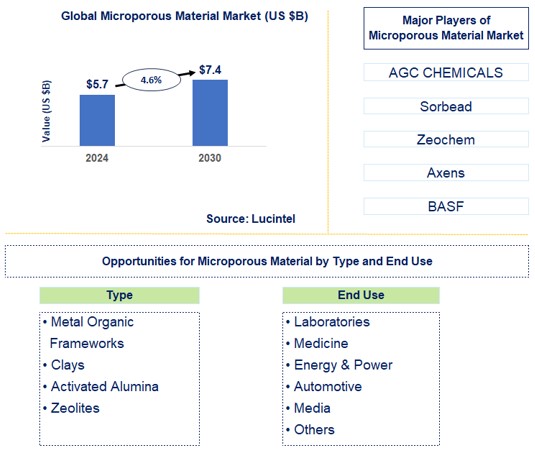
Key data points: The market size in 2030 = $7.4 billion, growth forecast = 4.6% annually for the next 6 years. Scroll below to get more insights. This market report covers trends, opportunities, and forecasts in the global microporous material market to 2030 by type (metal organic frameworks, clays, activated alumina, and zeolites), end use (laboratories, medicine, energy & power, automotive, media, and others), and region (North America, Europe, Asia Pacific, and the Rest of the World)
We'll send your sample report shortly.
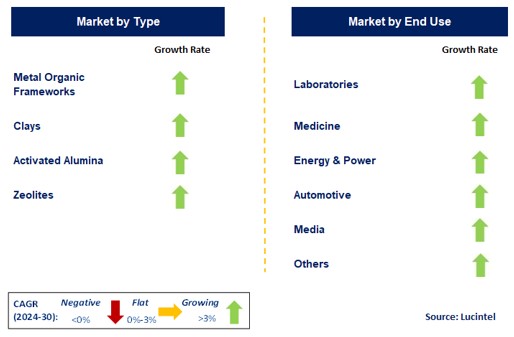
• Lucintel forecasts that, within the type category, zeolites will remain the largest segment over the forecast period.
• Within the application category, automotive will remain the largest segment.
• In terms of regions, APAC is expected to witness the highest growth over the forecast period. A more than 150-page report is developed to help in your business decisions.
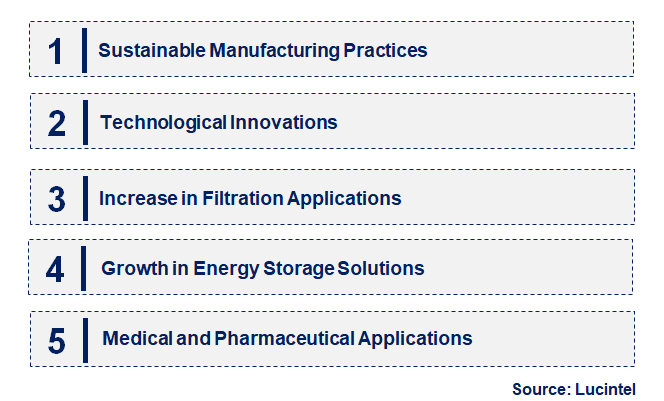
• Sustainable Manufacturing Practices: Increased environmental awareness continues to push manufacturers toward sustainable production techniques for microporous materials. They are encouraged to use environmentally friendly raw materials and recycling processes. Companies investing in sustainability not only meet regulatory requirements but also gain a competitive edge by catering to consumers who prioritize environmental responsibility in their purchasing decisions.
• Technological Innovations: Advances in manufacturing technologies enable the production of higher-quality microporous materials. Electrospinning and advanced casting methods enhance performance characteristics, improving filtration efficiency and thermal resistance. These innovations create new opportunities across various industries.
• Increase in Filtration Applications: The demand for competitive filtration products in sectors like water treatment, air purification, and pharmaceuticals has risen. Advanced filtration technologies implemented in microporous materials enable excellent pollutant and pathogen removal. This trend is expected to drive significant market growth.
• Growth in Energy Storage Solutions: Rising demand for microporous materials in batteries and fuel cells, spurred by the growth of electric vehicles and renewable energy technologies, is creating new opportunities. These materials enhance energy efficiency and are critical for safety. As the energy sector grows, manufacturers are increasingly focused on producing specialized microporous materials for these applications.
• Medical and Pharmaceutical Applications: Microporous materials are finding applications in healthcare, such as in drug delivery systems, skin care products, and other medical devices. Their unique properties enable controlled release and improved therapeutic outcomes, stimulating innovation and investment in the medical field. These trends are driving the microporous material market toward greater sustainability and technological improvement, creating manifold opportunities for application across various industries.
• Advanced Filtration Technologies: Recent advancements in microporous materials are revolutionizing filtration technologies, improving air and water purification. New membrane technologies increase the efficiency of pollutant removal while reducing operating costs. This innovation helps meet regulatory standards and minimize environmental impacts.
• Sustainable Production Methods: The industry is increasingly adopting sustainable production methods using bio-based and recyclable microporous materials. By focusing on green technologies, companies are minimizing environmental impacts, aligning with global sustainability goals, and appealing to environmentally conscious customers.
• Innovations in Energy Applications: Growth in electric vehicles and renewable energy technologies is driving innovation in microporous materials for batteries and fuel cells. New materials are being developed to enhance energy density and safety, positioning manufacturers to capitalize on the energy sector's expansion.
• Entry into Medical Applications: Microporous materials are gaining traction in the medical field, particularly for drug delivery and wound care. Key developments in biocompatibility and controlled release mechanisms are improving therapeutic outcomes, highlighting the versatility of microporous materials.
• Collaborations and Research Efforts: Collaboration between industry players and research institutions is fostering innovation in microporous materials. Knowledge sharing and resource pooling are leading to more advanced applications and products, meeting the evolving demands of the market. Recent developments have propelled the microporous material market beyond expectations, driven by innovation, application, and sustainability. As manufacturers adapt to these changes, the market will continue to evolve in terms of performance and applicability across industries.
• Water and Air Filtration: The growing demand for clean water and air is driving opportunities in filtration applications. Microporous materials with superior membrane development capabilities can significantly enhance pollutant removal efficiency, serving both industrial and residential sectors.
• Battery Technologies: The demand for microporous materials is increasing in electric vehicles and renewable energy, particularly in lithium-ion and solid-state batteries, which require better energy efficiency and safety. Manufacturers can seize this opportunity by developing specialized materials for energy applications.
• Biomedical Applications: Healthcare is a promising field, with lucrative opportunities in drug delivery systems and wound care products. As demand for innovative medical solutions rises, there is potential to develop microporous materials enhanced for biocompatibility and therapeutic efficacy.
• Lightweight Construction Materials: The construction industry requires lighter and higher-performance materials for insulation and structural functions. Microporous materials provide superior thermal resistance and energy efficiency, offering manufacturers an opportunity to respond to sustainable building practices.
• Renewable Energy Solutions: As the demand for sustainable energy sources grows, microporous materials are increasingly used in fuel cells and solar panels. Manufacturers can contribute to global sustainability goals by developing innovative materials that improve efficiency and performance. These growth opportunities present avenues for innovation and expansion in the microporous material market. By focusing on key application areas like filtration, energy storage, healthcare, construction, and renewable energy, manufacturers can improve their competitive edge and capitalize on emerging trends.
• Growth in Demand for Filtration Solutions: As the need for clean air and water increases, demand for advanced filtration solutions is driving growth in the microporous material market. These materials are essential for improving purification efficiency, benefiting both industrial and consumer applications.
• Focus on Sustainability: Sustainability is a key driver for the production of microporous materials. Suppliers are becoming more environmentally conscious, using greener materials to meet regulatory requirements and consumer expectations for eco-friendly products.
• Technological Advancements: Advances in material science and manufacturing technologies are driving the production of high-performance microporous materials. These improvements open up new applications and are likely to expand the market.
• Expansion in Energy Storage Technologies: The use of microporous materials in batteries and fuel cells for electric vehicles and renewable energy technologies is growing. As these markets expand, there are opportunities for manufacturers to innovate and create application-specific materials.
• Healthcare Applications Increasing: The increasing use of microporous materials in healthcare, for drug delivery systems and medical devices, is a major growth driver. These materials improve the effectiveness of therapies, offering significant opportunities for manufacturers. Challenges
• Price Volatility of Raw Materials: Fluctuating prices of raw materials can affect the profitability of microporous material production. Manufacturers must manage these costs while maintaining product quality in a competitive market.
• Regulatory Compliance: Navigating complex global regulations on materials and manufacturing processes can be challenging. Manufacturers need to invest in research and development to comply with country-specific regulations.
• High Competition: The microporous material market is highly competitive, with many companies vying for market share. Constant innovation and differentiation are required to remain competitive, necessitating significant investment in research and development. These drivers and challenges shape the market for microporous materials, influencing product development and strategic planning. Companies that address these challenges while leveraging the drivers will be better positioned to navigate the complexities of the market and capitalize on growth opportunities.
• AGC CHEMICALS
• Sorbead
• Zeochem
• Axens
• BASF
• PQ
• PIDC
• Sumitomo Chemical
• Zeolyst
• Solvay
• Metal Organic Frameworks
• Clays
• Activated Alumina
• Zeolites
• Laboratories
• Medicine
• Energy & Power
• Automotive
• Media
• Others
• North America
• Europe
• Asia Pacific
• The Rest of the World
• United States: In the U.S., developments are focused on improving microporous materials for filtration technologies, particularly in water and air purification. New membrane technologies offer long-term sustainability. The healthcare sector is also transforming with the increased use of microporous materials in drug delivery and wound care, improving therapeutic outcomes. Industry-research collaborations are driving innovation.
• China: China is investing heavily in the development of microporous materials, particularly for the automotive and electronics sectors. Advanced manufacturing technologies are improving the quality and performance of these materials. Research in lightweight, thermal-resistant microporous composites is essential for electric vehicle applications. Environmental regulations are pushing manufacturers toward greener practices, driving the development of eco-friendly materials.
• Germany: Germany leads in microporous material technology, with significant advancements in automotive and industrial applications. Research is focused on high-performance materials for filtration and separation, as well as energy storage solutions like batteries and fuel cells. Sustainability is a key concern, driving the use of biodegradable and recyclable materials. Germany’s focus on quality and performance maintains its strong market position.
• India: The Indian market for microporous materials is growing rapidly, driven by industries such as construction, automotive, and textiles. Recent developments include microporous membranes for water filtration and air purification, addressing environmental and health concerns. The Indian government’s push for sustainable manufacturing promotes green materials and processes. Growth in the pharmaceutical sector is increasing demand for drug delivery and packaging applications.
• Japan: Japan is focusing on advanced applications of microporous materials in electronics and healthcare. Developments include high-performance microporous films for batteries with improved energy efficiency and safety. Microporous materials are also being used in electronic device thermal management to improve performance and lifespan. Research in biomedicine is driving innovations in drug delivery systems, while sustainability efforts are leading to alternatives to traditional microporous materials.


• AGC CHEMICALS
• Sorbead
• Zeochem
• Axens
• BASF
• PQ
• PIDC
• Sumitomo Chemical
• Zeolyst
• Solvay Q6. Which microporous material market segment will be the largest in future? Answer: Lucintel forecasts that zeolites will remain the largest segment over the forecast period. Q7. In microporous material market, which region is expected to be the largest in next 5 years? Answer: APAC is expected to witness highest growth over the forecast period. Q.8 Do we receive customization in this report? Answer: Yes, Lucintel provides 10% customization without any additional cost.


Choose a license that fits your team. Instant PDF delivery.
Prices exclude taxes. Instant delivery. Custom licensing available on request.
Market Report · July 22, 2026
Market Report · July 22, 2026
Market Report · July 22, 2026
Trusted partner for strategic intelligence and business growth


Receive a complimentary market analysis tailored to your industry. Our analysts will identify key growth opportunities and competitive dynamics specific to your business.

Market size, growth rate, and key trend analysis for your specific sector.

Top competitor positioning and market share analysis.

Strategic recommendations backed by data-driven insights.
Get curated market intelligence and competitive moves straight to your inbox.
By subscribing, you agree to receive our monthly insights. Unsubscribe anytime.
Receive a complimentary market analysis tailored to your industry. Our analysts will identify key growth opportunities and competitive dynamics specific to your business.
Market size, growth rate, and key trend analysis for your specific sector.
Top competitor positioning and market share analysis.
Strategic recommendations backed by data-driven insights.
Get curated market intelligence, emerging trends, and competitive moves straight to your inbox each month.
By subscribing, you agree to receive our monthly insights. Unsubscribe anytime.
We'll send your sample report shortly.