
Market Report · July 31, 2026

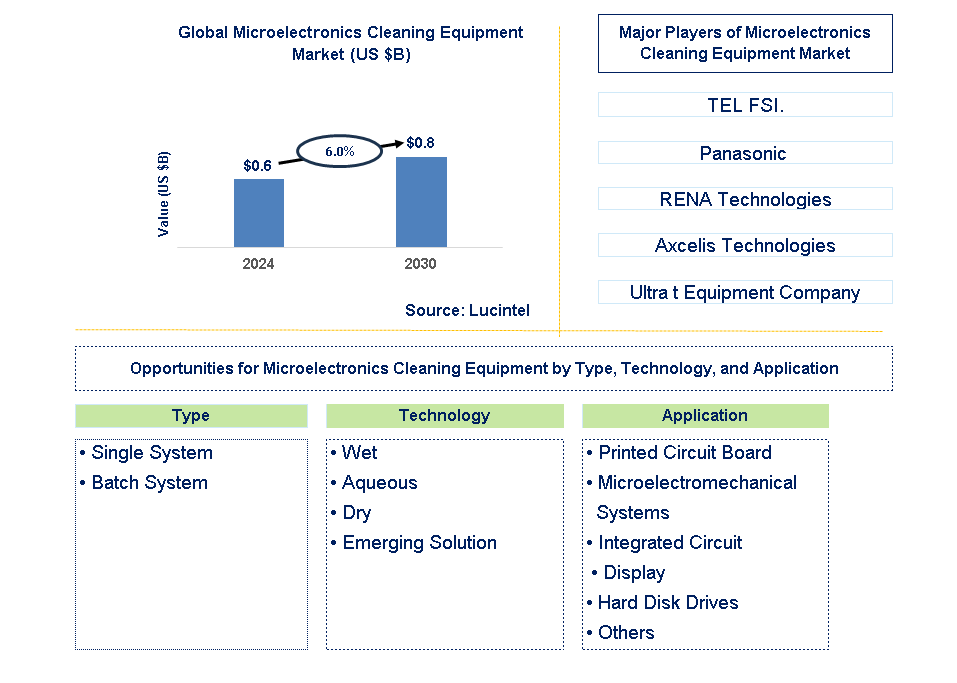
Key data points: The market size in 2030 = $0.8 billion, growth forecast = 6.0% annually for the next 6 years. Scroll below to get more insights. This market report covers trends, opportunities, and forecasts in the global microelectronics cleaning equipment market to 2030 by type (single system and batch system), technology (wet, aqueous, dry, and emerging solution), application (printed circuit board (PCB), microelectromechanical systems (MEMS), integrated circuit (ICS), display, hard disk drives (HDD), and others), and region (North America, Europe, Asia Pacific, and the Rest of the World)
We'll send your sample report shortly.
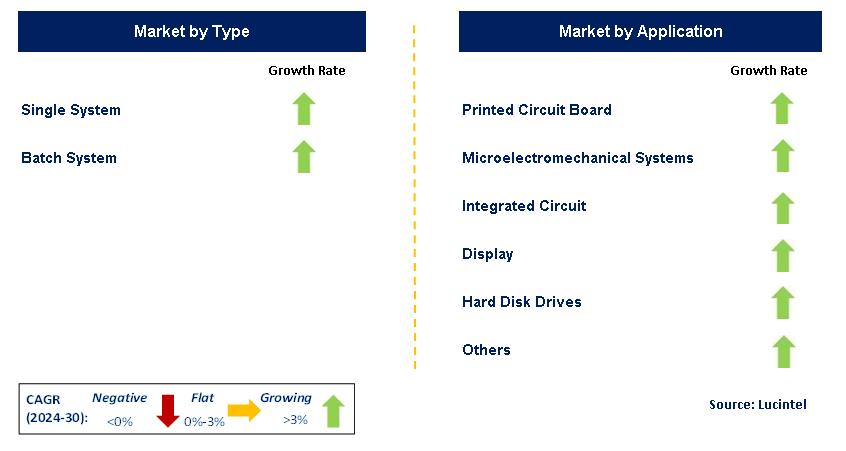
• Lucintel forecasts that, within the type category, batch system is expected to witness highest growth over the forecast period due to cost-effectiveness and more versatility than single batch system.
• Within the application category, microelectromechanical systems (MEMS) will remain the largest segment due to its characteristics like dependability and precision as well as the capacity to create smaller electrical equipment. .
• In terms of regions, Asia Pacific is expected to witness highest growth over the forecast period due to high demand from nations like China, Japan, Singapore, India, and China for smartphones and other consumer goods. Gain valuable insights for your business decisions with our 150+ page report.
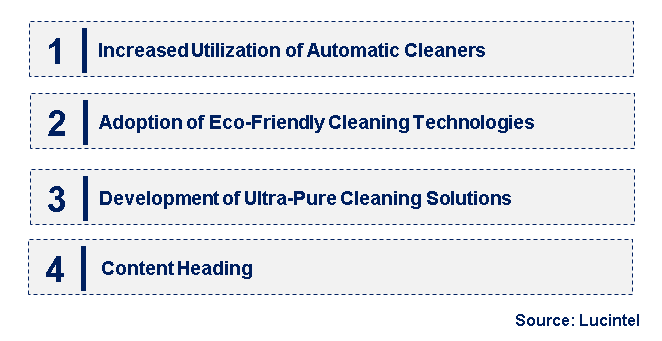
• Increased Utilization of Automatic Cleaners: A key trend is the increased use of automatic cleaners in the industry. Automation allows for greater precision and consistency in cleaning, reduces manpower needs, lowers labor costs, and minimizes human error. By integrating robotics and AI, manufacturers achieve higher throughput and more reliable cleaning results, essential in meeting semiconductor production requirements.
• Adoption of Eco-Friendly Cleaning Technologies: There is a growing trend toward eco-friendly cleaning technologies in the microelectronics industry. Companies are focused on developing cleaning processes that pose minimal environmental risks from chemical discharge. Innovations such as dry cleaning and plasma cleaning have been helpful in achieving this. This trend is part of the industry’s larger effort to be more sustainable and to comply with stricter environmental regulations.
• Development of Ultra-Pure Cleaning Solutions: Another focus is on the development of ultra-pure cleaning solutions. The increased complexity and miniaturization of semiconductor devices have driven demand for high-purity cleaning solutions to ensure contamination-free production. These solutions are specially designed for the high cleanliness standards required in advanced semiconductor manufacturing and ensure high product reliability.
• Integration of Industry 4.0 Technologies: The integration of Industry 4.0 technologies, including IoT and data analytics, is expected to transform the microelectronics cleaning equipment market. These technologies enable real-time monitoring and control of cleaning processes, improving efficiency and allowing predictive maintenance. New trends in microelectronics cleaning equipment focus on automation, sustainability, and technology advancements. These manifest in the increased use of automated systems, adoption of eco-friendly technologies, development of ultra-pure solutions, and integration of Industry 4.0 technologies, enhancing efficiency, performance, and environmental responsibility within the microelectronics sector.
• Application of Advanced Cleaning Technologies: Precision cleaning with dry and plasma cleaning methods is revolutionizing the field. These methods improve cleaning efficiency by effectively removing contaminants without harmful chemicals. Dry cleaning minimizes chemical contamination risks, while plasma cleaning enables high-precision removal of nanoscale contaminants. These innovations help maintain the high standards necessary for semiconductor manufacturing and improve equipment performance.
• Integration of Automation: Automation is one of the most significant developments in microelectronics cleaning equipment. Automation technologies, such as robotics and AI, make cleaning processes more efficient and minimize human intervention, leading to faster and more precise treatments. Computer-controlled systems optimize consistency and throughput, reduce human error, and improve overall efficiency while lowering operational costs.
• Demand for Environmentally Sustainable Practices: Environmental sustainability has emerged as a priority in the development of microelectronics cleaning equipment. New solutions aim to reduce hazardous chemical use and minimize environmental impact. Technologies such as water-based cleaning and recyclable materials are gaining prominence as companies align with global sustainability goals. This effort reduces regulatory pressures and minimizes the ecological footprint of cleaning processes.
• Enhanced Cleaning for Miniaturized Devices: With the miniaturization of semiconductor devices, cleaning equipment has adapted to handle more compact and intricate components. Recent innovations include specialized cleaning systems designed for the smaller, more delicate features of modern devices. High-precision nozzles and advanced filtration systems allow thorough cleaning without damaging sensitive components, which is crucial for device performance and reliability. Recent developments in microelectronics cleaning equipment highlight advancements in precision, automation, and sustainability. Advanced cleaning technologies, automation integration, and environmentally friendly solutions are crucial to meeting the increasing demands of semiconductor manufacturing and addressing environmental considerations.
• Expansion into Emerging Markets: Growth opportunities for cleaning equipment in microelectronics are significant in emerging markets. With the expansion of semiconductor manufacturing in regions like Asia-Pacific, demand for advanced cleaning solutions is rising. Companies can capitalize on this growth by entering emerging markets and offering customized technological cleaning solutions that meet local needs. Expansion into these markets presents business opportunities to increase market share and revenue.
• Development of Customized Cleaning Solutions: Demand for customized cleaning solutions that cater to specific semiconductor manufacturing needs is increasing. Companies can develop specialized equipment tailored to the unique requirements of different semiconductor processes and device types. Offering customized solutions gives manufacturers a competitive edge and meets diverse client needs, improving customer satisfaction and loyalty.
• Integration of IoT and Data Analytics: Integrating IoT and data analytics presents a key growth opportunity. Embedding these technologies in cleaning equipment enables real-time monitoring, predictive maintenance, and performance optimization. IoT-enabled equipment provides data to enhance cleaning processes and reduce downtime through data-driven decisions, promoting operational efficiency and maintaining a competitive edge.
• Focus on Sustainable Solutions: Sustainability is becoming a key selling point in the microelectronics cleaning equipment market. Eco-friendly solutions, such as water-based or recyclable technologies, meet regulatory requirements and reduce environmental impacts. Companies can attract eco-conscious consumers and strengthen their market position by minimizing their environmental footprint. Strategic growth opportunities in the microelectronics cleaning equipment market are evident in emerging markets, customization, IoT integration, sustainability, and R&D investments. These opportunities enable companies to strengthen their market position, meet evolving semiconductor manufacturing demands, and address environmental concerns.
• Technological Advancements: Technology development is a major driver in the microelectronics cleaning equipment market. Advances in cleaning, automation, and precision tools enhance cleaning efficiency and effectiveness. For example, high-precision nozzles and advanced filtration systems improve contaminant removal without damaging sensitive components, meeting strict quality standards in semiconductor manufacturing.
• Growing Demand for Device Miniaturization: Demand for miniaturized electronic devices is fueling the development of advanced cleaning equipment. Smaller, more complex semiconductor devices require innovations in cleaning equipment for high-precision cleaning and contamination control, ensuring device performance and compliance with manufacturing standards.
• Environmental Regulations: Strict environmental regulations are driving companies to adopt greener cleaning technologies, such as water-based solutions and recyclable materials. Compliance with these regulations reduces environmental impact and demonstrates corporate responsibility in sustainable manufacturing practices. Challenges in the microelectronics cleaning equipment market are:
• Economic Pressures: Economic pressures, including cost management and competition, impact the microelectronics cleaning equipment market. Companies face challenges in balancing the cost of advanced cleaning technologies with the need to keep products affordable. Economic pressures influence investment in new equipment and technologies, pushing companies to optimize cleaning processes and invest in cost-effective solutions.
• Demand for High Efficiency: The demand for high-efficiency cleaning processes is driving innovation in the microelectronics cleaning equipment market. Manufacturers seek equipment that enhances cleaning performance while minimizing energy and resource consumption. High-efficiency equipment reduces downtime and improves throughput, pushing advancements in cleaning performance and operational efficiency. The primary drivers and challenges in the microelectronics cleaning equipment market are technology advancements, device miniaturization, environmental regulations, economic pressures, and efficiency demands. Technological innovations meet the needs of smaller, more complex components, while regulatory requirements promote greener solutions and economic factors drive investment and cost management.
• TEL FSI.
• Panasonic
• RENA Technologies
• Axcelis Technologies
• Ultra t Equipment Company
• NAURA Akrion
• Quantum Global Technologies
• Dainippon Screen
• Speedline Technologies
• Axus Technology
• Single System
• Batch System
• Wet
• Aqueous
• Dry
• Emerging Solution
• Printed Circuit Board
• Microelectromechanical Systems
• Integrated Circuit
• Display
• Hard Disk Drives
• Others
• North America
• Europe
• Asia Pacific
• The Rest of the World
• United States: Efforts in the United States focus on advanced cleaning technologies and automation. Robotics and AI are being introduced to enhance precision and speed, while eco-friendly cleaning with fewer hazardous chemicals is gaining attention. These initiatives target high-quality standards in semiconductor manufacturing and environmental protection.
• China: Investments in microelectronics cleaning equipment are growing in China, driven by its semiconductor industry. Recently, cutting-edge cleaning technologies, including plasma and dry cleaning systems, have been developed to improve efficiency and reduce contamination risk. Efforts focus on increasing production speeds and volumes to meet the needs of the expanding semiconductor sector.
• Germany: Germany prioritizes precision and innovation in microelectronics cleaning equipment, particularly in ultra-pure cleaning solutions and advanced filtration systems. Industry 4.0 technologies are also being integrated to enhance process monitoring and control, improving cleaning performance and efficiency.
• India: The microelectronics cleaning equipment market in India is moving towards cost-effective, locally manufactured solutions. Affordable cleaning systems are being introduced without compromising industry standards. Local workforce training supports the growth of the semiconductor industry, encouraging domestic manufacturing to meet rising equipment demand.
• Japan: Japan leads in microelectronics cleaning equipment innovation, focusing on ultra-clean processes and increased automation. Japanese companies are also researching new materials and coatings to improve cleaning efficiency and extend equipment lifespan. These advancements are vital for maintaining Japan’s competitive position in the global semiconductor market.


• TEL FSI.
• Panasonic
• RENA Technologies
• Axcelis Technologies
• Ultra t Equipment Company
• NAURA Akrion
• Quantum Global Technologies
• Dainippon Screen
• Speedline Technologies
• Axus Technology Q6. Which microelectronics cleaning equipment segment will be the largest in future? Answer: Lucintel forecasts that batch system is expected to witness highest growth over the forecast period due to cost-effectiveness and more versatility than single batch system. Q7. In microelectronics cleaning equipment, which region is expected to be the largest in next 5 years? Answer: Asia Pacific is expected to witness highest growth over the forecast period due to high demand from nations like China, Japan, Singapore, India, and China for smartphones and other consumer goods. Q.8 Do we receive customization in this report? Answer: Yes, Lucintel provides 10% customization without any additional cost.


Choose a license that fits your team. Instant PDF delivery.
Prices exclude taxes. Instant delivery. Custom licensing available on request.
Market Report · July 31, 2026
Market Report · July 31, 2026
Market Report · July 31, 2026
Trusted partner for strategic intelligence and business growth


Receive a complimentary market analysis tailored to your industry. Our analysts will identify key growth opportunities and competitive dynamics specific to your business.

Market size, growth rate, and key trend analysis for your specific sector.

Top competitor positioning and market share analysis.

Strategic recommendations backed by data-driven insights.
Get curated market intelligence and competitive moves straight to your inbox.
By subscribing, you agree to receive our monthly insights. Unsubscribe anytime.
Receive a complimentary market analysis tailored to your industry. Our analysts will identify key growth opportunities and competitive dynamics specific to your business.
Market size, growth rate, and key trend analysis for your specific sector.
Top competitor positioning and market share analysis.
Strategic recommendations backed by data-driven insights.
Get curated market intelligence, emerging trends, and competitive moves straight to your inbox each month.
By subscribing, you agree to receive our monthly insights. Unsubscribe anytime.
We'll send your sample report shortly.