
Report Feature
Microbiome Therapeutics Market Trends and Forecast
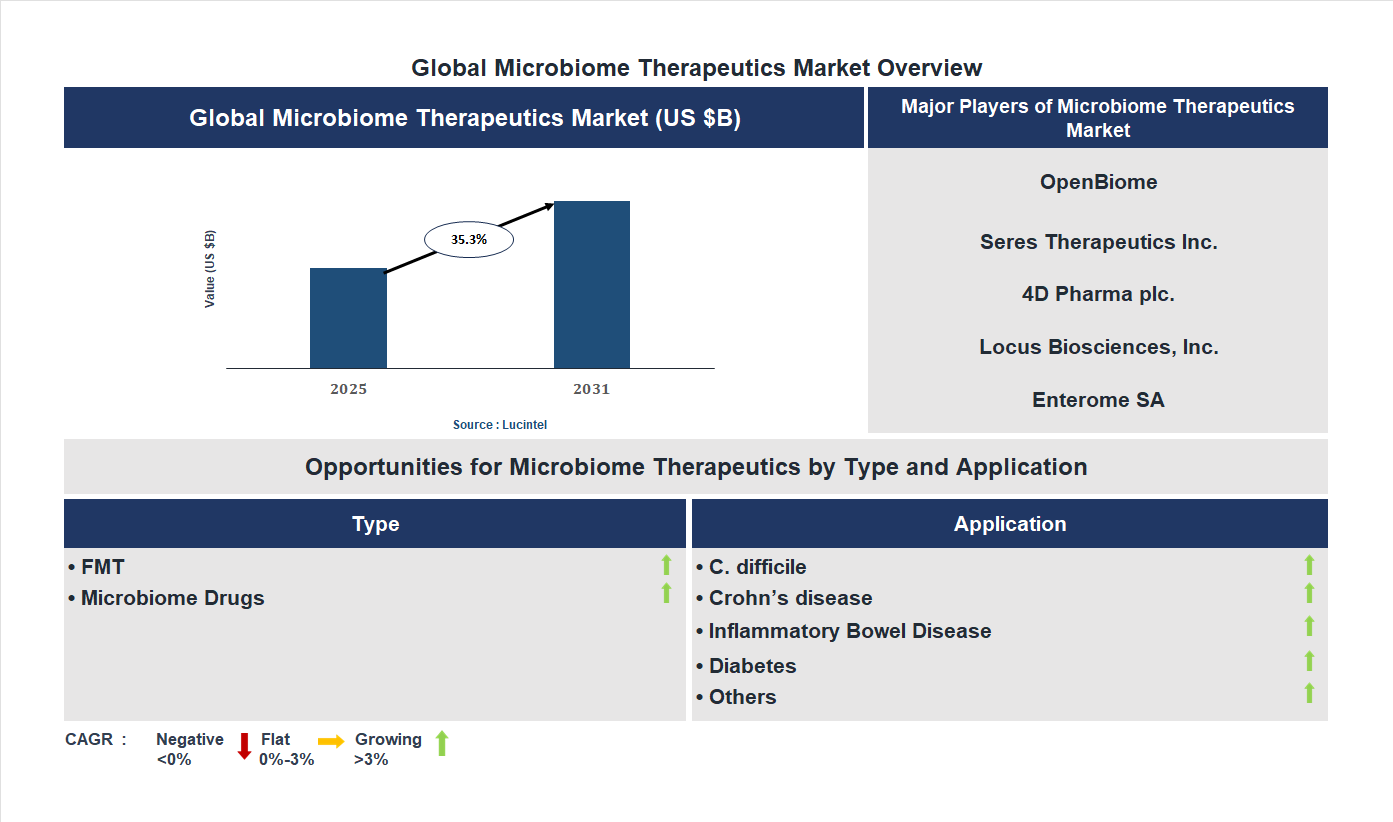
The future of the global microbiome therapeutics market looks promising with opportunities in the C. difficile, crohn’s disease, inflammatory bowel disease, and diabetes markets. The global microbiome therapeutics market is expected to grow with a CAGR of 35.3% from 2025 to 2031. The major drivers for this market are the increasing research into gut health therapies, the rising prevalence of chronic immune disorders, and the growing investment in microbiome based drugs.• Lucintel forecasts that, within the type category, FMT is expected to witness higher growth over the forecast period.
• Within the application category, C. difficile is expected to witness the highest growth.
• In terms of region, APAC is expected to witness the highest growth over the forecast period. Gain valuable insights for your business decisions with our comprehensive 150+ page report. Sample figures with some insights are shown below.
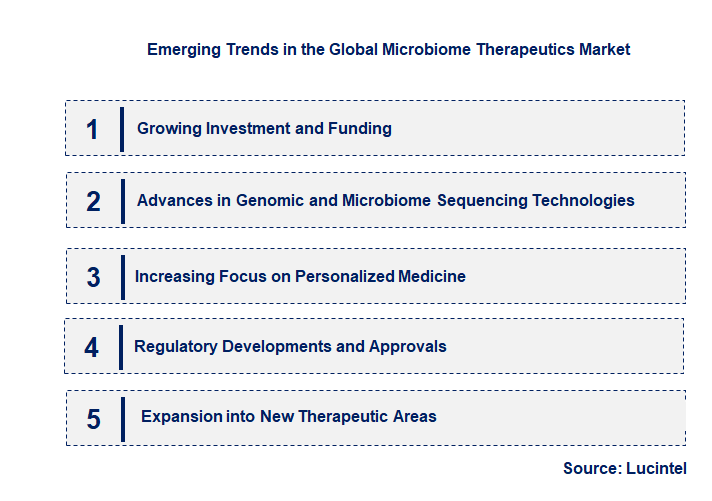
Emerging Trends in the Microbiome Therapeutics Market
The microbiome therapeutics market is experiencing rapid growth driven by advances in scientific research, increasing awareness of the microbiomes role in health, and technological innovations. As understanding deepens, new therapies are emerging to treat a variety of conditions, from gastrointestinal disorders to mental health issues. This evolving landscape is characterized by increased investment, regulatory support, and a shift towards personalized medicine. These developments are not only expanding the market but also transforming healthcare approaches, emphasizing the importance of the microbiome in overall health management. The following key trends highlight the major shifts shaping this dynamic industry.• Growing Investment and Funding: The market is witnessing increased investment from venture capitalists, pharmaceutical companies, and government agencies. This influx of capital supports research, development, and commercialization of microbiome-based therapies. As funding rises, more innovative products are entering clinical trials, accelerating the pace of discovery. This trend indicates strong confidence in the market’s potential and is likely to lead to a broader pipeline of microbiome therapeutics, ultimately making these treatments more accessible and affordable for patients.
• Advances in Genomic and Microbiome Sequencing Technologies: Technological innovations in sequencing have revolutionized microbiome research. High-throughput sequencing allows for detailed analysis of microbial communities, enabling precise identification of beneficial and harmful microbes. These insights facilitate the development of targeted therapies tailored to individual microbiomes, enhancing efficacy and reducing side effects. As sequencing becomes more affordable and accurate, it will continue to drive personalized medicine approaches, expanding the scope and effectiveness of microbiome therapeutics.
• Increasing Focus on Personalized Medicine: The trend toward personalized medicine is prominent in the microbiome therapeutics market. By analyzing individual microbiome profiles, treatments can be customized to optimize outcomes. This approach improves efficacy, minimizes adverse effects, and addresses specific health conditions more effectively. Personalized microbiome therapies are gaining traction in clinical settings, supported by advancements in diagnostics and data analytics. This shift is transforming traditional treatment paradigms, making healthcare more patient-centric and precise, and opening new avenues for managing complex and chronic diseases.
• Regulatory Developments and Approvals: Regulatory agencies are increasingly providing clear guidelines for microbiome-based therapies. Recent approvals and positive regulatory feedback are boosting market confidence and encouraging investment. Regulatory clarity helps streamline the development process, reduce uncertainties, and facilitate faster market entry for new products. As regulatory frameworks evolve, they will support innovation while ensuring safety and efficacy, fostering a more robust and trustworthy market environment. This trend is crucial for translating scientific discoveries into approved, widely available therapies.
• Expansion into New Therapeutic Areas: Initially focused on gastrointestinal disorders, microbiome therapeutics are now expanding into areas such as mental health, metabolic disorders, and autoimmune diseases. This diversification is driven by growing evidence of the microbiome’s influence on various health conditions. The expansion opens new revenue streams and broadens the market scope. It also encourages interdisciplinary research, integrating microbiology, neurology, and immunology. As microbiome-based interventions prove effective across multiple domains, they are poised to become integral components of holistic healthcare strategies. In summary, these trends are collectively reshaping the microbiome therapeutics market by fostering innovation, enhancing personalization, and broadening therapeutic applications. They are driving increased investment, regulatory support, and technological advancements, which will likely lead to more effective, accessible, and diverse microbiome-based treatments. This evolution is poised to significantly impact healthcare, offering new hope for managing complex health conditions through microbiome modulation.
Recent Development in the Microbiome Therapeutics Market
The microbiome therapeutics market has experienced rapid growth driven by increasing awareness of the microbiomes role in human health, advancements in biotechnology, and a surge in research funding. As scientific understanding deepens, new therapies targeting gut health, immune modulation, and metabolic disorders are emerging. The market is also influenced by regulatory developments, strategic collaborations, and technological innovations that enhance product development and delivery. These factors collectively contribute to a dynamic landscape, promising significant clinical and commercial opportunities. The following key developments highlight the recent trajectory and future potential of this evolving market.• Expansion of Clinical Trials: The number of clinical trials for microbiome-based therapies has surged, indicating increased investment and interest. This expansion accelerates the validation process for new treatments, fostering confidence among investors and healthcare providers. It also helps identify effective therapeutic strains and formulations, ultimately leading to regulatory approvals and market entry. The growth in trials signifies a maturing industry focused on evidence-based solutions, which could improve patient outcomes and expand market reach.
• Regulatory Framework Advancements: Regulatory agencies like the FDA and EMA are developing clearer guidelines for microbiome therapeutics. These frameworks facilitate smoother approval processes and ensure safety and efficacy standards. As regulations become more defined, companies are more willing to invest in research and development, reducing uncertainties. This development encourages innovation and attracts funding, ultimately accelerating the commercialization of microbiome-based products and increasing market confidence.
• Strategic Collaborations and Partnerships: Major pharmaceutical companies, biotech firms, and research institutions are forming strategic alliances to accelerate product development. These collaborations combine expertise in microbiology, genomics, and clinical research, leading to innovative therapies. Such partnerships also facilitate resource sharing, reduce R&D costs, and expand distribution channels. The trend enhances the pipeline of microbiome therapeutics and fosters market growth through shared knowledge and technological advancements.
• Technological Innovations in Delivery Systems: Advances in delivery technologies, such as encapsulation and targeted delivery, improve the stability and efficacy of microbiome therapeutics. These innovations enable precise targeting of specific gut regions or microbial strains, enhancing treatment outcomes. Improved delivery systems also extend shelf life and ease of administration, increasing patient compliance. These technological breakthroughs are critical for commercial success and broader adoption of microbiome therapies in clinical practice.
• Rising Investment and Funding: The market has seen a significant influx of venture capital, private equity, and government funding aimed at microbiome research and product development. Increased financial support accelerates innovation, supports clinical trials, and facilitates commercialization efforts. This influx of capital reflects growing confidence in the market’s potential and encourages startups and established companies to expand their pipelines. Enhanced funding ultimately drives market growth, innovation, and the development of personalized microbiome-based treatments. In summary, these recent developments are collectively propelling the microbiome therapeutics market toward rapid growth and increased clinical relevance. Regulatory clarity, technological advancements, strategic collaborations, and heightened funding are creating a conducive environment for innovation. As a result, the market is poised for broader adoption of microbiome-based therapies, promising improved patient outcomes and substantial commercial opportunities.
Strategic Growth Opportunities in the Microbiome Therapeutics Market
The microbiome therapeutics market is experiencing rapid growth driven by increasing awareness of the microbiomes role in health, advancements in biotechnology, and a rising prevalence of chronic diseases. As research uncovers new therapeutic potentials, key applications are emerging as significant growth drivers. These opportunities are transforming treatment paradigms, offering personalized and targeted solutions. Companies and healthcare providers are investing heavily in this sector, recognizing its potential to revolutionize medicine. The following five key growth opportunities across different applications highlight the markets dynamic evolution and its promising future.• Gut Health Management: The focus on gut health therapeutics is expanding due to its link to overall wellness. Microbiome-based products targeting digestive disorders, such as IBS and IBD, are gaining popularity. This growth improves patient outcomes by providing more effective, personalized treatments, and reduces reliance on traditional medications with adverse effects. The market for gut health therapeutics is expected to see substantial expansion, driven by increasing consumer awareness and scientific validation.
• Mental Health and Neurological Disorders: Emerging research links the microbiome to mental health conditions like depression and anxiety. Microbiome therapeutics targeting the gut-brain axis are poised to revolutionize psychiatric treatments. This application offers a novel, non-invasive approach, potentially reducing the need for long-term psychiatric medications. The impact includes improved quality of life and reduced healthcare costs, making it a significant growth area.
• Immune System Modulation: Microbiome therapeutics are increasingly used to modulate immune responses, especially in autoimmune diseases and allergies. These therapies enhance immune regulation, leading to better disease management and reduced medication side effects. The growth in this application supports the development of personalized immunotherapies, contributing to more effective and targeted treatments, and expanding market opportunities.
• Oncology Supportive Care: The microbiomes role in cancer treatment, particularly in managing side effects of chemotherapy and immunotherapy, is gaining recognition. Microbiome therapeutics help restore gut health and improve patient resilience during cancer treatments. This application enhances treatment efficacy and patient quality of life, opening new avenues for supportive care products and therapies in oncology.
• Infectious Disease Management: The use of microbiome therapeutics to prevent and treat infections, especially antibiotic-resistant strains, is a promising area. These therapies can restore microbial balance disrupted by antibiotics, reducing infection risks. This growth opportunity addresses urgent healthcare challenges, offering alternative or adjunct treatments that can improve patient outcomes and combat antimicrobial resistance. In summary, these key growth opportunities are significantly impacting the microbiome therapeutics market by expanding its application scope, fostering innovation, and improving patient outcomes. As research progresses and acceptance increases, the market is poised for sustained growth, transforming healthcare practices and offering new hope for personalized medicine.
Microbiome Therapeutics Market Driver and Challenges
The microbiome therapeutics market is influenced by a complex interplay of technological advancements, economic factors, and regulatory frameworks. Innovations in microbiome research have unlocked new therapeutic possibilities, while economic considerations such as funding and market demand shape growth trajectories. Regulatory policies ensure safety and efficacy but can also pose hurdles to development and approval processes. These factors collectively impact the pace of innovation, market expansion, and commercialization of microbiome-based therapies, making it a dynamic and evolving sector with significant potential and challenges. The factors responsible for driving the microbiome therapeutics market include:-• Technological Innovations: The rapid development of sequencing technologies and bioinformatics tools has significantly advanced microbiome research. These innovations enable precise identification and manipulation of microbial communities, leading to the development of targeted therapeutics. As technology becomes more affordable and accessible, more companies and research institutions can contribute to product development, accelerating market growth. Additionally, innovations in delivery mechanisms and formulation improve therapeutic efficacy and patient compliance, further boosting market prospects.
• Rising Prevalence of Chronic Diseases: Increasing incidences of conditions such as inflammatory bowel disease, obesity, diabetes, and autoimmune disorders are driving demand for novel treatments. Microbiome therapeutics offer promising alternatives to traditional drugs by targeting underlying microbial imbalances. As awareness grows among healthcare providers and patients about the potential benefits, the market is expected to expand rapidly. The shift towards personalized medicine also supports the development of microbiome-based solutions tailored to individual microbial profiles.
• Growing Investment and Funding: The microbiome therapeutics sector has attracted substantial investments from venture capitalists, pharmaceutical companies, and government agencies. This influx of funding supports research, clinical trials, and commercialization efforts. Increased financial backing reduces the time-to-market for new therapies and encourages innovation. Moreover, strategic collaborations and partnerships foster knowledge sharing and resource pooling, further propelling market growth.
• Regulatory Support and Frameworks: Evolving regulatory pathways and guidelines facilitate the approval process for microbiome therapeutics. Agencies like the FDA are developing frameworks to evaluate safety and efficacy, providing clarity for developers. Regulatory support encourages investment and accelerates product development by reducing uncertainties. As regulatory landscapes become more defined, more companies are motivated to bring microbiome therapies to market, expanding the therapeutic options available. The challenges in the microbiome therapeutics market are:
• Complex Regulatory Environment: Despite progress, regulatory pathways for microbiome therapeutics remain complex and evolving. The novelty of these therapies poses challenges in establishing standardized safety and efficacy criteria. Lengthy approval processes and uncertain regulatory requirements can delay product launches and increase costs. Additionally, variability in microbiome compositions among individuals complicates clinical trial designs and regulatory assessments, creating hurdles for widespread adoption.
• Scientific and Technical Challenges: The microbiome is highly complex and dynamic, making it difficult to identify specific therapeutic targets. Variability in microbial communities among individuals adds to the challenge of developing universally effective treatments. Moreover, ensuring stability, safety, and consistent delivery of microbiome therapeutics remains a technical hurdle. These scientific uncertainties can hinder product development and slow down commercialization.
• Market Penetration and Acceptance: Despite promising research, microbiome therapeutics face challenges in gaining acceptance among healthcare providers and patients. Limited awareness, skepticism about efficacy, and concerns over safety can impede adoption. Additionally, high development costs and uncertain reimbursement policies pose financial barriers for companies. Overcoming these hurdles requires extensive education, clinical validation, and strategic market positioning to establish trust and acceptance. In summary, the microbiome therapeutics market is driven by technological progress, increasing disease prevalence, investment influx, and supportive regulations. However, scientific complexities, regulatory uncertainties, and market acceptance challenges temper growth prospects. Navigating these drivers and challenges will be crucial for stakeholders aiming to capitalize on the market’s potential, ultimately shaping the future landscape of microbiome-based therapies and their integration into mainstream healthcare.
List of Microbiome Therapeutics Companies
Companies in the market compete on the basis of product quality offered. Major players in this market focus on expanding their manufacturing facilities, R&D investments, infrastructural development, and leverage integration opportunities across the value chain. With these strategies microbiome therapeutics companies cater increasing demand, ensure competitive effectiveness, develop innovative products & technologies, reduce production costs, and expand their customer base. Some of the microbiome therapeutics companies profiled in this report include-• OpenBiome
• Seres Therapeutics Inc.
• 4D Pharma plc.
• Locus Biosciences, Inc.
• Enterome SA
• Finch Therapeutics Group, Inc.
• Intralytix, Inc.
• Microbiotica
• Second Genome
• Rebiotix Inc.
Microbiome Therapeutics Market by Segment
The study includes a forecast for the global microbiome therapeutics market by type, application, and region.Microbiome Therapeutics Market by Type [Value from 2019 to 2031]:
• FMT
• Microbiome Drugs
Microbiome Therapeutics Market by Application [Value from 2019 to 2031]:
• C. difficile
• Crohn’s disease
• Inflammatory Bowel Disease
• Diabetes
• Others
Microbiome Therapeutics Market by Region [Value from 2019 to 2031]:
• North America
• Europe
• Asia Pacific
• The Rest of the World
Country Wise Outlook for the Microbiome Therapeutics Market
The microbiome therapeutics market has experienced significant growth driven by increasing awareness of the microbiomes role in health, advancements in biotechnology, and rising investments in research and development. Countries are focusing on innovative therapies to treat conditions like gastrointestinal diseases, metabolic disorders, and immune-related illnesses. Regulatory frameworks are evolving to accommodate new treatments, fostering a competitive landscape. The markets expansion is also supported by collaborations between biotech firms and academic institutions, alongside a surge in clinical trials. These developments reflect a global shift towards personalized medicine and microbiome-based interventions, positioning the market for substantial future growth.• United States: The US leads in microbiome therapeutics with numerous startups and established biotech companies conducting advanced clinical trials. Regulatory agencies like the FDA are actively engaging with the industry to develop clear pathways for approval. Investment in microbiome research has surged, supported by government grants and private funding. Major pharmaceutical firms are acquiring smaller firms to expand their microbiome portfolios. Innovative therapies targeting gastrointestinal, metabolic, and immune disorders are progressing through late-stage trials, with some nearing commercialization. The US also emphasizes personalized microbiome treatments, integrating genomics and microbiology.
• China: China has rapidly increased its focus on microbiome research, backed by substantial government funding and strategic initiatives. Several domestic biotech firms are developing microbiome-based therapies, with a strong emphasis on traditional medicine integration. The country has seen a rise in clinical trials, especially for gastrointestinal and infectious diseases. Regulatory pathways are being streamlined to facilitate faster approval processes. Collaborations between Chinese universities and biotech companies are fostering innovation. Additionally, China is investing in large-scale microbiome databases to support personalized medicine approaches, aiming to become a global leader in microbiome therapeutics.
• Germany: Germany remains a key player in microbiome research within Europe, with a focus on scientific innovation and clinical validation. Several research institutions and biotech companies are advancing microbiome therapies for inflammatory and metabolic diseases. The country benefits from a robust regulatory environment that supports clinical development and approval. Germany is also involved in European Union-funded projects aimed at understanding microbiome interactions and developing targeted treatments. The market sees increasing investment in microbiome diagnostics and therapeutics, with a focus on translating research into clinical practice. Collaboration with academia and industry continues to drive innovation.
• India: India is emerging as a significant hub for microbiome research, driven by a large population and increasing healthcare awareness. The country is witnessing growing investments from both government and private sectors in microbiome therapeutics. Startups are developing affordable, locally tailored microbiome solutions for gastrointestinal and infectious diseases prevalent in India. Clinical trials are expanding, with a focus on traditional medicine integration and indigenous microbiome data. Regulatory frameworks are evolving to accommodate new therapies. The emphasis on cost-effective solutions and local research is positioning India as a potential leader in affordable microbiome-based treatments in the region.
• Japan: Japan is advancing microbiome therapeutics through strong academic-industry collaborations and innovative research. The country has a well-established regulatory system that supports the development and approval of microbiome therapies. Japanese companies are focusing on personalized medicine approaches, including microbiome modulation for metabolic and immune-related conditions. Investment in microbiome research is increasing, with government initiatives promoting innovation. Clinical trials are progressing, and some therapies are approaching commercialization. Japan’s emphasis on integrating traditional knowledge with modern science is fostering unique therapeutic strategies, positioning it as a key player in the global microbiome therapeutics market.

Features of the Global Microbiome Therapeutics Market
Market Size Estimates: Microbiome therapeutics market size estimation in terms of value ($B). Trend and Forecast Analysis: Market trends (2019 to 2024) and forecast (2025 to 2031) by various segments and regions. Segmentation Analysis: Microbiome therapeutics market size by type, application, and region in terms of value ($B). Regional Analysis: Microbiome therapeutics market breakdown by North America, Europe, Asia Pacific, and Rest of the World. Growth Opportunities: Analysis of growth opportunities in different types, applications, and regions for the microbiome therapeutics market. Strategic Analysis: This includes M&A, new product development, and competitive landscape of the microbiome therapeutics market. Analysis of competitive intensity of the industry based on Porter’s Five Forces model.
FAQ
Q1. What is the growth forecast for microbiome therapeutics market? Answer: The global microbiome therapeutics market is expected to grow with a CAGR of 35.3% from 2025 to 2031. Q2. What are the major drivers influencing the growth of the microbiome therapeutics market? Answer: The major drivers for this market are the increasing research into gut health therapies, the rising prevalence of chronic immune disorders, and the growing investment in microbiome based drugs. Q3. What are the major segments for microbiome therapeutics market? Answer: The future of the microbiome therapeutics market looks promising with opportunities in the C. difficile, crohn’s disease, inflammatory bowel disease, and diabetes markets. Q4. Who are the key microbiome therapeutics market companies? Answer: Some of the key microbiome therapeutics companies are as follows:• OpenBiome
• Seres Therapeutics Inc.
• 4D Pharma plc.
• Locus Biosciences, Inc.
• Enterome SA
• Finch Therapeutics Group, Inc.
• Intralytix, Inc.
• Microbiotica
• Second Genome
• Rebiotix Inc. Q5. Which microbiome therapeutics market segment will be the largest in future? Answer: Lucintel forecasts that, within the type category, FMT is expected to witness higher growth over the forecast period. Q6. In microbiome therapeutics market, which region is expected to be the largest in next 5 years? Answer: In terms of region, APAC is expected to witness the highest growth over the forecast period. Q7. Do we receive customization in this report? Answer: Yes, Lucintel provides 10% customization without any additional cost.
Table of Contents
List of Figures
List of Tables
Methodology
- In-depth interviews of the major players in this market
- Detailed secondary research from competitors’ financial statements and published data
- Extensive searches of published works, market, and database information pertaining to industry news, company press releases, and customer intentions
- A compilation of the experiences, judgments, and insights of Lucintel’s professionals, who have analyzed and tracked this market over the years.


Buy Now
Choose a license that fits your team. Instant PDF delivery.
Prices exclude taxes. Instant delivery. Custom licensing available on request.
Key Questions
- • What are some of the most promising, high-growth opportunities for the microbiome therapeutics market by type (FMT and microbiome drugs), application (C. difficile, crohn’s disease, inflammatory bowel disease, diabetes, and others), and region (North America, Europe, Asia Pacific, and the Rest of the World)?
- • Which segments will grow at a faster pace and why?
- • Which region will grow at a faster pace and why?
- • What are the key factors affecting market dynamics? What are the key challenges and business risks in this market?
- • What are the business risks and competitive threats in this market?
- • What are the emerging trends in this market and the reasons behind them?
- • What are some of the changing demands of customers in the market?
- • What are the new developments in the market? Which companies are leading these developments?
- • Who are the major players in this market? What strategic initiatives are key players pursuing for business growth?
- • What are some of the competing products in this market and how big of a threat do they pose for loss of market share by material or product substitution?
- • What M&A activity has occurred in the last 5 years and what has its impact been on the industry? For any questions related to Microbiome Therapeutics Market, Microbiome Therapeutics Market Size, Microbiome Therapeutics Market Growth, Microbiome Therapeutics Market Analysis, Microbiome Therapeutics Market Report, Microbiome Therapeutics Market Share, Microbiome Therapeutics Market Trends, Microbiome Therapeutics Market Forecast, Microbiome Therapeutics Companies, write Lucintel analyst at email: helpdesk@lucintel.com. We will be glad to get back to you soon.


