
Market Report · May 18, 2026

Key data points: The growth forecast = 17.2% annually for the next 7 years. Scroll below to get more insights. This market report covers trends, opportunities and forecasts in microbiome sequencing service market to 2031 by type (sequencing by synthesis, sequencing by ligation, and sanger sequencing), application (pharmaceuticals, biotech companies, academic, authorities, and others), and region (North America, Europe, Asia Pacific, and the Rest of the World)
We'll send your sample report shortly.
• Lucintel forecasts that, within the type category, sequencing by synthesis is expected to witness the highest growth over the forecast period.
• Within the application category, biotech company is expected to witness the highest growth.
• In terms of region, APAC is expected to witness the highest growth over the forecast period.
Gain valuable insights for your business decisions with our comprehensive 150+ page report. Sample figures with some insights are shown below.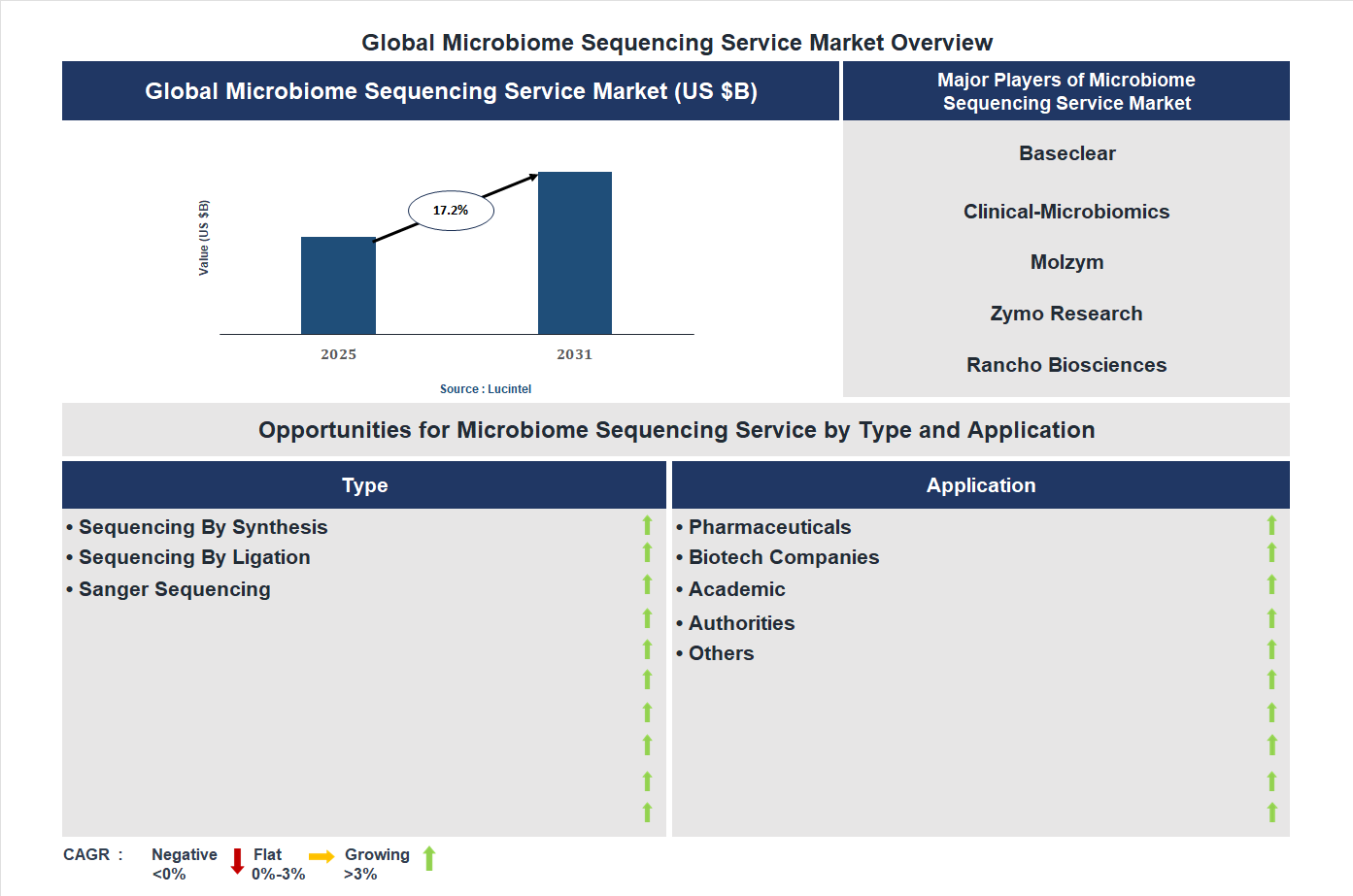
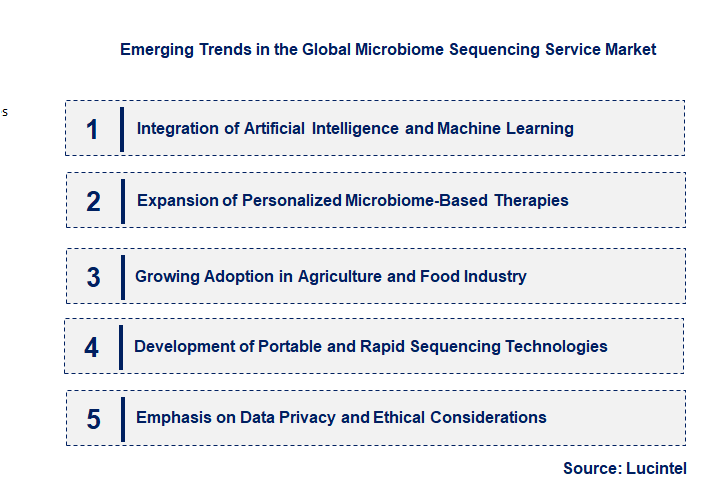
• Integration of Artificial Intelligence (AI) and Machine Learning: AI and machine learning are increasingly being integrated into microbiome sequencing analysis, enabling faster, more accurate data interpretation. These technologies facilitate pattern recognition, predictive modeling, and personalized insights, which improve diagnostic precision and treatment strategies. The impact includes enhanced research capabilities, reduced analysis time, and the ability to handle large datasets efficiently. This integration is transforming microbiome research from traditional laboratory work to advanced computational science, ultimately accelerating discoveries and clinical applications.
• Expansion of Personalized Microbiome-Based Therapies: Personalized medicine is driving the development of microbiome-based therapies tailored to individual microbiota profiles. These therapies include probiotics, prebiotics, and fecal microbiota transplants designed to treat conditions like inflammatory bowel disease, obesity, and mental health disorders. The impact is significant, as it offers targeted, effective treatments with fewer side effects. This trend is fostering a shift from generic treatments to customized interventions, increasing demand for sequencing services that can accurately characterize individual microbiomes and support personalized healthcare solutions.
• Growing Adoption in Agriculture and Food Industry: Microbiome sequencing is increasingly adopted in agriculture to improve crop yields, soil health, and pest resistance, as well as in the food industry for quality control and safety assessments. This trend broadens the market beyond healthcare, creating new revenue streams and applications. The impact includes more sustainable farming practices, enhanced food safety, and better understanding of plant-microbe interactions. As these sectors recognize the value of microbiome insights, demand for sequencing services is expected to rise, fostering innovation and sustainability.
• Development of Portable and Rapid Sequencing Technologies: Advances in portable and rapid sequencing devices are making microbiome analysis more accessible outside traditional laboratories. These technologies enable on-site testing in clinical, environmental, and agricultural settings, providing real-time data. The impact is increased flexibility, faster decision-making, and expanded use cases, especially in remote or resource-limited areas. This trend democratizes microbiome research and diagnostics, facilitating timely interventions and broadening market reach. It also encourages startups and smaller organizations to participate in microbiome analysis, fueling market growth.
• Emphasis on Data Privacy and Ethical Considerations: As microbiome sequencing generates vast amounts of personal and sensitive data, there is a growing focus on data privacy, security, and ethical use. Regulatory frameworks and industry standards are evolving to address these concerns, ensuring consumer trust and compliance. The impact includes increased investment in secure data management systems and transparent data-sharing policies. This trend influences market dynamics by emphasizing responsible data handling, fostering consumer confidence, and encouraging ethical research practices, which are crucial for sustainable growth in the microbiome sequencing industry.
• Technological Advancements: The introduction of next-generation sequencing (NGS) platforms has revolutionized microbiome analysis by increasing speed, accuracy, and reducing costs. These innovations enable comprehensive profiling of complex microbial communities, facilitating detailed research and clinical diagnostics. As a result, service providers can now offer more precise and scalable solutions, attracting a broader customer base and expanding market penetration.
• Growing Healthcare Applications: Increasing recognition of the microbiomes role in health and disease has led to expanded applications in diagnostics, personalized medicine, and therapeutics. Companies are developing targeted microbiome-based treatments and diagnostic tools, which are gaining regulatory approval. This trend is driving market growth by creating new revenue streams and encouraging investment in microbiome research.
• Strategic Collaborations and Partnerships: Major players are forming alliances with biotech firms, research institutions, and healthcare providers to enhance technological capabilities and expand service offerings. These collaborations facilitate access to novel research, accelerate product development, and improve market reach. Such strategic partnerships are vital for innovation and competitiveness in the evolving market landscape.
• Regulatory and Funding Support: Governments and regulatory bodies are increasingly providing funding and establishing guidelines to promote microbiome research and commercialization. Initiatives like grants and favorable policies are encouraging startups and established companies to invest in microbiome sequencing services. This support accelerates market development and fosters innovation.
• Market Expansion and Geographic Growth: The market is witnessing significant expansion into emerging regions such as Asia-Pacific and Latin America, driven by increasing research activities and healthcare infrastructure development. Localized service providers are emerging, catering to regional needs and fostering global market growth. This geographic diversification enhances market resilience and broadens application opportunities.
• Healthcare: Personalized medicine and diagnostics: The increasing use of microbiome sequencing in personalized medicine enables tailored treatments for conditions like inflammatory bowel disease, obesity, and infections, improving patient outcomes and reducing healthcare costs.
• Agriculture: Crop health and soil management: Microbiome sequencing helps optimize soil health and crop productivity by identifying beneficial microbial communities, leading to sustainable farming practices and reduced reliance on chemical inputs.
• Environmental Monitoring: Ecosystem health assessment: Sequencing services facilitate the analysis of microbial communities in water, soil, and air, aiding in pollution detection, biodiversity conservation, and climate change studies.
• Pharmaceuticals: Development of microbiome-based therapeutics: The insights gained from microbiome sequencing accelerate the discovery of novel drugs and probiotic formulations, opening new revenue streams for pharmaceutical companies.
• Food Safety: Quality control and pathogen detection: Microbiome sequencing enhances food safety by identifying microbial contaminants and ensuring product quality, thereby reducing foodborne illnesses and recalls.
• Technological Advancements: Rapid innovations in sequencing technologies, such as next-generation sequencing (NGS), have significantly reduced costs and increased accuracy. These improvements enable more comprehensive microbiome analysis, fostering broader adoption across healthcare, agriculture, and environmental sectors. As technology continues to evolve, service providers can offer faster, more detailed insights, fueling market growth and expanding application areas.
• Rising Healthcare Awareness: Increasing recognition of the microbiomes role in human health, including its impact on diseases like obesity, diabetes, and mental health disorders, has heightened demand for microbiome analysis. This awareness drives research initiatives and clinical diagnostics, encouraging healthcare providers and researchers to adopt sequencing services for personalized medicine and therapeutic development.
• Growing Investment and Funding: Governments, private investors, and research institutions are allocating substantial funds toward microbiome research. This financial support accelerates the development of sequencing technologies and expands service offerings. Increased funding also facilitates large-scale studies, which generate valuable data, further propelling market expansion and innovation.
• Expansion in Research and Development: The surge in microbiome research across various fields, including agriculture, environmental science, and medicine, necessitates advanced sequencing services. R&D efforts lead to new discoveries about microbial functions and interactions, creating demand for specialized sequencing solutions. This continuous innovation sustains market growth and broadens the scope of applications.
• High Costs of Sequencing: Despite technological advancements, sequencing remains expensive, especially for large-scale studies. The costs associated with sample processing, data analysis, and interpretation can be prohibitive for smaller organizations and developing regions. This financial barrier limits widespread adoption and slows market growth, necessitating cost-reduction strategies and affordable solutions.
• Regulatory Uncertainties: The lack of clear regulatory frameworks for microbiome data and sequencing services creates uncertainty for market participants. Variations in regulations across regions can hinder product approval, clinical application, and data sharing. Navigating these complex regulatory landscapes requires significant effort and resources, potentially delaying market entry and innovation.
• Data Privacy and Ethical Concerns: Microbiome data is sensitive and personal, raising concerns about privacy, consent, and data security. Ensuring compliance with data protection laws and establishing ethical standards is challenging, especially with increasing data sharing and collaboration. These issues can impede trust among consumers and stakeholders, affecting market growth and the development of microbiome-based therapies.
• Baseclear
• Clinical-Microbiomics
• Molzym
• Zymo Research
• Rancho Biosciences
• Microbiome Therapeutics
• Microbiome Insights
• Openbiome
• Resphera Biosciences
• Metabiomics
• Sequencing By Synthesis
• Sequencing By Ligation
• Sanger Sequencing
• Pharmaceuticals
• Biotech Companies
• Academic
• Authorities
• Others
• North America
• Europe
• Asia Pacific
• The Rest of the World
• United States: The US market has seen significant growth with major biotech firms investing heavily in microbiome research. Recent developments include the launch of advanced sequencing platforms and increased funding for microbiome-focused clinical trials. Leading companies are expanding their service offerings to include personalized microbiome therapies and diagnostics, driven by rising consumer awareness and regulatory support. Collaborations between academia and industry are fostering innovation, and government initiatives are promoting microbiome research as a key area of scientific interest.
• China: China has rapidly emerged as a major player in microbiome sequencing, with substantial government funding fueling research initiatives. Recent advancements include the development of cost-effective sequencing technologies and large-scale microbiome projects aimed at understanding population-specific health issues. Chinese companies are expanding their service capabilities, focusing on agricultural microbiomes and traditional medicine applications. The market is also witnessing increased international collaborations, boosting technological innovation and data sharing.
• Germany: Germanys market is characterized by a strong emphasis on clinical applications and regulatory compliance. Recent developments include the integration of microbiome sequencing into personalized medicine and diagnostics, supported by robust research institutions. German companies are investing in high-throughput sequencing platforms and bioinformatics tools to enhance data analysis. The country is also focusing on environmental microbiome studies, particularly in sustainable agriculture and wastewater treatment, aligning with its environmental policies.
• India: India is witnessing a surge in microbiome research driven by rising healthcare awareness and government initiatives promoting biotechnology. Recent advancements include the development of affordable sequencing services tailored for local needs and large-scale population studies. Indian startups are exploring microbiome-based solutions for chronic diseases and gut health. Collaborations with international research organizations are enhancing technological capabilities, and the market is poised for significant growth in personalized health and agricultural microbiome applications.
• Japan: Japans market is characterized by technological innovation and a focus on aging-related health issues. Recent developments include the deployment of advanced sequencing technologies for clinical microbiome analysis and the integration of microbiome data into healthcare systems. Japanese companies are investing in research on microbiomes role in age-related diseases and immune health. The government is supporting initiatives to develop microbiome-based therapeutics, and collaborations with global firms are fostering innovation in diagnostics and personalized medicine.


• Baseclear
• Clinical-Microbiomics
• Molzym
• Zymo Research
• Rancho Biosciences
• Microbiome Therapeutics
• Microbiome Insights
• Openbiome
• Resphera Biosciences
• Metabiomics
Q5. Which microbiome sequencing service market segment will be the largest in future?

Choose a license that fits your team. Instant PDF delivery.
Prices exclude taxes. Instant delivery. Custom licensing available on request.
Market Report · May 18, 2026
Market Report · May 18, 2026
Market Report · May 18, 2026
Trusted partner for strategic intelligence and business growth


Receive a complimentary market analysis tailored to your industry. Our analysts will identify key growth opportunities and competitive dynamics specific to your business.

Market size, growth rate, and key trend analysis for your specific sector.

Top competitor positioning and market share analysis.

Strategic recommendations backed by data-driven insights.
Get curated market intelligence and competitive moves straight to your inbox.
By subscribing, you agree to receive our monthly insights. Unsubscribe anytime.
Receive a complimentary market analysis tailored to your industry. Our analysts will identify key growth opportunities and competitive dynamics specific to your business.
Market size, growth rate, and key trend analysis for your specific sector.
Top competitor positioning and market share analysis.
Strategic recommendations backed by data-driven insights.
Get curated market intelligence, emerging trends, and competitive moves straight to your inbox each month.
By subscribing, you agree to receive our monthly insights. Unsubscribe anytime.
We'll send your sample report shortly.