
Report Feature
Microbiology Culture Market Trends and Forecast
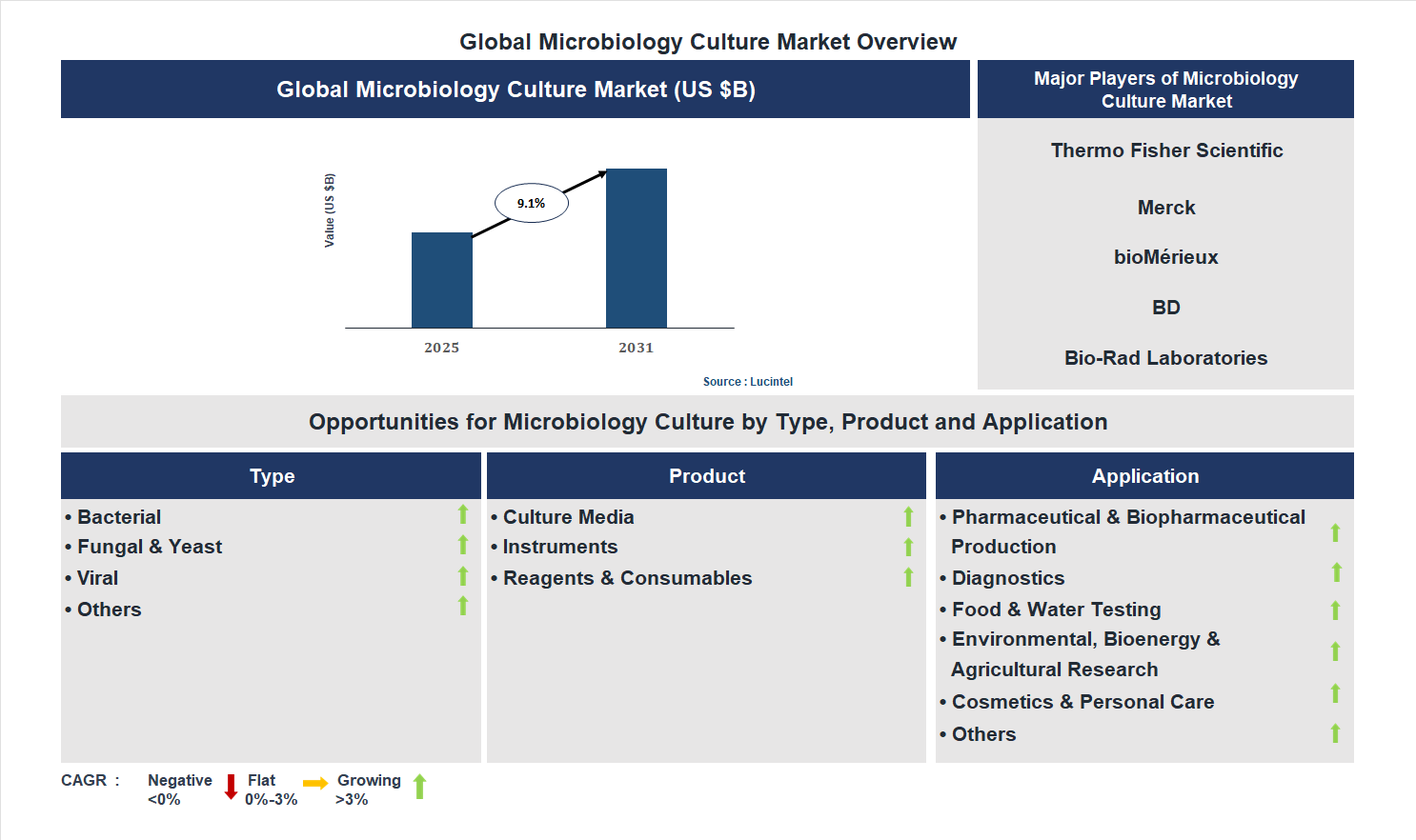
The future of the global microbiology culture market looks promising with opportunities in the pharmaceutical & biopharmaceutical production, diagnostic, food & water testing, environmental, bioenergy & agricultural research, and cosmetic & personal care application markets. The global microbiology culture market is expected to grow with a CAGR of 9.1% from 2025 to 2031. The major drivers for this market are the increasing need for diagnostic microbiology testing, the rising demand for personalized healthcare solutions, and the growing research in microbiology and biotechnology fields.• Lucintel forecasts that, within the type category, bacterial is expected to witness the highest growth over the forecast period.
• Within the application category, pharmaceutical & biopharmaceutical production is expected to witness the highest growth.
• In terms of region, APAC is expected to witness the highest growth over the forecast period. Gain valuable insights for your business decisions with our comprehensive 150+ page report. Sample figures with some insights are shown below.
Emerging Trends in the Microbiology Culture Market
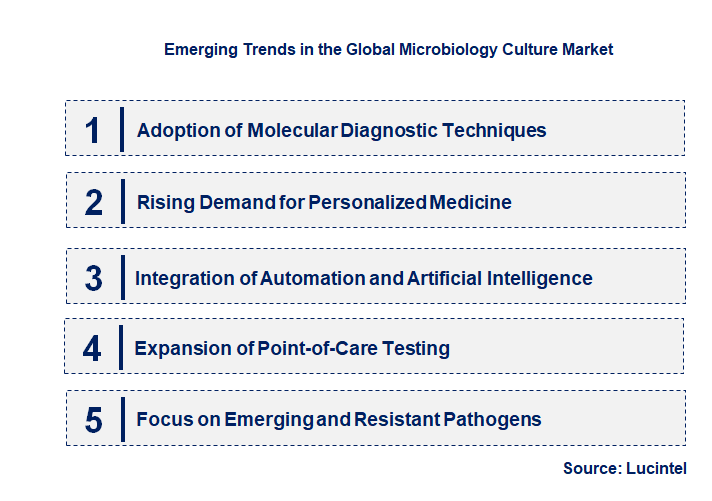
The microbiology culture market is experiencing rapid evolution driven by technological advancements, increasing demand for accurate diagnostics, and a growing focus on personalized medicine. As healthcare systems worldwide prioritize early detection and targeted treatments, the market is adapting to meet these needs through innovative products and services. Emerging trends are shaping the landscape, influencing market growth, and redefining industry standards. These developments are not only improving diagnostic accuracy but also enhancing research capabilities and patient outcomes. Understanding these key trends is essential for stakeholders aiming to capitalize on opportunities and navigate the dynamic environment of the microbiology culture market.• Adoption of Molecular Diagnostic Techniques: The integration of molecular diagnostics, such as PCR and next-generation sequencing, is revolutionizing microbiology cultures by enabling rapid, precise pathogen identification. These techniques reduce turnaround times significantly compared to traditional culture methods, facilitating quicker clinical decisions. They also improve detection of fastidious or slow-growing organisms, expanding diagnostic capabilities. As a result, healthcare providers can initiate targeted treatments sooner, improving patient outcomes. The market is witnessing increased investment in molecular technologies, driven by their superior sensitivity and specificity, which is expected to propel growth and innovation in microbiology diagnostics.
• Rising Demand for Personalized Medicine: Personalized medicine is transforming microbiology culture applications by tailoring treatments based on specific pathogen profiles and resistance patterns. This trend emphasizes the importance of detailed microbial characterization to optimize therapy effectiveness and minimize adverse effects. Advanced culture techniques combined with genomic data enable clinicians to select the most appropriate antimicrobial agents, reducing the risk of resistance development. The market is responding with the development of customized diagnostic panels and culture media designed for individual patient needs. This shift towards personalized approaches is enhancing treatment efficacy and fostering growth in the microbiology culture sector.
• Integration of Automation and Artificial Intelligence: Automation and AI are increasingly being incorporated into microbiology laboratories to enhance efficiency, accuracy, and throughput. Automated systems streamline sample processing, culture reading, and data analysis, reducing human error and labor costs. AI algorithms assist in interpreting complex data, identifying patterns, and predicting antimicrobial resistance trends. This integration accelerates diagnostic workflows and improves reliability, enabling laboratories to handle larger volumes of samples with greater precision. The adoption of these technologies is transforming laboratory operations, making microbiology diagnostics faster and more consistent, which is crucial for timely clinical interventions and market expansion.
• Expansion of Point-of-Care Testing (POCT): The development of portable, easy-to-use microbiology testing devices is expanding the reach of diagnostics beyond traditional laboratories. POCT allows for rapid pathogen detection at the patients bedside or in remote settings, facilitating immediate clinical decisions. This trend is driven by technological miniaturization, cost reduction, and the need for timely diagnosis in infectious disease outbreaks. The market is witnessing increased adoption of POCT devices for diseases like COVID-19, influenza, and bacterial infections. This expansion improves healthcare access, especially in underserved areas, and accelerates treatment initiation, significantly impacting market growth and healthcare delivery.
• Focus on Emerging and Resistant Pathogens: The rise of multidrug-resistant organisms and emerging infectious diseases is prompting a shift in microbiology culture strategies. There is a growing demand for specialized media and culture techniques capable of detecting resistant strains and novel pathogens quickly. This focus enhances early diagnosis and containment efforts, crucial for public health responses. The market is investing in research to develop culture methods that can identify resistance markers and emerging pathogens more efficiently. This trend underscores the importance of innovation in diagnostics to combat global health threats, driving market growth and emphasizing the need for continuous technological advancement. In summary, these trends are collectively reshaping the microbiology culture market by fostering innovation, improving diagnostic speed and accuracy, and expanding access to testing. They are enabling more personalized, efficient, and effective healthcare solutions, ultimately leading to better patient outcomes and a more resilient healthcare infrastructure.
Recent Development in the Microbiology Culture Market
The microbiology culture market has experienced significant growth driven by advancements in diagnostic technologies, increasing prevalence of infectious diseases, and a rising focus on personalized medicine. As healthcare systems worldwide prioritize early detection and targeted treatment, the market is evolving rapidly. Innovations in culture media, automation, and molecular diagnostics are transforming traditional microbiology practices. Additionally, the COVID-19 pandemic has underscored the importance of rapid and accurate microbial testing. These developments are shaping the future landscape of microbiology diagnostics, making them more efficient, accessible, and reliable. The following key developments highlight the current trajectory of this dynamic market.• Technological Advancements: Integration of automation and molecular diagnostics has enhanced accuracy and reduced turnaround times, improving clinical decision-making and patient outcomes.
• Rising Infectious Disease Incidence: Increasing cases of bacterial, viral, and fungal infections globally have driven demand for advanced culture media and diagnostic tools, expanding market opportunities.
• COVID-19 Impact: The pandemic accelerated the adoption of rapid testing methods and increased investments in microbiology infrastructure, boosting market growth and innovation.
• Product Innovation: Development of novel culture media and rapid identification systems has improved pathogen detection, enabling more precise and timely treatments.
• Regulatory and Reimbursement Changes: Evolving policies and reimbursement frameworks are encouraging adoption of advanced microbiology diagnostics, fostering market expansion. These developments are collectively propelling the microbiology culture market toward greater innovation, efficiency, and global reach, ultimately enhancing infectious disease management and patient care.
Strategic Growth Opportunities in the Microbiology Culture Market
The microbiology culture market is experiencing rapid growth driven by advancements in healthcare, increasing prevalence of infectious diseases, and the need for rapid diagnostic solutions. As laboratories and healthcare providers seek more accurate and efficient testing methods, key applications are emerging as significant growth drivers. These opportunities are transforming the landscape of microbiology diagnostics, enabling better disease management and improved patient outcomes. The markets evolution is also influenced by technological innovations, regulatory support, and rising awareness about infectious diseases. Understanding these growth opportunities across various applications is essential for stakeholders aiming to capitalize on the expanding microbiology culture landscape.• Clinical Diagnostics: The largest application area, clinical diagnostics, is witnessing significant growth due to the rising incidence of infectious diseases. Microbiology cultures are essential for identifying pathogens, guiding treatment decisions, and monitoring disease outbreaks. Advances in rapid culture techniques and automation are enhancing diagnostic accuracy and turnaround times. This growth improves patient care, reduces hospital stays, and curtails the spread of infections, making clinical diagnostics a critical driver in the microbiology culture market.
• Food & Beverage Testing: Increasing food safety concerns and stringent regulatory standards are boosting microbiology culture applications in food testing. Cultures are used to detect pathogens like Salmonella, Listeria, and E. coli, ensuring product safety. The demand for rapid, reliable testing methods is encouraging innovation in culture media and techniques. This application not only safeguards public health but also supports compliance with international food safety standards, contributing significantly to market expansion.
• Pharmaceutical & Biotechnology: The pharmaceutical industry relies on microbiology cultures for quality control, drug development, and bioprocessing. Growing investments in biopharmaceuticals and biologics are fueling demand for precise microbial testing. Innovations in culture media and automation are improving efficiency and sensitivity. This application ensures the safety and efficacy of pharmaceutical products, reducing recalls and enhancing consumer trust, thereby playing a vital role in market growth.
• Environmental Testing: Microbiology cultures are increasingly used for environmental monitoring, including water quality testing and pollution control. Rising awareness of environmental health risks and regulatory requirements are driving this segment. Cultures help detect microbial contamination in water sources, wastewater, and soil, supporting public health initiatives. The development of portable and rapid testing kits is further expanding this application, making environmental testing a key growth area.
• Research & Academia: The research sector relies heavily on microbiology cultures for studying microbial behavior, developing new antibiotics, and understanding disease mechanisms. Growing research funding and technological advancements are expanding this application. Cultures facilitate innovation in microbiology, leading to new diagnostic tools and therapies. This segments growth supports the overall market by fostering scientific discovery and educational initiatives. In summary, these key applications are collectively propelling the microbiology culture market forward by addressing critical healthcare, safety, and research needs. The integration of advanced technologies and increasing global awareness are creating new opportunities, ultimately leading to a more robust and dynamic market landscape.
Microbiology Culture Market Driver and Challenges
The microbiology culture market is influenced by a variety of technological, economic, and regulatory factors that shape its growth and development. Advances in diagnostic technologies and increasing research activities drive demand for microbiological cultures. Economic factors such as healthcare expenditure and funding for research institutions also play a significant role. Additionally, regulatory standards and policies impact product development, quality assurance, and market entry. The interplay of these drivers and challenges determines the markets trajectory, influencing innovation, accessibility, and overall growth prospects. Understanding these factors is essential for stakeholders aiming to capitalize on opportunities and mitigate risks within this dynamic industry. The factors responsible for driving the microbiology culture market include:• Technological Advancements: The development of rapid diagnostic tools and automation in microbiology laboratories enhances the efficiency and accuracy of microbial detection. Innovations such as molecular diagnostics and next-generation sequencing enable faster identification of pathogens, reducing turnaround times and improving patient outcomes. These technological improvements attract healthcare providers and research institutions, fueling market growth. Moreover, ongoing R&D efforts continue to introduce novel culture media and testing methods, expanding the scope and capabilities of microbiology diagnostics. As technology evolves, the market is expected to see increased adoption and integration of advanced microbiological culture systems.
• Rising Prevalence of Infectious Diseases: The increasing incidence of infectious diseases worldwide, including bacterial, viral, and fungal infections, significantly drives demand for microbiological cultures. Outbreaks and the emergence of antibiotic-resistant strains necessitate accurate pathogen identification for effective treatment. This trend is particularly prominent in developing regions with limited healthcare infrastructure, where early diagnosis can prevent disease spread. The growing burden of infectious diseases also prompts healthcare systems to invest in better diagnostic tools, boosting the market for microbiology cultures. Consequently, the need for reliable and rapid culture methods becomes critical in managing public health concerns.
• Growing Research and Development Activities: Increased investment in microbiology research by pharmaceutical companies, academic institutions, and government agencies propels market growth. These R&D activities aim to discover new antimicrobial agents, understand microbial resistance mechanisms, and develop innovative diagnostic techniques. The expansion of research initiatives leads to higher demand for specialized culture media and testing kits. Additionally, collaborations between industry and academia foster innovation, resulting in new products and improved methodologies. As research efforts intensify, the market benefits from a broader product portfolio and enhanced capabilities, supporting the development of personalized medicine and targeted therapies.
• Expansion of Healthcare Infrastructure: The global expansion of healthcare facilities, especially in emerging economies, contributes to increased adoption of microbiology culture products. Improved laboratory infrastructure, skilled personnel, and increased healthcare spending facilitate the integration of advanced microbiological diagnostics. Hospitals, clinics, and diagnostic laboratories are investing in modern culture systems to enhance diagnostic accuracy and patient care. This infrastructure growth supports the market by creating a larger customer base and encouraging routine microbiological testing. Furthermore, government initiatives to improve healthcare access and quality standards drive the adoption of microbiology cultures, fostering market expansion across various regions.
• Increasing Awareness and Preventive Healthcare: Rising awareness about infectious diseases and the importance of early diagnosis promote the use of microbiological cultures. Public health campaigns and educational programs emphasize preventive measures, encouraging healthcare providers to adopt microbiology testing for timely detection. This trend is complemented by the increasing focus on infection control and antimicrobial stewardship programs, which rely heavily on accurate microbial identification. As patients and providers become more conscious of disease prevention, demand for reliable microbiology cultures grows. This heightened awareness supports market growth by expanding the customer base beyond traditional clinical settings to include preventive and community health initiatives. The challenges facing this microbiology culture market include:
• Stringent Regulatory Frameworks: The microbiology culture market faces complex regulatory requirements that can delay product approval and market entry. Regulatory agencies such as the FDA and EMA impose strict standards for safety, efficacy, and quality, necessitating extensive validation and documentation. Compliance costs and lengthy approval processes can hinder innovation and slow down the introduction of new products. Additionally, varying regulations across regions create barriers for global market expansion. Navigating these regulatory landscapes requires significant investment and expertise, which can be challenging for smaller companies and startups, potentially limiting market competitiveness and innovation.
• High Cost of Advanced Diagnostic Technologies: The adoption of cutting-edge microbiological culture systems and molecular diagnostics involves substantial capital investment. High equipment costs, reagent expenses, and maintenance fees can restrict access, especially in resource-limited settings. This financial barrier limits the widespread implementation of advanced diagnostics, impacting market growth in developing regions. Moreover, the cost of training personnel and maintaining quality standards adds to the overall expenditure. As a result, healthcare providers may opt for traditional, less expensive methods, which can compromise diagnostic accuracy and delay treatment, thereby affecting market expansion and technological adoption.
• Increasing Competition and Market Saturation: The microbiology culture market is highly competitive, with numerous players offering similar products and services. Market saturation in developed regions leads to pricing pressures and reduced profit margins. Companies face challenges in differentiating their offerings and maintaining market share. Additionally, the entry of generic and private-label products intensifies competition, impacting innovation and profitability. The rapid pace of technological change also requires continuous investment in R&D to stay ahead. This competitive landscape necessitates strategic positioning and innovation to sustain growth, posing ongoing challenges for market participants. In summary, the microbiology culture market is shaped by technological innovations, rising disease prevalence, research activities, healthcare infrastructure expansion, and increased awareness. However, regulatory hurdles, high costs, and intense competition present significant challenges. These factors collectively influence market dynamics, with opportunities for growth driven by technological progress and healthcare needs, while challenges require strategic navigation. Overall, the markets future depends on balancing innovation with regulatory compliance and cost management, ensuring sustainable growth and improved diagnostic capabilities worldwide.
List of Microbiology Culture Companies
Companies in the market compete on the basis of product quality offered. Major players in this market focus on expanding their manufacturing facilities, R&D investments, infrastructural development, and leverage integration opportunities across the value chain. With these strategies microbiology culture companies cater increasing demand, ensure competitive effectiveness, develop innovative products & technologies, reduce production costs, and expand their customer base. Some of the microbiology culture companies profiled in this report include-• Thermo Fisher Scientific
• Merck
• bioMérieux
• BD
• Bio-Rad Laboratories
• Neogen Corporation
• HiMedia Laboratories
Microbiology Culture Market by Segment
The study includes a forecast for the global microbiology culture market by type, product, application, and region.Microbiology Culture Market by Type [Value from 2019 to 2031]:
• Bacterial
• Fungal & Yeast
• Viral
• Others
Microbiology Culture Market by Product [Value from 2019 to 2031]:
• Culture Media
• Instruments
• Reagents & Consumables
Microbiology Culture Market by Application [Value from 2019 to 2031]:
• Pharmaceutical & Biopharmaceutical Production
• Diagnostics
• Food & Water Testing
• Environmental, Bioenergy & Agricultural Research
• Cosmetics & Personal Care
• Others
Microbiology Culture Market by Region [Value from 2019 to 2031]:
• North America
• Europe
• Asia Pacific
• The Rest of the World
Country Wise Outlook for the Microbiology Culture Market
The microbiology culture market has experienced significant growth driven by advancements in healthcare, increased research activities, and the rising prevalence of infectious diseases worldwide. Technological innovations, such as automation and molecular diagnostics, have enhanced the accuracy and efficiency of microbiological testing. Governments and private sectors are investing heavily in research and development to improve diagnostic tools and treatments. The markets expansion is also fueled by the growing demand for personalized medicine and rapid diagnostic solutions. As countries focus on improving healthcare infrastructure, the microbiology culture market is poised for continued innovation and global expansion, reflecting its critical role in disease detection and management.• United States: The U.S. microbiology culture market has seen rapid growth due to technological advancements like automation and molecular diagnostics. Increased funding for infectious disease research and a focus on personalized medicine have driven demand. The COVID-19 pandemic accelerated the adoption of rapid testing methods, boosting market expansion. Key players are investing in R&D to develop faster, more accurate diagnostic tools, and regulatory approvals are streamlining product launches. The U.S. remains a leader in microbiology innovation, with a strong healthcare infrastructure supporting market growth.
• China: Chinas microbiology culture market is expanding rapidly, supported by government initiatives to improve healthcare infrastructure and infectious disease control. The country is witnessing increased adoption of automated systems and molecular diagnostics to enhance testing efficiency. Rising healthcare expenditure and a large patient population contribute to market growth. Local companies are investing in R&D to develop cost-effective solutions, and collaborations with international firms are increasing. The COVID-19 pandemic further accelerated demand for rapid diagnostic tests, positioning China as a key player in the global market.
• Germany: Germanys microbiology culture market benefits from a well-established healthcare system and high healthcare expenditure. The country emphasizes innovation, with significant investments in research and development of advanced diagnostic technologies. Growing awareness of antimicrobial resistance has increased demand for precise microbiological testing. Germany is also a leader in automation and digital health integration, improving testing accuracy and efficiency. Regulatory frameworks support innovation, and collaborations between academia and industry foster new product development. The market is poised for steady growth driven by technological advancements and healthcare needs.
• India: The microbiology culture market in India is experiencing rapid growth due to increasing infectious disease prevalence and expanding healthcare infrastructure. Rising awareness and government initiatives to improve diagnostic facilities are key drivers. The adoption of automated systems and molecular diagnostics is increasing, although cost remains a challenge. Local manufacturers are developing affordable solutions to cater to the large population. The COVID-19 pandemic highlighted the need for rapid diagnostics, boosting market demand. Overall, India presents significant growth opportunities driven by a large patient base and ongoing healthcare reforms.
• Japan: Japans microbiology culture market is characterized by high technological adoption and a focus on precision diagnostics. The country invests heavily in R&D to develop innovative testing methods, including automation and molecular diagnostics. Aging population and rising healthcare costs have increased demand for efficient and accurate microbiological testing. Japan emphasizes regulatory compliance and quality standards, fostering innovation. Collaborations between industry and academia are common, leading to advanced diagnostic solutions. The market is expected to grow steadily, supported by technological innovation and a focus on healthcare quality improvement.

Features of the Global Microbiology Culture Market
Market Size Estimates: Microbiology culture market size estimation in terms of value ($B). Trend and Forecast Analysis: Market trends (2019 to 2024) and forecast (2025 to 2031) by various segments and regions. Segmentation Analysis: Microbiology culture market size by type, product, application, and region in terms of value ($B). Regional Analysis: Microbiology culture market breakdown by North America, Europe, Asia Pacific, and Rest of the World. Growth Opportunities: Analysis of growth opportunities in different type, product, application, and regions for the microbiology culture market. Strategic Analysis: This includes M&A, new product development, and competitive landscape of the microbiology culture market. Analysis of competitive intensity of the industry based on Porter’s Five Forces model.
FAQ
Q1. What is the growth forecast for microbiology culture market? Answer: The global microbiology culture market is expected to grow with a CAGR of 9.1% from 2025 to 2031. Q2. What are the major drivers influencing the growth of the microbiology culture market? Answer: The major drivers for this market are the increasing need for diagnostic microbiology testing, the rising demand for personalized healthcare solutions, and the growing research in microbiology and biotechnology fields. Q3. What are the major segments for microbiology culture market? Answer: The future of the microbiology culture market looks promising with opportunities in the pharmaceutical & biopharmaceutical production, diagnostic, food & water testing, environmental, bioenergy & agricultural research, and cosmetic & personal care application markets. Q4. Who are the key microbiology culture market companies? Answer: Some of the key microbiology culture companies are as follows:• Thermo Fisher Scientific
• Merck
• bioMérieux
• BD
• Bio-Rad Laboratories
• Neogen Corporation
• HiMedia Laboratories Q5. Which microbiology culture market segment will be the largest in future? Answer: Lucintel forecasts that, within the type category, bacterial is expected to witness the highest growth over the forecast period. Q6. In microbiology culture market, which region is expected to be the largest in next 5 years? Answer: In terms of region, APAC is expected to witness the highest growth over the forecast period. Q7. Do we receive customization in this report? Answer: Yes, Lucintel provides 10% customization without any additional cost.
Table of Contents
List of Figures
List of Tables
Methodology
- In-depth interviews of the major players in this market
- Detailed secondary research from competitors’ financial statements and published data
- Extensive searches of published works, market, and database information pertaining to industry news, company press releases, and customer intentions
- A compilation of the experiences, judgments, and insights of Lucintel’s professionals, who have analyzed and tracked this market over the years.


Buy Now
Choose a license that fits your team. Instant PDF delivery.
Prices exclude taxes. Instant delivery. Custom licensing available on request.
Key Questions
- • What are some of the most promising, high-growth opportunities for the microbiology culture market by type (bacterial, fungal & yeast, viral, and others), product (culture media, instruments, and reagents & consumables), application (pharmaceutical & biopharmaceutical production, diagnostics, food & water testing, environmental, bioenergy & agricultural research, cosmetics & personal care, and others), and region (North America, Europe, Asia Pacific, and the Rest of the World)?
- • Which segments will grow at a faster pace and why?
- • Which region will grow at a faster pace and why?
- • What are the key factors affecting market dynamics? What are the key challenges and business risks in this market?
- • What are the business risks and competitive threats in this market?
- • What are the emerging trends in this market and the reasons behind them?
- • What are some of the changing demands of customers in the market?
- • What are the new developments in the market? Which companies are leading these developments?
- • Who are the major players in this market? What strategic initiatives are key players pursuing for business growth?
- • What are some of the competing products in this market and how big of a threat do they pose for loss of market share by material or product substitution?
- • What M&A activity has occurred in the last 5 years and what has its impact been on the industry? For any questions related to Microbiology Culture Market, Microbiology Culture Market Size, Microbiology Culture Market Growth, Microbiology Culture Market Analysis, Microbiology Culture Market Report, Microbiology Culture Market Share, Microbiology Culture Market Trends, Microbiology Culture Market Forecast, Microbiology Culture Companies, write Lucintel analyst at email: helpdesk@lucintel.com. We will be glad to get back to you soon.


