
Report Feature
Microbial Protein Market Trends and Forecast
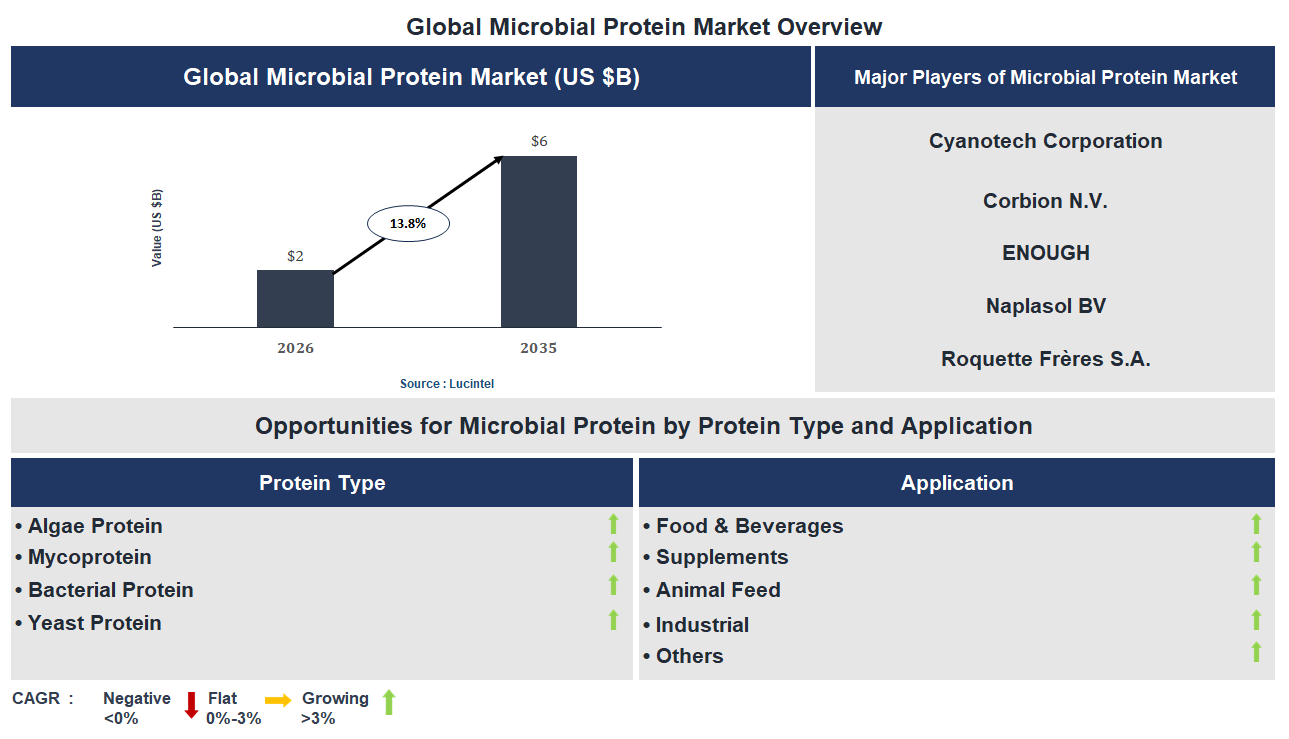
The future of the global microbial protein market looks promising with opportunities in the food & beverage, supplement, animal feed, and industrial markets. The global microbial protein market is expected to reach an estimated $6 billion by 2035 with a CAGR of 13.8% from 2026 to 2035. The major drivers for this market are the increasing demand for sustainable protein sources, the rising awareness about plant-based diets, and the growing need for alternative protein sources.• Lucintel forecasts that, within the protein type category, mycoprotein is expected to witness the highest growth over the forecast period.
• Within the application category, food & beverage is expected to witness the highest growth.
• In terms of region, Europe is expected to witness the highest growth over the forecast period. Gain valuable insights for your business decisions with our comprehensive 150+ page report. Sample figures with some insights are shown below.
Emerging Trends in the Microbial Protein Market
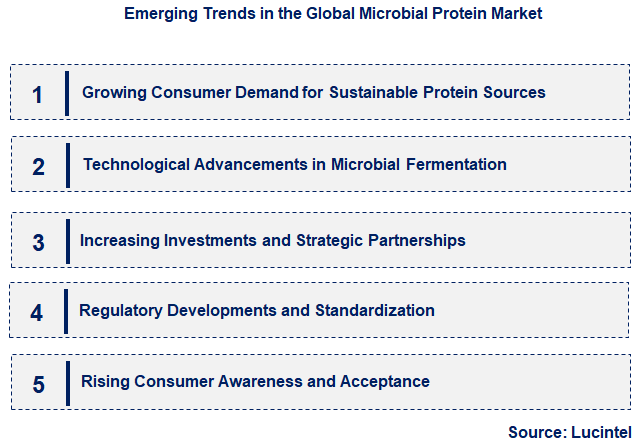
The microbial protein market is experiencing rapid growth driven by increasing demand for sustainable and alternative protein sources. As consumers become more environmentally conscious and seek healthier options, innovations in microbial protein production are gaining momentum. Advances in biotechnology, shifting dietary preferences, and the need for efficient food production methods are shaping this markets future. These developments are not only transforming how protein is sourced but also influencing global food security and environmental sustainability. The following key trends highlight the major shifts currently occurring within this dynamic industry.• Growing Consumer Demand for Sustainable Protein Sources: Consumers are increasingly seeking environmentally friendly and ethically produced food options. Microbial protein offers a sustainable alternative to traditional animal-based proteins, requiring less land, water, and energy. This shift is driven by concerns over climate change, resource depletion, and animal welfare. As awareness grows, more food companies are investing in microbial protein products, which are perceived as a responsible choice. This trend is expanding market reach and encouraging innovation in production methods, ultimately making microbial protein a mainstream dietary option.
• Technological Advancements in Microbial Fermentation: Innovations in fermentation technology are enhancing the efficiency and scalability of microbial protein production. Genetic engineering and optimized fermentation processes enable higher yields and better nutritional profiles. These technological improvements reduce costs and improve product quality, making microbial protein more competitive with traditional sources. Additionally, automation and bioreactor innovations are streamlining manufacturing, allowing for rapid expansion of production capacity. This trend is crucial for meeting rising global demand and ensuring the markets sustainable growth.
• Increasing Investments and Strategic Partnerships: Major food corporations, biotech firms, and venture capitalists are investing heavily in microbial protein startups and research. Strategic alliances are facilitating technology transfer, product development, and market expansion. These investments are accelerating innovation, reducing costs, and increasing product diversity. The influx of funding also signals strong confidence in the market’s potential, encouraging further research and commercialization efforts. This trend is vital for overcoming technical challenges and establishing microbial protein as a viable, large-scale food source.
• Regulatory Developments and Standardization: Governments and regulatory bodies are establishing guidelines and standards for microbial protein products. Clear regulations help ensure safety, quality, and consumer confidence, which are essential for market acceptance. Regulatory frameworks also facilitate international trade and investment by providing clarity and consistency. As standards evolve, companies can innovate with confidence, and consumers can trust the safety of microbial protein products. This trend is instrumental in creating a stable environment for market growth and widespread adoption.
• Rising Consumer Awareness and Acceptance: Education campaigns and product innovations are increasing consumer understanding of microbial protein benefits. As awareness about sustainability, health, and food security grows, acceptance of microbial protein as a dietary option is expanding. Companies are developing appealing, familiar products to ease consumer transition from traditional proteins. This trend is crucial for mainstream adoption, as consumer preferences directly influence market demand. Increased acceptance will drive sales, encourage product diversification, and foster a more sustainable and resilient food system. These trends are collectively reshaping the microbial protein market by making it more sustainable, technologically advanced, investment-driven, regulated, and consumer-friendly. They are paving the way for microbial protein to become a significant component of future global diets, addressing environmental challenges and food security concerns while offering nutritious, innovative alternatives to traditional proteins.
Recent Development in the Microbial Protein Market
The microbial protein market is experiencing rapid growth driven by increasing demand for sustainable and alternative protein sources. Innovations in biotechnology and rising awareness of environmental impacts are fueling development. Governments and the private sector are investing heavily to scale production and improve efficiency. This evolving landscape presents significant opportunities for stakeholders to meet global nutritional needs while reducing ecological footprints. The following developments highlight key advancements shaping the future of microbial protein.• Technological Innovations in Fermentation Processes: Advancements in fermentation technology are enabling higher yields and cost-effective production of microbial proteins. New strains and optimized bioreactors improve efficiency, reduce resource consumption, and lower production costs. These innovations make microbial protein more competitive with traditional sources, expanding its market reach. Enhanced fermentation methods also allow for customization of nutritional profiles, catering to diverse consumer needs and preferences, thus accelerating adoption across food and feed industries.
• Expansion of Sustainable Production Facilities: Major investments are being made to establish large-scale microbial protein manufacturing plants globally. These facilities utilize renewable energy sources and eco-friendly practices, significantly reducing carbon footprints. The expansion increases supply capacity, making microbial protein more accessible and affordable. It also supports local economies by creating jobs and fostering technological development. As production scales up, the market benefits from improved logistics, wider distribution networks, and increased consumer confidence in sustainable food options.
• Regulatory Approvals and Policy Support: Governments and regulatory bodies are increasingly approving microbial protein products for human and animal consumption. Clearer regulations and safety standards facilitate market entry and boost investor confidence. Policy incentives, such as subsidies and grants, encourage research and development efforts. These supportive frameworks help overcome initial market barriers, accelerate commercialization, and promote consumer acceptance. As regulatory clarity improves, microbial protein is positioned as a mainstream alternative, fostering market growth and innovation.
• Consumer Awareness and Acceptance: Growing awareness of environmental issues and health benefits is driving consumer interest in microbial protein. Educational campaigns and product innovations are increasing acceptance among diverse demographics. Companies are launching innovative, appealing products that cater to taste, texture, and nutritional needs. As consumer trust builds, demand rises, encouraging further investment and product development. This shift in perception is crucial for mainstream adoption, ultimately expanding the market and encouraging sustainable dietary choices.
• Strategic Collaborations and Market Partnerships: Industry players are forming alliances with research institutions, biotech firms, and food companies to accelerate innovation and commercialization. These collaborations facilitate knowledge sharing, resource pooling, and technology transfer. Strategic partnerships also help expand distribution channels and access new markets. Such alliances foster a competitive environment that drives product diversification and cost reduction. As collaboration intensifies, the microbial protein market is poised for rapid expansion, innovation, and global reach. The overall impact of these developments is a robust, sustainable, and innovative microbial protein market. Increased production capacity, regulatory support, consumer acceptance, and technological advancements are collectively driving growth. These factors are positioning microbial protein as a vital component of future food systems, addressing global nutritional and environmental challenges while opening new market opportunities.
Strategic Growth Opportunities in the Microbial Protein Market
The microbial protein market is experiencing rapid expansion driven by increasing demand for sustainable, high-quality protein sources across various industries. Innovations in biotechnology and growing awareness of environmental impacts are fueling new applications and market segments. Strategic growth opportunities are emerging as companies focus on product development, technological advancements, and expanding geographic reach. These opportunities present significant potential to meet global nutritional needs while reducing ecological footprints, positioning the microbial protein market for sustained long-term growth and diversification.• Expanding Applications in Animal Feed to Drive Market Growth: The increasing adoption of microbial protein as a sustainable alternative in animal feed formulations offers significant growth potential. Its high digestibility, nutritional value, and environmental benefits make it attractive for livestock, aquaculture, and pet food industries. As regulations tighten and consumer preferences shift toward eco-friendly products, companies investing in microbial-based feed solutions can capitalize on expanding markets, improve feed efficiency, and reduce reliance on traditional protein sources like soy and fishmeal.
• Technological Innovations Enhancing Production Efficiency: Advances in fermentation technology, genetic engineering, and bioprocess optimization are crucial for scaling microbial protein production cost-effectively. These innovations enable higher yields, reduced energy consumption, and improved product quality. As research progresses, the ability to produce microbial protein at lower costs and with tailored nutritional profiles will open new market segments, attract investments, and facilitate broader commercialization, ultimately strengthening the market’s competitive edge.
• Growing Demand for Sustainable Human Nutrition Solutions: Consumers are increasingly seeking plant-based and alternative protein sources to address health and environmental concerns. Microbial protein offers a sustainable, allergen-free, and nutrient-dense option suitable for various dietary needs. Its versatility in product formulation and potential for clean-label branding make it an attractive ingredient for food and beverage companies aiming to meet the rising demand for eco-friendly, nutritious, and innovative products in the human food sector.
• Strategic Geographic Expansion into Emerging Markets: Developing regions with rising populations and protein shortages present significant opportunities for microbial protein market expansion. Establishing local production facilities and distribution networks can reduce costs and improve accessibility. Tailoring products to regional tastes and nutritional needs, along with partnerships with local stakeholders, will facilitate market entry and growth, helping to address global food security challenges while tapping into underserved markets with high growth potential.
• Increasing Investment and Collaborations in R&D for Market Diversification: Rising investments from private and public sectors are fueling research into new microbial strains, processing methods, and product applications. Collaborations between biotech firms, academia, and food companies accelerate innovation, enabling diversification into sectors like pharmaceuticals, specialty ingredients, and functional foods. These efforts will expand the product portfolio, improve scalability, and create new revenue streams, ensuring the microbial protein market remains dynamic and adaptable to evolving consumer and industry demands. The overall impact of these growth opportunities is poised to significantly enhance the microbial protein market’s size, diversity, and sustainability. By leveraging technological advancements, expanding applications, and entering new markets, industry players can meet global nutritional needs while promoting environmentally responsible practices. This strategic focus will foster innovation, increase competitiveness, and ensure long-term market resilience amid evolving consumer preferences and regulatory landscapes.
Microbial Protein Market Driver and Challenges
The microbial protein market is influenced by a variety of technological, economic, and regulatory factors that shape its growth trajectory. Advances in biotechnology and fermentation technologies have enabled more efficient production processes, reducing costs and increasing scalability. Economic factors such as rising demand for sustainable and alternative protein sources due to population growth and environmental concerns are significant drivers. Regulatory frameworks around food safety and novel food approvals also impact market expansion, either facilitating or hindering progress. Additionally, consumer preferences shifting towards plant-based and sustainable diets further propel the market forward. However, challenges such as high production costs, regulatory hurdles, and consumer acceptance issues pose significant obstacles to widespread adoption and growth. The factors responsible for driving the microbial protein market include:• Technological Innovation: The development of advanced fermentation and bioprocessing techniques has significantly improved microbial protein yields and quality. Innovations such as genetically engineered microbes enable tailored protein profiles, making microbial protein more appealing and nutritionally comparable to traditional sources. These technological advancements reduce production costs over time and facilitate large-scale manufacturing, thus expanding market potential. As research continues, further improvements are expected, making microbial protein a more viable alternative for various applications, including human consumption and animal feed.
• Rising Demand for Sustainable Protein Sources: With increasing awareness of environmental issues and the ecological footprint of traditional livestock farming, consumers and industries are seeking sustainable protein alternatives. Microbial protein offers a low land, water, and greenhouse gas footprint compared to conventional animal proteins. Governments and organizations are promoting plant-based and alternative proteins to meet global food security goals, which directly boosts market growth. The shift towards sustainable diets driven by environmental concerns and resource scarcity is a major factor propelling the microbial protein industry.
• Growing Population and Protein Demand: The global population is expected to reach nearly 10 billion by 2050, intensifying the need for efficient and scalable protein sources. Traditional agriculture may not be sufficient to meet this demand sustainably, prompting a shift towards microbial protein as a high-yield, fast-growing alternative. Its ability to be produced in controlled environments ensures consistent quality and supply, regardless of climatic conditions. This demographic trend underscores the importance of microbial protein in future food security strategies, making it a critical driver for market expansion.
• Technological Advancements in Food Processing: Innovations in food processing techniques, such as spray drying, fermentation optimization, and encapsulation, have improved the stability, taste, and nutritional profile of microbial protein products. These advancements enhance consumer acceptance and facilitate integration into various food products. Improved processing methods also enable the production of diverse formats, from powders to ready-to-eat items, broadening market applications. As processing technologies evolve, microbial protein becomes more versatile and appealing, further driving market growth.
• Strategic Collaborations and Investments: Increased investments from venture capitalists, food corporations, and research institutions are fueling innovation and commercialization efforts in the microbial protein sector. Strategic partnerships facilitate technology transfer, scale-up, and market entry, accelerating product development and distribution. These collaborations also help address regulatory challenges and consumer acceptance issues by leveraging established brand trust. The influx of funding and partnerships signifies strong confidence in microbial protein’s potential, thus propelling the market forward. The challenges in the microbial protein market are:
• High Production Costs: Despite technological advancements, microbial protein production remains expensive due to costly raw materials, fermentation infrastructure, and downstream processing. Scaling up production to meet global demand requires significant capital investment, which can hinder market growth, especially in developing regions. High costs also impact pricing strategies, making microbial protein less competitive compared to traditional proteins. Overcoming these economic barriers is essential for widespread adoption and commercial success.
• Regulatory and Approval Hurdles: Microbial proteins are classified as novel foods in many jurisdictions, requiring rigorous safety assessments and regulatory approvals before market entry. The lengthy and complex approval processes can delay product launches and increase costs for companies. Variations in regulatory standards across countries further complicate international expansion. Navigating these regulatory landscapes is a significant challenge that can impede the rapid growth and acceptance of microbial protein products.
• Consumer Acceptance and Perception: Despite its benefits, microbial protein faces skepticism and resistance from consumers unfamiliar with or hesitant about novel food sources. Concerns about safety, taste, and naturalness influence purchasing decisions. Cultural preferences and misconceptions may also hinder acceptance, limiting market penetration. Educating consumers and building trust are crucial but challenging steps in ensuring widespread adoption of microbial protein as a mainstream food source. The microbial protein market is driven by technological innovations, sustainability demands, demographic trends, processing advancements, and strategic investments. However, high production costs, regulatory complexities, and consumer acceptance issues pose significant hurdles. These factors collectively shape the market’s growth trajectory, requiring concerted efforts to overcome challenges and capitalize on opportunities. The future of microbial protein hinges on technological progress, regulatory clarity, and consumer education, which will determine its role in sustainable global food systems.
List of Microbial Protein Companies
Companies in the market compete on the basis of product quality offered. Major players in this market focus on expanding their manufacturing facilities, R&D investments, infrastructural development, and leverage integration opportunities across the value chain. With these strategies microbial protein companies cater increasing demand, ensure competitive effectiveness, develop innovative products & technologies, reduce production costs, and expand their customer base. Some of the microbial protein companies profiled in this report include-• Cyanotech Corporation
• Corbion N.V.
• ENOUGH
• Naplasol BV
• Roquette Frères S.A.
• KnipBio Inc.
• Algenol Biotech LLC
• Alver World SA
• Enifer
• Zilor
Microbial Protein Market by Segment
The study includes a forecast for the global microbial protein market by protein type, application, and region.Microbial Protein Market by Protein Type [Value from 2019 to 2035]:
• Algae Protein
• Mycoprotein
• Bacterial Protein
• Yeast Protein
Microbial Protein Market by Application [Value from 2019 to 2035]:
• Food & Beverages
• Supplements
• Animal Feed
• Industrial
• Others
Microbial Protein Market by Region [Value from 2019 to 2035]:
• North America
• Europe
• Asia Pacific
• The Rest of the World
Country Wise Outlook for the Microbial Protein Market
The microbial protein market has experienced significant growth driven by increasing demand for sustainable and alternative protein sources worldwide. Innovations in biotechnology, rising environmental concerns, and shifting consumer preferences have accelerated development in this sector. Countries are investing heavily in research and infrastructure to capitalize on the potential of microbial proteins as a nutritious, eco-friendly food source. Regulatory frameworks are evolving to support commercialization, while collaborations between biotech firms and food manufacturers are expanding. This dynamic landscape reflects a global shift towards sustainable food production, with each country contributing uniquely based on its technological capabilities and market needs.• United States: The US has seen rapid advancements in microbial protein research, with major biotech firms developing novel fermentation techniques. Investment in sustainable food startups has increased, supported by government grants and private funding. Several companies have launched plant-based and microbial protein products, gaining consumer acceptance. Regulatory agencies are working to streamline approval processes, fostering innovation. The US also benefits from a robust supply chain infrastructure, enabling large-scale production and distribution. Overall, the market is poised for substantial growth, driven by consumer demand for healthy, sustainable foods.
• China: China is rapidly expanding its microbial protein industry, focusing on cost-effective production methods and large-scale manufacturing. The government has prioritized food security and sustainability, providing subsidies and policy support for biotech innovations. Domestic companies are investing heavily in R&D to develop locally adapted microbial strains. The market is witnessing increased adoption of microbial proteins in both the food and animal feed sectors. Strategic collaborations with international firms are also enhancing technological capabilities. As consumer awareness grows, demand for microbial-based products is expected to rise, positioning China as a key player in the global market.
• Germany: Germany is at the forefront of microbial protein innovation within Europe, emphasizing sustainability and food safety. Several startups and research institutions are pioneering new fermentation processes and product formulations. The country’s strict regulatory environment ensures high-quality standards, boosting consumer confidence. Germany’s focus on eco-friendly production aligns with its broader environmental goals, encouraging investments in green technologies. The market is also benefiting from EU funding programs supporting sustainable food research. As awareness of environmental issues increases, microbial protein is gaining popularity as a sustainable alternative, with expanding applications in both human and animal nutrition.
• India: India is emerging as a significant market for microbial protein, driven by its large population and increasing protein deficiency concerns. The government is promoting biotech innovations through funding and policy initiatives aimed at food security. Local startups are developing affordable microbial protein products tailored to Indian tastes and dietary habits. The focus is on scalable, low-cost production methods to meet domestic demand. Additionally, microbial proteins are being explored as sustainable animal feed options to improve livestock productivity. As awareness of nutritional benefits grows, the market is expected to expand rapidly, supported by increasing investments and consumer acceptance.
• Japan: Japan is investing heavily in microbial protein research, emphasizing health benefits and food safety. The country’s aging population is driving demand for nutritious, easy-to-consume protein sources. Japanese companies are developing innovative fermentation technologies and functional foods incorporating microbial proteins. Regulatory frameworks are being adapted to facilitate market entry and ensure safety standards. Japan’s focus on sustainability aligns with its technological expertise, fostering collaborations between academia and industry. The market is also benefiting from consumer interest in plant-based and alternative proteins, positioning Japan as a key innovator in the microbial protein space.

Features of the Global Microbial Protein Market
Market Size Estimates: Microbial protein market size estimation in terms of value ($B). Trend and Forecast Analysis: Market trends (2019 to 2025) and forecast (2026 to 2035) by various segments and regions. Segmentation Analysis: Microbial protein market size by protein type, application, and region in terms of value ($B). Regional Analysis: Microbial protein market breakdown by North America, Europe, Asia Pacific, and Rest of the World. Growth Opportunities: Analysis of growth opportunities in different protein types, applications, and regions for the microbial protein market. Strategic Analysis: This includes M&A, new product development, and competitive landscape of the microbial protein market. Analysis of competitive intensity of the industry based on Porter’s Five Forces model.
FAQ
Q1. What is the microbial protein market size? Answer: The global microbial protein market is expected to reach an estimated $6 billion by 2035. Q2. What is the growth forecast for microbial protein market? Answer: The global microbial protein market is expected to grow with a CAGR of 13.8% from 2026 to 2035. Q3. What are the major drivers influencing the growth of the microbial protein market? Answer: The major drivers for this market are the increasing demand for sustainable protein sources, the rising awareness about plant-based diets, and the growing need for alternative protein sources. Q4. What are the major segments for microbial protein market? Answer: The future of the microbial protein market looks promising with opportunities in the food & beverage, supplement, animal feed, and industrial markets. Q5. Who are the key microbial protein market companies? Answer: Some of the key microbial protein companies are as follows:• Cyanotech Corporation
• Corbion N.V.
• ENOUGH
• Naplasol BV
• Roquette Frères S.A.
• KnipBio Inc.
• Algenol Biotech LLC
• Alver World SA
• Enifer
• Zilor Q6. Which microbial protein market segment will be the largest in future? Answer: Lucintel forecasts that, within the protein type category, mycoprotein is expected to witness the highest growth over the forecast period. Q7. In microbial protein market, which region is expected to be the largest in next 8 years? Answer: In terms of region, Europe is expected to witness the highest growth over the forecast period. Q8. Do we receive customization in this report? Answer: Yes, Lucintel provides 10% customization without any additional cost.
Table of Contents
List of Figures
List of Tables
Methodology
- In-depth interviews of the major players in this market
- Detailed secondary research from competitors’ financial statements and published data
- Extensive searches of published works, market, and database information pertaining to industry news, company press releases, and customer intentions
- A compilation of the experiences, judgments, and insights of Lucintel’s professionals, who have analyzed and tracked this market over the years.


Buy Now
Choose a license that fits your team. Instant PDF delivery.
Prices exclude taxes. Instant delivery. Custom licensing available on request.
Key Questions
- • What are some of the most promising, high-growth opportunities for the microbial protein market by protein type (algae protein, mycoprotein, bacterial protein, and yeast protein), application (food & beverages, supplements, animal feed, industrial, and others), and region (North America, Europe, Asia Pacific, and the Rest of the World)?
- • Which segments will grow at a faster pace and why?
- • Which region will grow at a faster pace and why?
- • What are the key factors affecting market dynamics? What are the key challenges and business risks in this market?
- • What are the business risks and competitive threats in this market?
- • What are the emerging trends in this market and the reasons behind them?
- • What are some of the changing demands of customers in the market?
- • What are the new developments in the market? Which companies are leading these developments?
- • Who are the major players in this market? What strategic initiatives are key players pursuing for business growth?
- • What are some of the competing products in this market and how big of a threat do they pose for loss of market share by material or product substitution?
- • What M&A activity has occurred in the last 7 years and what has its impact been on the industry? For any questions related to Microbial Protein Market, Microbial Protein Market Size, Microbial Protein Market Growth, Microbial Protein Market Analysis, Microbial Protein Market Report, Microbial Protein Market Share, Microbial Protein Market Trends, Microbial Protein Market Forecast, Microbial Protein Companies, write Lucintel analyst at email: helpdesk@lucintel.com. We will be glad to get back to you soon.


