
Market Report · July 31, 2026

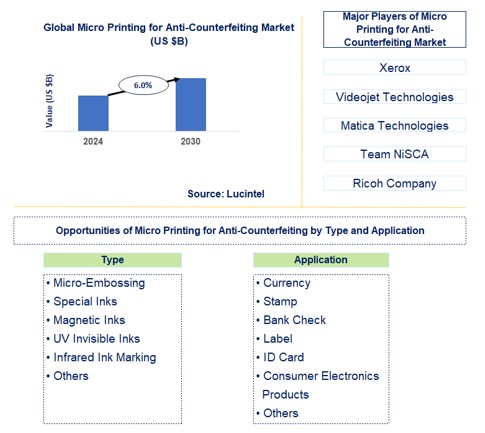
Key data points: The growth forecast = 6.0% annually for the next 6 years. Scroll below to get more insights. This market report covers trends, opportunities, and forecasts in the global micro printing for anti-counterfeiting market to 2030 by type (micro-embossing, special inks, magnetic inks, UV invisible inks, infrared ink marking, and others), application (currency, stamp, bank check, label, ID card, consumer electronics products, and others), and region (North America, Europe, Asia Pacific, and the Rest of the World)
We'll send your sample report shortly.
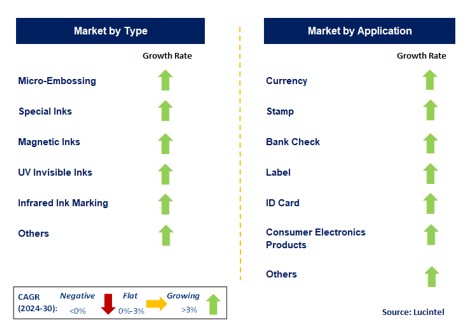
• Lucintel forecasts that, within the type category, micro-embossing is expected to witness the highest growth over the forecast period.
• Within the application category, currency is expected to witness the highest growth.
• In terms of regions, North America is expected to witness the highest growth over the forecast period. Gain valuable insights for your business decisions with our comprehensive 150+ page report
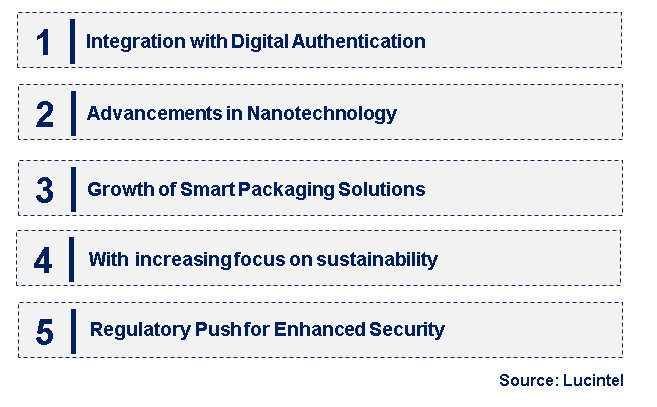
• Integration with Digital Authentication: Microprinting technology is increasingly being integrated with digital technologies such as QR codes and NFC chips to facilitate multi-layer security and easy authentication by both consumers and businesses. This trend enhances the efficiency of anti-counterfeiting measures and real-time authentication.
• Advancements in Nanotechnology: Nanotechnology is being applied to create more sophisticated micro prints that are difficult to replicate. These advancements allow for the creation of complex patterns and security features that cannot practically be reproduced, strengthening anti-counterfeiting measures.
• Growth of Smart Packaging Solutions: Developments in smart packaging are increasing demand for micro printing. Smart packaging, which involves sensors and digital codes, employs micro printing as an additional security feature. Adoption of smart packaging is particularly prominent in the pharmaceutical sector and among high-value consumer goods.
• Increased Focus on Sustainability: The drive toward sustainability in the micro printing industry is rising. Companies are developing eco-friendly inks and materials for micro printing applications that will not harm the environment while providing high security.
• Regulatory Push for Enhanced Security: Increasing regulatory requirements for enhanced security are driving the deployment of advanced micro printing solutions. This has ensured the widespread adoption of micro printing technologies due to stricter government and industry standards related to product authentication and anti-counterfeiting. These trends contribute to greater security, integrate new technologies, and respond to regulatory and environmental pressures. As these trends develop, they establish foundations for product authenticity and customer protection.
• Technological Advancement: The development of new laser and digital printing technologies enables the creation of more sophisticated, highly secure, and detailed micro prints. These enhancements improve the efficacy of anti-counterfeiting and offer greater protection against counterfeit products.
• Integration with Digital Technologies: Micro printing technology is increasingly integrated with digital technologies like NFC and QR codes. This integration can lead to more efficient verification and traceability by adding multi-layer anti-counterfeiting features.
• Increased Use of Nanotechnology: The use of nanotechnology in micro-printing solutions with advanced security features is a recent trend in this industry. Such features include microscopic patterns and unique identifiers that are difficult to replicate, enhancing product authentication.
• Sustainable Practices: The use of eco-friendly inks and materials in micro printing is trending among companies adopting sustainable practices. Environmental concerns are being addressed without compromising security in applications requiring anti-counterfeiting measures.
• Stricter Regulations: The passage of more stringent regulations and laws by governments and industry bodies regarding anti-counterfeiting measures has created an enhanced requirement for advanced micro printing technologies to ensure product authenticity and consumer safety. In conclusion, these developments are driving growth in the micro printing for anti-counterfeiting market: technological advancements, integration with digital solutions, a focus on sustainability, and a response to regulatory demands. The market landscape is gradually changing due to an increasing need for secure and credible product authentication.
• Pharmaceutical Industry: The growth of the pharmaceutical sector presents significant potential as counterfeiting is on the rise. Micro printing can be employed to print drug packaging, providing authenticity to medications and ensuring safe usage by patients or other users.
• Luxury Goods: The luxury goods market represents a targeted segment for micro printing applications. High-end brands are investing heavily in advanced micro printing solutions to ensure brand integrity and protect their products against counterfeiting.
• Consumer Electronics: Micro printing can address counterfeiting issues and secure product packaging and components in consumer electronics. This ensures that customers receive genuine products while reducing revenue loss for manufacturers.
• Smart Packaging Solutions: Integrating micro-printing technology with intelligent packaging solutions presents an opportunity for growth. Adding micro printing to various types of smart packaging can enhance security and traceability across a wide range of products.
• Anti-Counterfeiting Regulations: Tightening anti-counterfeiting regulations create avenues for growth in this sector. Companies that provide advanced micro printing solutions to meet these regulations can gain a competitive advantage over rivals. In summary, these growth opportunities indicate the potential of micro printing technologies in solving critical security issues across industries. To expand further and meet changing consumer and regulatory demands, key applications companies should target include pharmaceuticals, luxury goods, consumer electronics, and smart packaging.
• Technological Innovations: Advances in micro printing technologies enable more secure and sophisticated anti-counterfeiting features, driving market growth.
• Growing Counterfeiting Issues: The rise in counterfeiting across various sectors drives demand for effective anti-counterfeiting solutions. Micro printing provides an efficient means to enhance security features in products and ensure authenticity.
• Regulatory Requirements: Increasing regulations and standards for product authentication trigger the adoption of micro printing technologies. To avoid legal complications, businesses must comply with these regulations to maintain product integrity.
• Consumer Demand for Security: Growing awareness among consumers regarding secure products encourages firms to invest in advanced anti-counterfeiting technologies. Micro printing meets consumer needs for security effectively.
• Integration with Digital Technologies: The integration of micro printing with digital technologies like NFC and QR codes enhances product verification and traceability. This trend drives the adoption of micro printing solutions. Challenges in the micro printing market include:
• Higher Technology Costs: Accessing advanced micro printing technologies can be expensive for some companies, particularly small-scale operations. High initial and maintenance costs may limit the number of adopters.
• Complexity of Implementation: Micro-printing solutions can be complex to implement and require specialized knowledge and equipment. This poses a significant challenge for companies attempting to integrate these technologies into their systems.
• Evolving Counterfeiting Methods: Micro printing solutions must keep pace with evolving counterfeiting methods, which can be challenging. Continuous innovation and adaptation are necessary. The drivers for micro printing technologies in anti-counterfeiting markets include technological advances, regulatory requirements, and increasing counterfeiting problems. However, these markets must also consider rising costs, implementation complexities, and the ongoing evolution of counterfeiting techniques. Balancing these drivers and challenges is crucial for sustaining growth and effectiveness in combating counterfeiting.
• Xerox
• Videojet Technologies
• Matica Technologies
• Team NiSCA
• Ricoh Company
• Saueressig
• Hewlett-Packard
• Brady Corporation
• Printegra
• Gallas Label & Decal
• Micro-Embossing
• Special Inks
• Magnetic Inks
• UV Invisible Inks
• Infrared Ink Marking
• Others
• Currency
• Stamp
• Bank Check
• Label
• ID Card
• Consumer Electronics Products
• Others
• North America
• Europe
• Asia Pacific
• The Rest of the World
• US: The US micro printing market is gradually evolving with advancements in digital printing and laser technologies. Companies are integrating micro printing with smart packaging solutions and blockchain for better traceability and verification. Regulatory pressures and consumer demand for secure products drive investments in advanced anti-counterfeiting technologies. Furthermore, technology firms collaborating on security innovations are advancing the market.
• China: Issues related to counterfeiting and relevant regulations have spurred development in the micro printing field. High-resolution prints and advanced holographic techniques are emerging. Government agencies are keen to develop and implement micro printing solutions to safeguard intellectual property rights and product authenticity. Access to domestic and international markets is also growing.
• Germany: With a strong emphasis on quality and security, Germany leads in developing high-tech micro printing solutions. Innovations involve using nanotechnology to replicate complex, tamper-evident features with advanced inks. The market is supported by stringent EU regulations and high demand for secure packaging solutions in the pharmaceutical and luxury goods sectors.
• India: The Indian market is rapidly adopting micro printing technologies to curb counterfeiting, focusing on cost-effective solutions. The problem of counterfeit goods is escalating, particularly in the pharmaceutical and consumer goods industries. Local manufacturers are investing in advanced printing technologies to meet new regulatory standards and demands for secure packaging.
• Japan: Japan's micro printing market is moving towards integrating printing technology with digital authentication systems. Innovative ideas are being applied to micro printing to enhance product security in the electronics and luxury industries. High standards of product quality and strict anti-counterfeiting regulations shape the market, compelling the use of advanced micro printing techniques.


• Xerox
• Videojet Technologies
• Matica Technologies
• Team NiSCA
• Ricoh Company
• Saueressig
• Hewlett-Packard
• Brady Corporation
• Printegra
• Gallas Label & Decal Q5. Which micro printing for anti-counterfeiting market segment will be the largest in future? Answer: Lucintel forecasts that micro-embossing is expected to witness the highest growth over the forecast period. Q6. In micro printing for anti-counterfeiting market, which region is expected to be the largest in next 5 years? Answer: North America is expected to witness the highest growth over the forecast period. Q.7 Do we receive customization in this report? Answer: Yes, Lucintel provides 10% customization without any additional cost.


Choose a license that fits your team. Instant PDF delivery.
Prices exclude taxes. Instant delivery. Custom licensing available on request.
Market Report · July 31, 2026
Market Report · July 31, 2026
Market Report · July 31, 2026
Trusted partner for strategic intelligence and business growth


Receive a complimentary market analysis tailored to your industry. Our analysts will identify key growth opportunities and competitive dynamics specific to your business.

Market size, growth rate, and key trend analysis for your specific sector.

Top competitor positioning and market share analysis.

Strategic recommendations backed by data-driven insights.
Get curated market intelligence and competitive moves straight to your inbox.
By subscribing, you agree to receive our monthly insights. Unsubscribe anytime.
Receive a complimentary market analysis tailored to your industry. Our analysts will identify key growth opportunities and competitive dynamics specific to your business.
Market size, growth rate, and key trend analysis for your specific sector.
Top competitor positioning and market share analysis.
Strategic recommendations backed by data-driven insights.
Get curated market intelligence, emerging trends, and competitive moves straight to your inbox each month.
By subscribing, you agree to receive our monthly insights. Unsubscribe anytime.
We'll send your sample report shortly.