
Market Report · July 22, 2026

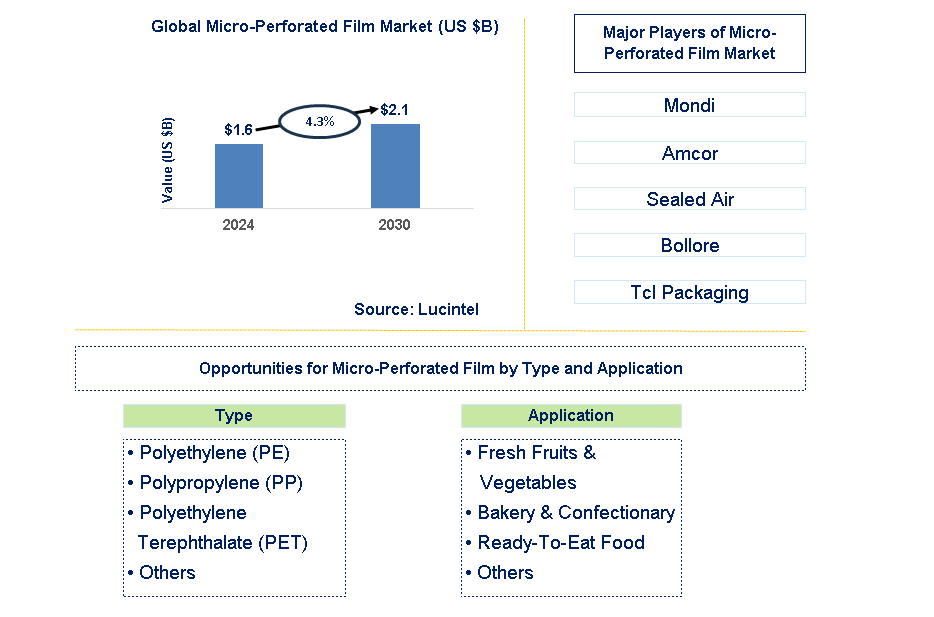
Key data points: The market size in 2030 = $2.1 billion, growth forecast = 4.3% annually for the next 6 years. Scroll below to get more insights. This market report covers trends, opportunities, and forecasts in the global micro-perforated film market to 2030 by type (polyethylene (PE), polypropylene (PP), polyethylene terephthalate (PET), and others), application (fresh fruits & vegetables, bakery & confectionary, ready-to-eat food, and others), and region (North America, Europe, Asia Pacific, and the Rest of the World)
We'll send your sample report shortly.
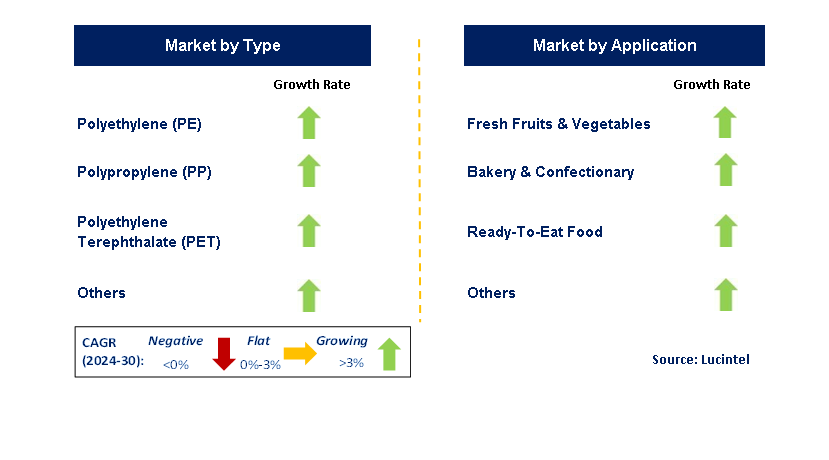
• Lucintel forecasts that, within the type category, polyethylene (PE) will remain the largest segment over the forecast period because of its extensive use in food packaging applications owing to its array of advantageous attributes, including exceptional transparency, resistance to punctures, affordability, impressive tensile strength, and superior resistance to impacts.
• In terms of regions, North America will remain the largest region over the forecast period due to a surge in demand for convenience foods, bolstered by economic advancements and increased disposable incomes, along with technological innovations in the packaging sector, and rising consumer preference for healthier and more convenient food options. Gain valuable insights for your business decisions with our comprehensive 150+ page report.
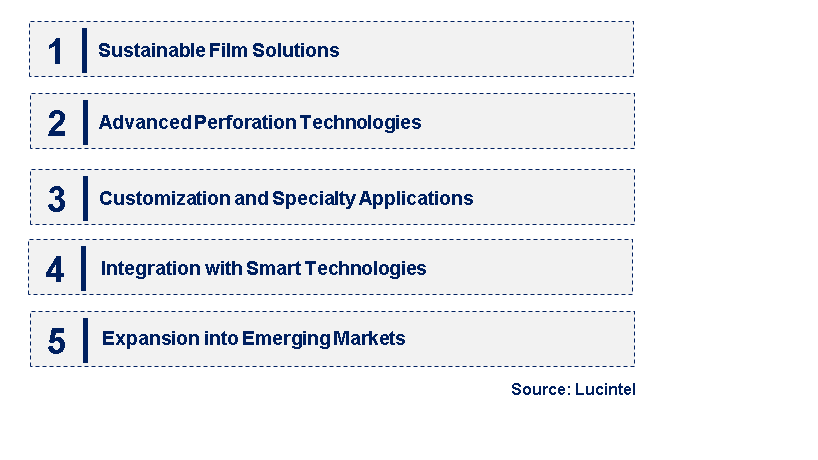
• Sustainable Film Solutions: There is a growing trend towards developing sustainable micro-perforated films made from biodegradable or recyclable materials. This shift is driven by increasing environmental regulations and consumer demand for eco-friendly packaging. Companies are investing in materials that reduce waste and environmental impact, aligning with global sustainability goals.
• Advanced Perforation Technologies: Innovations in perforation technologies are enhancing the performance of micro-perforated films. Advanced techniques are improving precision, durability, and functionality, resulting in films with better breathability, moisture control, and strength. These advancements are expanding the applications of micro-perforated films across various industries.
• Customization and Specialty Applications: The trend towards customization is leading to the development of micro-perforated films tailored for specific applications. This includes films with specialized properties such as antimicrobial, UV-resistant, and anti-static features. Customization caters to the unique needs of industries such as healthcare, electronics, and agriculture.
• Integration with Smart Technologies: Integration with smart technologies is becoming a trend in the micro-perforated film market. Films are being developed with embedded sensors or smart features that enable real-time monitoring of conditions such as temperature and humidity. This trend enhances the functionality and versatility of micro-perforated films in various applications.
• Expansion into Emerging Markets: The expansion into emerging markets is driving growth in the micro-perforated film sector. Companies are exploring opportunities in regions with rising industrial activity and increasing demand for advanced packaging solutions. This trend supports market growth and creates new opportunities for manufacturers. Emerging trends such as sustainable solutions, advanced perforation technologies, customization, smart technology integration, and market expansion are reshaping the micro-perforated film industry. These trends are driving innovation, enhancing product functionality, and addressing evolving consumer and industry needs.
• Enhanced Imaging Modalities: Significant advancements in imaging modalities such as MRI, CT, and ultrasound improve visualization quality while minimizing invasiveness. Newer techniques, like hybrid imaging systems, combine the strengths of multiple modalities, offering real-time insights. These advancements allow for earlier diagnoses and more accurate monitoring of diseases, enhancing patient management and treatment outcomes.
• Integration of Artificial Intelligence: The integration of AI in minimally invasive imaging is transforming diagnostic capabilities. AI algorithms are used to analyze imaging data more efficiently, identifying anomalies that may be missed by human interpretation. This leads to quicker, more accurate diagnoses and helps healthcare providers make informed decisions about patient care, thereby improving overall healthcare delivery.
• Development of Portable Imaging Devices: The emergence of portable imaging devices is a game-changer for minimally invasive procedures. These devices allow for imaging at the point of care, increasing accessibility and convenience for both patients and providers. With a reduced need for transportation to imaging facilities, the patient experience is improved, and timely interventions can be initiated, leading to better clinical outcomes.
• Advancements in 3D Imaging Technology: Recent developments in 3D imaging technology provide surgeons with enhanced spatial awareness during procedures. Techniques such as 3D reconstruction and real-time imaging assist in precise navigation and planning, minimizing the risk of complications. This level of detail improves surgical precision and can lead to shorter recovery times for patients.
• Regulatory Approvals and Market Expansion: Increased regulatory approvals for new imaging technologies are fueling market growth. As more innovative solutions receive clearance, healthcare facilities are more likely to adopt these technologies, expanding their use in clinical practice. This trend enhances the range of diagnostic options available and encourages ongoing research and development in the minimally invasive imaging field. In summary, recent developments in the minimally invasive imaging market foster a shift toward more efficient, patient-centered care. Enhanced imaging modalities, AI integration, portable devices, advancements in 3D technology, and increased regulatory approvals are collectively driving innovation and improving clinical outcomes. These trends set the stage for a future where minimally invasive imaging plays a critical role in diagnostics and treatment strategies.
• Expanding into Emerging Markets: Growing demand in emerging markets exhibits significant growth potential, driven by increasing healthcare investments and demands for advanced technology in medical diagnosis. Expanding into these markets may provide new revenue streams and opportunities for growth.
• Development of Advanced Imaging Technologies: Growth opportunities arise from investing in the development of high-definition endoscopy and real-time imaging systems. Innovations could enhance diagnostic and operational accuracy, thus driving demand for advanced minimally invasive imaging solutions.
• Integration of Digital Health and AI Solutions: Integrating minimally invasive imaging into digital health platforms and AI solutions opens up new applications and further enhances the existing value proposition. It supports real-time analysis for improved outcomes and predictive analytics, driving growth and innovation in the market.
• Growth in Remote and Telemedicine Applications: The increase in the use of telemedicine and remote applications presents opportunities for minimally invasive imaging solutions. Developing technologies to enable diagnostics remotely, along with virtual consultations, will facilitate larger market access with greater penetration in less-resourced areas.
• Innovation in Portable and Wearable Devices: Innovation in portable and wearable imaging devices creates opportunities for growth through improved accessibility and convenience. These devices enable real-time monitoring and diagnostics in different settings, expanding the range of minimally invasive imaging solutions. The future of the minimally invasive imaging market will be influenced by emerging market opportunities, advanced imaging technologies, integration of digital health, remote applications, and portable devices. These emerging opportunities offer tremendous possibilities for growth in extending the potential of minimally invasive imaging technologies.
• Technological Advancements: Technological advancements in perforation and film production are driving market growth. Innovations that enhance film performance, such as improved breathability and strength, are expanding application areas and meeting diverse industry needs.
• Growing Demand for Sustainable Solutions: Increasing demand for eco-friendly and recyclable packaging solutions is driving the development of sustainable micro-perforated films. Companies are investing in biodegradable materials and greener manufacturing processes to meet environmental regulations and consumer preferences.
• Expanding Application Areas: The expansion of micro-perforated films into new application areas, such as medical devices and electronics, is driving market growth. Innovations that address the specific needs of these sectors are creating new opportunities for manufacturers.
• Cost-Effective Production: Advancements in cost-effective production techniques are making micro-perforated films more affordable and accessible. This supports market growth by allowing manufacturers to offer competitive pricing and meet the demands of various industries.
• Increasing Industrialization: Rising industrialization, particularly in emerging markets, is driving the demand for micro-perforated films in sectors such as agriculture and automotive. This trend is contributing to market expansion and providing growth opportunities for manufacturers. Challenges in the micro-perforated film market are:
• High Raw Material Costs: The high cost of raw materials used in making micro-perforated films decreases profitability and makes products less competitive in terms of pricing. Managing material costs and seeking alternative materials are critical to remaining competitive in the marketplace.
• Regulatory Compliance: Complex regulatory compliance related to product safety, environmental impact, and performance can be challenging. Ensuring compliance with regulations in various regions requires significant resources and expertise.
• Market Competition: Intense competition among manufacturers can limit market share and influence pricing strategies. Differentiating products and striving for competitiveness are key challenges for companies involved in the micro-perforated film market. The drivers for the micro-perforated film market include technological developments, demand for sustainability, expanding applications, cost-effectiveness in production, and growing industrialization. In addition to these factors, concerns regarding raw material costs, regulatory compliance, and market competitiveness must be addressed to maintain the growth and success of the market.
• Mondi
• Amcor
• Sealed Air
• Bollore
• Tcl Packaging
• Coveris Holdings
• Now Plastics
• Aera
• Amerplast
• Uflex
• Polyethylene (PE)
• Polypropylene (PP)
• Polyethylene Terephthalate (PET)
• Others
• Fresh Fruits & Vegetables
• Bakery & Confectionary
• Ready-To-Eat Food
• Others
• North America
• Europe
• Asia Pacific
• The Rest of the World
• United States: In the United States, recent developments in micro-perforated films focus on enhancing product functionality and sustainability. Innovations include the development of high-performance films with improved breathability and moisture control for food packaging. Additionally, U.S. manufacturers are integrating recyclable materials into their films to meet growing environmental regulations and consumer demand for sustainable packaging solutions. The market is also seeing increased adoption of micro-perforated films in medical and industrial applications due to their advanced properties.
• China: China’s micro-perforated film market is expanding rapidly with advancements in production technology and application versatility. Recent developments include the introduction of high-efficiency perforation techniques that enhance film strength and durability while reducing material waste. Chinese manufacturers are also investing in R&D to develop films with specialized properties, such as antimicrobial and UV-resistant features, catering to diverse industrial and consumer needs. Increased focus on cost-effective production methods and scaling up operations are supporting market growth.
• Germany: In Germany, the micro-perforated film market is experiencing innovation driven by stringent environmental regulations and technological advancements. Recent developments include the introduction of biodegradable and compostable micro-perforated films that comply with EU sustainability standards. German companies are also enhancing film performance through advanced manufacturing processes that improve film clarity and strength. Additionally, there is a growing emphasis on developing films for specific applications in the automotive and medical industries, reflecting Germany’s focus on high-quality, specialized solutions.
• India: India’s market for micro-perforated films is witnessing growth due to increased industrialization and demand for advanced packaging solutions. Recent advancements include the adoption of cost-effective manufacturing techniques and the development of films with improved breathability and barrier properties for food and beverage packaging. Indian manufacturers are also exploring the use of micro-perforated films in agriculture for crop protection and enhanced air circulation. The market is supported by government initiatives to boost the packaging industry and technological upgrades in production facilities.
• Japan: Japan’s micro-perforated film market is characterized by technological innovation and a focus on high-performance applications. Recent developments include the creation of ultra-thin films with precise perforation patterns for enhanced functionality in electronics and medical devices. Japanese companies are investing in advanced materials and production technologies to improve film properties such as flexibility, strength, and environmental resistance. The market is also seeing increased adoption of micro-perforated films in the high-tech and consumer goods sectors, driven by Japan’s emphasis on quality and innovation.


• Mondi
• Amcor
• Sealed Air
• Bollore
• Tcl Packaging
• Coveris Holdings
• Now Plastics
• Aera
• Amerplast
• Uflex Q6. Which micro-perforated film market segment will be the largest in future? Answer: Lucintel forecasts that polyethylene (PE) will remain the largest segment over the forecast period because of extensive use in food packaging applications owing to its array of advantageous attributes, including exceptional transparency, resistance to punctures, affordability, impressive tensile strength, and superior resistance to impacts. Q7. In micro-perforated film market, which region is expected to be the largest in next 5 years? Answer: North America will remain the largest region over the forecast period due to surge in demand for convenience foods, bolstered by economic advancements and increased disposable incomes, along with technological innovations in the packaging sector, and rising consumer preference for healthier and more convenient food options. Q.8 Do we receive customization in this report? Answer: Yes, Lucintel provides 10% customization without any additional cost.


Choose a license that fits your team. Instant PDF delivery.
Prices exclude taxes. Instant delivery. Custom licensing available on request.
Market Report · July 22, 2026
Market Report · July 22, 2026
Market Report · July 22, 2026
Trusted partner for strategic intelligence and business growth


Receive a complimentary market analysis tailored to your industry. Our analysts will identify key growth opportunities and competitive dynamics specific to your business.

Market size, growth rate, and key trend analysis for your specific sector.

Top competitor positioning and market share analysis.

Strategic recommendations backed by data-driven insights.
Get curated market intelligence and competitive moves straight to your inbox.
By subscribing, you agree to receive our monthly insights. Unsubscribe anytime.
Receive a complimentary market analysis tailored to your industry. Our analysts will identify key growth opportunities and competitive dynamics specific to your business.
Market size, growth rate, and key trend analysis for your specific sector.
Top competitor positioning and market share analysis.
Strategic recommendations backed by data-driven insights.
Get curated market intelligence, emerging trends, and competitive moves straight to your inbox each month.
By subscribing, you agree to receive our monthly insights. Unsubscribe anytime.
We'll send your sample report shortly.