
Market Report · July 15, 2026

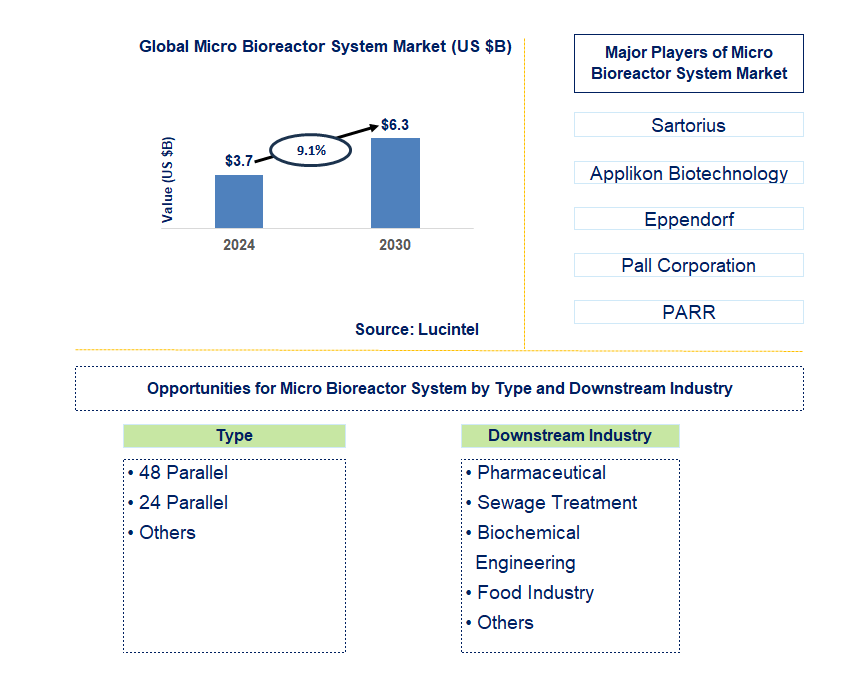
Key data points: The market size in 2030 = $6.25 billion, growth forecast = 9.1% annually next 6 years. Scroll below to get more insights. This market report covers trends, opportunities, and forecast in the global micro bioreactor system market to 2030 by type (48 parallel, 24 parallel, and others), downstream industry (pharmaceutical, sewage treatment, biochemical engineering, food industry, and others), and region (North America, Europe, Asia Pacific, and the Rest of the World)
We'll send your sample report shortly.
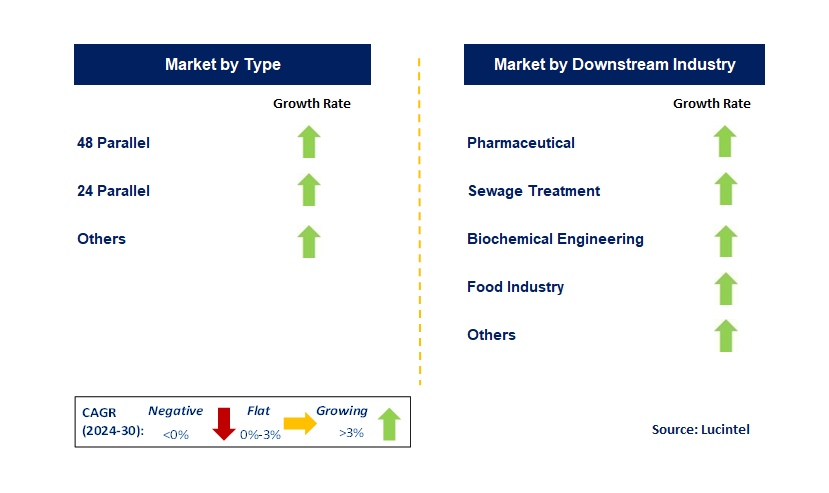
• Lucintel forecasts that 48 parallel will remain the larger segment over the forecast period.
• Within this market, pharmaceutical will remain the largest segment.
• Europe will remain the largest region over the forecast period due to thriving biopharmaceutical industry. A more than 150-page report is developed to help in your business decisions.
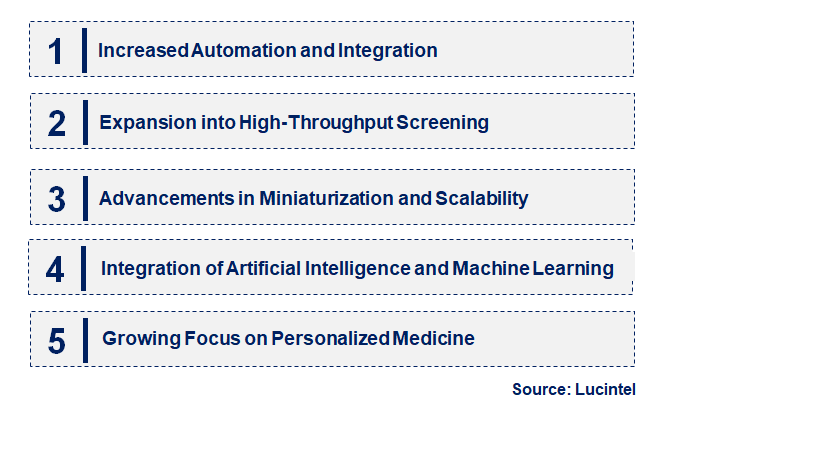
• Increased Automation and Integration: Automation in micro bioreactor systems is enhancing efficiency and precision by reducing manual intervention and human error. Advanced automation features, such as robotic handling and integrated data management, streamline bioprocesses and enable real-time monitoring. This trend is driven by the need for higher throughput and reproducibility in research and development. Automation also facilitates seamless integration with other lab systems and data analytics platforms, providing comprehensive insights and control over bioprocessing tasks. As automation becomes more sophisticated, it supports accelerated development cycles and improved process consistency.
• Expansion into High-Throughput Screening: Micro bioreactors are increasingly employed in high-throughput screening (HTS) applications due to their ability to manage multiple experiments simultaneously. This trend is driven by the need to rapidly identify and test a wide array of conditions and compounds in drug discovery and development. Micro bioreactors enable efficient parallel processing of samples, which accelerates the screening process and reduces overall research time. The scalability and precision of micro bioreactors make them ideal for HTS, supporting faster and more effective identification of promising drug candidates.
• Advancements in Miniaturization and Scalability: The trend towards miniaturization in micro bioreactors aims to enhance their functionality while reducing their size. Advanced miniaturization techniques enable the development of compact systems that maintain high performance and precision. These systems allow for more efficient use of resources and faster experimentation cycles. Scalability is also a key focus, with developments aimed at ensuring that micro bioreactors can be easily scaled up from laboratory to industrial production. This trend supports a smoother transition from small-scale research to large-scale manufacturing, optimizing both cost and productivity.
• Integration of Artificial Intelligence and Machine Learning: The integration of artificial intelligence (AI) and machine learning (ML) into micro bioreactor systems is transforming data analysis and process optimization. AI and ML algorithms can analyze complex datasets, predict outcomes, and adjust bioprocess parameters in real time. This trend enhances process control and efficiency by enabling more accurate predictions and optimizations based on historical data. The use of AI and ML in micro bioreactors supports smarter decision-making and process improvements, leading to better yields and reduced development times.
• Growing Focus on Personalized Medicine: The rise of personalized medicine is driving the adoption of micro bioreactor systems tailored to individual patient needs. These systems facilitate the development of customized treatments and therapies by allowing precise control over bioprocesses. The ability to adjust bioprocess parameters to match specific patient profiles supports the creation of targeted drugs and personalized healthcare solutions. As the demand for personalized medicine increases, micro bioreactors play a crucial role in supporting the development of bespoke treatments, reflecting a broader shift towards precision in medical care. These emerging trends highlight the innovative directions the micro bioreactor system market is taking. As technology advances, these trends will likely continue to shape the industry, driving improvements in efficiency, scalability, and personalized solutions.
• Advanced Automation Features: Recent developments in micro bioreactor systems include sophisticated automation capabilities that significantly enhance efficiency and precision. Modern systems now incorporate automated liquid handling, sample processing, and data acquisition, which minimize manual intervention and reduce human error. These advancements allow for real-time monitoring and control of bioprocesses, improving reproducibility and throughput. Automation also facilitates seamless integration with other laboratory systems, enabling comprehensive process management and streamlined workflows.
• Miniaturization and Compact Designs: Miniaturization continues to be a key trend in the micro bioreactor market, with recent developments focusing on creating more compact and efficient systems. Innovations in microfabrication and design have led to smaller bioreactors that offer high performance while using fewer resources. These miniaturized systems enable high-density experiments and reduce operational costs. The compact design also supports the scalability of bioprocesses, making it easier to transition from laboratory-scale to industrial-scale production.
• Integration with AI and Machine Learning: The integration of artificial intelligence (AI) and machine learning (ML) into micro bioreactor systems is revolutionizing data analysis and process optimization. AI and ML algorithms analyze complex datasets to predict outcomes, optimize parameters, and improve process control in real time. This integration allows for more accurate predictions and adjustments, enhancing overall process efficiency and effectiveness. AI and ML contribute to better decision-making and higher-quality bioprocesses.
• Enhanced High-Throughput Screening Capabilities: Micro bioreactors are increasingly being optimized for high-throughput screening (HTS) applications, allowing researchers to test numerous conditions and compounds simultaneously. Recent advancements have focused on improving the performance of micro bioreactors for HTS, facilitating faster identification of potential drug candidates. The ability to perform parallel experiments with precision and efficiency supports accelerated drug discovery and development processes.
• Support for Personalized Medicine: The push towards personalized medicine is driving developments in micro bioreactor systems designed to accommodate individualized treatments. Recent advancements enable precise customization of bioprocesses to match specific patient profiles, facilitating the development of tailored therapies. These systems support targeted drug development and personalized healthcare solutions, reflecting the broader trend towards precision medicine. Overall, these key developments highlight the rapid evolution of the micro bioreactor system market, driven by advancements in automation, miniaturization, AI integration, high-throughput screening, and personalized medicine. These innovations are enhancing the efficiency, precision, and versatility of bioprocessing, supporting a wide range of applications from research to production.
• Drug Discovery and Development: Micro bioreactors are increasingly crucial for accelerating drug discovery and development. By enabling high-throughput screening, these systems allow researchers to test a wide range of compounds and conditions efficiently. The precision and scalability of micro bioreactors facilitate faster identification of promising drug candidates and optimization of bioprocesses. This capability is particularly valuable for pharmaceutical companies seeking to expedite the drug development pipeline and reduce time-to-market. Investing in micro bioreactor systems for drug discovery can lead to more effective and rapid advancements in therapeutic development.
• Personalized Medicine: The shift towards personalized medicine is driving demand for micro bioreactor systems that support individualized treatments. These systems can be customized to replicate patient-specific conditions and optimize therapies tailored to individual genetic profiles. By enabling precise control and monitoring of bioprocesses, micro bioreactors facilitate the development of targeted drugs and personalized treatment regimens. As personalized medicine becomes more prevalent, micro bioreactor systems will play a key role in supporting this approach, offering significant growth opportunities in this burgeoning field.
• Bioprocess Optimization: Micro bioreactors are essential for bioprocess optimization, providing detailed insights into process parameters and performance at a small scale. By enabling precise monitoring and control, these systems help optimize conditions for microbial fermentation, cell culture, and protein production. This capability is crucial for enhancing yield, quality, and efficiency in bioprocesses. Industries such as biotechnology and pharmaceuticals can benefit from investing in micro bioreactor systems to improve process development and scaling, resulting in more cost-effective and efficient production methods.
• Vaccine Development: The development of vaccines, especially in response to emerging health threats, benefits greatly from the use of micro bioreactor systems. These systems allow for rapid and controlled cultivation of vaccine candidates, enabling high-throughput testing and optimization of production processes. Micro bioreactors can efficiently handle the small-scale production required for initial vaccine development and testing phases. As global demand for vaccines continues to rise, particularly in light of recent health crises, there is substantial growth potential in leveraging micro bioreactors for vaccine research and production.
• Industrial Biotechnology: Micro bioreactors are increasingly being adopted in industrial biotechnology for the production of bio-based chemicals, materials, and energy. Their ability to optimize microbial and cell-based processes at a small scale supports the development of sustainable and efficient production methods. Micro bioreactors enable precise control of fermentation and synthesis processes, which is critical for scaling up production in industrial applications. As the push for sustainable and green technologies grows, micro bioreactors offer significant opportunities for innovation and efficiency in industrial biotechnology. These strategic growth opportunities reflect the expanding role of micro bioreactor systems across diverse applications, highlighting their potential to drive innovation and efficiency in drug discovery, personalized medicine, bioprocess optimization, vaccine development, and industrial biotechnology. Capitalizing on these opportunities can significantly enhance market positioning and contribute to advancements in various scientific and industrial fields.
• Sartorius
• Applikon Biotechnology
• Eppendorf
• Pall Corporation
• PARR
• M2p-Labs
• INFORS
• 48 Parallel
• 24 Parallel
• Others
• Pharmaceutical
• Sewage Treatment
• Biochemical Engineering
• Food Industry
• Others
• North America
• Europe
• Asia Pacific
• The Rest of the World
• United States: In the United States, the micro bioreactor system market is expanding rapidly due to advancements in biotechnology and pharmaceutical research. Major companies like Eppendorf and Sartorius are leading innovations with enhanced micro bioreactor platforms that offer improved automation, data integration, and process control. The U.S. market is also driven by substantial investments in research and development, aiming to accelerate drug discovery and development processes. Regulatory support and a strong focus on personalized medicine further bolster the growth of micro bioreactor systems, making the U.S. a leading market in this sector.
• China: China micro bioreactor system market is experiencing notable growth, fueled by the country's expanding biotechnology sector and increasing emphasis on pharmaceutical innovation. Chinese companies are investing heavily in micro bioreactor technologies to support rapid development and high-throughput screening processes. Partnerships between local firms and international technology providers are also facilitating the adoption of advanced micro bioreactor systems. Additionally, government initiatives to promote biopharmaceutical development and improve healthcare infrastructure contribute to the burgeoning market, positioning China as a significant player in the global micro bioreactor landscape.
• Germany: Germany, a key player in the European biotechnology sector, is witnessing advancements in micro bioreactor systems driven by both technological innovation and research needs. German companies like Applikon Biotechnology and Bioengineering are developing cutting-edge micro bioreactor platforms that offer high precision and efficiency. The focus is on integrating advanced sensors and automation to enhance process control and data analysis. Germany strong emphasis on research and development, coupled with its robust pharmaceutical and biotech industries, supports the growth of micro bioreactor systems, making it a central hub in Europe for these technologies.
• India: In India, the micro bioreactor system market is growing due to increasing investments in biopharmaceutical research and development. Indian companies are adopting micro bioreactor technologies to enhance their capabilities in drug development and production. The expansion of biotech and pharmaceutical sectors, along with government support for innovation and healthcare improvements, is driving the demand for these systems. Moreover, collaborations between Indian and international firms are facilitating the integration of advanced micro bioreactor solutions, contributing to the rapid development of the market and positioning India as an emerging player in the sector.
• Japan: Japan micro bioreactor system market is characterized by a strong focus on technological innovation and precision. Japanese companies such as Mitsubishi Chemical and Japan BioScience Laboratory are advancing micro bioreactor technologies to improve efficiency and scalability in bioprocessing. The market benefits from Japan’s robust research infrastructure and a high level of investment in biotechnology. Additionally, the country’s emphasis on high-quality manufacturing and regulatory standards supports the adoption of advanced micro bioreactor systems. Japan’s growing pharmaceutical and biotech industries are key drivers of the market, positioning it as a significant contributor to global advancements in micro bioreactor technology.


• Sartorius
• Applikon Biotechnology
• Eppendorf
• Pall Corporation
• PARR
• M2p-Labs
• INFORS Q6. Which micro bioreactor system market segment will be the largest in future? Answer: Lucintel forecasts that 48 parallel will remain the larger segment over the forecast period. Q7. In micro bioreactor system market, which region is expected to be the largest in next 5 years? Answer: rising demand for personalized medicine and biopharmaceuticals and increasing focus in the fields of synthetic biology and metabolic engineering. Q.8 Do we receive customization in this report? Answer: Yes, Lucintel provides 10% customization without any additional cost.


Choose a license that fits your team. Instant PDF delivery.
Prices exclude taxes. Instant delivery. Custom licensing available on request.
Market Report · July 15, 2026
Market Report · May 18, 2026
Market Report · May 18, 2026
Trusted partner for strategic intelligence and business growth


Receive a complimentary market analysis tailored to your industry. Our analysts will identify key growth opportunities and competitive dynamics specific to your business.

Market size, growth rate, and key trend analysis for your specific sector.

Top competitor positioning and market share analysis.

Strategic recommendations backed by data-driven insights.
Get curated market intelligence and competitive moves straight to your inbox.
By subscribing, you agree to receive our monthly insights. Unsubscribe anytime.
Receive a complimentary market analysis tailored to your industry. Our analysts will identify key growth opportunities and competitive dynamics specific to your business.
Market size, growth rate, and key trend analysis for your specific sector.
Top competitor positioning and market share analysis.
Strategic recommendations backed by data-driven insights.
Get curated market intelligence, emerging trends, and competitive moves straight to your inbox each month.
By subscribing, you agree to receive our monthly insights. Unsubscribe anytime.
We'll send your sample report shortly.