
Report Feature
Mezcal Market Trends and Forecast
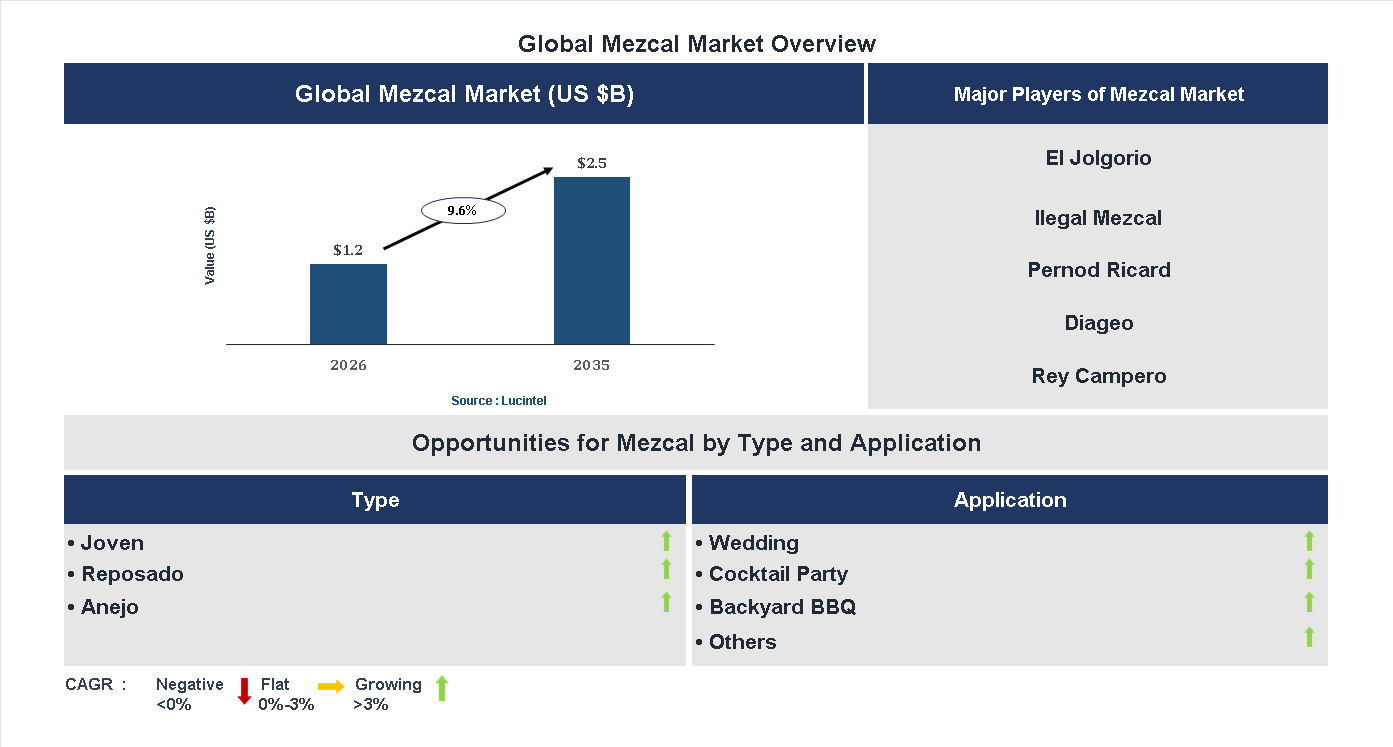
The future of the global mezcal market looks promising with opportunities in the wedding, cocktail party, and backyard BBQ markets. The global mezcal market is expected to reach an estimated $2.5 billion by 2035 with a CAGR of 9.6% from 2026 to 2035. The major drivers for this market are the increasing popularity of craft spirits, the rising demand for unique alcoholic beverages, and the growing interest in traditional mexican drinks.• Lucintel forecasts that, within the type category, reposado is expected to witness the highest growth over the forecast period.
• Within the application category, cocktail party is expected to witness the highest growth.
• In terms of region, APAC is expected to witness the highest growth over the forecast period. Gain valuable insights for your business decisions with our comprehensive 150+ page report. Sample figures with some insights are shown below.
Emerging Trends in the Mezcal Market
The mezcal market is experiencing rapid growth driven by increasing consumer interest in artisanal spirits, sustainability, and unique flavor profiles. As consumers seek authentic and culturally rich experiences, producers are innovating and expanding their reach globally. Technological advancements, changing regulations, and evolving consumer preferences are shaping the landscape, creating new opportunities and challenges. This dynamic environment is fostering innovation, sustainability, and diversification within the industry. Understanding these emerging trends is crucial for stakeholders aiming to capitalize on the markets potential and adapt to the shifting consumer landscape effectively.• Growing Global Demand: The mezcal market is expanding beyond Mexico, driven by increasing international interest in premium and craft spirits. Consumers worldwide are seeking authentic, artisanal products, which has led to a surge in exports and new markets. This global demand is encouraging producers to scale operations while maintaining quality and tradition. The trend also promotes cultural exchange and elevates mezcals status as a premium spirit, attracting a broader consumer base and increasing market competitiveness.
• Focus on Sustainability and Organic Production: Sustainability is becoming a key priority for mezcal producers, with many adopting eco-friendly practices. Organic farming, sustainable harvesting of agave, and environmentally conscious production methods are gaining popularity. This trend responds to consumer demand for ethically produced products and helps preserve local ecosystems. It also enhances brand reputation and allows producers to access niche markets willing to pay premium prices for sustainable products, thus fostering long-term industry growth.
• Innovation in Flavors and Packaging: Producers are experimenting with new flavors, infusions, and innovative packaging to appeal to diverse consumer preferences. This includes limited editions, flavored mezcals, and eco-friendly packaging solutions. Such innovations help differentiate products in a competitive market and attract younger consumers seeking novel experiences. Creative branding and packaging also enhance shelf appeal and facilitate premium positioning, driving sales and expanding the product portfolio.
• Digital Marketing and E-commerce Expansion: The rise of digital platforms and e-commerce channels is transforming how mezcal is marketed and sold. Producers leverage social media, online marketplaces, and direct-to-consumer sales to reach global audiences more effectively. This trend reduces reliance on traditional distribution channels, increases brand visibility, and allows for targeted marketing campaigns. It also enables smaller producers to compete with larger brands, fostering a more diverse and accessible market landscape.
• Regulatory Changes and Certification Standards: Evolving regulations and certification standards are shaping industry practices. Governments and industry bodies are implementing quality standards, origin certifications, and sustainability labels to ensure product authenticity and safety. These regulations help build consumer trust, protect traditional producers, and prevent counterfeit products. Compliance with standards also opens access to premium markets and export opportunities, fostering a more transparent and regulated industry environment. In summary, these emerging trends are reshaping the mezcal market by fostering innovation, promoting sustainability, expanding global reach, and enhancing consumer engagement. They are driving growth, elevating product quality, and ensuring the industry adapts to modern demands while preserving its cultural heritage.

Recent Development in the Mezcal Market
The mezcal market is experiencing rapid growth driven by increasing consumer interest in artisanal spirits, sustainable production practices, and cultural heritage. Innovations in production techniques and expanding global markets are further fueling this trend. As consumers seek unique, high-quality beverages, the industry is adapting to meet these demands with new product offerings and marketing strategies. These developments are reshaping the landscape, creating opportunities for brands to expand their reach and influence in both traditional and emerging markets.• Growing Global Demand: The mezcal market is expanding internationally as consumers seek authentic, artisanal spirits. Increased awareness of Mexican culture and heritage has driven demand in North America, Europe, and Asia. Premiumization trends are encouraging consumers to explore higher-quality, craft spirits, boosting exports and market penetration. This growth is fostering new distribution channels and partnerships, ultimately elevating mezcal’s global profile and creating significant revenue opportunities for producers and exporters.
• Innovation in Production Techniques: Producers are adopting innovative methods such as sustainable agave farming, organic certification, and traditional distillation processes. These advancements enhance product quality and appeal to eco-conscious consumers. Additionally, experimentation with flavor profiles and aging techniques is leading to diverse offerings. These innovations not only improve the sustainability and authenticity of mezcal but also enable brands to differentiate themselves in a competitive market, attracting a broader customer base and commanding premium prices.
• Rising Consumer Preference for Premium and Craft Spirits: Consumers are increasingly favoring premium, small-batch, and craft spirits, viewing them as symbols of quality and authenticity. This shift benefits mezcal producers who emphasize artisanal craftsmanship and heritage. Premium mezcal brands are gaining market share through storytelling and unique branding, appealing to connoisseurs and new drinkers alike. This trend is driving higher profit margins and encouraging investment in branding, packaging, and marketing to capitalize on the premium segment.
• Expansion of Distribution Channels: The mezcal market is benefiting from the expansion of distribution channels, including bars, restaurants, e-commerce platforms, and specialty liquor stores. Online sales and direct-to-consumer models are particularly boosting accessibility and consumer engagement. This diversification allows brands to reach wider audiences and adapt to changing purchasing behaviors. Enhanced distribution infrastructure is crucial for market growth, enabling brands to scale operations and meet increasing demand across different regions efficiently.
• Cultural and Tourism-Driven Growth: The cultural significance of mezcal and its association with Mexican heritage are attracting tourism and cultural events. Distillery tours, festivals, and culinary experiences are increasing brand visibility and consumer engagement. This cultural connection fosters brand loyalty and educates consumers about mezcal’s artisanal roots. As tourism rebounds globally, this trend is expected to further boost sales, support local economies, and promote mezcal as a premium cultural product on the international stage. The overall impact of these developments is a dynamic, expanding market characterized by increased global reach, innovation, and consumer engagement. These opportunities are driving higher sales, brand differentiation, and sustainable growth, positioning mezcal as a leading premium spirit worldwide.
Strategic Growth Opportunities in the Mezcal Market
The mezcal market is experiencing rapid growth driven by increasing consumer interest in artisanal spirits, cultural heritage, and sustainable production practices. Rising global demand for unique, premium alcoholic beverages presents significant opportunities for producers and brands to expand their market share. Innovations in flavor profiles, marketing strategies, and distribution channels are further fueling this expansion. As consumer preferences shift towards authentic and ethically produced products, the mezcal industry is poised for substantial development across diverse regions and applications.• Expanding Premium and Craft Segments: The growing consumer preference for premium and craft spirits is a key driver for mezcal. Producers are focusing on high-quality, small-batch products with unique flavor profiles, appealing to connoisseurs and collectors. This trend encourages innovation in production techniques and branding, positioning mezcal as a luxury item. As demand for artisanal spirits increases, market players can capitalize on storytelling and heritage to differentiate their offerings and command higher price points.
• Increasing Global Distribution and Export Opportunities: The globalization of mezcal is opening new markets beyond Mexico, especially in North America, Europe, and Asia. Strategic partnerships with distributors and retailers are expanding availability in international markets. E-commerce platforms and duty-free outlets further enhance accessibility. This growth in distribution channels allows producers to reach a broader consumer base, increase sales volume, and establish brand recognition globally, thereby accelerating overall market expansion.
• Innovation in Flavors and Product Offerings: Diversification of flavor profiles and product formats is a significant growth avenue. Producers are experimenting with infusions, aging techniques, and limited editions to attract diverse consumer segments. Ready-to-drink (RTD) cocktails and flavored mezcal variants are gaining popularity, especially among younger consumers seeking convenience and novelty. These innovations help differentiate brands, stimulate interest, and expand applications across bars, restaurants, and retail outlets.
• Emphasizing Sustainability and Ethical Production: Consumers are increasingly conscious of environmental and social impacts, prompting mezcal producers to adopt sustainable practices. Organic farming, eco-friendly packaging, and fair trade sourcing are becoming standard. Highlighting these efforts enhances brand reputation and appeals to ethically minded buyers. Sustainability initiatives also support regulatory compliance and long-term viability, positioning mezcal as a responsible choice in the spirits industry and fostering consumer loyalty.
• Growing Use in Culinary and Mixology Applications: Mezcal’s distinctive smoky flavor is increasingly utilized in culinary arts and mixology. Chefs incorporate it into dishes, while bartenders create innovative cocktails, elevating its profile beyond traditional drinking. This trend broadens mezcal’s application scope, attracting foodservice establishments and cocktail enthusiasts. As the versatility of mezcal is recognized, demand in hospitality sectors rises, encouraging product development tailored for culinary and mixology uses, thus fueling overall market growth. The overall impact of these opportunities is a robust expansion of the mezcal market, driven by innovation, global outreach, and consumer preferences for authenticity and sustainability. These factors collectively enhance brand differentiation, increase sales channels, and foster long-term industry growth. As market players capitalize on these opportunities, the mezcal industry is positioned for sustained development and increased global prominence.
Mezcal Market Driver and Challenges
The mezcal market is influenced by a variety of technological, economic, and regulatory factors that shape its growth and development. Innovations in production techniques and sustainable practices are enhancing product quality and appeal. Economic trends, such as increasing consumer demand for premium and artisanal spirits, are expanding market opportunities. Regulatory frameworks, including geographic indications and export policies, impact market access and branding. Additionally, cultural trends and tourism significantly contribute to market expansion. Navigating these drivers and challenges is essential for stakeholders aiming to capitalize on the growing popularity of mezcal worldwide, ensuring sustainable growth while addressing regulatory and environmental concerns. The factors responsible for driving the mezcal market include:• Growing Consumer Preference for Premium and Artisanal Spirits: The increasing demand for high-quality, handcrafted spirits is a major driver. Consumers are seeking authentic, unique flavors, which mezcal offers through traditional production methods. This trend is fueled by a rising interest in cultural and artisanal products, boosting sales in both domestic and international markets. Premiumization is also encouraging producers to innovate and improve quality, further expanding market reach. As consumers become more discerning, the market benefits from a shift towards higher-value products, fostering growth and brand differentiation.
• Expansion of Export Markets: The globalization of spirits has opened new avenues for mezcal exports, especially to North America, Europe, and Asia. International markets are increasingly recognizing mezcal’s unique qualities, leading to higher demand. Trade agreements, marketing campaigns, and cultural promotion have facilitated this expansion. Export growth not only increases revenue but also enhances brand recognition globally. This trend encourages producers to meet international standards and certifications, fostering industry growth and diversification of supply chains.
• Technological Advancements in Production: Innovations in distillation, fermentation, and sustainable farming practices are improving mezcal quality and production efficiency. Modern equipment and techniques enable producers to maintain traditional flavors while increasing yield and consistency. Additionally, advancements in organic farming and eco-friendly methods support sustainable production, appealing to environmentally conscious consumers. These technological improvements reduce costs, enhance product safety, and enable scaling, which collectively contribute to market expansion and competitiveness.
• Rising Tourism and Cultural Promotion: Tourism in Mexico, especially in regions known for mezcal production, significantly boosts market visibility. Visitors seek authentic experiences, including tastings and distillery visits, which promote brand loyalty and awareness. Cultural festivals and marketing campaigns further enhance mezcal’s image as a premium, culturally rich spirit. This influx of tourists and cultural promotion helps sustain local economies and encourages new product development, ultimately expanding the market and attracting new consumers globally.
• Increasing Investment in Sustainable and Organic Production: The focus on sustainability and organic certification is a key driver. Consumers are increasingly prioritizing environmentally friendly and ethically produced spirits. Producers investing in organic farming, eco-friendly distillation, and fair trade practices are gaining a competitive edge. This trend aligns with global sustainability goals and enhances brand reputation. As demand for sustainable products grows, investments in eco-conscious production methods are expected to further stimulate market growth and meet evolving consumer preferences. The challenges facing the mezcal market include:
• Regulatory and Certification Barriers: Stringent regulations, geographic indications, and certification requirements can hinder market entry and expansion. Producers often face complex legal frameworks that vary by country, creating barriers for small-scale artisans. Certification processes can be costly and time-consuming, limiting access to export markets and reducing competitiveness. Additionally, intellectual property issues related to traditional knowledge and regional branding pose challenges in protecting authentic mezcal products from imitation and misappropriation.
• Supply Chain and Raw Material Constraints: The availability of high-quality agave, the primary raw material, is a significant challenge. Overharvesting and climate change threaten agave cultivation, leading to supply shortages and price volatility. Disruptions in supply chains, due to logistical issues or environmental factors, can impact production schedules and product availability. Ensuring sustainable sourcing while maintaining quality standards is critical but challenging, especially for small producers with limited resources.
• Market Competition and Counterfeit Products: The increasing popularity of mezcal has attracted numerous new entrants, intensifying competition. The proliferation of counterfeit and adulterated products damages brand reputation and consumer trust. Differentiating authentic mezcal from imitation is a persistent challenge, requiring robust branding and quality assurance measures. Market saturation and price competition can also pressure producers to lower prices, potentially impacting quality and profitability. In summary, the mezcal market is driven by consumer preferences for premium, artisanal products, expanding export opportunities, technological innovations, tourism, and sustainability investments. However, regulatory hurdles, raw material constraints, and market competition pose significant challenges. These factors collectively influence the market’s growth trajectory, requiring stakeholders to navigate complex regulatory landscapes, invest in sustainable practices, and differentiate their products. Overall, the market’s future depends on balancing innovation and tradition while addressing environmental and regulatory challenges to sustain long-term growth.
List of Mezcal Companies
Companies in the market compete on the basis of product quality offered. Major players in this market focus on expanding their manufacturing facilities, R&D investments, infrastructural development, and leverage integration opportunities across the value chain. With these strategies mezcal companies cater increasing demand, ensure competitive effectiveness, develop innovative products & technologies, reduce production costs, and expand their customer base. Some of the mezcal companies profiled in this report include-• El Jolgorio
• Ilegal Mezcal
• Pernod Ricard
• Diageo
• Rey Campero
• Tlacolula Distillery
• William Grant & Sons
Mezcal Market by Segment
The study includes a forecast for the global mezcal market by type, application, and region.Mezcal Market by Type [Value from 2019 to 2035]:
• Joven
• Reposado
• Anejo
Mezcal Market by Application [Value from 2019 to 2035]:
• Wedding
• Cocktail Party
• Backyard BBQ
• Others
Mezcal Market by Region [Value from 2019 to 2035]:
• North America
• Europe
• Asia Pacific
• The Rest of the World
Country Wise Outlook for the Mezcal Market
The mezcal market has experienced significant growth globally, driven by increasing consumer interest in artisanal spirits, sustainable production practices, and unique flavor profiles. As consumers seek authentic and culturally rich beverages, countries are innovating and expanding their offerings. The United States, China, Germany, India, and Japan are notable markets with distinct trends and developments shaping the future of mezcal consumption and production. These countries are adopting new marketing strategies, expanding distribution channels, and emphasizing quality and sustainability to meet rising demand.• United States: The US market has seen rapid growth with a surge in premium and craft mezcal brands. Consumers are increasingly interested in authentic, artisanal products, leading to expanded bar and retail presence. Major brands are investing in marketing campaigns emphasizing traditional production methods and sustainability. The craft cocktail movement has further boosted mezcals popularity, with mixologists showcasing its versatility. E-commerce platforms and specialty liquor stores are key distribution channels, and consumer awareness about mezcals cultural heritage continues to grow.
• China: The Chinese market is emerging as a promising frontier for mezcal, driven by a rising middle class and growing interest in international spirits. Premiumization trends are encouraging imports and local production initiatives. Importers are focusing on educating consumers about mezcals unique qualities through tastings and marketing campaigns. High-end bars and restaurants are beginning to feature mezcal cocktails, and collaborations with local influencers are increasing brand visibility. Regulatory developments and import tariffs are challenges, but overall, the market shows strong growth potential.
• Germany: Germanys market for mezcal is expanding, fueled by a strong craft spirits culture and a preference for high-quality, authentic products. Specialty liquor stores and bars are increasingly offering mezcal, often emphasizing its artisanal and sustainable aspects. Consumer awareness campaigns highlight traditional production techniques and the cultural heritage of mezcal. The trend toward organic and environmentally friendly products aligns well with local preferences. Importers are focusing on educating consumers through tastings and events, and online sales channels are gaining popularity, further supporting market growth.
• India: The Indian mezcal market is in its nascent stages but shows promising potential due to the rising popularity of premium spirits and international beverages. Urban consumers are exploring new flavors and spirits, with mezcal gaining attention through social media and experiential marketing. Importers and local producers are working to increase awareness via tastings and promotional events. The growing number of upscale bars and restaurants in metropolitan areas is creating opportunities for mezcals introduction. Challenges include regulatory hurdles and limited distribution infrastructure, but the market is expected to expand as consumer preferences evolve.
• Japan: Japans interest in mezcal is growing among connoisseurs and bartenders seeking unique spirits. The market benefits from Japans sophisticated palate and appreciation for artisanal products. Importers are focusing on high-quality, authentic mezcal brands, often emphasizing traditional production methods. Bars and specialty stores are hosting tastings and educational events to promote awareness. The trend toward sustainable and organic spirits aligns with local consumer values. E-commerce sales are increasing, and collaborations with local mixologists are helping to elevate mezcals profile in Japans vibrant cocktail scene.

Features of the Global Mezcal Market
Market Size Estimates: Mezcal market size estimation in terms of value ($B). Trend and Forecast Analysis: Market trends (2019 to 2025) and forecast (2026 to 2035) by various segments and regions. Segmentation Analysis: Mezcal market size by type, application, and region in terms of value ($B). Regional Analysis: Mezcal market breakdown by North America, Europe, Asia Pacific, and Rest of the World. Growth Opportunities: Analysis of growth opportunities in different types, applications, and regions for the mezcal market. Strategic Analysis: This includes M&A, new product development, and competitive landscape of the mezcal market. Analysis of competitive intensity of the industry based on Porter’s Five Forces model.
FAQ
Q1. What is the mezcal market size? Answer: The global mezcal market is expected to reach an estimated $2.5 billion by 2035. Q2. What is the growth forecast for mezcal market? Answer: The global mezcal market is expected to grow with a CAGR of 9.6% from 2026 to 2035. Q3. What are the major drivers influencing the growth of the mezcal market? Answer: The major drivers for this market are the increasing popularity of craft spirits, the rising demand for unique alcoholic beverages, and the growing interest in traditional mexican drinks. Q4. What are the major segments for mezcal market? Answer: The future of the mezcal market looks promising with opportunities in the wedding, cocktail party, and backyard BBQ markets. Q5. Who are the key mezcal market companies? Answer: Some of the key mezcal companies are as follows:• El Jolgorio
• Ilegal Mezcal
• Pernod Ricard
• Diageo
• Rey Campero
• Tlacolula Distillery
• William Grant & Sons Q6. Which mezcal market segment will be the largest in future? Answer: Lucintel forecasts that, within the type category, reposado is expected to witness the highest growth over the forecast period. Q7. In mezcal market, which region is expected to be the largest in next 5 years? Answer: In terms of region, APAC is expected to witness the highest growth over the forecast period. Q8. Do we receive customization in this report? Answer: Yes, Lucintel provides 10% customization without any additional cost.
Table of Contents
List of Figures
List of Tables
Methodology
- In-depth interviews of the major players in this market
- Detailed secondary research from competitors’ financial statements and published data
- Extensive searches of published works, market, and database information pertaining to industry news, company press releases, and customer intentions
- A compilation of the experiences, judgments, and insights of Lucintel’s professionals, who have analyzed and tracked this market over the years.


Buy Now
Choose a license that fits your team. Instant PDF delivery.
Prices exclude taxes. Instant delivery. Custom licensing available on request.
Key Questions
- • What are some of the most promising, high-growth opportunities for the mezcal market by type (joven, reposado, and anejo), application (wedding, cocktail party, backyard BBQ, and others), and region (North America, Europe, Asia Pacific, and the Rest of the World)?
- • Which segments will grow at a faster pace and why?
- • Which region will grow at a faster pace and why?
- • What are the key factors affecting market dynamics? What are the key challenges and business risks in this market?
- • What are the business risks and competitive threats in this market?
- • What are the emerging trends in this market and the reasons behind them?
- • What are some of the changing demands of customers in the market?
- • What are the new developments in the market? Which companies are leading these developments?
- • Who are the major players in this market? What strategic initiatives are key players pursuing for business growth?
- • What are some of the competing products in this market and how big of a threat do they pose for loss of market share by material or product substitution?
- • What M&A activity has occurred in the last 7 years and what has its impact been on the industry? For any questions related to Mezcal Market, Mezcal Market Size, Mezcal Market Growth, Mezcal Market Analysis, Mezcal Market Report, Mezcal Market Share, Mezcal Market Trends, Mezcal Market Forecast, Mezcal Companies, write Lucintel analyst at email: helpdesk@lucintel.com. We will be glad to get back to you soon.


