
Market Report · September 3, 2026

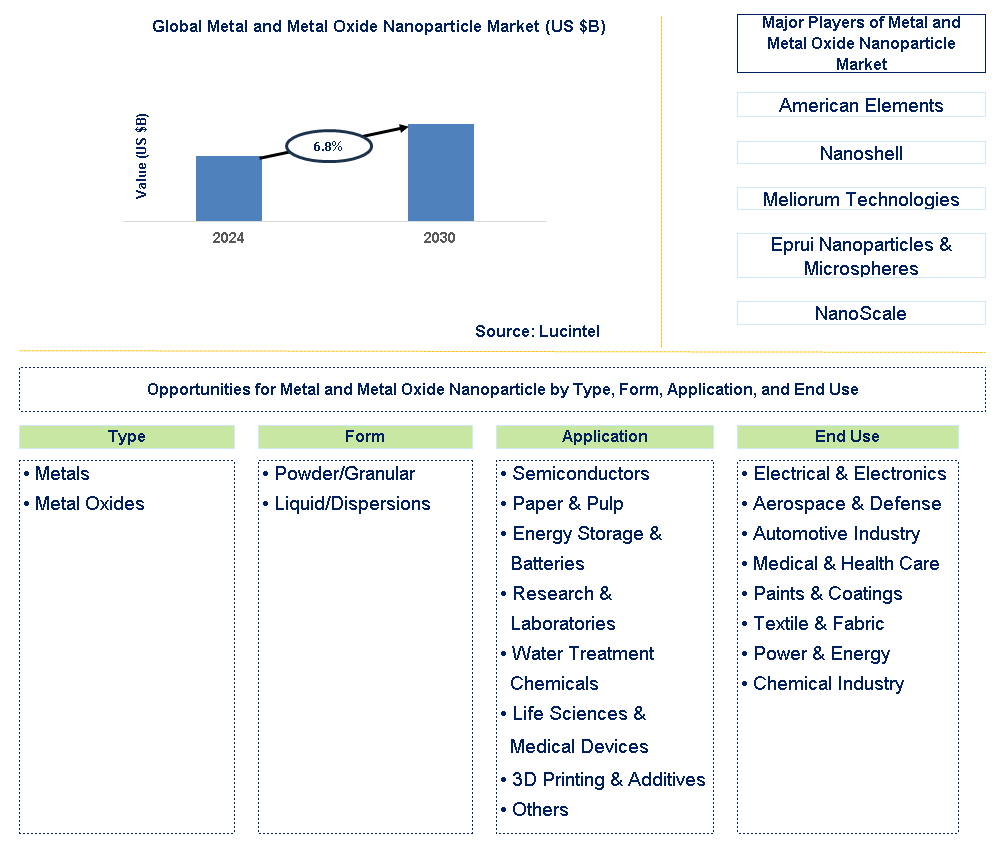
Key data points: The growth forecast = 6.8% annually for the next 6 years. Scroll below to get more insights. This market report covers trends, opportunities, and forecasts in the global metal and metal oxide nanoparticle market to 2030 by type (metals and metal oxides), form (powder/granular and liquid/dispersions), application (semiconductors, paper & pulp, energy storage & batteries, research & laboratories, water treatment chemicals, life sciences & medical devices, 3D printing & additives, and others), end use (electrical & electronics, aerospace & defense, automotive industry, medical & health care, paints & coatings, textile & fabric, power & energy, chemical industry, and others), and region (North America, Europe, Asia Pacific, and the Rest of the World)
We'll send your sample report shortly.
• Lucintel forecasts that, within type category, metal will remain a larger segment over the forecast period due to diverse range of uses.
• Within the end use category, electrical & electronic will remain the largest segment due to applied across a broad spectrum of electrical and electronic uses.
• In terms of regions, APAC will remain the largest region over the forecast period due to rising demand in the electronics sector. Gain valuable insight for your business decisions with our comprehensive 150+ page report. The metal and metal oxide nanoparticle market is witnessing significant advancements across the globe, driven by innovations in technology and an increasing array of applications in sectors like electronics, healthcare, and energy. Countries such as the United States, China, Germany, India, and Japan are leading this evolution, investing in research and development to enhance the properties and functionalities of nanoparticles. These developments are fostering growth and opening new avenues for commercial applications, reflecting a dynamic and rapidly evolving market landscape.
• United States: In the U.S., recent developments in the metal and metal oxide nanoparticle market focus on enhancing nanoparticle stability and functionality. Research initiatives are aimed at improving the bioavailability of nanoparticles for drug delivery applications, particularly in oncology. Additionally, collaborations between universities and industry players are accelerating the commercialization of advanced nanoparticle technologies, paving the way for new products in electronics and environmental remediation.
• China: China continues to dominate the metal and metal oxide nanoparticle market in Asia. The country is investing heavily in nanotechnology, with government-led initiatives promoting the production of sustainable and high-performance nanoparticles. Chinese manufacturers are focusing on large-scale production to meet growing demand across industries, including energy storage and environmental applications. The country's vast manufacturing capabilities and strong research environment are boosting its role as a global leader in the nanoparticle sector.
• Germany: Germany is a hub for innovation in the metal and metal oxide nanoparticle market. With a focus on sustainability, the country is developing eco-friendly production methods for nanoparticles used in various applications, including coatings, sensors, and energy storage. Germany's strong industrial base and emphasis on research and development are driving the adoption of nanoparticle-based technologies across automotive, aerospace, and environmental sectors.
• India: India is emerging as a key player in the global metal and metal oxide nanoparticle market. Government initiatives and collaborations with international research institutions are fostering the growth of nanotechnology research and its commercial applications. India is focusing on developing nanoparticles for drug delivery and environmental cleanup solutions. The country's growing pharmaceutical and manufacturing sectors are driving the demand for nanoparticles, presenting significant opportunities for market growth. A more than 150-page report is developed to help in your business decisions.
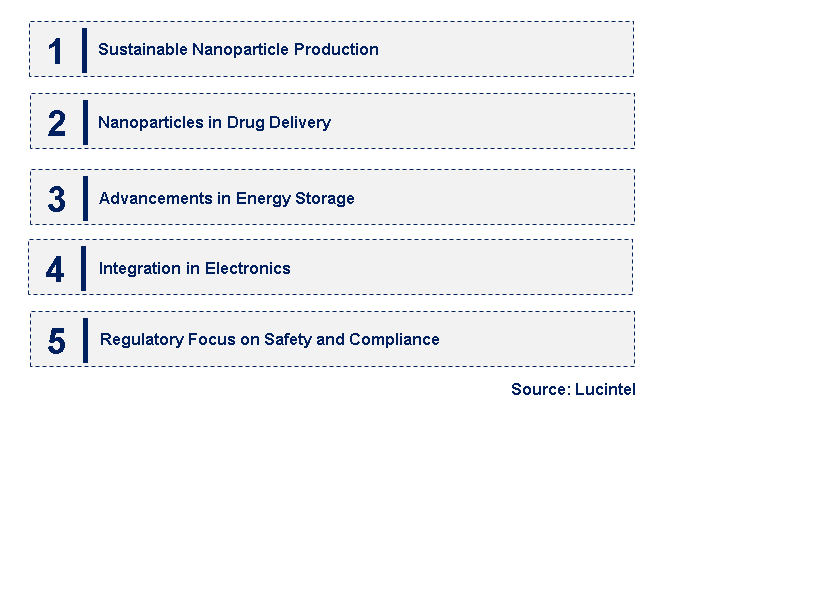
• Sustainable nanoparticle production: There is a growing emphasis on eco-friendly synthesis methods for producing metal and metal oxide nanoparticles. Techniques such as green chemistry and biogenic approaches are gaining traction, reducing environmental impact. This trend is attracting regulatory support and meeting consumer demands for sustainable products, making it a key driver for market growth.
• Nanoparticles in drug delivery: The use of nanoparticles in drug delivery systems is rapidly expanding. Innovations in targeting and controlled release mechanisms are enhancing therapeutic efficacy, particularly in cancer treatment. This trend is driving investment in research and development, enabling pharmaceutical companies to leverage nanoparticles for safer and more effective therapies.
• Advancements in energy storage: Metal and metal oxide nanoparticles are increasingly being utilized in energy storage applications, particularly in batteries and supercapacitors. These nanoparticles enhance energy density and charge/discharge rates. As demand for efficient energy storage solutions rises, this trend is set to drive significant growth in the market, especially in renewable energy technologies.
• Integration in electronics: The integration of nanoparticles in electronic components is transforming the electronics industry. Their unique electrical properties enable the development of smaller, more efficient devices. This trend is fostering innovation in the production of sensors, conductive inks, and other electronic applications, enhancing the functionality and performance of consumer electronics.
• Regulatory focus on safety and compliance: With the growing use of nanoparticles, regulatory bodies are increasing scrutiny on their safety and environmental impact. This trend is leading to the establishment of stricter guidelines for the production and application of nanoparticles. Companies that proactively address these regulatory challenges are likely to gain a competitive edge and build consumer trust. These emerging trends are reshaping the metal and metal oxide nanoparticle market by promoting sustainability, enhancing functionalities, and expanding applications. As industries adapt to these changes, the market is poised for substantial growth driven by innovation and consumer demand.
• Innovative production techniques: Recent advancements in production techniques are improving the efficiency and scalability of nanoparticle synthesis. Methods such as sol-gel processing and hydrothermal synthesis are being refined to produce high-quality nanoparticles with controlled size and morphology, enhancing their applicability in sectors like electronics and healthcare.
• Biocompatible nanoparticles: The development of biocompatible metal and metal oxide nanoparticles is gaining traction in the biomedical field. Recent studies focus on synthesizing nanoparticles that are safe for human use, particularly for drug delivery and imaging applications. These innovations are paving the way for advanced therapeutic solutions, addressing key challenges in modern medicine.
• Environmental applications: There is an increasing focus on utilizing nanoparticles for environmental remediation. Recent developments include the use of metal oxides for catalyzing reactions that degrade pollutants in water and air. This trend is not only addressing environmental concerns but also creating new market opportunities for companies specializing in green technologies.
• Nanoparticles in coatings: The incorporation of metal and metal oxide nanoparticles in coatings is enhancing their properties, such as scratch resistance, antimicrobial effects, and UV protection. Recent advancements in this area are driving demand in industries like automotive, aerospace, and construction, as manufacturers seek durable and high-performance coatings.
• Research collaborations: Collaborative efforts between academic institutions and industry players are accelerating innovation in the nanoparticle market. Recent partnerships aim to leverage expertise and resources to explore novel applications and improve production techniques. These collaborations are fostering a dynamic research environment, enhancing the overall growth of the market. These recent developments are significantly impacting the metal and metal oxide nanoparticle market by driving innovation, expanding applications, and addressing safety and environmental concerns. This evolution positions the market for sustained growth as industries continue to explore the potential of nanoparticles.
• Healthcare innovations: The healthcare sector presents significant growth opportunities for metal and metal oxide nanoparticles, particularly in drug delivery and imaging. Companies can develop targeted delivery systems that enhance treatment efficacy and reduce side effects. As the demand for personalized medicine grows, the potential for nanoparticles in this field continues to expand.
• Energy applications: Nanoparticles are increasingly used in energy applications, particularly in batteries and fuel cells. Innovations that improve energy storage efficiency and reduce charging times are in high demand. Manufacturers can capitalize on this trend by developing advanced nanoparticle solutions that enhance the performance of energy systems, aligning with global renewable energy goals.
• Environmental remediation: The environmental sector is ripe for growth as the demand for sustainable solutions rises. Metal and metal oxide nanoparticles can be employed for water purification and pollutant degradation. Companies focusing on developing effective and eco-friendly remediation technologies can capture a significant market share, addressing pressing environmental challenges.
• Advanced coatings: The demand for high-performance coatings is driving opportunities in the coatings industry. Incorporating nanoparticles can enhance properties such as durability, corrosion resistance, and antimicrobial activity. Manufacturers can innovate in this space by creating specialized coatings for automotive, aerospace, and construction applications, boosting their market presence.
• Electronics miniaturization: The trend toward miniaturization in electronics creates growth opportunities for nanoparticles in producing smaller, more efficient devices. Companies can develop conductive inks and components that leverage nanoparticle properties for enhanced performance. This focus on innovation aligns with the evolving needs of the electronics market, driving demand for advanced materials. These strategic growth opportunities in the metal and metal oxide nanoparticle market are opening new avenues for innovation and expansion. As industries adapt to emerging technologies and changing consumer demands, the market is poised for substantial growth driven by these developments.
• Technological advancements: Continuous innovations in nanoparticle synthesis and characterization are driving market growth. New production methods enhance quality and scalability, enabling the development of high-performance nanoparticles. These advancements allow industries to explore novel applications, boosting demand and market potential across sectors such as electronics, healthcare, and environmental remediation.
• Growing applications: The increasing adoption of metal and metal oxide nanoparticles in diverse applications is a significant driver. From healthcare to energy storage and environmental solutions, nanoparticles are being utilized for their unique properties. As industries seek innovative materials to enhance product performance, the demand for nanoparticles is expected to rise, supporting market expansion.
• Investment in research and development: Growing investments in R&D are accelerating innovation in the nanoparticle market. Governments and private entities are funding research initiatives to explore new applications and improve existing technologies. This focus on innovation fosters a competitive landscape, encouraging companies to develop cutting-edge solutions that meet market demands.
• Environmental awareness: Heightened awareness of environmental issues is driving the demand for sustainable solutions, including eco-friendly nanoparticles. Companies that prioritize green production methods and applications are gaining a competitive edge. This trend is pushing the industry toward more sustainable practices, influencing consumer choices and regulatory frameworks.
• Global market expansion: The increasing globalization of trade is facilitating the growth of the nanoparticle market. Emerging economies are investing in nanotechnology, creating new opportunities for manufacturers to expand their reach. As markets develop in regions like Asia-Pacific and Latin America, companies can capitalize on the growing demand for nanoparticles in these areas. Challenges in the metal and metal oxide nanoparticle market are:
• Regulatory hurdles: Navigating the regulatory landscape surrounding nanoparticles can be challenging for manufacturers. Stringent safety and environmental regulations require significant investment in compliance efforts. Failure to meet these regulations can result in penalties and market restrictions, posing a risk to companies operating in this space.
• Production costs: High production costs associated with advanced nanoparticle synthesis can limit market accessibility for some manufacturers. The need for specialized equipment and materials increases operational expenses, impacting profit margins. Companies must find ways to optimize production processes and reduce costs to remain competitive.
• Market competition: The metal and metal oxide nanoparticle market is becoming increasingly competitive, with numerous players vying for market share. This competitive landscape can lead to price wars and reduced profit margins. Companies must focus on product differentiation, innovation, and effective marketing strategies to maintain their competitive edge. The drivers and challenges impacting the metal and metal oxide nanoparticle market significantly shape industry dynamics. Technological advancements and growing applications create opportunities, while regulatory hurdles, production costs, and market competition require careful navigation. Understanding these factors is essential for stakeholders aiming to thrive in this evolving market landscape.
• American Elements
• Nanoshell
• Meliorum Technologies
• Eprui Nanoparticles & Microspheres
• NanoScale
• Reinste Nanoventures
• Sigma Aldrich
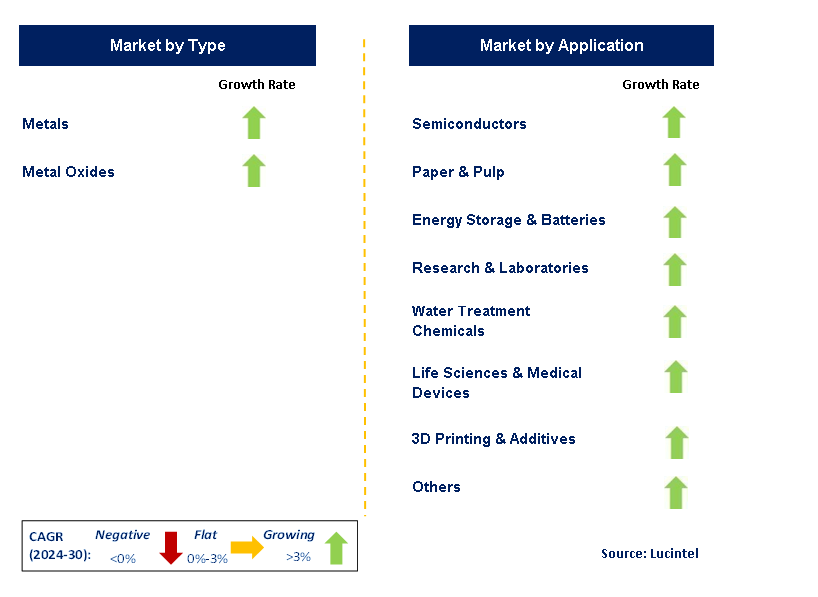
• Metals
• Metal Oxides
• Powder/Granular
• Liquid/Dispersions
• Semiconductors
• Paper & Pulp
• Energy Storage & Batteries
• Research & Laboratories
• Water Treatment Chemicals
• Life Sciences & Medical Devices
• Others
• Electrical & Electronics
• Aerospace & Defense
• Automotive Industry
• Medical & Health Care
• Paints & Coatings
• Textile & Fabric
• Power & Energy
• Chemical Industry
• North America
• Europe
• Asia Pacific
• The Rest of the World


• American Elements
• Nanoshell
• Meliorum Technologies
• Eprui Nanoparticles & Microspheres
• NanoScale
• Reinste Nanoventures
• Sigma Aldrich Q5. Which metal and metal oxide nanoparticle market segment will be the largest in future? Answer: Lucintel forecasts that metal will remain the larger segment over the forecast period due to diverse range of uses. Q6. In metal and metal oxide nanoparticle market, which region is expected to be the largest in next 5 years? Answer: APAC will remain the largest region over the forecast period due to rising demand in the electronics sector. Q7. Do we receive customization in this report? Answer: Yes, Lucintel provides 10% customization without any additional cost.


Choose a license that fits your team. Instant PDF delivery.
Prices exclude taxes. Instant delivery. Custom licensing available on request.
Market Report · September 3, 2026
Market Report · July 22, 2026
Market Report · July 22, 2026
Trusted partner for strategic intelligence and business growth


Receive a complimentary market analysis tailored to your industry. Our analysts will identify key growth opportunities and competitive dynamics specific to your business.

Market size, growth rate, and key trend analysis for your specific sector.

Top competitor positioning and market share analysis.

Strategic recommendations backed by data-driven insights.
Get curated market intelligence and competitive moves straight to your inbox.
By subscribing, you agree to receive our monthly insights. Unsubscribe anytime.
Receive a complimentary market analysis tailored to your industry. Our analysts will identify key growth opportunities and competitive dynamics specific to your business.
Market size, growth rate, and key trend analysis for your specific sector.
Top competitor positioning and market share analysis.
Strategic recommendations backed by data-driven insights.
Get curated market intelligence, emerging trends, and competitive moves straight to your inbox each month.
By subscribing, you agree to receive our monthly insights. Unsubscribe anytime.
We'll send your sample report shortly.