
Market Report · July 22, 2026

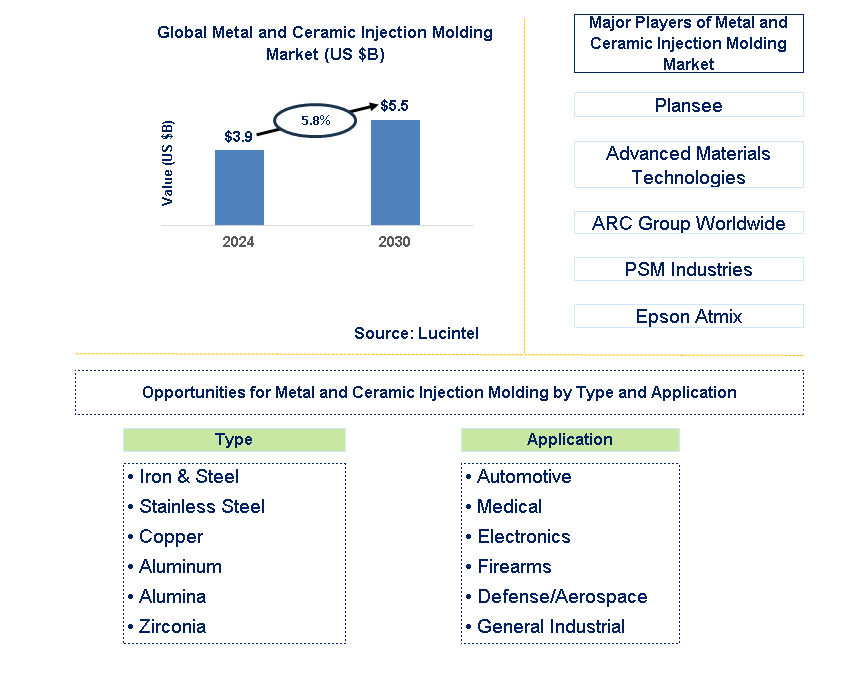
Key data points: The market size in 2030 = $5.5 billion, growth forecast = 5.8% annually next 6 years. Scroll below to get more insights. This market report covers trends, opportunities, and forecast in the global metal and ceramic injection molding market to 2030 by type (iron & steel, stainless steel, copper, aluminum, alumina, and zirconia), application (automotive, medical, electronics, firearms, defense/aerospace, and general industrial), and region (North America, Europe, Asia Pacific, and the Rest of the World)
We'll send your sample report shortly.
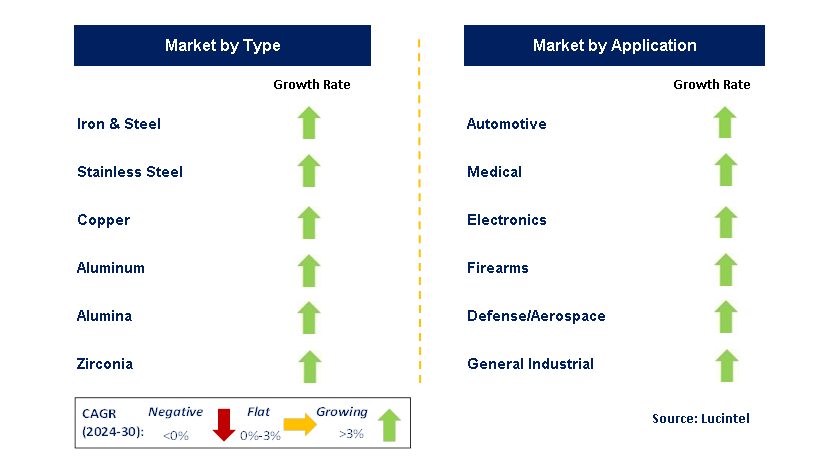
• Lucintel forecasts that stainless steel will remain the largest segment over the forecast period because high-quality stainless steel is easily accessible, and it has greater strength, flexibility, durability, and resistance to rust.
• APAC is expected to witness highest growth over the forecast period due to growing demand for metal and ceramic injection molding in this region.
• United States: The focus of the U.S. MIM/CIM market, therefore, is more on advanced manufacturing techniques and automation to drive efficiency and bring down production costs. The companies are now investing in R&D for innovative materials that enhance the mechanical properties of molded parts. Rising demand for lightweight yet durable components in vehicle and aerospace applications also drives the demand for MIM processes. Increasing regulatory support for sustainable practices is also forcing manufacturers to manufacture using more environmentally friendly manufacturing solutions.
• China: The paramount manufacturing strength coupled with cost benefit factors in China enables it to continue dominating the global MIM market. Moreover, recent investments in high-precision injection molding technologies increase the capacities to face the growing demand from the domestic and international fronts. Moreover, research into new materials like titanium and specialized ceramics takes a great deal of attention for bettering product offerings; this focuses the government initiatives on quality standards within the MIM sector.
• Germany: The German MIM/CIM market is highly innovation and quality-centric, and very much focus on the engineering with high precision. The last few years have introduced hybrid materials consisting of high-advanced compositions including metals and ceramics, enabling upgrades in terms of performance used in industrial applications. Industry 4.0 especially in IoT and analytics is gaining tremendous momentum among German manufacturers. Investment in sustainability is concentrated in recycling technology and ecologically friendly practices prevalent in Germany, in-line with environmental laws in Europe.
• India: Demand for MIM in the country is increasing manifold, and there is a notable growth of demand from the automotive, aerospace, and medical industries. Local manufacturers are also collaborating with foreign companies to advance their capabilities in terms of technology. Training and skill upgradation of the workforce in the MIM field are undertaken on an enormous scale. The efforts by the government as part of "Make in India" have indeed strengthened indigenous production and reduced dependability on imports, thus fueling further innovation in manufacturing activity.
• Japan: The Japanese MIM/CIM market is a very advanced and highly quality-focused industry. For example, relatively recently, new high-performance ceramic injection molding processes have come to the forefront, particularly oriented toward electronics and automotive applications. This led the Japanese companies to substantially invest in the R&D sector in developing new materials and improving production efficiency. The market is using robotics and automation technology to enhance precision and reduce labor costs. The quality control is also stringent to meet the world-class quality standards required for the products manufactured here in Japan, making it one of the world's manufacturing excellence destinations.
• Sustainability initiatives: Eco-friendly manufacturing and recycling technologies will be the emerging trend in the MIM/CIM market. This will mean incorporating materials that are considered green or environment-friendly and recycling technology to reduce waste and minimize environmental impact. While this has compliance benefits, it also appeals to consumers who are sensitive to the environment, further helping to enhance brand reputation and marketability.
• Advanced Materials Development: New and advanced materials for MIM and CIM processes are currently under development. Innovations in composite materials and high-strength alloys continue to expand the applications of molded parts - aerospace and automotive sectors included. Their superior mechanical properties bring together enhanced performance and durability of products.
• Automation and Industry 4.0: The landscape of MIM/CIM is fundamentally being reshaped by the integration of automation and smart manufacturing. IoT-equipped machines as well as data analytics are improving production processes, cutting down on loss of time, and ensuring higher levels of quality control. This does indeed enhance overall efficiency, cut production costs, and makes it easier to be responsive in the market.
• Market Expansion in Global Geographies: The MIM/CIM market is expanding at a great rate into emerging economies, mainly owing to an increase in industrialization and the demand for lightweight components. India and Brazil are today leading countries, opening new growth perspectives for manufacturers. This development enhances the level of competitiveness and continues to boost investments in local production facilities.
• Customization and On-Demand Manufacturing: Greater demand for customized and on-demand products is one of the shaping forces for the MIM/CIM market. It makes possible the achievement of specific customer requirements, leads to shorter lead times and greater design freedom, thus improving the satisfaction of customers and increasing the competitiveness of the market.
Thereby, these trends collectively reshape the MIM/CIM market, driving innovation, improving sustainability, and enhancing global competitiveness.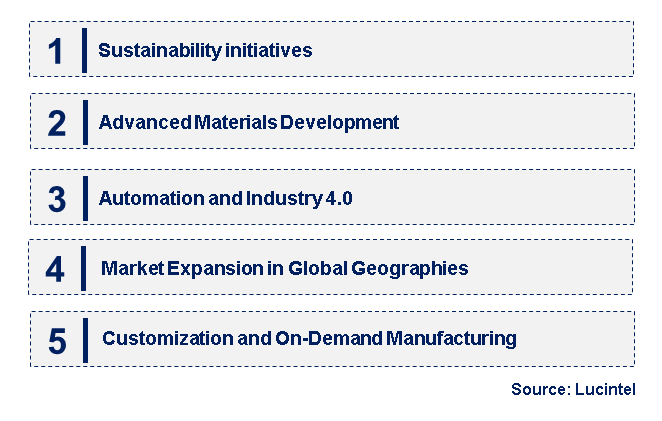
• Technological Advancements: Improved injection molding technologies-innovations to be specific include advanced molding machines and sophisticated software to optimize the process. These improve the efficiency and precision of production, allowing for faster cycle times and greater output rates in order to meet the rising demand for complex components.
• Material Innovations: New MIM/CIM capabilities include new metal and ceramic materials. High-performance alloys and biocompatible ceramics have direct application in the medical devices and aerospace industries, thus allowing manufacturers to produce parts with superior properties.
• Sustainability Focus: Most organizations have adopted the use of sustainable policies through recyclable process inputs in their production lines. This approach to ecologically friendly production is both legally compliant and in line with sustainable consumers' need for environmental-friendly products, which means more loyalty to their brands.
• Industry Collaborations: Interactions between MIM/CIM manufacturers and research institutions are promoting innovation through the new technologies as well as materials going to be developed, which will see the industry find its way forward into increased competitiveness in world markets.
• Reaching New Markets: Companies are increasingly expanding their operations into new markets, seizing the opportunity on burgeoning demand for MIM/CIM solutions. The strategy is further supported by effects of local investments and other kinds of partnerships, which enables companies to cater better to the varied needs of a customer base, thus improving the market presence.
These factors greatly influence the MIM/CIM market since they facilitate technological superiority, sustainability, and fuel growth in new areas.• Automobile Components: MIM/CIM market possess substantial opportunities for growth in the automobile sector since the demand for the lightweight and high strength components is increasing in the sector. With the advancement in material and process innovation, the demand for more fuel-efficient and performance-based components may be met, driving the automobile industry to implement such products.
• Medical Implants: The medical device industry tops the list of growth opportunities when talk turns to increased demand for precision-engineered parts. Advanced medical applications, such as surgical instruments and implants, have complex geometries and biocompatibility with MIM/CIM processes.
• Consumer Electronics: Consumer Electronics: Consumer electronics are another high growth area where MIM/CIM can prove to be highly profitable. Demand from mobile devices, like smartphones and wearables, for delivering lightweight rugged parts is shifting this market strongly towards high-quality molded components. This is an industrial opportunity for manufacturers.
• Aerospace Applications: Another critical growth industry is aerospace, where manufacturers move to reduce the weight of structures without reduction of strength and reliability. Safer and more efficient aircraft designs utilizing advanced materials manufactured by the MIM/CIM processes form new areas of industry innovation.
• Industrial Machinery: The industrial machinery market offers considerable opportunities to MIM/CIM providers of durable and high-performance components. At the same time, as this sector is increasingly moving toward automation and advanced manufacturing, the need for precision-engineering products is gaining momentum.
Thus, these growth opportunities are influencing the MIM/CIM market present and future, widening the base of applicability, driving innovation, and also enhancing overall competitiveness in the market.• Plansee
• Advanced Materials Technologies
• ARC Group Worldwide
• PSM Industries
• Epson Atmix
• CMG Technologies
• Indo-US MIM Tec
• Iron & Steel
• Stainless Steel
• Copper
• Aluminum
• Alumina
• Zirconia
• Automotive
• Medical
• Electronics
• Firearms
• Defense/Aerospace
• General Industrial
• North America
• Europe
• Asia Pacific
• The Rest of the World
• Lucintel forecasts that stainless steel will remain the largest segment over the forecast period because high-quality stainless steel is easily accessible, and it has greater strength, flexibility, durability, and resistance to rust.
• APAC is expected to witness highest growth over the forecast period due to growing demand for metal and ceramic injection molding in this region.


• Plansee
• Advanced Materials Technologies
• ARC Group Worldwide
• PSM Industries
• Epson Atmix
• CMG Technologies
• Indo-US MIM Tec
Q6. Which metal and ceramic injection molding market segment will be the largest in future?

Choose a license that fits your team. Instant PDF delivery.
Prices exclude taxes. Instant delivery. Custom licensing available on request.
Market Report · July 22, 2026
Market Report · July 22, 2026
Market Report · July 22, 2026
Trusted partner for strategic intelligence and business growth


Receive a complimentary market analysis tailored to your industry. Our analysts will identify key growth opportunities and competitive dynamics specific to your business.

Market size, growth rate, and key trend analysis for your specific sector.

Top competitor positioning and market share analysis.

Strategic recommendations backed by data-driven insights.
Get curated market intelligence and competitive moves straight to your inbox.
By subscribing, you agree to receive our monthly insights. Unsubscribe anytime.
Receive a complimentary market analysis tailored to your industry. Our analysts will identify key growth opportunities and competitive dynamics specific to your business.
Market size, growth rate, and key trend analysis for your specific sector.
Top competitor positioning and market share analysis.
Strategic recommendations backed by data-driven insights.
Get curated market intelligence, emerging trends, and competitive moves straight to your inbox each month.
By subscribing, you agree to receive our monthly insights. Unsubscribe anytime.
We'll send your sample report shortly.