
Market Report · July 29, 2026

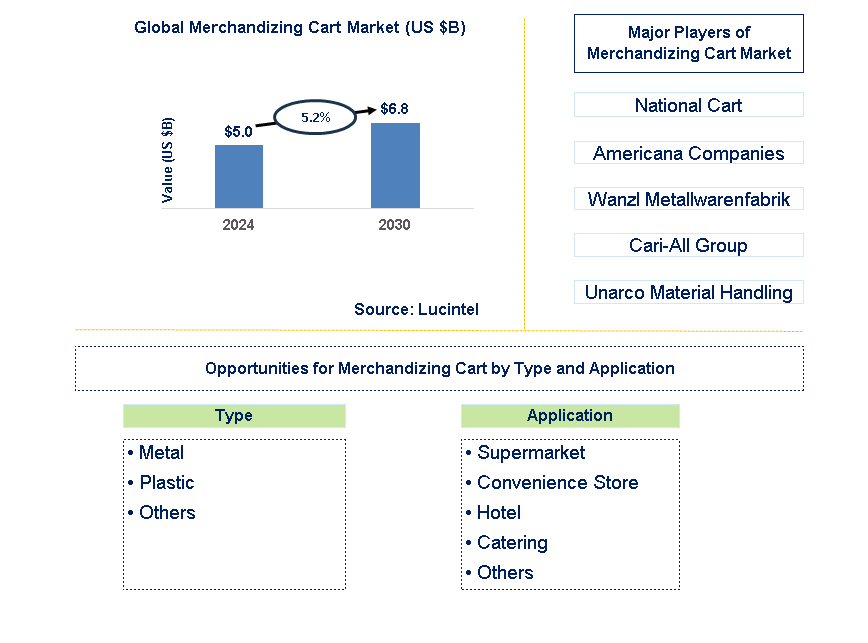
Key data points: The market size in 2030 = $6.8 billion, growth forecast = 5.2% annually for the next 6 years. Scroll below to get more insights. This market report covers trends, opportunities, and forecasts in the global merchandizing cart market to 2030 by type (metal, plastic, and others), application (supermarket, convenience store, hotel, catering, and others), and region (North America, Europe, Asia Pacific, and the Rest of the World)
We'll send your sample report shortly.
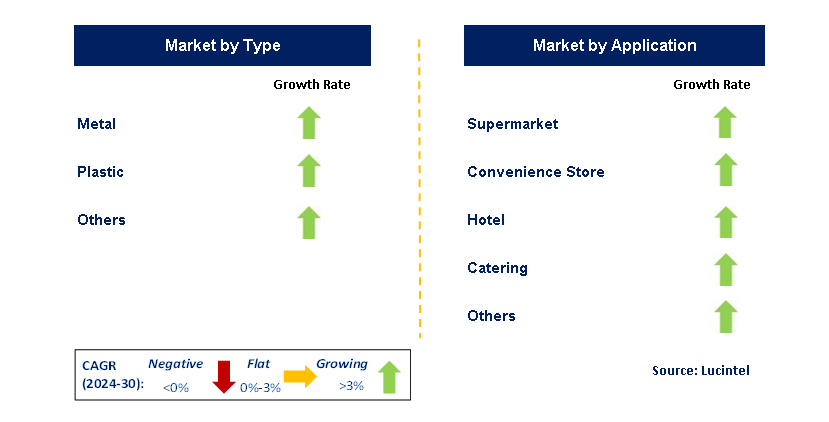
• Lucintel forecasts that, within the type category, the metal is expected to witness higher growth over the forecast period.
• Within the application category, supermarket is expected to witness the highest growth.
• In terms of regions, APAC is expected to witness the highest growth over the forecast period. Gain valuable insights for your business decisions with our comprehensive 150+ page report.
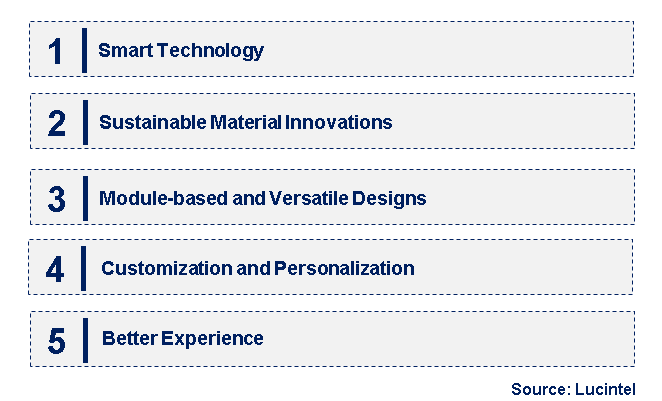
• Smart Technology: The trend of incorporating smart technology into merchandising carts enables inventory tracking, digital signage, and mobile payment options. These features enhance customer engagement and operational efficiency while improving inventory management for retailers.
• Sustainable Material Innovations: The increasing environmental awareness has compelled producers to offer diverse eco-friendly merchandising carts made from environmentally friendly materials. This aligns with consumer orientation toward green products, leading retailers to adopt more sustainable policies and enhance their brand imagery through the consumption of eco-friendly products by informed customers.
• Module-based and Versatile Designs: Modular merchandising carts that can be easily reconfigured are highly popular. Retailers appreciate the flexibility that allows them to adapt to dynamic promotions and product lines. This facilitates changes in store layouts that improve customer flow and enhance the shopping experience.
• Customization and Personalization: The demand for customized merchandising carts is increasing, as business owners seek to differentiate themselves from their peers in a competitive marketplace. Custom designs that communicate brand identity and aesthetic qualities attract more customers, thereby driving sales through effective promotion.
• Better Experience: Merchandizing carts are becoming innovative tools for improving user experience. Latest ergonomic designs and improved maneuverability, along with integrated technology, characterize them. Customer satisfaction will improve, resulting in longer in-store visits, which directly affects sales. These trends will significantly change the Merchandizing Carts Market, support innovation, and develop customer engagement—all in line with evolving retail strategies.
• Launch of Smart Carts: The recently launched smart merchandising cart equipped with built-in sensors and RFID technology aids in real-time inventory tracking and management. These technologies reduce the risk of inventory losses and enhance operational productivity.
• Sustainable Material Innovations: Manufacturers are now using biodegradable and recyclable materials to produce carts. This move toward sustainability meets the needs of environmentally conscious customers and ensures compliance with regulations, enriching the business's reputation in the marketplace.
• Collaborations for Custom Solutions: Rising partnerships between retailers and manufacturers focus on developing customized solutions for specific retail environments. Creating carts that meet unique operational requirements improves merchandising effectiveness through collaboration.
• Increased Integration with E-commerce: The growing e-commerce trend has led to merchandising carts designed for click-and-collect services. This integration allows for seamless online and offline experiences, enabling retailers to meet changing customer preferences.
• Implementation of AI and Data Analytics: Retailers utilize AI and data analytics to inform cart designs and placement strategies. Understanding customer behavior enhances merchandising strategies, resulting in increased sales and customer engagement. In conclusion, these trends foster innovation, sustainability, and improved customer experiences, driving growth and competitiveness in the Merchandizing Carts Market.
• In-Store Promotions: Promotions in retail stores through eye-catching merchandise carts encourage impulse buying and increase sales. This can be effectively executed in high-traffic areas with limited-time offers or new products on display. Greater visibility and convenience translate to better promotional activities and increased chances for shoppers to try a variety of items, thus generating revenue.
• E-commerce Fulfillment: As e-commerce grows, merchandising carts with click-and-collect services present significant opportunities. Retailers can enhance efficiency and customer satisfaction for online-order fulfillment with carts designed for pick-up. This approach streamlines the shopping experience, seamlessly connecting online and in-store shopping.
• Brand Identity Personalization: Custom-made merchandising carts can represent a specific store brand, creating a unique identity in a busy market. This design can help attract and retain customers, fostering brand loyalty. Instead of merely serving as eye candy, these carts also assist customers in making preferred choices, thereby increasing sales.
• Connected Technology/Smart Devices: Smart technologies integrated into merchandising carts present substantial growth opportunities. Features such as mobile payment systems, inventory tracking, and digital displays enhance operational efficiency and customer engagement. The use of technology creates seamless and engaging shopping experiences, boosting sales and customer retention.
• Sustainability Focus: There is a growing demand from environmentally conscious consumers for more ecological merchandising carts made from eco-friendly materials. Retailers can capitalize on this trend by embracing sustainable practices and promoting their brands to consumers whose choices are influenced by environmental factors. This focus on sustainability aligns with corporate social responsibility goals and resonates with consumer preferences. These strategic growth opportunities are transforming the Merchandizing Carts Market through innovation, enhanced customer experiences, and a focus on sustainability. By addressing challenges, retailers can foster brand loyalty, increase sales, and carve out space in the evolving retail landscape.
• Rising Retail Competition: Increased competition in retail necessitates better merchandising solutions. Retailers are investing more in effective carts to enhance product visibility and customer interaction, ultimately driving sales.
• Moving Toward E-commerce: As e-commerce rapidly grows, traditional retailers must adapt their in-store strategies. Hybrid shopping experiences provided by merchandising carts blur the lines between online and offline shopping, enabling businesses to reach a larger consumer base.
• Consumer Demand for Experiential Shopping: Shopper expectations are evolving, and today's consumers seek enjoyable shopping experiences. Interactive displays and promotional merchandising carts address changing shopper needs, compelling retailers to adopt modern retail solutions that enhance customer satisfaction. Challenges in the merchandizing cart market include:
• Supply Chain Disruptions: Current events have exacerbated supply chain problems in the global market, slowing down production lines for merchandising carts. Such delays increase production costs.
• High Initial Investment: The development and implementation of merchandising carts can be expensive for small retailers. Significant initial investments hinder access to better products, reducing competitive positioning.
• Change in Consumer Preferences: Rapid shifts in consumer preferences require merchandising carts to remain adaptable. Trends can change quickly, presenting challenges for retailers. They must be agile and continuously innovate to stay ahead, adapting cart designs to meet evolving consumer needs. These driving forces and challenges in the Merchandizing Carts Market influence strategies and investments, strengthening resilience and adaptability in a dynamic retail environment.
• National Cart
• Americana Companies
• Wanzl Metallwarenfabrik
• Cari-All Group
• Unarco Material Handling
• Metal
• Plastic
• Others
• Supermarket
• Convenience Store
• Hotel
• Catering
• Others
• North America
• Europe
• Asia Pacific
• The Rest of the World
• United States: The U.S. market for merchandising carts is on the rise, as discerning customers demand multi-functional display solutions. Retailers are opting for customized in-store merchandising carts that facilitate customer engagement and streamline inventory management. Digital signage systems and mobile payment methods are widespread, providing interesting shopping experiences that enhance sales and customer satisfaction.
• China: The merchandising cart market in China is flourishing, driven by a growing retail sector and shopping malls. Merchandising carts are increasingly preferred by retailers to attract attention to products and create an engaging shopping atmosphere while promoting them effectively.
• Germany: In Germany, there is a focus on eco-friendly merchandising carts. Producers emphasize sustainable materials and energy-efficient designs. Retailers prioritize sustainability, making these innovative carts desirable for environmentally conscious consumers. Additionally, modular designs allow flexibility in store layouts, enabling retailers to adapt quickly to changes in product lines and seasonal promotions, thereby enhancing overall sales performance.
• India: In India, the Merchandizing Carts Market is gaining momentum as modern retail formats expand. Retailers are increasingly utilizing mobile carts to enhance in-store visibility and promote a wide range of products. Designs are tailored to local market needs, being affordable yet efficient. Additionally, technological integrations, such as mobile apps for tracking cart usage and inventory levels, are gradually being implemented to further improve operational efficiency.
• Japan: In the Japanese market, merchandising carts are highly advanced and compact, designed for limited retail spaces. Retailers seek smart carts with digital interfaces that engage customers and streamline shopping. The lightweight materials and ergonomic designs of the merchandising carts make them easy to maneuver, attracting more customers and enhancing the overall aesthetic appeal in retail environments.


• National Cart
• Americana Companies
• Wanzl Metallwarenfabrik
• Cari-All Group
• Unarco Material Handling Q6. Which merchandizing cart market segment will be the largest in future? Answer: Lucintel forecasts that metal is expected to witness a higher growth over the forecast period. Q7. In merchandizing cart market, which region is expected to be the largest in next 5 years? Answer: APAC is expected to witness the highest growth over the forecast period. Q.8 Do we receive customization in this report? Answer: Yes, Lucintel provides 10% customization without any additional cost.


Choose a license that fits your team. Instant PDF delivery.
Prices exclude taxes. Instant delivery. Custom licensing available on request.
Market Report · July 29, 2026
Market Report · July 20, 2026
Market Report · July 20, 2026
Trusted partner for strategic intelligence and business growth


Receive a complimentary market analysis tailored to your industry. Our analysts will identify key growth opportunities and competitive dynamics specific to your business.

Market size, growth rate, and key trend analysis for your specific sector.

Top competitor positioning and market share analysis.

Strategic recommendations backed by data-driven insights.
Get curated market intelligence and competitive moves straight to your inbox.
By subscribing, you agree to receive our monthly insights. Unsubscribe anytime.
Receive a complimentary market analysis tailored to your industry. Our analysts will identify key growth opportunities and competitive dynamics specific to your business.
Market size, growth rate, and key trend analysis for your specific sector.
Top competitor positioning and market share analysis.
Strategic recommendations backed by data-driven insights.
Get curated market intelligence, emerging trends, and competitive moves straight to your inbox each month.
By subscribing, you agree to receive our monthly insights. Unsubscribe anytime.
We'll send your sample report shortly.