
Market Report · July 31, 2026

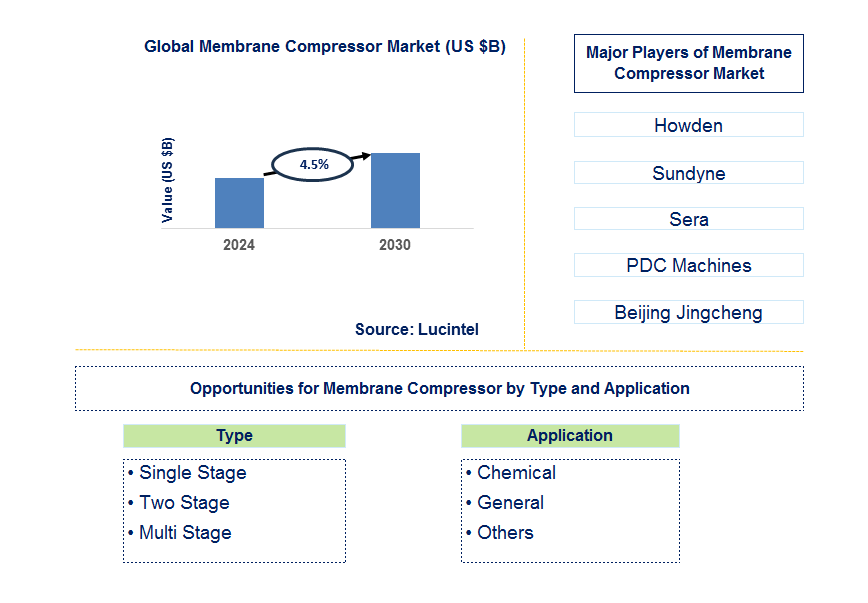
Key data points: The growth forecast = 4.5% annually next 6 years. Scroll below to get more insights. This market report covers trends, opportunities, and forecast in the global membrane compressor market to 2030 by type (single stage, two stage, and multi stage), application (chemical, general, and others), and region (North America, Europe, Asia Pacific, and the Rest of the World)
We'll send your sample report shortly.
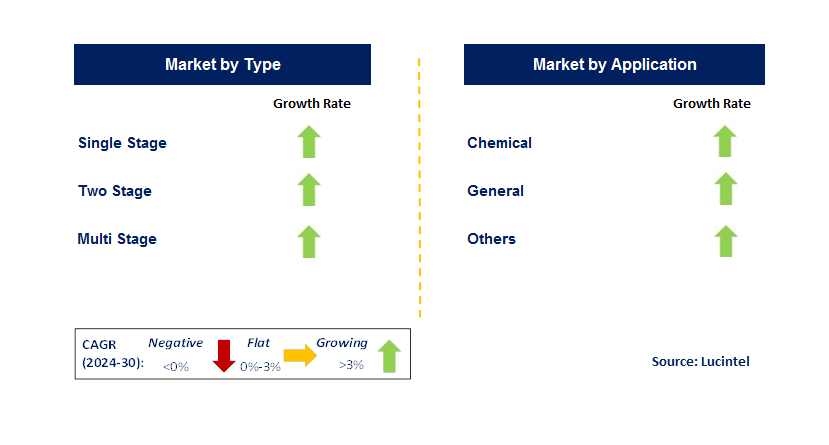
• Lucintel forecasts that, within the type category, single stage is expected to witness the highest growth over the forecast period.
• Within the application category, chemical is expected to witness the higher growth.
• In terms of regions, APAC is expected to witness highest growth over the forecast period. Gain valuable insights for your business decisions with our comprehensive 150+ page report.
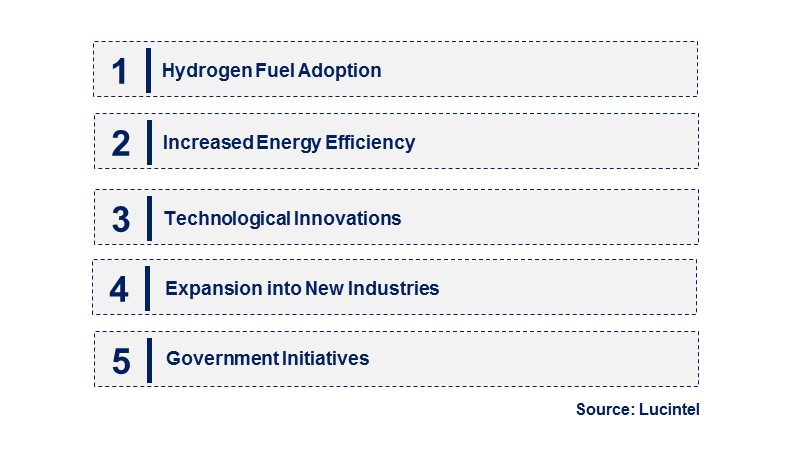
• Hydrogen Fuel Adoption: As global demand for hydrogen fuel rises, membrane compressors are becoming integral to production and storage processes. This trend is driven by countries' focus on cleaner energy solutions and decarbonization.
• Increased Energy Efficiency: Industries are investing in compressors that offer better energy efficiency. This shift is due to rising energy costs and the need to reduce emissions, pushing companies to adopt advanced membrane compressor technologies.
• Technological Innovations: Automation, AI, and IoT are transforming the membrane compressor market. These technologies help monitor compressor performance in real-time, enhancing efficiency and lowering operational costs.
• Expansion into New Industries: Membrane compressors are finding applications beyond traditional sectors like energy and chemicals. Industries such as healthcare, food processing, and automotive are increasingly adopting these compressors.
• Government Initiatives: Governments worldwide are offering incentives to companies that adopt green technology. This has spurred innovation and growth in the membrane compressor market, as manufacturers align with new regulations. In conclusion, the membrane compressor market is undergoing significant transformation, driven by advancements in green energy solutions, a growing demand for hydrogen technologies, and enhanced compressor efficiency. These evolving trends are redefining the applications of membrane compressors across diverse industries. Recent Developments Content The membrane compressor market has seen key developments that are shaping its future. These advancements include innovations in energy efficiency, green technology, and enhanced product designs, positioning the industry for substantial growth.
• Hydrogen Compressor Technologies: Several companies have focused on developing compressors for hydrogen storage and fuel cell applications, reflecting the rising global interest in hydrogen energy as a sustainable alternative.
• AI Integration: Manufacturers are integrating artificial intelligence into compressor systems to monitor and optimize performance, reducing energy waste and increasing operational efficiency.
• Compact Design Innovations: Membrane compressors are becoming more compact, enhancing portability and reducing space requirements in industrial applications. This development is crucial for industries that need high performance with minimal space.
• Collaborative Efforts: Partnerships between governments and industries have led to advancements in compressor technology, focusing on reducing carbon footprints. This collaboration accelerates the adoption of eco-friendly compressor solutions.
• Sustainability Focus: The emphasis on reducing environmental impact is pushing manufacturers to design compressors that consume less energy while maintaining high performance, making them more attractive to industries focused on sustainability. In summary, the membrane compressor market is poised for substantial growth, fueled by key developments in energy efficiency, green technology, and improved product designs. These innovations are shaping the industry's future and expanding its potential across various sectors.
• Hydrogen Compressor Technologies: Several companies have focused on developing compressors for hydrogen storage and fuel cell applications, reflecting the rising global interest in hydrogen energy as a sustainable alternative.
• AI Integration: Manufacturers are integrating artificial intelligence into compressor systems to monitor and optimize performance, reducing energy waste and increasing operational efficiency.
• Compact Design Innovations: Membrane compressors are becoming more compact, enhancing portability and reducing space requirements in industrial applications. This development is crucial for industries that need high performance with minimal space.
• Collaborative Efforts: Partnerships between governments and industries have led to advancements in compressor technology, focusing on reducing carbon footprints. This collaboration accelerates the adoption of eco-friendly compressor solutions.
• Sustainability Focus: The emphasis on reducing environmental impact is pushing manufacturers to design compressors that consume less energy while maintaining high performance, making them more attractive to industries focused on sustainability. In summary, the membrane compressor market is poised for substantial growth, fueled by key developments in energy efficiency, green technology, and improved product designs. These innovations are shaping the industry's future and expanding its potential across various sectors.
• Hydrogen Fuel Cells: Membrane compressors are critical in hydrogen fuel cell systems. As the hydrogen economy grows, compressors will play a vital role in the production, storage, and transportation of hydrogen, particularly in energy applications.
• Renewable Energy Storage: Membrane compressors are integral to energy storage solutions, particularly for renewable energy sources like wind and solar. As energy storage becomes a focus, compressor demand will increase.
• Pharmaceutical Applications: In the healthcare sector, membrane compressors are increasingly used for the production of medical gases and in life sciences applications, offering opportunities for growth in these markets.
• Food & Beverage Industry: Membrane compressors are used in food processing for nitrogen generation and packaging. With the increasing demand for clean and efficient food processing methods, this sector presents growth potential for the membrane compressor market.
• Automotive Industry: The rise in electric and fuel-efficient vehicles has driven demand for membrane compressors in automotive manufacturing, especially in processes that involve hydrogen fuel and energy-efficient components. In conclusion, membrane compressors are increasingly being adopted across multiple industries, with notable growth opportunities arising in renewable energy, healthcare, food processing, automotive, and chemical sectors. This expanding adoption highlights the versatility and importance of membrane compressors in supporting diverse applications.
• Hydrogen Economy: The global push toward hydrogen fuel has significantly increased the demand for membrane compressors.
• Energy Efficiency Standards: Rising energy costs and stringent environmental regulations are pushing industries to adopt more efficient compressor technologies.
• Technological Advancements: Automation, AI, and IoT are enhancing the performance of membrane compressors, leading to improved operational efficiency.
• Industrial Decarbonization: Industries are shifting toward cleaner technologies, and membrane compressors are essential for reducing carbon footprints in gas applications.
• Government Incentives: Governments are providing financial support and incentives to companies that invest in green technology, boosting demand for membrane compressors. Challenges:
• High Initial Costs: The high upfront investment required for advanced membrane compressors can deter smaller industries from adopting them.
• Maintenance Complexities: Membrane compressors require specialized maintenance, which can lead to operational downtime and higher costs.
• Technological Barriers: Some regions face limitations in adopting advanced compressor technologies due to a lack of technical expertise or infrastructure.
• Regulatory Compliance: Varying regulatory standards across regions pose challenges for companies that operate in multiple markets.
• Market Saturation: In highly developed markets, competition among manufacturers can lead to pricing pressures, limiting profitability.
• The membrane compressor market is witnessing robust growth driven by technological advancements, government initiatives, and the global shift toward cleaner energy. However, challenges such as high initial costs and regulatory complexities need to be addressed for the market to reach its full potential.
• Howden
• Sundyne
• Sera
• PDC Machines
• Beijing Jingcheng
• Andreas Hofer Hochdrucktechnik
• Mehrer Compression
• Mikuni Kikai Kogyo
• Aoki Works
• Beijing Huizhi
• Single Stage
• Two Stage
• Multi Stage
• Chemical
• General
• Others
• North America
• Europe
• Asia Pacific
• The Rest of the World
• United States: Advancements in green technology have driven the adoption of membrane compressors in energy sectors. The U.S. is focusing on renewable energy integration, enhancing compressor technologies to support hydrogen storage and clean energy applications, with the government funding multiple green initiatives.
• China: China is rapidly investing in hydrogen technology, leading to a surge in membrane compressor development. The Chinese government's focus on reducing carbon emissions has pushed the adoption of advanced compressors in industries like chemicals and energy.
• Germany: Germany’s membrane compressor market is centered around industrial decarbonization. German manufacturers are innovating in compressor designs for industrial gas applications, aligning with the country’s renewable energy goals and the push for a hydrogen economy.
• India: India's developments in membrane compressors focus on industrial efficiency and reducing reliance on conventional energy. There has been an increased demand for membrane compressors in industrial gas applications, supported by government initiatives aimed at improving energy use.
• Japan: Japan is focused on hydrogen fuel cell technology, which has accelerated innovations in membrane compressors. Companies in Japan are heavily investing in research and development to enhance compressor efficiency for renewable energy and hydrogen fuel sectors.


• Howden
• Sundyne
• Sera
• PDC Machines
• Beijing Jingcheng
• Andreas Hofer Hochdrucktechnik
• Mehrer Compression
• Mikuni Kikai Kogyo
• Aoki Works
• Beijing Huizhi Q5. Which membrane compressor market segment will be the largest in future? Answer: Lucintel forecasts that single stage is expected to witness the highest growth over the forecast period. Q6. In membrane compressor market, which region is expected to be the largest in next 5 years? Answer: APAC is expected to witness highest growth over the forecast period. Q.7 Do we receive customization in this report? Answer: Yes, Lucintel provides 10% customization without any additional cost.


Choose a license that fits your team. Instant PDF delivery.
Prices exclude taxes. Instant delivery. Custom licensing available on request.
Market Report · July 31, 2026
Market Report · July 22, 2026
Market Report · July 20, 2026
Trusted partner for strategic intelligence and business growth


Receive a complimentary market analysis tailored to your industry. Our analysts will identify key growth opportunities and competitive dynamics specific to your business.

Market size, growth rate, and key trend analysis for your specific sector.

Top competitor positioning and market share analysis.

Strategic recommendations backed by data-driven insights.
Get curated market intelligence and competitive moves straight to your inbox.
By subscribing, you agree to receive our monthly insights. Unsubscribe anytime.
Receive a complimentary market analysis tailored to your industry. Our analysts will identify key growth opportunities and competitive dynamics specific to your business.
Market size, growth rate, and key trend analysis for your specific sector.
Top competitor positioning and market share analysis.
Strategic recommendations backed by data-driven insights.
Get curated market intelligence, emerging trends, and competitive moves straight to your inbox each month.
By subscribing, you agree to receive our monthly insights. Unsubscribe anytime.
We'll send your sample report shortly.