
Report Feature
Medical Wellness Market Trends and Forecast
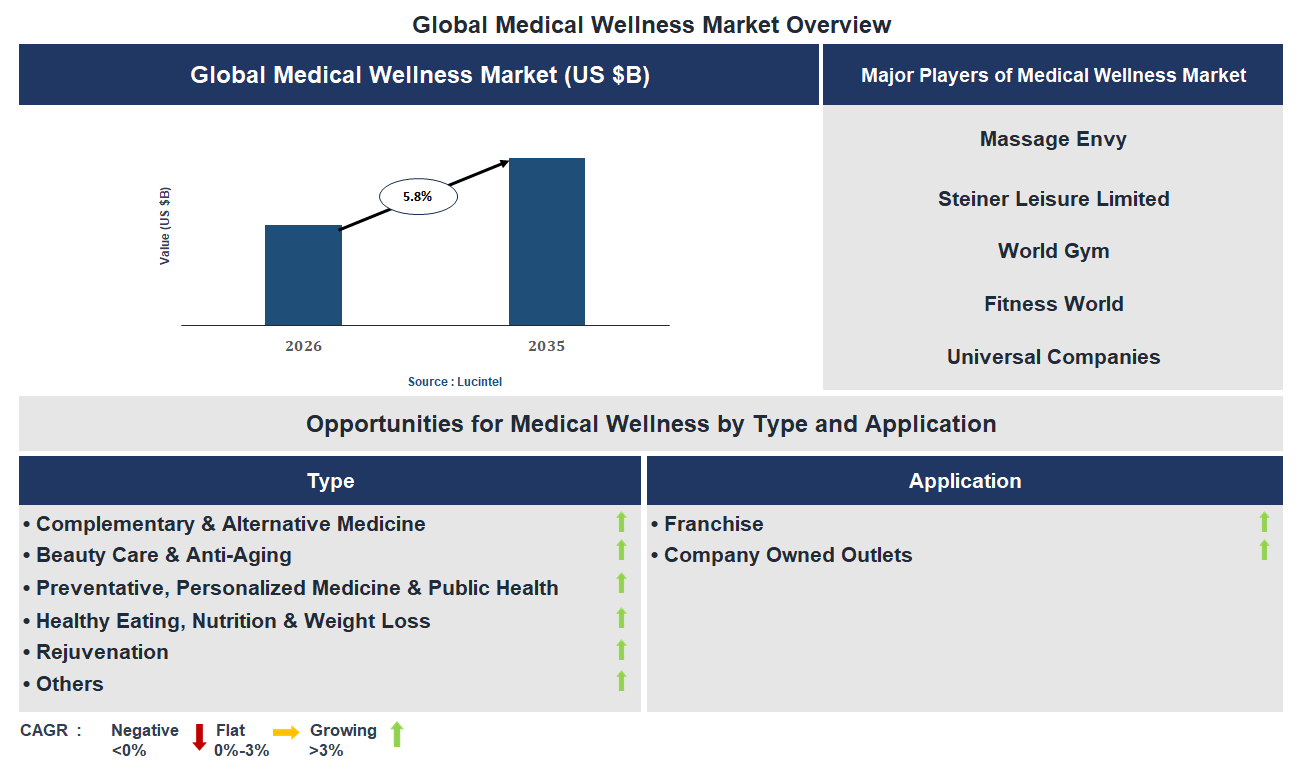
The future of the global medical wellness market looks promising with opportunities in the franchise and company owned outlet markets. The global medical wellness market is expected to reach an estimated $5 billion by 2035 with a CAGR of 10.6% from 2026 to 2035. The major drivers for this market are the increasing focus on preventive healthcare, the rising awareness of mental well-being, and the growing demand for holistic health solutions.• Lucintel forecasts that, within the type category, personalized medicine & public health is expected to witness the highest growth over the forecast period.
• Within the application category, franchise is expected to witness higher growth.
• In terms of region, APAC is expected to witness the highest growth over the forecast period. Gain valuable insights for your business decisions with our comprehensive 150+ page report. Sample figures with some insights are shown below.
Emerging Trends in the Medical Wellness Market
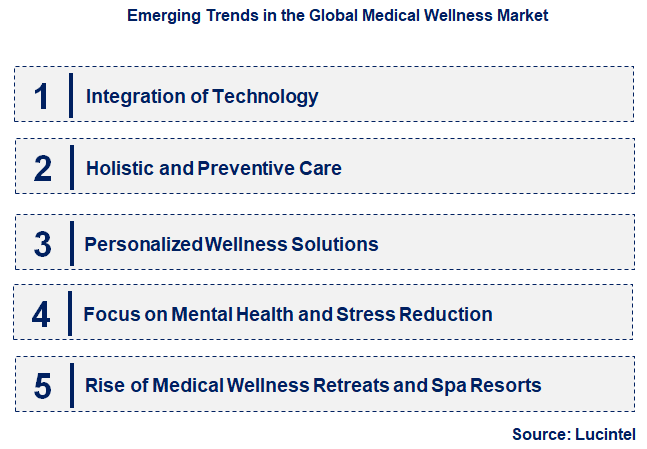
The medical wellness market is experiencing rapid growth driven by increasing health awareness, technological advancements, and a shift towards preventive healthcare. Consumers are seeking holistic approaches that combine medical expertise with wellness practices to improve overall health and longevity. This evolving landscape is characterized by innovative treatments, personalized services, and a focus on mental and physical well-being. As the market expands, key trends are shaping its future, influencing service offerings, consumer preferences, and industry strategies. These developments are not only transforming how healthcare is delivered but also redefining the concept of wellness in a medical context, creating new opportunities and challenges for providers and stakeholders.• Integration of Technology: The adoption of digital health tools and telemedicine is revolutionizing medical wellness services. Wearable devices, health apps, and remote monitoring enable personalized health management and real-time data collection. This trend enhances accessibility, convenience, and patient engagement, allowing for more tailored treatment plans. It also facilitates early detection of health issues, improving outcomes. As technology becomes more sophisticated, it will continue to drive innovation in diagnostics, treatment, and wellness coaching, making healthcare more proactive and patient-centric.
• Holistic and Preventive Care: There is a growing emphasis on holistic approaches that address physical, mental, and emotional health. Preventive care services such as screenings, nutritional counseling, stress management, and lifestyle coaching are gaining popularity. This trend shifts the focus from treating illnesses to maintaining wellness and preventing diseases. It encourages individuals to adopt healthier lifestyles, reducing long-term healthcare costs and improving quality of life. Providers are increasingly integrating wellness programs into traditional medical practices, fostering a more comprehensive approach to health.
• Personalized Wellness Solutions: Advances in genomics and data analytics are enabling highly personalized wellness plans. Customized treatments based on genetic profiles, lifestyle, and health history are becoming standard. This trend enhances treatment efficacy and patient satisfaction by addressing individual needs precisely. Personalized solutions also include tailored nutrition, fitness regimes, and mental health support. As personalization becomes more accessible, it is transforming the market by offering more targeted, effective, and engaging wellness experiences, ultimately leading to better health outcomes.
• Focus on Mental Health and Stress Reduction: Recognizing the importance of mental well-being, the market is increasingly incorporating mental health services and stress management programs. Techniques such as mindfulness, meditation, therapy, and digital mental health platforms are expanding. This trend reflects a broader understanding that mental health is integral to overall wellness and productivity. It is driving demand for specialized services and creating new revenue streams. The integration of mental health into medical wellness signifies a holistic approach, addressing the full spectrum of health needs and improving overall quality of life.
• Rise of Medical Wellness Retreats and Spa Resorts: Luxury wellness retreats and spa resorts offering medical-grade treatments are gaining popularity among affluent consumers seeking comprehensive health experiences. These facilities combine relaxation with advanced medical therapies, including regenerative medicine, detoxification, and anti-aging treatments. They provide immersive environments for health improvement, stress relief, and rejuvenation. This trend caters to a growing demographic interested in luxury wellness experiences, blending leisure with medical expertise. It is expanding the market beyond traditional healthcare settings, creating new avenues for growth and innovation. In summary, these trends are reshaping the medical wellness market by fostering a more integrated, personalized, and holistic approach to health. They are driving technological innovation, emphasizing prevention, and expanding service offerings to meet evolving consumer demands. As a result, the market is becoming more accessible, effective, and aligned with individual health goals, ultimately transforming the future of healthcare and wellness.
Recent Development in the Medical Wellness Market
The medical wellness market is experiencing rapid growth driven by increasing health awareness, technological advancements, and a shift towards preventive healthcare. Consumers are seeking personalized, holistic approaches to health that combine traditional medicine with wellness practices. This evolving landscape presents significant opportunities for innovation, investment, and expansion across various sectors. As the market matures, stakeholders are focusing on integrating new services, digital solutions, and sustainable practices to meet rising demand and improve health outcomes globally.• Digital Integration: The adoption of digital health tools, telemedicine, and mobile apps is transforming the medical wellness landscape. These technologies enable personalized health monitoring, remote consultations, and data-driven treatment plans, improving accessibility and convenience. Digital integration also facilitates real-time health tracking, fostering proactive wellness management. This shift enhances patient engagement, reduces healthcare costs, and broadens reach, making wellness services more accessible and efficient for diverse populations.
• Personalized Wellness Solutions: Advances in genomics, AI, and data analytics are enabling highly personalized wellness plans. These solutions consider individual genetics, lifestyle, and health data to create targeted interventions. Personalized approaches improve treatment efficacy, reduce adverse effects, and enhance patient satisfaction. This trend is driving innovation in supplements, fitness programs, and preventive care, positioning personalized wellness as a key differentiator in the competitive market.
• Sustainable Practices: Sustainability is becoming central to the medical wellness industry, with a focus on eco-friendly products, ethical sourcing, and green facilities. Consumers increasingly prefer brands that demonstrate environmental responsibility and social ethics. Sustainable practices reduce carbon footprints, promote resource conservation, and appeal to eco-conscious clients. This shift not only benefits the environment but also enhances brand reputation and customer loyalty, fostering long-term growth in the market.
• Holistic and Integrative Approaches: The integration of holistic therapies with conventional medicine is gaining popularity. Practices such as acupuncture, yoga, and herbal medicine are being incorporated into mainstream wellness programs. This approach addresses physical, mental, and emotional health comprehensively, leading to improved patient outcomes. It also caters to diverse cultural preferences and promotes a more inclusive, patient-centered model of care, expanding market reach and acceptance.
• Regulatory and Policy Developments: Governments and regulatory bodies are establishing standards and policies to ensure safety, quality, and transparency in the medical wellness sector. These regulations foster consumer confidence, facilitate international trade, and encourage innovation. Clear guidelines also help in credentialing practitioners and standardizing services. As regulatory frameworks evolve, they provide a stable environment for investment and expansion, driving sustainable growth and market maturity. The recent developments in digital integration, personalized solutions, sustainability, holistic approaches, and regulatory policies are collectively transforming the medical wellness market. These trends are fostering innovation, improving service quality, and expanding access, which ultimately enhances consumer health outcomes. As a result, the market is experiencing accelerated growth, increased competitiveness, and greater global influence.
Strategic Growth Opportunities in the Medical Wellness Market
The medical wellness market is experiencing rapid expansion driven by increasing health awareness, aging populations, and a shift towards preventive healthcare. Consumers seek holistic approaches that combine medical expertise with wellness practices to improve quality of life. Technological advancements and personalized treatments are further fueling growth. This evolving landscape presents numerous strategic opportunities for industry players to innovate, expand their offerings, and capture new customer segments, ultimately transforming healthcare into a more proactive and integrated sector.• Digital Integration and Telemedicine Expansion: The integration of digital health tools and telemedicine services offers significant growth potential by providing accessible, remote medical wellness solutions. This enables personalized health monitoring, virtual consultations, and data-driven wellness plans, appealing to tech-savvy consumers. As regulatory frameworks evolve, companies can leverage these platforms to reach broader markets, improve patient engagement, and reduce healthcare costs, making wellness services more convenient and scalable.
• Personalized Wellness Programs Using Data Analytics: Utilizing data analytics and AI allows for highly personalized wellness programs tailored to individual health profiles. This approach enhances treatment efficacy and customer satisfaction by addressing specific needs such as nutrition, fitness, and mental health. Companies investing in data-driven solutions can differentiate their offerings, foster loyalty, and improve health outcomes, creating a competitive edge in a market increasingly focused on customization and precision medicine.
• Expansion of Integrative and Holistic Care Services: The rising demand for holistic health approaches presents opportunities to expand integrative care services, combining conventional medicine with alternative therapies like acupuncture, massage, and mindfulness. This approach appeals to consumers seeking comprehensive wellness solutions that address physical, mental, and emotional health. Providers can develop specialized clinics, wellness retreats, and multidisciplinary teams to meet this demand, fostering long-term client relationships and enhancing overall health outcomes.
• Strategic Collaborations and Partnerships: Forming alliances between healthcare providers, wellness brands, technology firms, and fitness centers can accelerate market growth. These collaborations enable the development of innovative products, integrated service offerings, and broader distribution channels. Strategic partnerships also facilitate knowledge sharing, resource pooling, and access to new markets, helping companies stay competitive and responsive to evolving consumer preferences in the dynamic medical wellness landscape.
• Focus on Preventive and Anti-Aging Treatments: The increasing focus on preventive healthcare and anti-aging therapies offers substantial growth opportunities. Innovations in regenerative medicine, skincare, and nutritional supplements attract aging populations and health-conscious consumers. Companies investing in research and development of advanced anti-aging solutions can tap into a lucrative market segment, promote longevity, and reduce long-term healthcare costs, positioning themselves as leaders in proactive health management. These strategic growth opportunities are poised to significantly shape the future of the medical wellness market. By embracing digital innovation, personalization, holistic care, strategic collaborations, and preventive treatments, industry players can expand their reach, improve health outcomes, and meet evolving consumer demands. Collectively, these opportunities will drive market expansion, foster innovation, and redefine healthcare as a more integrated, proactive, and consumer-centric industry.
Medical Wellness Market Driver and Challenges
The medical wellness market is influenced by a complex interplay of technological advancements, economic shifts, and regulatory frameworks. As healthcare increasingly integrates holistic wellness approaches, innovations such as digital health tools and personalized treatments are propelling growth. Economic factors like rising disposable incomes and aging populations further expand market opportunities. Simultaneously, regulatory policies shape service delivery and quality standards, impacting market dynamics. Navigating these multifaceted drivers and challenges is essential for stakeholders aiming to capitalize on emerging trends while addressing potential barriers. Understanding these factors provides a comprehensive view of the market’s trajectory and strategic considerations. The factors responsible for driving the medical wellness market include:-• Technological Innovation: The integration of advanced technologies such as telemedicine, wearable health devices, and AI-driven diagnostics enhances service delivery, improves patient outcomes, and increases accessibility. These innovations enable personalized wellness plans and remote monitoring, making healthcare more efficient and patient-centric. As technology continues to evolve rapidly, providers can offer more sophisticated and tailored solutions, attracting a broader customer base and fostering market expansion.
• Rising Healthcare Expenditure: Increasing healthcare spending worldwide, driven by higher disposable incomes and greater health awareness, fuels demand for wellness services. Consumers are investing more in preventive care, holistic treatments, and personalized health programs. Governments and private sectors are also allocating more resources to wellness initiatives, recognizing their role in reducing long-term healthcare costs and improving population health, thereby propelling market growth.
• Aging Population: The global demographic shift towards an older population significantly impacts the medical wellness market. Older adults seek specialized wellness services to manage chronic conditions, improve mobility, and enhance quality of life. This demographic trend creates sustained demand for age-specific wellness programs, preventive therapies, and integrative health solutions, encouraging providers to innovate and expand their offerings to meet these needs.
• Increasing Awareness and Lifestyle Changes: Growing awareness about the importance of preventive health and holistic wellness is driving consumer interest. Lifestyle modifications, such as healthier diets, regular exercise, and stress management, are increasingly prioritized. This shift in consumer behavior encourages the development of wellness centers, corporate wellness programs, and personalized health plans, expanding the market and fostering a proactive approach to health management. The challenges in the medical wellness market are:
• Regulatory and Compliance Barriers: The sector faces complex regulatory landscapes varying across regions, affecting service standards, licensing, and data privacy. Navigating these regulations can be costly and time-consuming, potentially delaying market entry or expansion. Additionally, the lack of standardized protocols may hinder the consistency and quality of wellness services, impacting consumer trust and market credibility.
• High Cost of Advanced Technologies: While technological innovations drive growth, they often come with high initial investments and maintenance costs. Small and medium-sized providers may struggle to adopt cutting-edge tools like AI diagnostics or telehealth platforms, limiting their competitiveness. This financial barrier can slow down overall market development and create disparities in service availability.
• Market Fragmentation and Lack of Standardization: The medical wellness market is highly fragmented, with numerous small providers and diverse service offerings. This lack of standardization complicates consumer choice and hampers the development of a unified industry reputation. It also challenges regulatory oversight and insurance integration, potentially restricting broader access and reimbursement options, thereby impeding sustainable growth. In summary, the medical wellness market is shaped by rapid technological advancements, demographic shifts, and increasing health awareness, all of which present significant growth opportunities. However, regulatory complexities, high technology costs, and market fragmentation pose substantial challenges that could hinder progress. Addressing these barriers through standardization, policy reforms, and technological affordability will be crucial for sustainable expansion. Overall, the markets future depends on balancing innovation with regulatory and economic considerations to meet evolving consumer needs effectively.
List of Medical Wellness Companies
Companies in the market compete on the basis of product quality offered. Major players in this market focus on expanding their manufacturing facilities, R&D investments, infrastructural development, and leverage integration opportunities across the value chain. With these strategies medical wellness companies cater increasing demand, ensure competitive effectiveness, develop innovative products & technologies, reduce production costs, and expand their customer base. Some of the medical wellness companies profiled in this report include-• Massage Envy
• Steiner Leisure Limited
• World Gym
• Fitness World
• Universal Companies
• Beauty Farm
• VLCC Wellness Center
• Nanjing Zhaohui
• Edge Systems LLC
• HEALING HOTELS of the WORLD
Medical Wellness Market by Segment
The study includes a forecast for the global medical wellness market by type, application, and region.Medical Wellness Market by Type [Value from 2019 to 2035]:
• Complementary & Alternative Medicine
• Beauty Care & Anti-Aging
• Preventative, Personalized Medicine & Public Health
• Healthy Eating, Nutrition & Weight Loss
• Rejuvenation
• Others
Medical Wellness Market by Application [Value from 2019 to 2035]:
• Franchise
• Company Owned Outlets
Medical Wellness Market by Region [Value from 2019 to 2035]:
• North America
• Europe
• Asia Pacific
• The Rest of the World
Country Wise Outlook for the Medical Wellness Market
The medical wellness market has experienced significant growth globally, driven by increasing health awareness, technological advancements, and a shift towards preventive healthcare. Countries are investing in innovative solutions to enhance patient outcomes and expand wellness services. The United States, China, Germany, India, and Japan are leading this transformation, each contributing unique developments based on their healthcare infrastructure, technological capabilities, and consumer demand. These countries are adopting new strategies, integrating digital health tools, and expanding wellness offerings to meet evolving market needs. The following summaries highlight recent key advancements and trends in each nations medical wellness landscape.• United States: The US market has seen a surge in digital health integration, including telemedicine and wearable health devices. There is a growing emphasis on personalized wellness programs and holistic approaches combining mental and physical health. Major healthcare providers are investing in wellness clinics and preventive care services, driven by consumer demand for comprehensive health management. Innovations in AI and data analytics are enhancing diagnostics and treatment personalization, fostering a more proactive healthcare environment.
• China: China is rapidly expanding its medical wellness sector through government initiatives and private investments. The focus is on integrating traditional Chinese medicine with modern wellness practices, creating a unique hybrid market. Digital platforms and mobile health apps are widely adopted, facilitating remote consultations and health monitoring. The country is also witnessing growth in wellness tourism and fitness services, supported by a burgeoning middle class seeking holistic health solutions.
• Germany: Germanys market emphasizes high-quality, evidence-based wellness services, with a strong focus on preventive healthcare and aging population needs. The adoption of digital health records and telehealth services has increased, improving access to wellness programs. There is a notable rise in spa and medical tourism, especially in wellness retreats that combine medical treatments with relaxation therapies. Regulatory frameworks support innovation while maintaining high standards of safety and efficacy.
• India: India is experiencing rapid growth in the medical wellness sector, driven by increasing health awareness and disposable incomes. The market is characterized by a rise in wellness centers, yoga, Ayurveda, and alternative therapies. Digital health startups are expanding access to wellness services, especially in rural areas. The government is promoting wellness tourism and integrating traditional practices with modern healthcare, creating a diverse and expanding market landscape.
• Japan: Japan's focus is on aging-related wellness solutions, including preventive care and age management programs. The country is leveraging advanced technology, such as robotics and AI, to develop innovative health monitoring and rehabilitation services. Wellness resorts and medical spas are popular, emphasizing holistic approaches to health and longevity. The government supports research and development in health tech, aiming to improve the quality of life for its aging population through personalized wellness strategies.

Features of the Global Medical Wellness Market
Market Size Estimates: Medical wellness market size estimation in terms of value ($B). Trend and Forecast Analysis: Market trends (2019 to 2025) and forecast (2026 to 2035) by various segments and regions. Segmentation Analysis: Medical wellness market size by type, application, and region in terms of value ($B). Regional Analysis: Medical wellness market breakdown by North America, Europe, Asia Pacific, and Rest of the World. Growth Opportunities: Analysis of growth opportunities in different types, applications, and regions for the medical wellness market. Strategic Analysis: This includes M&A, new product development, and competitive landscape of the medical wellness market. Analysis of competitive intensity of the industry based on Porter’s Five Forces model.
FAQ
Q1. What is the market size and growth forecast for medical wellness market? Answer: The global medical wellness market is expected to reach an estimated $5 billion by 2035 and grow with a CAGR of 10.6% from 2026 to 2035. Q2. What are the major drivers influencing the growth of the medical wellness market? Answer: The major drivers for this market are the increasing focus on preventive healthcare, the rising awareness of mental well-being, and the growing demand for holistic health solutions. Q3. What are the major segments for medical wellness market? Answer: The future of the medical wellness market looks promising with opportunities in the franchise and company owned outlet markets. Q4. Who are the key medical wellness market companies? Answer: Some of the key medical wellness companies are as follows:• Massage Envy
• Steiner Leisure Limited
• World Gym
• Fitness World
• Universal Companies
• Beauty Farm
• VLCC Wellness Center
• Nanjing Zhaohui
• Edge Systems LLC
• HEALING HOTELS of the WORLD Q5. Which medical wellness market segment will be the largest in future? Answer: Lucintel forecasts that, within the type category, personalized medicine & public health is expected to witness the highest growth over the forecast period. Q6. In medical wellness market, which region is expected to be the largest in next 5 years? Answer: In terms of region, APAC is expected to witness the highest growth over the forecast period. Q7. Do we receive customization in this report? Answer: Yes, Lucintel provides 10% customization without any additional cost.
Table of Contents
List of Figures
List of Tables
Methodology
- In-depth interviews of the major players in this market
- Detailed secondary research from competitors’ financial statements and published data
- Extensive searches of published works, market, and database information pertaining to industry news, company press releases, and customer intentions
- A compilation of the experiences, judgments, and insights of Lucintel’s professionals, who have analyzed and tracked this market over the years.


Buy Now
Choose a license that fits your team. Instant PDF delivery.
Prices exclude taxes. Instant delivery. Custom licensing available on request.
Key Questions
- • What are some of the most promising, high-growth opportunities for the medical wellness market by type (complementary & alternative medicine, beauty care & anti-aging, preventative, personalized medicine & public health, healthy eating, nutrition & weight loss, rejuvenation, and others), application (franchise and company owned outlets), and region (North America, Europe, Asia Pacific, and the Rest of the World)?
- • Which segments will grow at a faster pace and why?
- • Which region will grow at a faster pace and why?
- • What are the key factors affecting market dynamics? What are the key challenges and business risks in this market?
- • What are the business risks and competitive threats in this market?
- • What are the emerging trends in this market and the reasons behind them?
- • What are some of the changing demands of customers in the market?
- • What are the new developments in the market? Which companies are leading these developments?
- • Who are the major players in this market? What strategic initiatives are key players pursuing for business growth?
- • What are some of the competing products in this market and how big of a threat do they pose for loss of market share by material or product substitution?
- • What M&A activity has occurred in the last 7 years and what has its impact been on the industry? For any questions related to Medical Wellness Market, Medical Wellness Market Size, Medical Wellness Market Growth, Medical Wellness Market Analysis, Medical Wellness Market Report, Medical Wellness Market Share, Medical Wellness Market Trends, Medical Wellness Market Forecast, Medical Wellness Companies, write Lucintel analyst at email: helpdesk@lucintel.com. We will be glad to get back to you soon.


