
Market Report · July 31, 2026

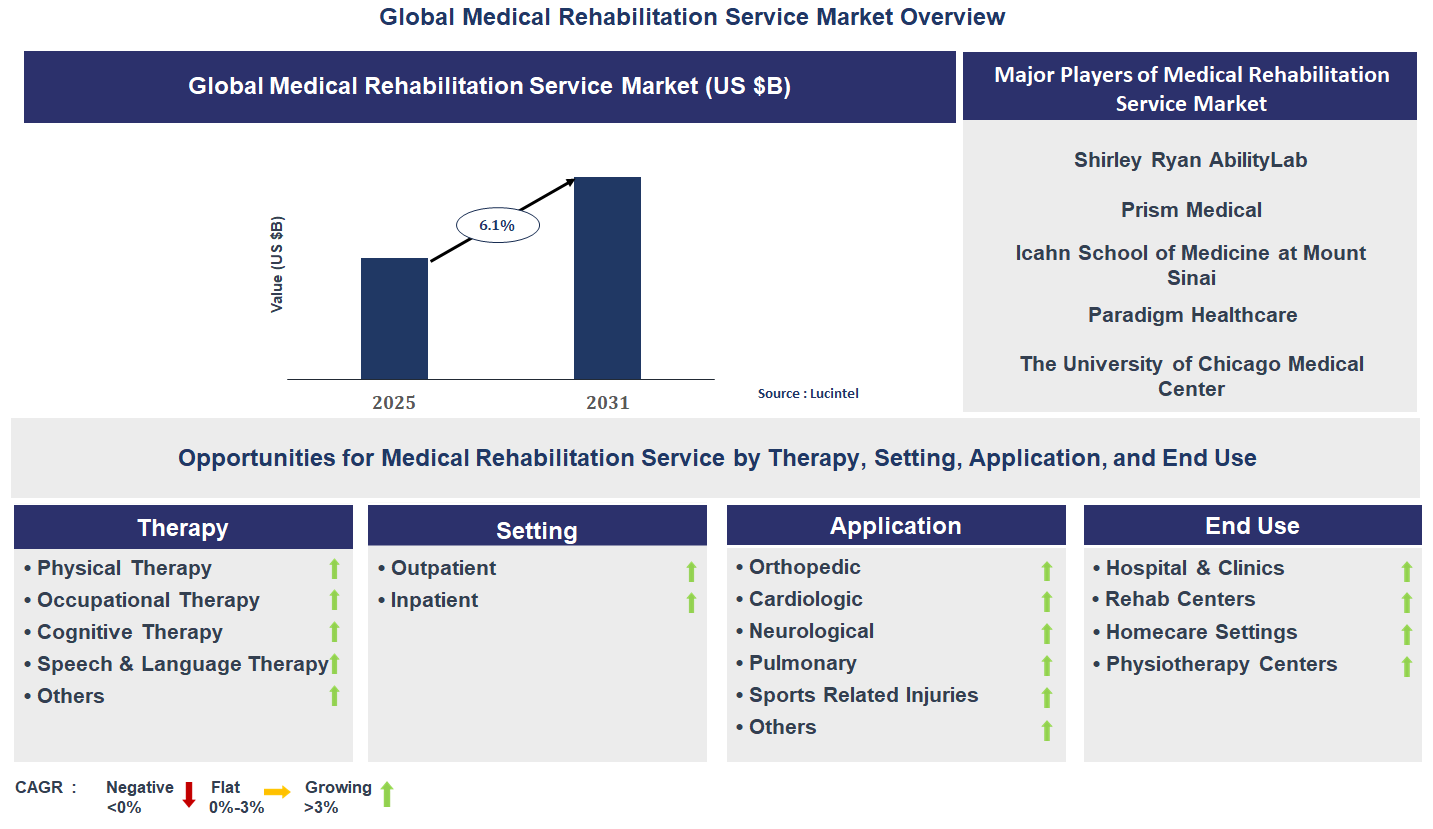
Key data points: The growth forecast = 6.1% annually for the next 7 years. Scroll below to get more insights. This market report covers trends, opportunities and forecasts in medical rehabilitation service market to 2031 by therapy (physical therapy, occupational therapy, cognitive therapy, speech & language therapy, and others), setting (outpatient and inpatient), application (orthopedic, cardiologic, neurological, pulmonary, sports related injuries, and others), end use (hospital & clinics, rehab centers, homecare settings, and physiotherapy centers), and region (North America, Europe, Asia Pacific, and the Rest of the World)
We'll send your sample report shortly.
• Lucintel forecasts that, within the therapy category, physical therapy is expected to witness the highest growth over the forecast period.
• Within the end use category, hospital & clinic is expected to witness the highest growth.
• In terms of region, North America will remain the largest region over the forecast period. Gain valuable insights for your business decisions with our comprehensive 150+ page report. Sample figures with some insights are shown below.
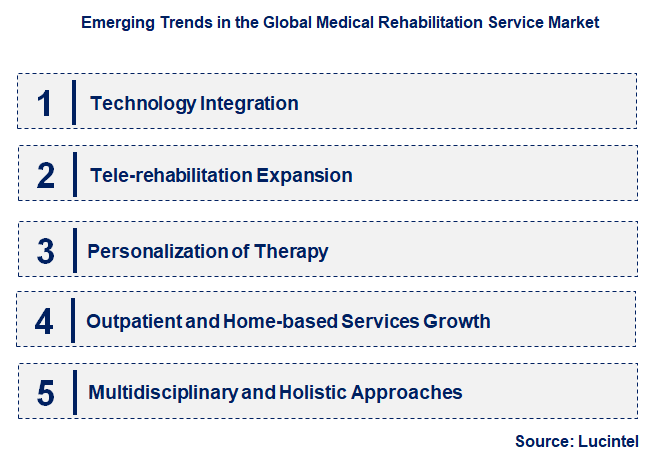
• Technology Integration: Robotics, AI, virtual reality, and wearable devices enhance therapy precision and patient engagement, enabling tailored rehabilitation programs and remote monitoring.
• Tele-rehabilitation Expansion: Virtual platforms offer accessible, cost-effective rehabilitation services overcoming geographical and mobility barriers, expanding patient reach.
• Personalization of Therapy: Customized treatment plans based on patient data and biometrics improve effectiveness and satisfaction, fostering better adherence and recovery.
• Outpatient and Home-based Services Growth: Increasing preference for low-cost, convenient care models drives demand for outpatient and home rehabilitation, supported by policy reforms and technology.
• Multidisciplinary and Holistic Approaches: Integration of physical, occupational, cognitive, and psychological therapies addresses comprehensive patient needs, improving functional outcomes. These trends are collectively reshaping the medical rehabilitation service market, driving innovation, improving care quality, and broadening service accessibility worldwide.
• Advanced Technologies: Introduction of cutting-edge tools like exoskeletons and AI-based monitoring improves therapy accuracy and engagement.
• Tele-rehabilitation Adoption: Accelerated by the COVID-19 pandemic, virtual rehab platforms now constitute a mainstream delivery model.
• Outpatient Service Growth: Policy support for cost-effective outpatient care models expands patient access and reduces hospitalization.
• Private Sector Involvement: Increasing private investments and partnerships boost infrastructure, services, and innovation.
• Multidisciplinary Care Integration: Coordinated therapies addressing physical, cognitive, and psychological aspects lead to comprehensive rehabilitation strategies. Collectively, these developments are driving market expansion and transforming rehabilitation care delivery.
• Neurological Rehabilitation: Demand grows with rising neurological disorders; advanced tech and personalized therapies improve functional recovery.
• Orthopedic Rehabilitation: Increasing musculoskeletal injuries and surgeries drive demand for effective, technology-enhanced physical therapy programs.
• Cardiac Rehabilitation: Growing cardiovascular disease prevalence fuels demand for structured post-event rehabilitation to reduce rehospitalization.
• Pediatric Rehabilitation: Greater attention to developmental disorders enhances demand for specialized rehab services tailored for children.
• Post-Surgical Rehabilitation: Increasing surgeries necessitate comprehensive post-operative protocols to restore mobility and independence. The strategy for the medical rehabilitation service market focuses on leveraging technological innovations, expanding access, customizing care, and enhancing patient engagement. Key approaches include adopting advanced therapies like robotics and AI, integrating digital health platforms, and developing multidisciplinary, patient-centered care models.
• Shirley Ryan AbilityLab
• Prism Medical
• Icahn School of Medicine at Mount Sinai
• Paradigm Healthcare
• The University of Chicago Medical Center
• MindMaze Healthcare
• Lifespan Physical Therapy Services
• SuVitas
• nMotion Physical Therapy
• Therapy Solutions for Kids
• Physical Therapy
• Occupational Therapy
• Cognitive Therapy
• Speech & Language Therapy
• Others
• Outpatient
• Inpatient
• Orthopedic
• Cardiologic
• Neurological
• Pulmonary
• Sports Related Injuries
• Others
• Hospital & Clinics
• Rehab Centers
• Homecare Settings
• Physiotherapy Centers
• North America
• Europe
• Asia Pacific
• The Rest of the World
• United States: The US leads with advanced rehabilitation technologies and integrated care models. Innovations including robotics, AI-assisted therapies, and virtual reality applications have improved therapy effectiveness and patient outcomes. Increasing insurance coverage and reimbursement reforms support outpatient and home-based rehabilitation growth. There is heightened focus on neurological, orthopedic, and cardiac rehabilitation. Research collaborations and significant investments in rehabilitation infrastructure propel market leadership.
• China: Chinas rehabilitation market shows robust expansion backed by government healthcare reforms promoting rehabilitation programs for an aging population. Infrastructure development in tier-2 and tier-3 cities broadens service accessibility. There is a growing adoption of robotic-assisted therapy and traditional Chinese medicine combined with modern rehabilitation approaches. Awareness campaigns and rising chronic disease incidence encourage outpatient and community-based services. Increasing private sector involvement and digital health platforms foster diversified service delivery models.
• Germany: Germany exhibits steady growth fueled by a well-established healthcare system emphasizing quality and precision rehabilitation care. Integration of advanced diagnostics, automated therapy devices, and evidence-based protocols improves treatment outcomes. The country prioritizes rehabilitation for musculoskeletal and neurological conditions with a multidisciplinary approach. Digital tools enhance patient monitoring and personalized therapy plans. Strong regulatory frameworks ensure service standards and support research in rehabilitation technologies.
• India: Rapid market growth is driven by increased healthcare investments, expanded rehabilitation centers, and rising awareness especially among urban populations. Cost-effective rehabilitation solutions and tele-rehabilitation services are gaining traction, addressing accessibility challenges in rural areas. Initiatives to train and deploy more rehabilitation professionals support service scaling. The rise of non-communicable diseases and trauma cases heighten demand. Integration of Ayurveda and physiotherapy broadens therapeutic options. Public-private partnerships accelerate infrastructure and technology adoption.
• Japan: Japan approaches rehabilitation with a focus on elderly care and chronic disease management due to its aging demographic. Advanced technologies such as robotic exoskeletons and AI-powered therapy systems improve rehabilitation quality and independence for patients. Government policies support home-based and community rehabilitation services, combining traditional and cutting-edge methods. Research investments target neurorehabilitation and personalized therapies. Digital rehabilitation platforms promote patient engagement and remote monitoring.


• Shirley Ryan AbilityLab
• Prism Medical
• Icahn School of Medicine at Mount Sinai
• Paradigm Healthcare
• The University of Chicago Medical Center
• MindMaze Healthcare
• Lifespan Physical Therapy Services
• SuVitas
• nMotion Physical Therapy
• Therapy Solutions for Kids Q5. Which medical rehabilitation service market segment will be the largest in future? Answer: Lucintel forecasts that, within the therapy category, physical therapy is expected to witness the highest growth over the forecast period. Q6. In medical rehabilitation service market, which region is expected to be the largest in next 5 years? Answer: In terms of region, North America will remain the largest region over the forecast period. Q7. Do we receive customization in this report? Answer: Yes, Lucintel provides 10% customization without any additional cost.


Choose a license that fits your team. Instant PDF delivery.
Prices exclude taxes. Instant delivery. Custom licensing available on request.
Market Report · July 31, 2026
Market Report · July 31, 2026
Market Report · July 31, 2026
Trusted partner for strategic intelligence and business growth


Receive a complimentary market analysis tailored to your industry. Our analysts will identify key growth opportunities and competitive dynamics specific to your business.

Market size, growth rate, and key trend analysis for your specific sector.

Top competitor positioning and market share analysis.

Strategic recommendations backed by data-driven insights.
Get curated market intelligence and competitive moves straight to your inbox.
By subscribing, you agree to receive our monthly insights. Unsubscribe anytime.
Receive a complimentary market analysis tailored to your industry. Our analysts will identify key growth opportunities and competitive dynamics specific to your business.
Market size, growth rate, and key trend analysis for your specific sector.
Top competitor positioning and market share analysis.
Strategic recommendations backed by data-driven insights.
Get curated market intelligence, emerging trends, and competitive moves straight to your inbox each month.
By subscribing, you agree to receive our monthly insights. Unsubscribe anytime.
We'll send your sample report shortly.