
Market Report · July 22, 2026

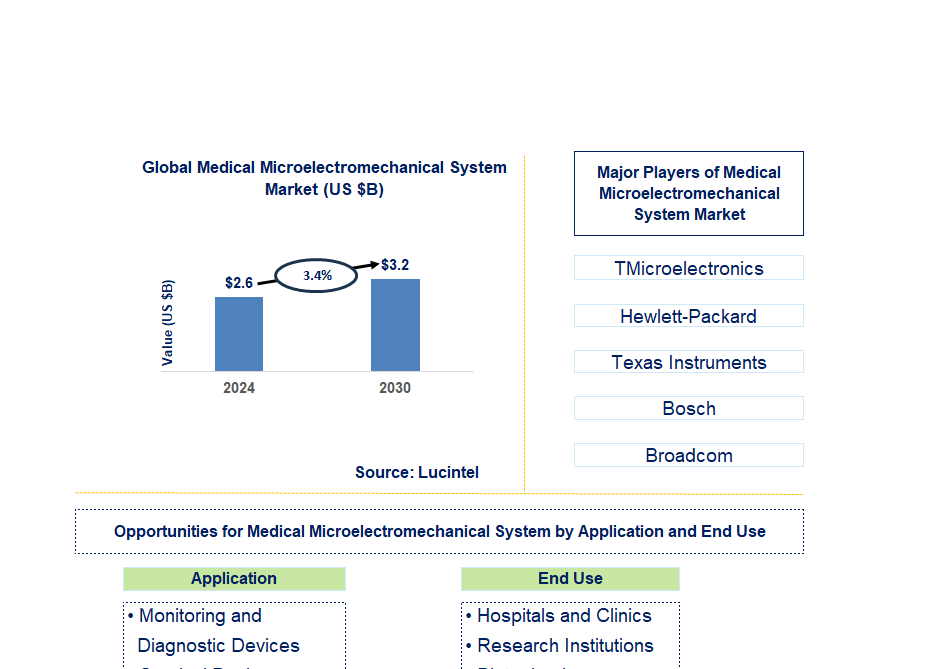
Key data points: The market size in 2030 = $3.2 billion, growth forecasts = 3.4% annually for the next 6 years. Scroll below to get more insights. This market report covers trends, opportunities, and forecasts in the global medical microelectromechanical system market to 2030 by application (monitoring and diagnostic devices, surgical devices, therapeutic devices, and others), end use (hospitals and clinics, research institutions, biotechnology companies, and others), and region (North America, Europe, Asia Pacific, and the Rest of the World)
We'll send your sample report shortly.
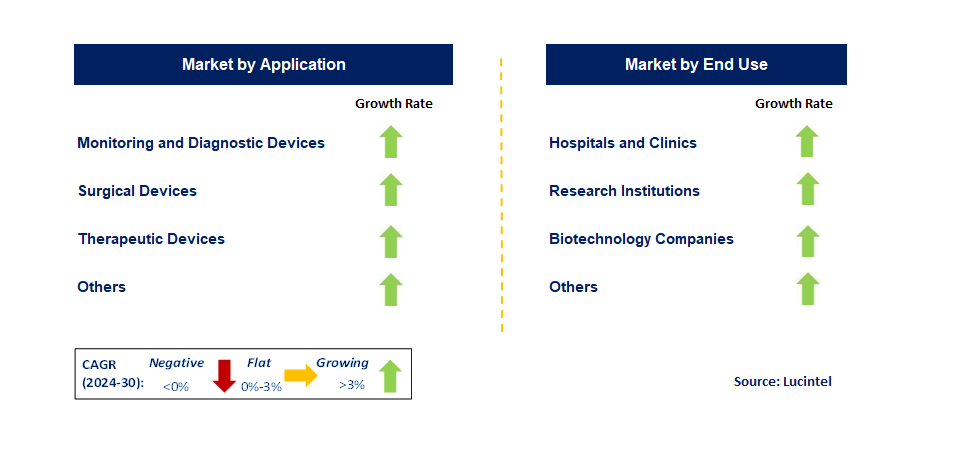
• Lucintel forecasts that, within the application category, monitoring and diagnostic device is expected to witness the highest growth over the forecast period.
• In terms of regions, APAC will remain the largest region over the forecast period due to the existence of a large number of consumer electronics companies and supportive R&D investements to create novel products in the region. A more than 150-page report is developed to help in your business decisions.
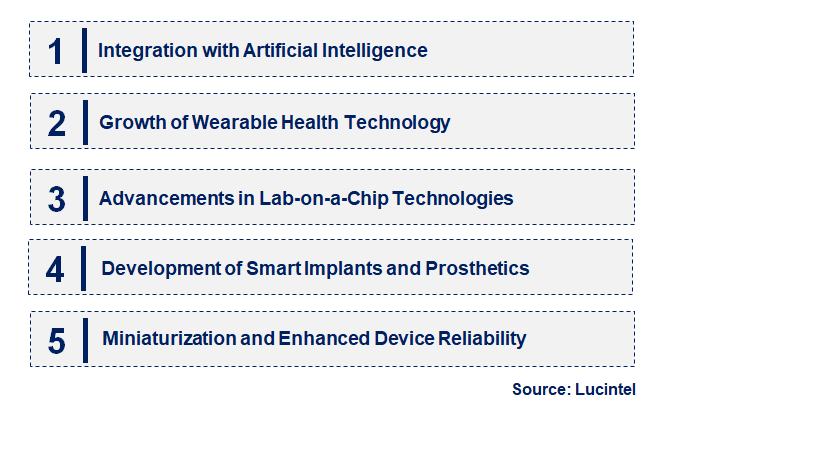
• Integration with Artificial Intelligence: medical microelectromechanical system devices are increasingly incorporating artificial intelligence (AI) to enhance data processing and decision-making capabilities. AI integration allows medical microelectromechanical system sensors to provide more accurate and actionable health insights by analyzing large datasets in real time. This trend is improving diagnostic accuracy and enabling more personalized treatment plans. AI-driven medical microelectromechanical system systems are also enhancing predictive analytics, leading to proactive rather than reactive healthcare.
• Growth of Wearable Health Technology: Wearable health devices incorporating medical microelectromechanical system technology are becoming more prevalent, offering continuous monitoring of various health parameters such as glucose levels, heart rate, and blood pressure. These devices provide real-time data to users and healthcare providers, improving disease management and patient engagement. The trend towards wearables reflects a growing emphasis on preventive care and remote monitoring, making healthcare more accessible and personalized.
• Advancements in Lab-on-a-Chip Technologies: Lab-on-a-chip (LoC) technologies are advancing with medical microelectromechanical system innovations, enabling complex biochemical assays and diagnostics on a miniature scale. These devices facilitate faster and more efficient laboratory testing, reducing costs and increasing accessibility. medical microelectromechanical system-based LoC systems are being used for point-of-care testing, enhancing the speed and accuracy of diagnostics, particularly in remote or resource-limited settings.
• Development of Smart Implants and Prosthetics: medical microelectromechanical system technology is advancing the development of smart implants and prosthetics, which offer enhanced functionality and patient comfort. These devices are equipped with medical microelectromechanical system sensors for real-time monitoring and adaptive responses to physiological changes. Innovations in this area are improving the quality of life for individuals with disabilities or chronic conditions by providing more intuitive and responsive medical devices.
• Miniaturization and Enhanced Device Reliability: The trend towards miniaturization is driving the development of smaller, more reliable medical microelectromechanical system devices with improved performance. Advances in manufacturing techniques and materials are enabling the creation of highly compact medical devices that maintain high levels of accuracy and durability. This trend is particularly important for applications requiring precision and reliability, such as in minimally invasive surgeries and advanced diagnostics. These emerging trends are reshaping the medical microelectromechanical system market by enhancing device capabilities, improving patient outcomes, and expanding the range of applications. The integration of AI, growth of wearable technology, advancements in lab-on-a-chip systems, development of smart implants, and miniaturization are driving innovation and increasing the accessibility and effectiveness of medical devices. As these trends continue to evolve, they promise to transform the landscape of healthcare technology.
• Advanced Wearable Sensors: The development of advanced medical microelectromechanical system-based wearable sensors has revolutionized health monitoring. These sensors offer real-time data on vital signs, glucose levels, and other health metrics, enabling continuous patient monitoring. The integration of medical microelectromechanical system technology into wearables has improved accuracy, comfort, and data accessibility, contributing to better disease management and preventive care.
• Lab-on-a-Chip Innovations: Recent advancements in lab-on-a-chip (LoC) technology have enabled the development of more sophisticated diagnostic tools. medical microelectromechanical system-based LoC devices allow for rapid, high-throughput testing on a micro-scale, reducing the need for bulky laboratory equipment. These innovations are enhancing the speed and efficiency of diagnostics, particularly in point-of-care settings.
• Enhanced Drug Delivery Systems: medical microelectromechanical system technology is advancing the development of precise drug delivery systems, including micro-pumps and implantable devices. These systems offer controlled, targeted drug delivery, improving therapeutic outcomes and reducing side effects. Recent developments focus on miniaturization and integration with smart technology for better patient compliance and treatment efficacy.
• Smart Prosthetics and Implants: Innovations in medical microelectromechanical system technology are leading to the development of smarter prosthetics and implants. medical microelectromechanical system sensors integrated into these devices enable real-time monitoring and adjustment based on physiological signals. This advancement enhances the functionality and comfort of prosthetics and implants, offering a more personalized experience for users.
• Next-Generation Imaging Systems: medical microelectromechanical system technology is being incorporated into next-generation imaging systems, including miniaturized endoscopes and diagnostic tools. These systems offer improved resolution and precision, facilitating earlier disease detection and more accurate diagnostics. Recent developments focus on enhancing imaging capabilities while reducing the size and invasiveness of the devices. These recent developments highlight the transformative impact of medical microelectromechanical system technology on the medical field. Advances in wearable sensors, lab-on-a-chip systems, drug delivery, smart prosthetics, and imaging systems are driving innovation and improving healthcare outcomes. As these technologies continue to evolve, they promise to deliver more effective, efficient, and personalized medical solutions.
• Wearable Health Devices: The growth of wearable health devices represents a major opportunity for medical microelectromechanical system technology. medical microelectromechanical system sensors integrated into wearables can monitor vital signs such as heart rate, blood glucose levels, and physical activity with high precision. This application supports continuous health monitoring, proactive disease management, and personalized treatment plans. The increasing consumer demand for health tracking and the rise of preventive care are driving investments in this area.
• Lab-on-a-Chip (LoC) Technologies: Lab-on-a-chip (LoC) technologies, enhanced by medical microelectromechanical system, offer significant growth potential by enabling rapid, cost-effective diagnostics on a miniature scale. medical microelectromechanical system-based LoC devices streamline complex biochemical assays and point-of-care testing, making diagnostics more accessible and efficient. This growth opportunity is particularly valuable in remote or underserved regions where traditional laboratory infrastructure is limited.
• Smart Drug Delivery Systems: medical microelectromechanical system technology is transforming drug delivery systems through the development of smart, precise micro-pumps and implantable devices. These medical microelectromechanical system-based systems can control and adjust medication delivery in real-time, improving therapeutic efficacy and reducing side effects. The growing focus on personalized medicine and the need for targeted treatments are driving advancements in this application.
• Advanced Imaging Systems: medical microelectromechanical system technology is advancing the development of miniature imaging systems, including endoscopes and diagnostic tools. These systems offer enhanced resolution and precision while being less invasive. medical microelectromechanical system-enhanced imaging systems improve early disease detection and diagnostic accuracy, meeting the demand for less intrusive and more accurate diagnostic methods.
• Smart Prosthetics and Implants: The integration of medical microelectromechanical system technology into prosthetics and implants is creating smart devices capable of real-time monitoring and adaptive responses. medical microelectromechanical system sensors embedded in these devices can provide feedback on physiological changes, improving functionality and user comfort. This opportunity aligns with the increasing demand for advanced, personalized medical devices that enhance quality of life. These strategic growth opportunities in the medical microelectromechanical system market highlight the transformative potential of technology across various healthcare applications. Wearable health devices, lab-on-a-chip technologies, smart drug delivery systems, advanced imaging systems, and smart prosthetics and implants are driving innovation and expanding market horizons. By leveraging these opportunities, stakeholders can address evolving healthcare needs and enhance patient outcomes.
• Technological Advancements Ongoing technological advancements in medical microelectromechanical system fabrication and integration are a primary driver of market growth. Innovations in micro-manufacturing techniques, materials science, and sensor technology enhance the functionality and reliability of medical microelectromechanical system devices. These advancements enable the development of more sophisticated and miniaturized medical devices, meeting increasing demands for precision and efficiency in healthcare.
• Growing Demand for Personalized Medicine The rise of personalized medicine is driving demand for medical microelectromechanical system technology, as it allows for more tailored and effective treatment options. medical microelectromechanical system devices, such as smart sensors and drug delivery systems, can be customized to individual patient needs, improving treatment outcomes. This trend aligns with the broader shift towards patient-centered care and individualized therapeutic approaches.
• Increase in Chronic Disease Prevalence The growing prevalence of chronic diseases, such as diabetes and cardiovascular conditions, is fueling demand for advanced medical microelectromechanical system-based monitoring and diagnostic tools. Continuous health monitoring and early disease detection are critical for managing chronic conditions effectively. medical microelectromechanical system technology supports these needs with wearable devices and implantable sensors that provide real-time health data and facilitate timely interventions.
• Rising Focus on Preventive Healthcare Preventive healthcare is gaining prominence, leading to increased demand for medical microelectromechanical system technologies that support early detection and ongoing health monitoring. medical microelectromechanical system-based wearable devices and diagnostic tools enable proactive health management, reducing the need for more extensive treatments and hospitalizations. This shift towards preventive care is driving investments in medical microelectromechanical system innovations.
• Advancements in Wireless Communication Technologies The development of advanced wireless communication technologies, such as 5G, enhances the capabilities of medical microelectromechanical system devices by enabling faster and more reliable data transmission. This advancement supports the growth of connected health devices and remote monitoring systems, improving patient engagement and data accessibility. Challenges in the medical microelectromechanical system market are:
• High Development and Manufacturing Costs The development and manufacturing of medical microelectromechanical system devices involve significant costs, including research and development expenses and sophisticated fabrication processes. These high costs can be a barrier to entry for new players and limit the affordability of medical microelectromechanical system-based medical devices. Addressing cost challenges is crucial for expanding market access and adoption.
• Regulatory and Compliance Issues Navigating regulatory requirements and ensuring compliance with medical device regulations pose challenges for medical microelectromechanical system manufacturers. Stringent approval processes and varying regulations across regions can delay market entry and increase development costs. Ensuring regulatory compliance while maintaining innovation is essential for market success.
• Integration and Compatibility Concerns Integrating medical microelectromechanical system technology with existing medical systems and ensuring compatibility with various healthcare infrastructures can be challenging. Technical and logistical issues related to integration may impact device performance and user experience. Addressing these concerns is important for achieving seamless implementation and broad adoption of medical microelectromechanical system-based solutions. The medical microelectromechanical system market is shaped by a complex interplay of drivers and challenges. Technological advancements, growing demand for personalized medicine, increased chronic disease prevalence, focus on preventive healthcare, and advancements in wireless technologies are key drivers of growth. Conversely, high development costs, regulatory hurdles, and integration issues present significant challenges. Balancing these factors is crucial for leveraging opportunities and overcoming obstacles in the medical microelectromechanical system market, ultimately impacting its trajectory and potential for innovation.
• TMicroelectronics
• Hewlett-Packard
• Texas Instruments
• Bosch
• Broadcom
• Robert Bosch
• TDK
• Panasonic
• GoerTek
• Knowles Electronics
• Monitoring and Diagnostic Devices
• Surgical Devices
• Therapeutic Devices
• Others
• Hospitals and Clinics
• Research Institutions
• Biotechnology Companies
• Others
• North America
• Europe
• Asia Pacific
• The Rest of the World
• United States: In the United States, the medical microelectromechanical system market has seen substantial growth driven by advancements in wearable health technology and diagnostic tools. Innovations include the development of medical microelectromechanical system-based sensors for continuous glucose monitoring and remote patient monitoring systems. The U.S. has also seen increased investment in research and development, leading to breakthroughs in lab-on-a-chip technologies and microfluidics. Companies are focusing on integrating artificial intelligence with medical microelectromechanical system devices to enhance data accuracy and predictive capabilities in patient care.
• China: China has emerged as a significant player in the medical microelectromechanical system market, emphasizing cost-effective manufacturing and rapid development of new technologies. Recent developments include medical microelectromechanical system-based sensors for wearable health devices and advancements in miniaturized imaging systems for diagnostics. The Chinese government’s support for healthcare innovation and increased funding for research and development have accelerated progress. China is also making strides in integrating medical microelectromechanical system with Internet of Things (IoT) technologies to improve health monitoring and management.
• Germany: Germany medical microelectromechanical system market is marked by advancements in high-precision medical devices and a focus on integrating medical microelectromechanical system technology with advanced imaging and diagnostic systems. German companies are leading innovations in medical microelectromechanical system-based sensors for minimally invasive surgeries and drug delivery systems. Collaboration between industry and academia in Germany is fostering cutting-edge research, particularly in developing medical microelectromechanical system devices for early disease detection and personalized medicine. The country is also focusing on enhancing device reliability and performance through advanced manufacturing techniques.
• India: India medical microelectromechanical system market is evolving with a focus on affordable and scalable medical solutions. Recent developments include the integration of medical microelectromechanical system technology in diagnostic devices and health monitoring systems designed for low-resource settings. Indian companies are working on medical microelectromechanical system-based sensors for remote diagnostics and telemedicine applications, addressing the need for accessible healthcare in rural and underserved areas. Additionally, increased investment in healthcare infrastructure and technology research is driving innovation and adoption of medical microelectromechanical system devices in India.
• Japan: Japan remains a leader in medical microelectromechanical system technology with a strong emphasis on precision and miniaturization. Recent advancements include the development of medical microelectromechanical system-based sensors for advanced prosthetics and robotics in surgery. Japanese companies are also focusing on integrating medical microelectromechanical system technology with advanced imaging systems and smart wearable devices. The country’s robust R&D environment and collaboration between industry and academic institutions are accelerating innovations in medical microelectromechanical system applications, particularly in enhancing the functionality and efficiency of medical devices.


• TMicroelectronics
• Hewlett-Packard
• Texas Instruments
• Bosch
• Broadcom
• Robert Bosch
• TDK
• Panasonic
• GoerTek
• Knowles Electronics Q6. Which medical microelectromechanical system market segment will be the largest in future? Answer: Lucintel forecasts that monitoring and diagnostic device is expected to witness the highest growth over the forecast period. Q7. In medical microelectromechanical system market, which region is expected to be the largest in next 5 years? Answer: APAC will remain the largest region over the forecast period due to the existence of a large number of consumer electronics companies and supportive R&D investements to create novel products in the region. Q.8 Do we receive customization in this report? Answer: Yes, Lucintel provides 10% customization without any additional cost.


Choose a license that fits your team. Instant PDF delivery.
Prices exclude taxes. Instant delivery. Custom licensing available on request.
Market Report · July 22, 2026
Market Report · July 22, 2026
Market Report · July 22, 2026
Trusted partner for strategic intelligence and business growth


Receive a complimentary market analysis tailored to your industry. Our analysts will identify key growth opportunities and competitive dynamics specific to your business.

Market size, growth rate, and key trend analysis for your specific sector.

Top competitor positioning and market share analysis.

Strategic recommendations backed by data-driven insights.
Get curated market intelligence and competitive moves straight to your inbox.
By subscribing, you agree to receive our monthly insights. Unsubscribe anytime.
Receive a complimentary market analysis tailored to your industry. Our analysts will identify key growth opportunities and competitive dynamics specific to your business.
Market size, growth rate, and key trend analysis for your specific sector.
Top competitor positioning and market share analysis.
Strategic recommendations backed by data-driven insights.
Get curated market intelligence, emerging trends, and competitive moves straight to your inbox each month.
By subscribing, you agree to receive our monthly insights. Unsubscribe anytime.
We'll send your sample report shortly.