
Market Report · July 31, 2026

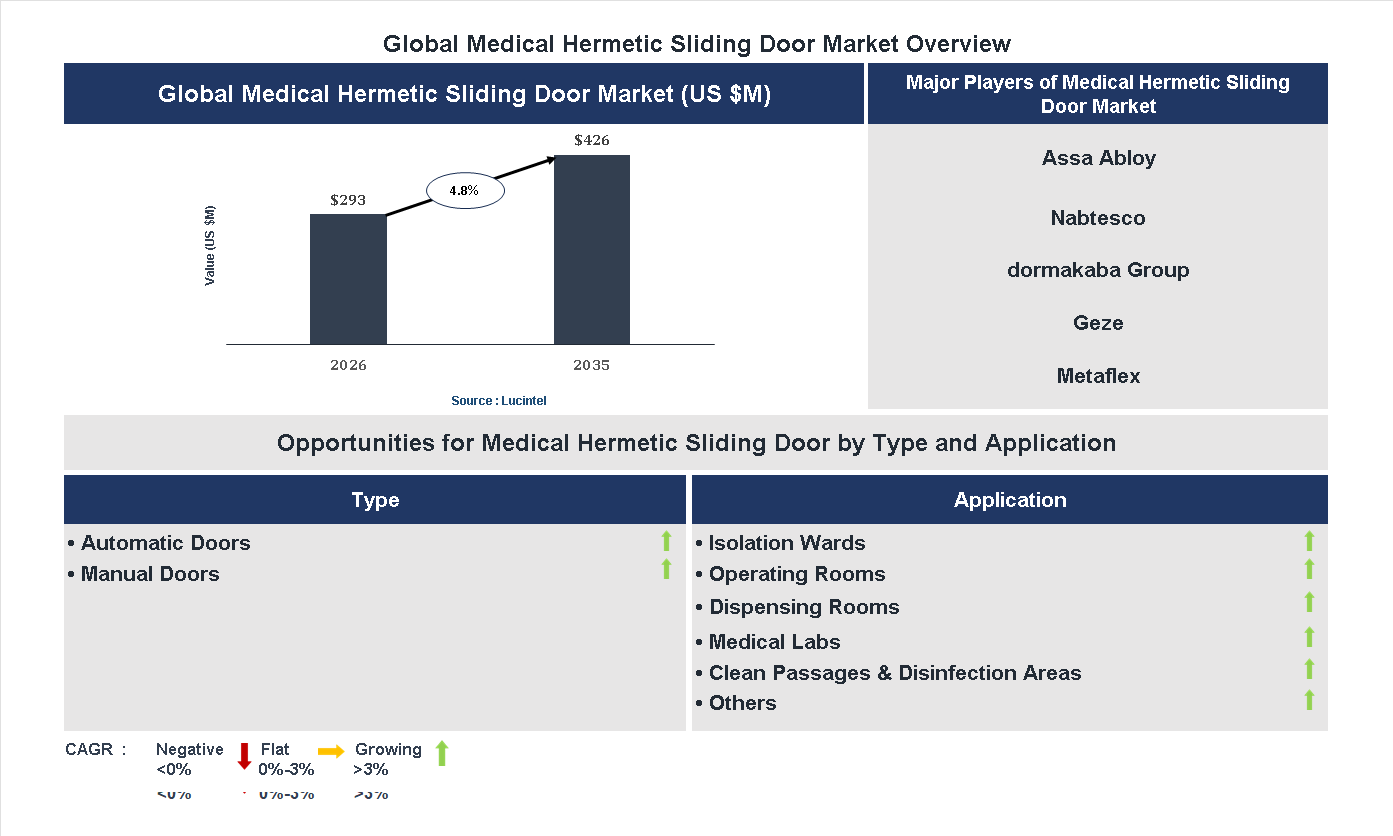
Key data points: The market size in 2035 = $426 million, growth forecast = 4.8% annually for the next 8 years. Scroll below to get more insights. This market report covers trends, opportunities and forecasts in medical hermetic sliding door market to 2035 by type (automatic doors and manual doors), application (isolation wards, operating rooms, dispensing rooms, medical labs, clean passages & disinfection areas, and others), and region (North America, Europe, Asia Pacific, and the Rest of the World)
We'll send your sample report shortly.
• Lucintel forecasts that, within the type category, automatic door is expected to witness higher growth over the forecast period.
• Within the application category, operating room is expected to witness the highest growth.
• In terms of region, APAC is expected to witness the highest growth over the forecast period. Gain valuable insights for your business decisions with our comprehensive 150+ page report. Sample figures with some insights are shown below.
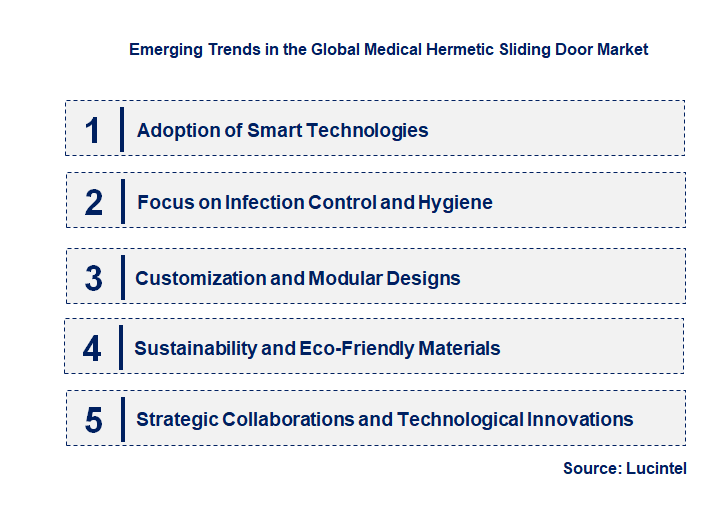
• Adoption of Smart Technologies: The integration of IoT and automation in hermetic sliding doors is transforming healthcare facilities. Smart doors enable remote operation, real-time monitoring, and enhanced security, reducing manual contact and minimizing infection risks. These features improve operational efficiency, facilitate maintenance, and provide data analytics for better facility management. As hospitals and clinics increasingly adopt digital solutions, smart hermetic doors are becoming essential for modern healthcare infrastructure, offering a seamless blend of hygiene, safety, and convenience.
• Focus on Infection Control and Hygiene: The COVID-19 pandemic has heightened the emphasis on infection prevention in healthcare settings. Hermetic sliding doors with airtight seals and antimicrobial coatings are gaining popularity for their ability to prevent cross-contamination. These doors help maintain sterile environments, especially in operating rooms, isolation wards, and laboratories. The demand for hygienic, easy-to-clean materials and designs is driving innovation, ensuring that these doors meet stringent infection control standards and contribute to safer healthcare environments.
• Customization and Modular Designs: Healthcare facilities are increasingly seeking tailored solutions to meet specific spatial and functional requirements. Modular hermetic sliding doors offer flexibility in installation, maintenance, and upgrades. Customizable options include size, material, sealing mechanisms, and integration with building management systems. This trend allows healthcare providers to optimize space utilization, enhance workflow, and ensure compliance with regulatory standards, making these doors adaptable to diverse clinical settings and future expansion plans.
• Sustainability and Eco-Friendly Materials: Environmental concerns are influencing product development in the market. Manufacturers are adopting sustainable materials, energy-efficient mechanisms, and eco-friendly manufacturing processes. Hermetic sliding doors with low energy consumption, recyclable components, and reduced carbon footprints are gaining traction. These sustainable solutions not only align with global environmental goals but also help healthcare facilities reduce operational costs and meet green building certifications, reflecting a broader shift towards environmentally responsible healthcare infrastructure.
• Strategic Collaborations and Technological Innovations: Companies are forming alliances with technology providers, research institutions, and healthcare organizations to develop advanced hermetic door solutions. These collaborations foster innovation in materials, automation, and safety features. Investment in R&D is leading to the creation of more durable, reliable, and intelligent doors that cater to evolving healthcare needs. Such strategic partnerships accelerate product development, expand market reach, and ensure compliance with regulatory standards, positioning companies competitively in this dynamic market. These emerging trends are significantly reshaping the medical hermetic sliding door market by enhancing safety, efficiency, and sustainability. The integration of smart technologies, focus on infection control, customization options, eco-friendly practices, and strategic collaborations are driving innovation and growth. As healthcare facilities worldwide prioritize hygiene, operational efficiency, and environmental responsibility, these trends will continue to influence product development and market dynamics, ensuring that hermetic sliding doors meet the complex demands of modern healthcare environments.
• Growing Demand for Sterile Environments: The increasing need for infection control in hospitals and laboratories is driving the adoption of hermetic sliding doors. These doors provide airtight seals, preventing contamination and ensuring sterile conditions. This trend is particularly prominent in pharmaceutical manufacturing and cleanroom environments, where maintaining hygiene is critical. The demand is further fueled by regulatory standards and the global focus on patient safety, leading to innovations in door materials and sealing technologies that enhance performance and durability.
• Technological Innovations in Door Mechanisms: Advances in automation and sensor technology are transforming hermetic sliding doors. Features like touchless operation, smart sensors, and remote monitoring improve hygiene and convenience. These innovations reduce manual contact, minimizing contamination risks, and enhance operational efficiency. Integration with building management systems allows for real-time diagnostics and maintenance, reducing downtime. As technology evolves, these doors are becoming more energy-efficient and customizable, meeting diverse healthcare facility needs and improving overall safety standards.
• Expansion of Healthcare Infrastructure: The global increase in healthcare facilities, including hospitals, clinics, and research centers, is significantly expanding the market. Governments and private sectors are investing heavily in modernizing healthcare infrastructure, which requires advanced door solutions. The trend is especially strong in emerging economies, where healthcare investments are rising rapidly. This expansion creates opportunities for manufacturers to supply high-quality hermetic sliding doors that meet international standards, supporting the growth of healthcare services and ensuring safety and hygiene.
• Focus on Sustainability and Eco-Friendly Materials: Environmental concerns are prompting the adoption of sustainable materials and energy-efficient designs in hermetic sliding doors. Manufacturers are developing eco-friendly seals, recyclable frames, and energy-saving mechanisms to reduce carbon footprints. These sustainable solutions not only comply with environmental regulations but also lower operational costs for healthcare facilities. The shift towards green building certifications and eco-conscious practices is influencing product development, making sustainable hermetic doors a key differentiator in the market.
• Increasing Adoption of Modular and Customizable Solutions: The demand for flexible, modular door systems that can be tailored to specific facility needs is rising. Customizable options include size, material, sealing level, and automation features, allowing healthcare providers to optimize space and functionality. Modular designs facilitate quick installation and maintenance, reducing downtime. This trend supports the diverse requirements of modern healthcare environments, from sterile rooms to emergency zones, and enhances overall operational efficiency, making hermetic sliding doors more adaptable and user-centric. The overall impact of these developments is a more efficient, safe, and sustainable market that caters to the evolving needs of healthcare facilities worldwide. Enhanced safety standards, technological integration, and environmental considerations are driving innovation, leading to increased adoption and market growth. These trends are positioning the medical hermetic sliding door market as a vital component in modern healthcare infrastructure, ensuring better patient outcomes and operational excellence.
• Increasing Demand for Sterile Environments: The need for contamination-free zones in hospitals, laboratories, and pharmaceutical manufacturing facilities is boosting the adoption of hermetic sliding doors. These doors provide airtight seals, preventing the ingress of dust, microbes, and other contaminants, which is critical for infection control and patient safety. As healthcare standards become more stringent worldwide, the demand for reliable, high-performance doors is expected to grow, especially in cleanrooms and operating theaters.
• Technological Advancements in Door Automation: Integration of automation and smart technology in hermetic sliding doors enhances operational efficiency and safety. Features such as sensor-based opening, remote control, and real-time monitoring are increasingly adopted. These innovations reduce manual handling, minimize cross-contamination risks, and improve workflow in healthcare settings. The development of energy-efficient and durable materials further supports the adoption of automated systems, catering to the needs of modern healthcare facilities.
• Growing Infrastructure Investment in Healthcare Facilities: Governments and private sectors are investing heavily in expanding and upgrading healthcare infrastructure worldwide. This includes new hospitals, clinics, and specialized treatment centers, which require advanced access control solutions like hermetic sliding doors. The expansion in emerging markets, especially in Asia-Pacific and Latin America, presents substantial growth opportunities for market players to supply high-quality, compliant door systems.
• Rising Focus on Infection Control and Hygiene Standards: The COVID-19 pandemic has heightened awareness around infection prevention, leading to increased adoption of hermetic doors in healthcare environments. These doors help contain infectious agents and maintain sterile conditions, essential for patient safety and staff protection. Regulatory bodies are also enforcing stricter hygiene standards, encouraging healthcare providers to invest in reliable sealing and contamination control solutions, thereby fueling market growth.
• Expansion of Sub-Segment Applications in Specialized Healthcare Settings: Beyond general hospitals, hermetic sliding doors are increasingly used in specialized areas such as pharmaceutical manufacturing, biotech labs, and research facilities. These environments demand precise environmental controls, including temperature, humidity, and particulate filtration. The development of customized door solutions for these sub-segments offers lucrative opportunities, driven by the need for contamination-free, secure, and efficient access points in sensitive operations. The medical hermetic sliding door market is poised for substantial growth driven by technological innovations, infrastructure development, and heightened infection control measures. These opportunities enable market players to expand their product offerings and improve healthcare safety standards globally. As demand for sterile, efficient, and automated solutions increases, the market is expected to witness continued innovation and expansion, supporting the evolving needs of healthcare and pharmaceutical sectors worldwide.
• Technological Innovation: The development of advanced, automated, and energy-efficient hermetic sliding doors enhances infection control and operational efficiency. Innovations such as touchless operation and improved sealing mechanisms are critical in sterile environments like hospitals and laboratories. These technological advancements reduce contamination risks and improve user convenience, making them highly desirable in healthcare settings. As technology continues to evolve, the market benefits from increased adoption of smart and automated solutions, driving growth and expanding application areas.
• Growing Healthcare Infrastructure: The expansion of healthcare facilities globally, especially in emerging economies, significantly boosts demand for hermetic sliding doors. Hospitals, clinics, and laboratories require sterile, secure, and efficient entry solutions to maintain hygiene standards. Government initiatives and investments in healthcare infrastructure further accelerate market growth. The increasing focus on infection prevention and control in healthcare settings makes hermetic sliding doors essential, supporting the market’s expansion across various regions.
• Rising Focus on Infection Control: The COVID-19 pandemic underscored the importance of infection prevention in healthcare environments. Hermetic sliding doors provide airtight seals that prevent the spread of pathogens, making them indispensable in sterile zones. Hospitals and laboratories are increasingly adopting these doors to comply with infection control protocols. This heightened focus on hygiene standards and safety regulations propels market demand, encouraging manufacturers to innovate and offer more effective solutions tailored to healthcare needs.
• Regulatory Compliance and Standards: Stringent regulations and standards related to infection control, safety, and environmental sustainability influence market growth. Governments and health authorities mandate the use of hermetic doors in sensitive areas to prevent contamination. Compliance with these standards ensures market players meet quality and safety benchmarks, fostering trust and adoption. Regulatory frameworks also drive innovation, as manufacturers develop products that meet evolving compliance requirements, thereby shaping the competitive landscape.
• Cost-Effectiveness and Energy Efficiency: The demand for cost-effective and energy-efficient solutions is a significant driver. Hermetic sliding doors that minimize energy loss and reduce operational costs are preferred by healthcare facilities aiming to optimize budgets. Features such as automatic operation and durable sealing mechanisms contribute to lower maintenance costs and energy savings. As healthcare providers seek sustainable and economical options, the market benefits from increased adoption of energy-efficient hermetic doors, supporting long-term operational efficiency. The challenges facing the medical hermetic sliding door market include:
• High Installation and Maintenance Costs: The initial investment for installing hermetic sliding doors can be substantial, especially in large healthcare facilities requiring multiple units. Additionally, maintenance and periodic servicing are necessary to ensure optimal performance, adding to ongoing expenses. These costs can deter smaller healthcare providers or facilities with limited budgets from adopting such advanced solutions, potentially slowing market growth. Manufacturers need to focus on cost-effective designs and maintenance solutions to overcome this barrier.
• Stringent Regulatory Approvals: The market faces challenges due to complex and time-consuming regulatory approval processes. Compliance with international standards such as ISO, FDA, and local health regulations requires rigorous testing and documentation, which can delay product launches and increase costs. Navigating diverse regulatory landscapes across regions complicates market entry for manufacturers and may hinder rapid adoption, especially in emerging markets with evolving standards.
• Maintenance and Operational Challenges: Ensuring the consistent performance of hermetic sliding doors requires regular maintenance, calibration, and technical expertise. Any malfunction or failure can compromise infection control and safety standards. Additionally, integrating these doors with existing hospital infrastructure can be complex, requiring specialized installation and training. These operational challenges can lead to downtime and increased costs, posing hurdles for widespread adoption and long-term reliability. The medical hermetic sliding door market is driven by technological advancements, expanding healthcare infrastructure, infection control priorities, regulatory compliance, and energy efficiency. However, high costs, regulatory hurdles, and operational complexities present significant challenges. The interplay of these factors influences market growth, requiring stakeholders to innovate cost-effective, compliant, and reliable solutions. Overall, the markets future depends on balancing technological progress with addressing economic and regulatory barriers to meet the increasing demand for sterile and secure healthcare environments.
• Assa Abloy
• Nabtesco
• dormakaba Group
• Geze
• Metaflex
• Portalp
• Thermod
• KBB Automatic Door Group
• SPENLE
• KONE
• Automatic Doors
• Manual Doors
• Isolation Wards
• Operating Rooms
• Dispensing Rooms
• Medical Labs
• Clean Passages & Disinfection Areas
• Others
• North America
• Europe
• Asia Pacific
• The Rest of the World
• United States: The US market has seen rapid adoption of automated hermetic sliding doors, driven by stringent infection control standards and technological innovations. Major healthcare providers are investing in smart, touchless solutions to reduce contamination risks. The integration of IoT-enabled systems for real-time monitoring and maintenance is gaining popularity, enhancing operational efficiency. Additionally, regulatory agencies are emphasizing hygiene and safety, prompting hospitals to upgrade existing infrastructure. The US market is also witnessing increased collaborations between manufacturers and healthcare institutions to develop customized solutions tailored to specific clinical needs.
• China: China’s market for medical hermetic sliding doors is expanding swiftly due to the rapid growth of healthcare infrastructure and government initiatives to improve hospital standards. The focus on infection prevention and control has accelerated demand for advanced, sterile door systems. Local manufacturers are increasingly adopting innovative materials and automation technologies to compete with international players. The government’s emphasis on healthcare modernization and the expansion of public and private hospitals are key drivers. Moreover, China is investing in R&D to develop cost-effective, durable, and energy-efficient door solutions suitable for diverse healthcare settings.
• Germany: Germany’s market is characterized by high-quality standards and strict regulatory compliance, emphasizing safety, durability, and hygiene. The country is witnessing a shift towards more sustainable and energy-efficient hermetic sliding doors, driven by environmental regulations. German manufacturers are focusing on integrating automation and sensor technology to improve user experience and infection control. The healthcare sector’s emphasis on patient safety and operational efficiency is fostering innovation. Additionally, collaborations with research institutions are leading to the development of advanced materials and smart systems, positioning Germany as a leader in high-end medical door solutions within Europe.
• India: The Indian market is experiencing rapid growth due to increasing healthcare infrastructure development and rising awareness of infection control. Hospitals and clinics are adopting hermetic sliding doors to meet hygiene standards and improve patient safety. Cost-effective and durable solutions are in high demand, prompting local manufacturers to innovate. The government’s initiatives to expand healthcare access and improve hospital facilities are significant growth catalysts. Furthermore, the integration of automation and contactless technology is gaining traction, driven by the need to reduce cross-contamination and enhance operational efficiency in healthcare settings.
• Japan: Japan’s market is characterized by advanced technological integration and a focus on infection prevention. The country is adopting smart, automated hermetic sliding doors with features like sensor-based operation and real-time monitoring. Aging population and increased healthcare expenditure are fueling demand for reliable, hygienic solutions. Japanese manufacturers emphasize high-quality materials, energy efficiency, and compliance with strict safety standards. The government’s initiatives to modernize healthcare infrastructure and promote smart hospital concepts are further propelling market growth. Innovations in automation and sustainable materials are positioning Japan as a key player in the global medical hermetic sliding door market.


• Assa Abloy
• Nabtesco
• dormakaba Group
• Geze
• Metaflex
• Portalp
• Thermod
• KBB Automatic Door Group
• SPENLE
• KONE Q6. Which medical hermetic sliding door market segment will be the largest in future? Answer: Lucintel forecasts that, within the type category, automatic door is expected to witness higher growth over the forecast period. Q7. In medical hermetic sliding door market, which region is expected to be the largest in next 5 years? Answer: In terms of region, APAC is expected to witness the highest growth over the forecast period. Q8. Do we receive customization in this report? Answer: Yes, Lucintel provides 10% customization without any additional cost.


Choose a license that fits your team. Instant PDF delivery.
Prices exclude taxes. Instant delivery. Custom licensing available on request.
Market Report · July 31, 2026
Market Report · July 31, 2026
Market Report · July 31, 2026
Trusted partner for strategic intelligence and business growth


Receive a complimentary market analysis tailored to your industry. Our analysts will identify key growth opportunities and competitive dynamics specific to your business.

Market size, growth rate, and key trend analysis for your specific sector.

Top competitor positioning and market share analysis.

Strategic recommendations backed by data-driven insights.
Get curated market intelligence and competitive moves straight to your inbox.
By subscribing, you agree to receive our monthly insights. Unsubscribe anytime.
Receive a complimentary market analysis tailored to your industry. Our analysts will identify key growth opportunities and competitive dynamics specific to your business.
Market size, growth rate, and key trend analysis for your specific sector.
Top competitor positioning and market share analysis.
Strategic recommendations backed by data-driven insights.
Get curated market intelligence, emerging trends, and competitive moves straight to your inbox each month.
By subscribing, you agree to receive our monthly insights. Unsubscribe anytime.
We'll send your sample report shortly.