
Report Feature
Medical Furniture Market Trends and Forecast
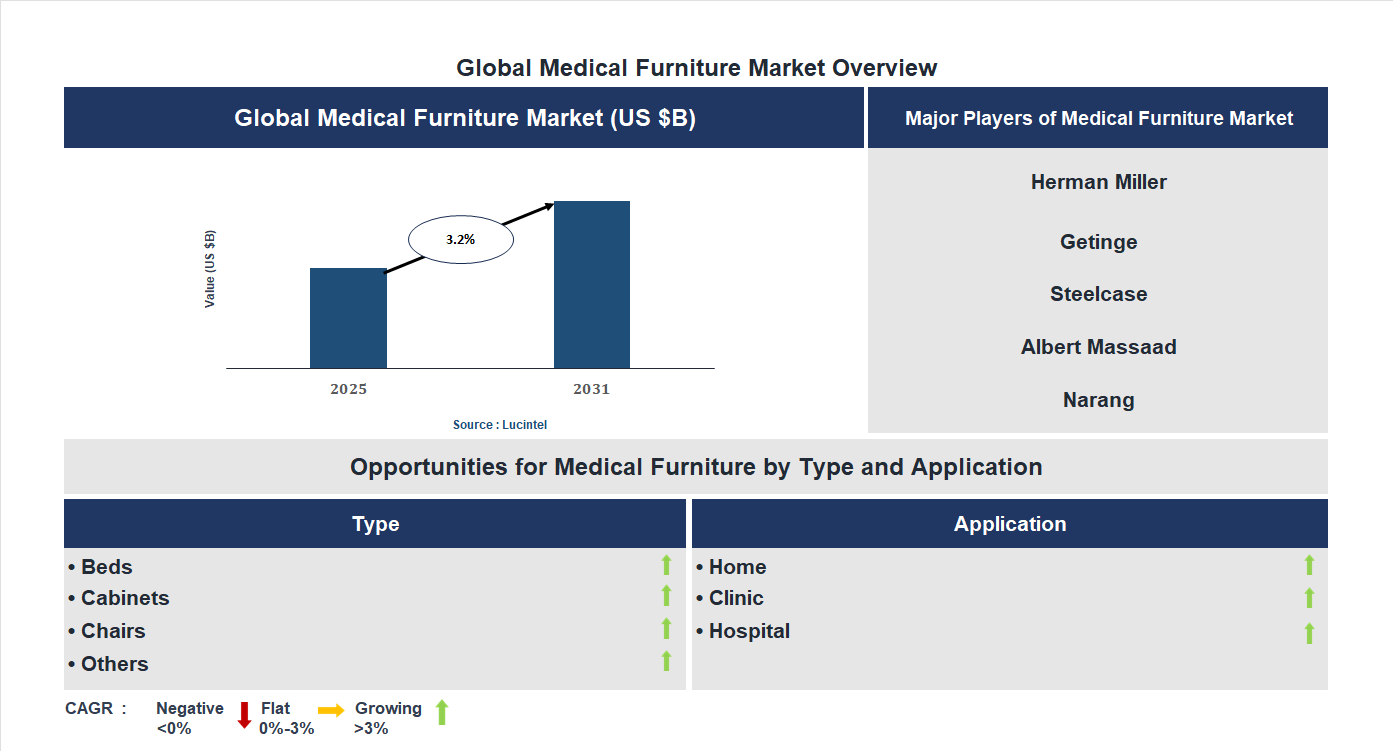
The future of the global medical furniture market looks promising with opportunities in the home, clinic, and hospital markets. The global medical furniture market is expected to grow with a CAGR of 3.2% from 2025 to 2031. The major drivers for this market are the increasing demand for advanced hospital infrastructure, the rising number of healthcare facilities & clinics, and the growing focus on patient comfort & safety.• Lucintel forecasts that, within the type category, bed is expected to witness the highest growth over the forecast period.
• Within the application category, hospital is expected to witness the highest growth.
• In terms of region, APAC is expected to witness the highest growth over the forecast period. Gain valuable insights for your business decisions with our comprehensive 150+ page report. Sample figures with some insights are shown below.
Emerging Trends in the Medical Furniture Market
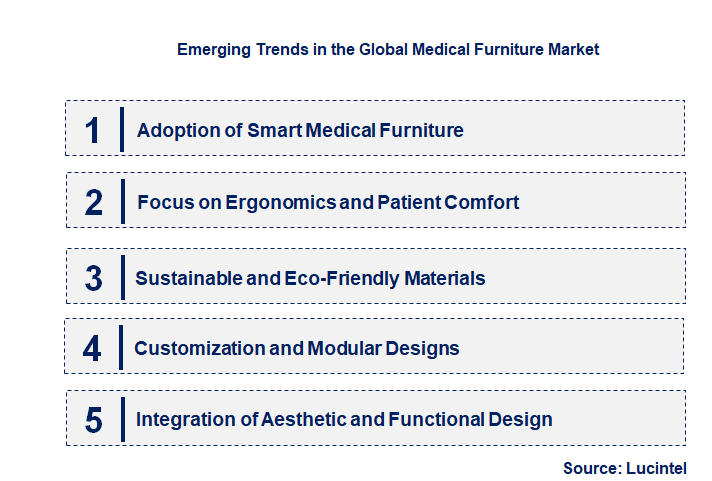
The medical furniture market is experiencing rapid evolution driven by technological advancements, changing healthcare needs, and increasing investments in healthcare infrastructure worldwide. As hospitals and clinics seek to improve patient care and operational efficiency, innovative designs and sustainable solutions are gaining prominence. The integration of smart technology, customization, and ergonomic designs are transforming traditional medical furniture into more functional and patient-centric solutions. These developments are not only enhancing the quality of healthcare delivery but also influencing market dynamics, competitive strategies, and consumer preferences. Understanding these emerging trends is crucial for stakeholders aiming to capitalize on growth opportunities and stay ahead in this competitive landscape.• Adoption of Smart Medical Furniture: Integration of IoT and automation technologies is revolutionizing medical furniture by enabling real-time monitoring, improved hygiene, and enhanced patient safety. Smart beds, chairs, and cabinets can track usage, alert staff to maintenance needs, and facilitate seamless communication with healthcare systems. This trend improves operational efficiency, reduces errors, and enhances patient outcomes, making smart furniture a key differentiator in modern healthcare facilities.
• Focus on Ergonomics and Patient Comfort: Increasing emphasis on ergonomic design aims to improve patient comfort and staff efficiency. Adjustable features, supportive cushions, and user-friendly interfaces are being incorporated into furniture to reduce physical strain and promote faster recovery. This trend reflects a shift towards patient-centered care, where comfort and safety are prioritized, ultimately leading to better patient satisfaction and staff productivity.
• Sustainable and Eco-Friendly Materials: Growing environmental awareness is driving the adoption of sustainable materials in medical furniture. Recyclable, biodegradable, and low-emission materials are being used to reduce the ecological footprint of healthcare facilities. This trend aligns with global sustainability goals and enhances the reputation of healthcare providers committed to eco-conscious practices, while also complying with regulatory standards.
• Customization and Modular Designs: The demand for flexible, adaptable furniture solutions is increasing, especially in multi-purpose healthcare settings. Modular designs allow easy reconfiguration to meet specific needs, such as different patient sizes or treatment types. Customization options enable healthcare providers to optimize space utilization and improve workflow, leading to more efficient and personalized patient care environments.
• Integration of Aesthetic and Functional Design: There is a rising trend towards blending aesthetic appeal with functionality in medical furniture. Modern designs focus on creating welcoming, non-clinical environments that reduce patient anxiety and improve overall experience. This approach also considers ease of cleaning and maintenance, ensuring that furniture remains hygienic and durable, while contributing positively to the healthcare facility’s ambiance. In summary, these emerging trends are significantly reshaping the medical furniture market by fostering innovation, enhancing patient and staff experiences, and promoting sustainability. They are driving the development of smarter, more comfortable, and environmentally responsible solutions that meet the evolving demands of modern healthcare environments. As a result, market players are increasingly focusing on integrating technology, design, and sustainability to gain competitive advantage and meet future healthcare challenges.
Recent Development in the Medical Furniture Market
The medical furniture market has experienced significant growth driven by technological advancements, increasing healthcare infrastructure, and rising patient care standards worldwide. As hospitals, clinics, and healthcare facilities modernize, the demand for innovative, durable, and ergonomic furniture has surged. Additionally, the focus on infection control and patient comfort has prompted manufacturers to develop specialized products. The market is also influenced by regulatory standards and the growing adoption of smart furniture integrated with healthcare technology. These factors collectively shape the evolving landscape of medical furniture, creating new opportunities and challenges for industry stakeholders.• Technological Integration: The incorporation of smart technology into medical furniture enhances patient monitoring and staff efficiency, leading to improved healthcare delivery and increased market competitiveness.
• Sustainable Materials: The shift towards eco-friendly and sustainable materials in manufacturing medical furniture reduces environmental impact and appeals to healthcare providers prioritizing green practices.
• Customization and Ergonomics: Growing demand for customized, ergonomic furniture improves patient comfort and staff productivity, influencing product design and market offerings.
• Regulatory Standards: Stricter safety and infection control regulations drive innovation and compliance in medical furniture, ensuring safety and quality in healthcare environments.
• Expansion in Emerging Markets: Rising healthcare infrastructure investments in emerging economies expand market reach, offering new growth opportunities for manufacturers. These developments collectively are transforming the medical furniture market by fostering innovation, enhancing product quality, and expanding global reach. They are also driving increased competition and encouraging sustainable practices, ultimately improving healthcare environments and patient outcomes.
Strategic Growth Opportunities in the Medical Furniture Market
The medical furniture market is experiencing rapid evolution driven by technological advancements, increasing healthcare infrastructure, and rising patient care standards worldwide. As healthcare facilities seek to enhance patient comfort, safety, and operational efficiency, several strategic growth opportunities are emerging across various applications. These opportunities are shaping the future landscape of medical furniture, enabling providers to meet evolving demands and improve overall healthcare delivery. Key growth areas include hospital furniture, outpatient clinic furniture, long-term care furniture, diagnostic and treatment furniture, and home healthcare furniture. Exploring these opportunities reveals significant potential for innovation, market expansion, and improved patient outcomes.• Hospital Furniture: Enhanced patient safety and comfort drive demand for ergonomic, durable, and customizable hospital furniture, leading to improved patient satisfaction and operational efficiency.
• Outpatient Clinic Furniture: The rise in outpatient services necessitates versatile, space-efficient, and easy-to-clean furniture, boosting clinic capacity and patient throughput.
• Long-term Care Furniture: Growing aging populations increase demand for specialized, comfortable, and accessible furniture that supports mobility and independence in long-term care facilities.
• Diagnostic and Treatment Furniture: Technological integration in diagnostic rooms requires adaptable, high-tech furniture that improves workflow and precision in medical procedures.
• Home Healthcare Furniture: The shift towards home-based care fuels demand for portable, user-friendly, and space-saving furniture, expanding market reach and patient comfort. These growth opportunities are significantly impacting the medical furniture market by fostering innovation, expanding product portfolios, and enabling healthcare providers to deliver higher quality care. They are also driving market expansion into emerging regions and diverse healthcare settings, ultimately contributing to improved patient experiences and operational efficiencies across the healthcare industry.
Medical Furniture Market Driver and Challenges
The medical furniture market is influenced by a variety of technological, economic, and regulatory factors that shape its growth and development. Advances in healthcare technology and increasing demand for modern, ergonomic, and customizable furniture are key drivers. Economic factors such as rising healthcare expenditure and expanding healthcare infrastructure further propel market expansion. Regulatory standards ensure safety and quality, influencing product innovation and compliance. However, the market also faces challenges including high manufacturing costs, stringent regulatory requirements, and supply chain disruptions. Understanding these drivers and challenges is essential for stakeholders to navigate the evolving landscape and capitalize on emerging opportunities effectively. The factors responsible for driving the medical furniture market include:• Technological Innovation: The integration of advanced materials and ergonomic designs enhances patient comfort and staff efficiency. Innovations such as antimicrobial surfaces and smart furniture with integrated technology improve safety and functionality. These advancements meet the increasing demand for patient-centered care and help healthcare facilities differentiate themselves. As technology continues to evolve, manufacturers are investing heavily in R&D to develop innovative products, which accelerates market growth and broadens product offerings.
• Rising Healthcare Expenditure: Increasing investments in healthcare infrastructure worldwide, especially in developing countries, are fueling demand for medical furniture. Governments and private sectors are allocating substantial funds to upgrade hospitals, clinics, and long-term care facilities. This financial commitment ensures the procurement of modern, durable, and compliant furniture, supporting the overall expansion of healthcare services. The trend is expected to continue as healthcare spending rises globally, creating sustained demand for specialized medical furniture.
• Growing Aging Population: The global increase in the elderly population drives demand for specialized medical furniture such as adjustable beds, wheelchairs, and ergonomic chairs. Older adults require comfortable, accessible, and safe furniture to support their healthcare needs. This demographic shift prompts healthcare providers to invest in patient-centric furniture solutions, thereby expanding the market. The aging population also increases the prevalence of chronic diseases, further boosting demand for supportive medical furniture.
• Regulatory Standards and Certifications: Strict compliance with safety, quality, and environmental standards influences product development and market entry. Regulatory bodies such as the FDA and CE mark ensure that medical furniture meets specific criteria, fostering consumer trust and safety. Manufacturers must invest in quality assurance and certification processes, which can increase costs but also enhance product credibility. These standards drive innovation and ensure that products are safe, reliable, and compliant with international regulations. The challenges facing the medical furniture market include:
• High Manufacturing Costs: Producing medical furniture involves the use of specialized materials and advanced manufacturing techniques, which can be costly. These expenses impact pricing strategies and profit margins, especially for small and medium-sized enterprises. Additionally, maintaining quality standards and compliance adds to production costs. High costs can limit market accessibility for some healthcare providers, particularly in developing regions, potentially restraining market growth.
• Stringent Regulatory Environment: Navigating complex regulatory frameworks across different countries poses a significant challenge. Compliance with diverse standards requires substantial investment in testing, certification, and documentation. Delays in approval processes can hinder product launches and market entry. Moreover, evolving regulations necessitate continuous updates to product designs and manufacturing practices, increasing operational complexity and costs for manufacturers.
• Supply Chain Disruptions: The global supply chain for raw materials and components used in medical furniture is vulnerable to disruptions caused by geopolitical tensions, pandemics, and logistical issues. These disruptions can lead to delays in production and delivery, affecting customer satisfaction and revenue. Maintaining a resilient supply chain requires strategic planning and diversification, which can increase operational complexity and costs, potentially hindering market growth. In summary, the medical furniture market is driven by technological advancements, increasing healthcare investments, demographic shifts, and regulatory compliance. However, high manufacturing costs, regulatory hurdles, and supply chain issues pose significant challenges. These factors collectively influence market dynamics, requiring stakeholders to innovate and adapt strategically. The overall impact is a market poised for growth, provided that companies effectively navigate these drivers and challenges to meet evolving healthcare needs and standards.
List of Medical Furniture Companies
Companies in the market compete on the basis of product quality offered. Major players in this market focus on expanding their manufacturing facilities, R&D investments, infrastructural development, and leverage integration opportunities across the value chain. With these strategies medical furniture companies cater increasing demand, ensure competitive effectiveness, develop innovative products & technologies, reduce production costs, and expand their customer base. Some of the medical furniture companies profiled in this report include-• Herman Miller
• Getinge
• Steelcase
• Albert Massaad
• Narang
• Ocura
• Paramount Bed
• Hill-Rom
• Stryker
• Linet Group
Medical Furniture Market by Segment
The study includes a forecast for the global medical furniture market by type, application, and region.Medical Furniture Market by Type [Value from 2019 to 2031]:
• Beds
• Cabinets
• Chairs
• Others
Medical Furniture Market by Application [Value from 2019 to 2031]:
• Home
• Clinic
• Hospital
Medical Furniture Market by Region [Value from 2019 to 2031]:
• North America
• Europe
• Asia Pacific
• The Rest of the World
Country Wise Outlook for the Medical Furniture Market
The medical furniture market has experienced significant growth driven by technological advancements, increasing healthcare infrastructure, and rising demand for modern medical facilities worldwide. Countries are investing heavily in upgrading their healthcare environments to improve patient care and operational efficiency. Innovations in ergonomic design, sterilization, and material durability are shaping the industry. Regulatory standards and sustainability concerns are also influencing product development. As healthcare systems evolve, the market is expected to see continued expansion, with key players focusing on customization and smart furniture solutions. The following summarizes recent developments in the United States, China, Germany, India, and Japan.• United States: The US market has seen a surge in smart medical furniture integrated with IoT technology, enhancing patient monitoring and staff efficiency. Hospitals are investing in ergonomic, space-saving designs to improve patient comfort and staff workflow. Regulatory compliance and sustainability are priorities, leading to eco-friendly materials and sterilization innovations. The adoption of modular furniture allows for flexible healthcare environments, especially in response to COVID-19. Additionally, private healthcare providers are increasingly upgrading their facilities with advanced furniture solutions to attract patients.
• China: China’s medical furniture market is rapidly expanding due to government initiatives to modernize healthcare infrastructure. There is a strong focus on affordable yet durable furniture that meets international standards. The rise of private hospitals and clinics has driven demand for customized and ergonomic furniture. E-commerce platforms are facilitating wider distribution of medical furniture, including innovative sterilization and antimicrobial products. The market is also witnessing increased investment in smart furniture with integrated technology for improved patient care and operational efficiency.
• Germany: Germany’s market emphasizes high-quality, durable, and sustainable medical furniture, driven by strict regulatory standards and environmental concerns. There is a growing trend toward ergonomic designs that enhance staff comfort and patient safety. The adoption of digital and smart furniture solutions is increasing, especially in hospitals and clinics aiming for digital transformation. Germany’s focus on innovation and quality has positioned it as a leader in medical furniture manufacturing within Europe, with a strong export market. The integration of antimicrobial materials is also gaining importance to prevent infections.
• India: The Indian medical furniture market is experiencing rapid growth due to increasing healthcare infrastructure development and government initiatives like Ayushman Bharat. There is a rising demand for affordable, durable, and functional furniture in both public and private healthcare facilities. The market is witnessing a shift toward ergonomic and space-efficient designs to optimize limited space. Local manufacturing is expanding, reducing reliance on imports, and fostering innovation in materials and design. The adoption of modular and customizable furniture solutions is also increasing to meet diverse healthcare needs across urban and rural areas.
• Japan: Japan’s market is characterized by a focus on advanced, space-efficient, and ergonomic medical furniture, driven by an aging population requiring specialized healthcare environments. There is a significant emphasis on infection control, sterilization, and sustainability. The integration of smart technology, such as IoT-enabled furniture, is gaining traction to improve patient care and operational management. Japan’s manufacturers are investing in innovative materials and designs that prioritize safety and comfort. The market also benefits from strong regulatory standards and a culture of technological innovation, positioning it as a key player in the global medical furniture industry.

Features of the Global Medical Furniture Market
Market Size Estimates: Medical furniture market size estimation in terms of value ($B). Trend and Forecast Analysis: Market trends (2019 to 2024) and forecast (2025 to 2031) by various segments and regions. Segmentation Analysis: Medical furniture market size by type, application, and region in terms of value ($B). Regional Analysis: Medical furniture market breakdown by North America, Europe, Asia Pacific, and Rest of the World. Growth Opportunities: Analysis of growth opportunities in different types, applications, and regions for the medical furniture market. Strategic Analysis: This includes M&A, new product development, and competitive landscape of the medical furniture market. Analysis of competitive intensity of the industry based on Porter’s Five Forces model.
FAQ
Q1. What is the growth forecast for medical furniture market? Answer: The global medical furniture market is expected to grow with a CAGR of 3.2% from 2025 to 2031. Q2. What are the major drivers influencing the growth of the medical furniture market? Answer: The major drivers for this market are the increasing demand for advanced hospital infrastructure, the rising number of healthcare facilities & clinics, and the growing focus on patient comfort & safety. Q3. What are the major segments for medical furniture market? Answer: The future of the medical furniture market looks promising with opportunities in the home, clinic, and hospital markets. Q4. Who are the key medical furniture market companies? Answer: Some of the key medical furniture companies are as follows:• Herman Miller
• Getinge
• Steelcase
• Albert Massaad
• Narang
• Ocura
• Paramount Bed
• Hill-Rom
• Stryker
• Linet Group Q5. Which medical furniture market segment will be the largest in future? Answer: Lucintel forecasts that, within the type category, bed is expected to witness the highest growth over the forecast period. Q6. In medical furniture market, which region is expected to be the largest in next 5 years? Answer: In terms of region, APAC is expected to witness the highest growth over the forecast period. Q7. Do we receive customization in this report? Answer: Yes, Lucintel provides 10% customization without any additional cost.
Table of Contents
List of Figures
List of Tables
Methodology
- In-depth interviews of the major players in this market
- Detailed secondary research from competitors’ financial statements and published data
- Extensive searches of published works, market, and database information pertaining to industry news, company press releases, and customer intentions
- A compilation of the experiences, judgments, and insights of Lucintel’s professionals, who have analyzed and tracked this market over the years.


Buy Now
Choose a license that fits your team. Instant PDF delivery.
Prices exclude taxes. Instant delivery. Custom licensing available on request.
Key Questions
- • What are some of the most promising, high-growth opportunities for the medical furniture market by type (beds, cabinets, chairs, and others), application (home, clinic, and hospital), and region (North America, Europe, Asia Pacific, and the Rest of the World)?
- • Which segments will grow at a faster pace and why?
- • Which region will grow at a faster pace and why?
- • What are the key factors affecting market dynamics? What are the key challenges and business risks in this market?
- • What are the business risks and competitive threats in this market?
- • What are the emerging trends in this market and the reasons behind them?
- • What are some of the changing demands of customers in the market?
- • What are the new developments in the market? Which companies are leading these developments?
- • Who are the major players in this market? What strategic initiatives are key players pursuing for business growth?
- • What are some of the competing products in this market and how big of a threat do they pose for loss of market share by material or product substitution?
- • What M&A activity has occurred in the last 5 years and what has its impact been on the industry? For any questions related to Medical Furniture Market, Medical Furniture Market Size, Medical Furniture Market Growth, Medical Furniture Market Analysis, Medical Furniture Market Report, Medical Furniture Market Share, Medical Furniture Market Trends, Medical Furniture Market Forecast, Medical Furniture Companies, write Lucintel analyst at email: helpdesk@lucintel.com. We will be glad to get back to you soon.


