
Market Report · July 22, 2026

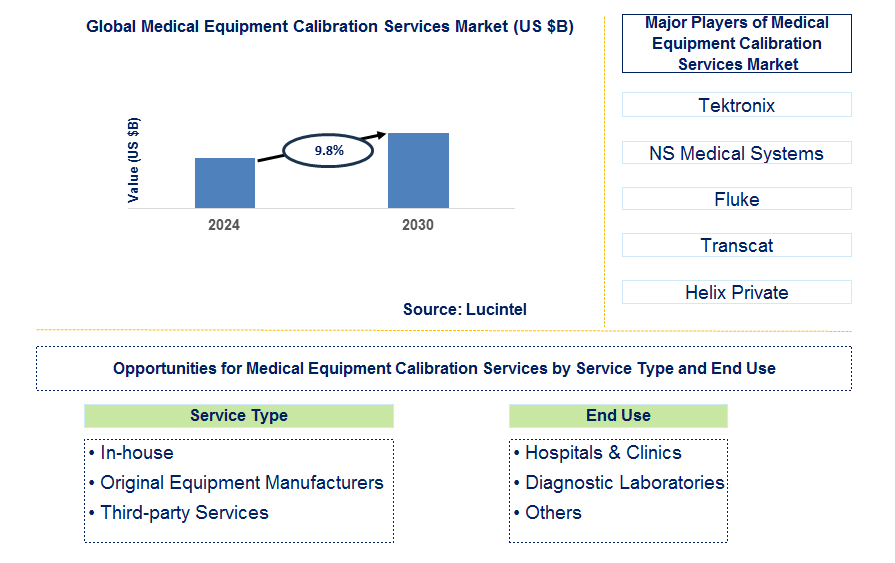
Key data points: The growth forecast = 9.8% annually for the next 6 years. Scroll below to get more insights. This market report covers trends, opportunities, and forecasts in the global medical equipment calibration services market to 2030 by service type (in-house, original equipment manufacturers, and third-party services), end use (hospitals & clinics, diagnostic laboratories, and others), and region (North America, Europe, Asia Pacific, and the Rest of the World)
We'll send your sample report shortly.
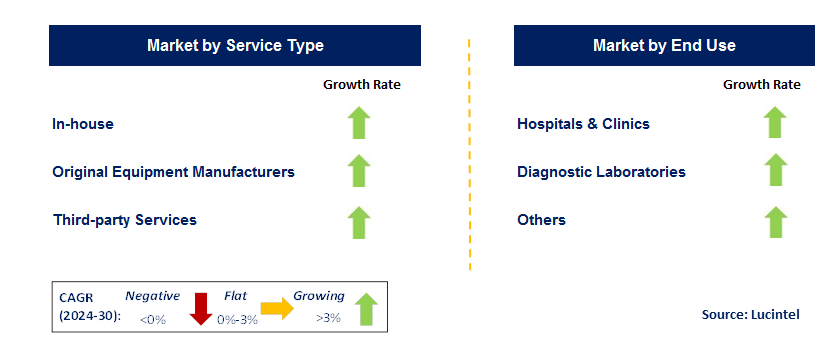
• Lucintel forecasts that, within the service type category, third-party services will remain the largest segment over the forecast period.
• Within the end-use category, hospitals & clinics will remain the largest segment due to the wider variety and larger quantity of medical equipment available at these facilities.
• In terms of regions, North America will remain the largest region over the forecast period due to the increasing number of stringent regulations and accreditation requirements regarding medical equipment maintenance and calibration imposed in this region. Gain valuable insights for your business decisions with our comprehensive 150+ page report.
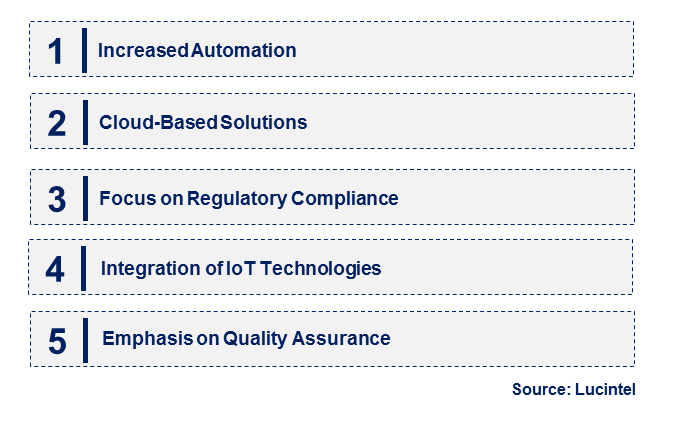
• Increased Automation: Automation in calibration processes is becoming prevalent, improving accuracy and efficiency while reducing human error. This trend allows healthcare facilities to optimize their calibration timelines, ensuring devices are compliant with regulations and ready for use promptly.
• Cloud-Based Solutions: The shift to cloud-based calibration management software is enhancing data accessibility and tracking. This trend allows for real-time monitoring of calibration activities, improving compliance and making it easier for facilities to maintain accurate records of service.
• Focus on Regulatory Compliance: Stricter regulations in healthcare are driving the demand for more rigorous calibration services. Companies are investing in services that ensure compliance with international standards, which enhances the credibility of their medical devices in global markets.
• Integration of IoT Technologies: The incorporation of Internet of Things (IoT) technologies in calibration services is improving device tracking and data collection. This trend allows for predictive maintenance and more proactive calibration practices, ultimately enhancing equipment reliability.
• Emphasis on Quality Assurance: A growing emphasis on quality assurance in healthcare is prompting more facilities to prioritize regular calibration services. This trend is crucial for patient safety and effective treatment, driving demand for high-quality calibration solutions. These trends are reshaping the medical equipment calibration services market by improving efficiency, ensuring compliance, and enhancing the reliability of medical devices, ultimately leading to better patient outcomes.
• Adoption of Advanced Calibration Technologies: The introduction of high-precision calibration technologies is enhancing the accuracy of medical devices. These advancements ensure compliance with stringent regulatory requirements, promoting patient safety and improving healthcare outcomes.
• Expansion of Service Offerings: Companies are expanding their service portfolios to include on-site calibration, remote calibration, and maintenance services. This diversification allows for greater flexibility and accessibility, catering to a wider range of healthcare facilities.
• Collaborations and Partnerships: Strategic partnerships between calibration service providers and medical device manufacturers are becoming common. These collaborations facilitate knowledge sharing and resource optimization, enhancing the overall quality of calibration services.
• Investment in Training and Certification: Increasing investments in training programs for calibration technicians are improving service quality. Well-trained professionals are essential for maintaining high standards in medical device calibration, directly impacting patient safety.
• Emphasis on Data Analytics: The utilization of data analytics in calibration services is on the rise. This development allows for better tracking of calibration history and predictive maintenance, ensuring that medical devices operate at optimal performance levels. These developments are transforming the medical equipment calibration services market by enhancing service quality, ensuring compliance, and improving patient safety, thereby meeting the evolving needs of healthcare providers.
• On-Site Calibration Services: The demand for on-site calibration services is rising, providing convenience for healthcare facilities. This opportunity allows service providers to offer tailored solutions, enhancing client relationships and ensuring that equipment remains compliant and operational.
• Telehealth Calibration Services: With the rise of telehealth, calibration services for remote medical devices are becoming crucial. This opportunity allows companies to innovate and provide calibration solutions that cater to telehealth technologies, improving patient care in remote settings.
• Pharmaceutical Equipment Calibration: The calibration of pharmaceutical equipment is gaining prominence due to stringent regulations. This opportunity enables service providers to specialize in this niche, catering to the pharmaceutical industry’s need for high-quality calibration services.
• Biotechnology Equipment Calibration: As the biotechnology sector grows, the demand for specialized calibration services for biotech equipment is increasing. This opportunity allows providers to expand their service offerings and tap into a rapidly growing market.
• Regulatory Compliance Consulting: Providing consulting services for regulatory compliance in calibration practices is an emerging opportunity. This service can help healthcare facilities navigate complex regulatory landscapes, ensuring they meet all necessary standards for medical equipment. These growth opportunities are reshaping the medical equipment calibration services market by enhancing service capabilities, ensuring compliance, and addressing the evolving needs of various healthcare applications.
• Technological Advancements: Continuous advancements in calibration technologies are driving market growth by enhancing service accuracy and efficiency. Providers that leverage cutting-edge technology can offer superior calibration services, gaining a competitive advantage.
• Regulatory Compliance: Stricter regulations in the healthcare sector are pushing organizations to prioritize calibration services. Compliance with these regulations is essential for maintaining device reliability and ensuring patient safety.
• Growing Healthcare Expenditure: Increasing healthcare expenditure globally is driving demand for high-quality calibration services. As healthcare facilities expand and upgrade their equipment, the need for reliable calibration becomes more critical.
• Aging Medical Equipment: The aging of medical equipment in healthcare facilities necessitates regular calibration services. Older devices require more frequent calibration to ensure their reliability and performance, driving market demand.
• Consumer Awareness: Growing consumer awareness of patient safety and quality assurance in healthcare is prompting providers to prioritize calibration services. This awareness drives demand for consistent and reliable calibration practices. Challenges in the medical equipment calibration services market are:
• Skilled Labor Shortage: A shortage of skilled technicians in calibration services poses a challenge for the industry. Ensuring that services are delivered by qualified professionals is critical for maintaining service quality.
• High Operational Costs: The cost of maintaining advanced calibration technologies can be high, affecting profitability. Service providers must balance investment in technology with pricing strategies to remain competitive.
• Complex Regulatory Requirements: Navigating complex regulatory landscapes can be challenging for service providers. Ensuring compliance with varying regulations across regions requires significant resources and expertise. These drivers and challenges shape the medical equipment calibration services market by influencing service delivery, operational efficiency, and compliance practices, ultimately impacting patient safety and healthcare outcomes.
• Tektronix
• NS Medical Systems
• Fluke
• Transcat
• Helix Private
• Spectrum Technologies
• JM Test Systems
• Micron
• JPen Medical
• Industrial Calibration and Service Company
• In-house
• Original Equipment Manufacturers
• Third-party Services
• Hospitals & Clinics
• Diagnostic Laboratories
• Others
• North America
• Europe
• Asia Pacific
• The Rest of the World
• United States: The US has implemented stricter regulatory requirements, increasing the demand for calibration services. Advanced technologies, such as cloud-based calibration management software, are being adopted to streamline processes and ensure compliance with FDA standards, resulting in improved service efficiency and traceability.
• China: In China, the growth of the healthcare sector has spurred investments in calibration services. The government is promoting quality standards for medical devices, driving local companies to enhance their calibration capabilities and meet international certifications, thus fostering a more competitive landscape.
• Germany: Germany continues to lead in precision engineering, with a focus on enhancing calibration services for high-tech medical equipment. The integration of Industry 4.0 technologies has enabled more efficient calibration processes, ensuring that devices meet stringent European Union regulations, thereby boosting the market’s reliability.
• India: The Indian healthcare sector is rapidly evolving, leading to a rising need for calibration services. Increased investments in medical technology and infrastructure improvements are prompting healthcare providers to prioritize accurate calibration, improving patient safety and operational efficiency in hospitals.
• Japan: Japan is at the forefront of technological advancement in calibration services. The adoption of robotic and automated calibration systems is gaining traction, enhancing accuracy and reducing human error. This trend is crucial for maintaining the high standards expected in the Japanese healthcare system.


• Tektronix
• NS Medical Systems
• Fluke
• Transcat
• Helix Private
• Spectrum Technologies
• JM Test Systems
• Micron
• JPen Medical
• Industrial Calibration and Service Company Q5. Which medical equipment calibration services market segment will be the largest in future? Answer: Lucintel forecasts that third-party services will remain the largest segment over the forecast period. Q6. In medical equipment calibration services market, which region is expected to be the largest in next 5 years? Answer: North America will remain the largest region over the forecast period due to the increasing number of stringent regulations and accreditation requirements regarding medical equipment maintenance and calibration imposed in this region. Q.7 Do we receive customization in this report? Answer: Yes, Lucintel provides 10% customization without any additional cost.


Choose a license that fits your team. Instant PDF delivery.
Prices exclude taxes. Instant delivery. Custom licensing available on request.
Market Report · July 22, 2026
Market Report · July 22, 2026
Market Report · July 22, 2026
Trusted partner for strategic intelligence and business growth


Receive a complimentary market analysis tailored to your industry. Our analysts will identify key growth opportunities and competitive dynamics specific to your business.

Market size, growth rate, and key trend analysis for your specific sector.

Top competitor positioning and market share analysis.

Strategic recommendations backed by data-driven insights.
Get curated market intelligence and competitive moves straight to your inbox.
By subscribing, you agree to receive our monthly insights. Unsubscribe anytime.
Receive a complimentary market analysis tailored to your industry. Our analysts will identify key growth opportunities and competitive dynamics specific to your business.
Market size, growth rate, and key trend analysis for your specific sector.
Top competitor positioning and market share analysis.
Strategic recommendations backed by data-driven insights.
Get curated market intelligence, emerging trends, and competitive moves straight to your inbox each month.
By subscribing, you agree to receive our monthly insights. Unsubscribe anytime.
We'll send your sample report shortly.