
Report Feature
Medical Botox Market Trends and Forecast
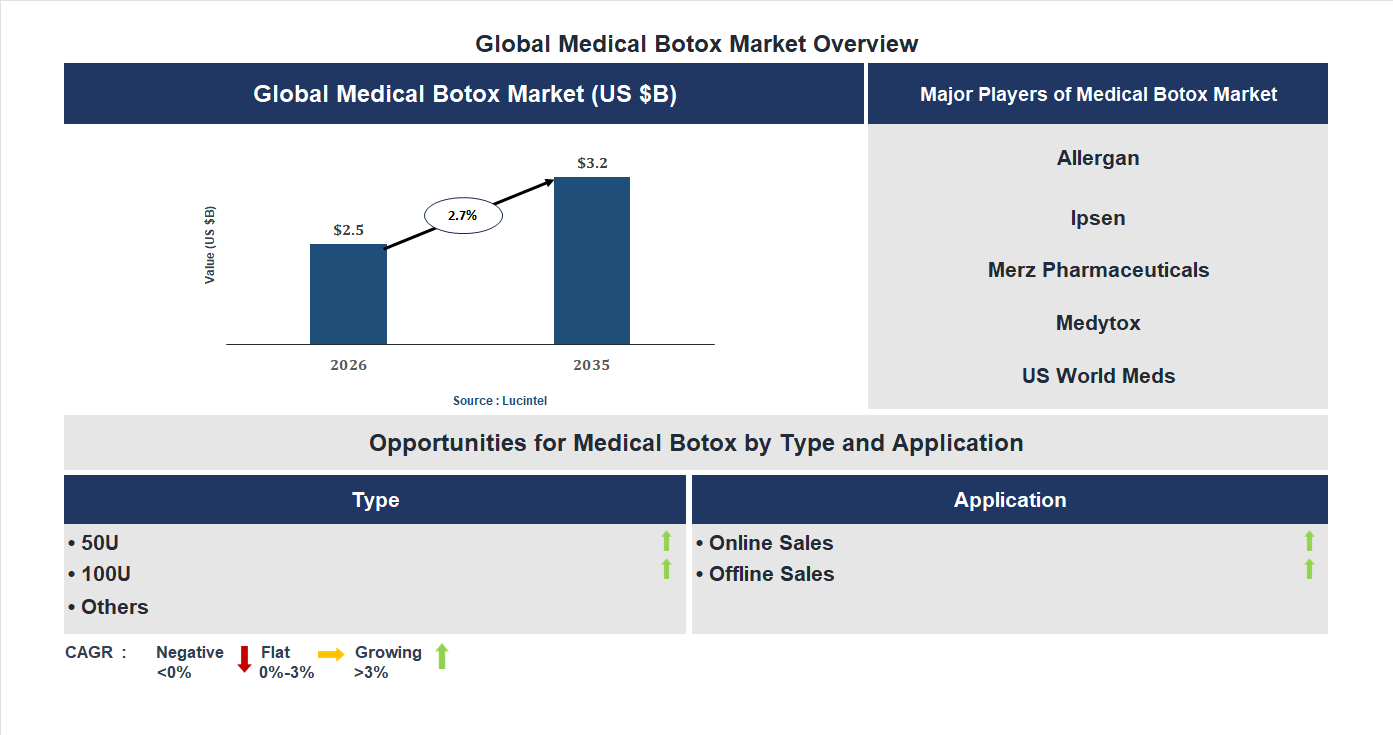
The future of the global medical botox market looks promising with opportunities in the online sale and offline sale markets. The global medical botox market is expected to reach an estimated $3.2 billion by 2035 with a CAGR of 2.7% from 2026 to 2035. The major drivers for this market are the increasing demand for cosmetic procedures, the rising prevalence of neurological disorders, and the growing use in therapeutic treatments.• Lucintel forecasts that, within the type category, 100U is expected to witness higher growth over the forecast period.
• Within the application category, offline sale is expected to witness higher growth.
• In terms of region, APAC is expected to witness the highest growth over the forecast period. Gain valuable insights for your business decisions with our comprehensive 150+ page report. Sample figures with some insights are shown below.
Emerging Trends in the Medical Botox Market
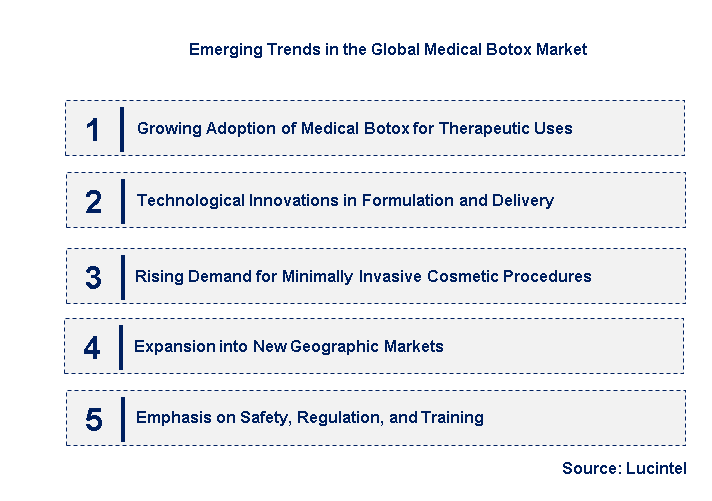
The medical botox market is experiencing rapid growth driven by technological advancements, increasing demand for minimally invasive procedures, and expanding applications across medical and aesthetic fields. As consumer awareness rises and healthcare providers adopt innovative techniques, the market is evolving dynamically. These developments are not only expanding the scope of Botox applications but also improving safety, efficacy, and accessibility. The following key trends highlight the major shifts shaping this market, reflecting its trajectory toward more personalized, efficient, and diverse treatment options. Understanding these trends is essential for stakeholders aiming to capitalize on emerging opportunities and navigate the competitive landscape effectively.• Growing Adoption of Medical Botox for Therapeutic Uses: Increasing use of Botox for medical conditions such as chronic migraines, hyperhidrosis, and muscle spasticity is expanding the market beyond aesthetic applications. This trend is driven by rising awareness among healthcare providers and patients about Botox’s therapeutic benefits, leading to broader acceptance and integration into treatment protocols. The shift enhances market revenue streams and encourages ongoing research to explore new medical indications, ultimately positioning Botox as a versatile treatment option in various healthcare settings.
• Technological Innovations in Formulation and Delivery: Advances in formulation techniques and delivery methods are improving the safety, precision, and efficacy of Botox treatments. Innovations such as microdosing, improved injection devices, and targeted delivery systems reduce side effects and enhance patient comfort. These technological improvements enable practitioners to customize treatments more effectively, expanding the range of conditions treatable with Botox. As a result, the market benefits from increased confidence among clinicians and patients, fostering growth and encouraging further R&D investments.
• Rising Demand for Minimally Invasive Cosmetic Procedures: The preference for non-surgical, minimally invasive aesthetic treatments continues to surge, driven by consumer desire for quick, effective, and low-risk options. Botox remains a leading choice due to its proven safety profile and immediate results. This trend is supported by social media influence and changing beauty standards, which emphasize natural-looking results. The increased demand is prompting providers to offer more accessible Botox services, expanding market reach, and encouraging innovations in treatment techniques to meet evolving consumer expectations.
• Expansion into New Geographic Markets: Emerging economies and regions with growing middle-class populations are witnessing increased adoption of Botox treatments. Market expansion is facilitated by decreasing costs, improved healthcare infrastructure, and rising awareness about aesthetic and therapeutic benefits. This geographic diversification not only boosts overall market size but also introduces new competitive dynamics. Companies are tailoring marketing strategies and product offerings to local preferences, which accelerates market penetration and fosters global growth, making Botox treatments more accessible worldwide.
• Emphasis on Safety, Regulation, and Training: As the market expands, there is a heightened focus on ensuring safety standards, regulatory compliance, and practitioner training. Governments and industry bodies are implementing stricter guidelines to prevent adverse effects and ensure quality control. Enhanced training programs improve practitioner skills, reducing complications and increasing patient trust. This trend promotes responsible growth, mitigates risks, and sustains market credibility. It also encourages innovation in safety protocols and educational initiatives, which are crucial for maintaining consumer confidence and supporting long-term market stability. In summary, these trends are collectively transforming the medical botox market by broadening its applications, enhancing treatment precision, expanding geographic reach, and emphasizing safety. This evolution is making Botox treatments more effective, accessible, and trusted, ultimately reshaping the landscape into a more diverse and resilient industry poised for sustained growth.
Recent Development in the Medical Botox Market
The medical botox market is experiencing rapid growth driven by increasing demand for minimally invasive cosmetic procedures and expanding therapeutic applications. Advances in technology and rising awareness about Botox’s benefits are fueling market expansion globally. The integration of innovative formulations and growing acceptance in medical treatments are further boosting industry prospects. This dynamic environment presents significant opportunities for manufacturers, healthcare providers, and investors to capitalize on emerging trends and meet the rising patient needs.• Growing Cosmetic Demand: The rising popularity of Botox for cosmetic purposes, such as wrinkle reduction and facial contouring, is a major growth driver. Increasing awareness and social acceptance are encouraging more individuals to seek minimally invasive procedures. This trend is supported by technological advancements that improve safety and efficacy. As a result, the market is experiencing a surge in demand, leading to higher sales and new product development, ultimately expanding the overall market size.
• Therapeutic Applications Expansion: Botox’s therapeutic uses are broadening beyond cosmetic applications to include conditions like chronic migraines, hyperhidrosis, and muscle spasticity. Growing clinical evidence and approval from regulatory bodies are facilitating this expansion. Healthcare providers are increasingly adopting Botox for these indications, which enhances patient quality of life and reduces healthcare costs. This diversification of applications is creating new revenue streams and strengthening market stability.
• Technological Innovations: Advances in formulation technology and injection techniques are improving the safety, precision, and effectiveness of Botox treatments. Innovations such as micro-dosing and targeted delivery systems are reducing side effects and increasing patient satisfaction. These technological improvements are attracting more practitioners and patients, thereby expanding the market. Continuous R&D investments are expected to sustain this growth trajectory and introduce next-generation products.
• Rising Awareness and Acceptance: Increased awareness campaigns and educational initiatives are informing both patients and healthcare providers about Botox’s benefits and safety profile. This heightened awareness is reducing misconceptions and encouraging wider adoption. Medical professionals are more confident in recommending Botox for various indications, which boosts market penetration. As acceptance grows, the demand for Botox treatments is expected to rise further, fueling overall market growth.
• Regulatory Approvals and Market Penetration: Regulatory approvals in emerging markets are opening new avenues for Botox distribution and use. Streamlined approval processes and supportive policies are enabling faster market entry. This expansion is increasing accessibility and affordability, especially in developing regions. Enhanced regulatory support and market penetration are driving global growth, making Botox a standard treatment option worldwide and significantly impacting the market landscape. The overall impact of these developments is a robust, expanding market characterized by increased innovation, broader application scope, and greater accessibility. This growth is attracting new entrants and investment, leading to competitive pricing and improved treatment options. Consequently, the medical botox market is poised for sustained expansion, benefiting patients, providers, and industry stakeholders alike.
Strategic Growth Opportunities in the Medical Botox Market
The medical botox market is experiencing rapid expansion driven by increasing demand for minimally invasive aesthetic and therapeutic procedures. Advances in formulation, growing awareness, and expanding applications are fueling growth opportunities across diverse healthcare settings. Key applications include cosmetic treatments, therapeutic uses, and innovative delivery methods, all contributing to a dynamic market landscape. Strategic investments and technological innovations are expected to further accelerate market growth, creating new avenues for providers and manufacturers alike.• Expansion of Cosmetic Botox Procedures for Anti-Aging and Facial Rejuvenation: The rising popularity of Botox for aesthetic purposes, such as wrinkle reduction and facial contouring, is a significant growth driver. Increasing consumer awareness and acceptance of minimally invasive procedures are fueling demand. Advances in formulation and techniques enable more natural results, attracting a broader demographic. Market players are investing in marketing and training to meet the growing need, making cosmetic Botox a dominant segment with substantial revenue potential.
• Growing Use of Botox for Therapeutic Indications like Chronic Migraine and Hyperhidrosis: Botox’s therapeutic applications are expanding beyond aesthetics, notably in treating chronic migraines, excessive sweating, and muscle spasticity. The increasing prevalence of these conditions and the approval of Botox for multiple indications are boosting adoption. Healthcare providers are recognizing Botox’s efficacy, leading to wider clinical use. This segment offers significant growth opportunities, supported by ongoing research, insurance coverage, and patient demand for effective, minimally invasive treatments.
• Development of Novel Delivery Systems and Formulations to Enhance Efficacy and Safety: Innovations in delivery methods, such as microneedle patches and targeted injections, are improving treatment precision and patient comfort. New formulations aim to extend duration and reduce side effects, increasing overall safety and efficacy. These advancements attract both clinicians and patients, expanding market reach. Investment in R&D for improved delivery systems is expected to drive market growth by enabling broader applications and improving treatment outcomes.
• Increasing Adoption of Botox in Emerging Markets Driven by Rising Healthcare Awareness: Emerging markets are witnessing increased adoption of Botox due to rising disposable incomes, urbanization, and growing awareness of aesthetic and therapeutic options. Local clinics and practitioners are adopting Botox treatments, supported by global manufacturers’ expansion strategies. Government initiatives to improve healthcare infrastructure and training further facilitate market penetration. This trend presents substantial growth opportunities, with untapped potential in regions experiencing rapid economic development and increasing demand for cosmetic and medical procedures.
• Integration of Botox with Other Aesthetic and Medical Technologies for Comprehensive Treatments: Combining Botox with other procedures like dermal fillers, laser treatments, and skincare regimens offers comprehensive aesthetic solutions. Integration enhances results, patient satisfaction, and treatment versatility. Medical applications are also benefiting from synergistic approaches, improving therapeutic outcomes. This trend encourages cross-disciplinary collaboration and innovation, creating new service offerings. Market players investing in integrated treatment protocols are positioned to capitalize on the growing demand for holistic, personalized care options. The overall market outlook is positively influenced by these growth opportunities, promising increased revenues, technological advancements, and expanded applications. As demand for both aesthetic and therapeutic uses continues to rise globally, strategic focus on innovation, emerging markets, and integrated solutions will be crucial for sustained growth and competitive advantage in the medical botox market.
Medical Botox Market Driver and Challenges
The medical botox market is influenced by a variety of technological, economic, and regulatory factors that shape its growth trajectory. Advances in minimally invasive procedures, increasing awareness of aesthetic and therapeutic benefits, and expanding applications across medical disciplines are key drivers. Simultaneously, regulatory approvals, reimbursement policies, and safety concerns pose significant challenges. The markets evolution depends on balancing innovation with compliance, addressing patient safety, and navigating economic fluctuations. Understanding these drivers and challenges is essential for stakeholders aiming to capitalize on opportunities while mitigating risks in this dynamic landscape. The factors responsible for driving the medical botox market include:-• Technological Advancements: The development of safer, more effective Botox formulations and delivery methods has significantly boosted market growth. Innovations such as microinjection techniques and improved formulations enhance patient outcomes and reduce side effects. These technological improvements enable practitioners to expand their applications from cosmetic to therapeutic uses, including chronic migraines, hyperhidrosis, and muscle spasticity. As research continues, new indications are emerging, further broadening the market scope. The ongoing innovation attracts investment, encourages product development, and increases adoption rates among healthcare providers, ultimately fueling market expansion.
• Rising Prevalence of Chronic Conditions: An increase in chronic neurological and muscular disorders, such as migraines, spasticity, and overactive bladder, is a major driver. Patients seeking minimally invasive, effective treatments are turning to Botox as a preferred option. The aging population further amplifies demand, as age-related conditions become more prevalent. Healthcare providers are increasingly recognizing Botox’s therapeutic benefits, leading to wider adoption. This trend not only sustains current market growth but also opens avenues for new therapeutic applications, thereby expanding the overall market size and revenue potential.
• Growing Awareness and Acceptance: Increased awareness about the benefits of Botox for both aesthetic and medical purposes has driven market growth. Educational campaigns, media coverage, and celebrity endorsements have contributed to reducing stigma and misconceptions. Patients are more informed and willing to opt for Botox treatments, which are now considered safe and effective when administered by trained professionals. This acceptance has led to higher patient demand, more clinics offering Botox services, and an overall boost in market penetration. As awareness continues to grow, the market is expected to see sustained expansion across diverse demographic groups.
• Expanding Application Scope: The diversification of Botox applications beyond cosmetic procedures into therapeutic areas is a key driver. Medical indications such as migraines, excessive sweating, and muscle spasticity are increasingly recognized, broadening the market base. Research into new uses, including depression and urinary incontinence, is ongoing, promising further growth opportunities. This expansion allows manufacturers to target multiple healthcare segments, increasing sales and market stability. The ability to serve both aesthetic and medical needs makes Botox a versatile product, ensuring its relevance in a competitive healthcare landscape.
• Increasing Investment and Strategic Collaborations: The market benefits from rising investments by pharmaceutical companies and strategic partnerships aimed at product development and market expansion. Funding supports clinical trials, regulatory approvals, and marketing efforts, accelerating product availability. Collaborations between biotech firms and healthcare providers facilitate training, distribution, and innovation. These investments enhance product pipelines and improve market reach, fostering competitive advantages. As companies seek to capitalize on emerging opportunities, strategic alliances will continue to drive growth, innovation, and market consolidation, ensuring sustained development in the medical botox market. The challenges facing this medical botox market include:-
• Regulatory and Safety Concerns: Stringent regulatory frameworks and safety issues pose significant hurdles. Variability in approval processes across regions can delay product launches and increase compliance costs. Safety concerns related to adverse effects, such as muscle weakness or allergic reactions, necessitate rigorous clinical testing and post-market surveillance. These factors can hinder market entry for new products and impact consumer confidence. Ensuring consistent safety standards and navigating complex regulatory landscapes require substantial investment and expertise, which may slow down innovation and market expansion.
• Reimbursement and Cost Issues: Limited reimbursement policies and high treatment costs restrict market growth. In many regions, insurance coverage for Botox treatments remains inadequate, making procedures less accessible to a broader population. The high cost of formulations and administration can deter potential patients, especially in developing economies. Healthcare providers may also face financial constraints, limiting their ability to offer Botox services. Addressing reimbursement challenges and reducing costs are crucial for expanding market reach and ensuring sustainable growth.
• Market Saturation and Competition: The increasing number of players and product options intensifies competition, leading to price wars and reduced profit margins. Established companies face pressure from new entrants offering similar or alternative treatments. Differentiating products and maintaining market share becomes challenging, especially as generic or off-label uses proliferate. Market saturation in developed regions may slow growth, prompting companies to seek emerging markets. Strategic innovation and branding are essential to sustain competitiveness amid a crowded landscape. In summary, the medical botox market is driven by technological innovations, expanding therapeutic applications, rising prevalence of chronic conditions, increased awareness, and strategic investments. However, regulatory hurdles, reimbursement issues, and intense competition present notable challenges. These factors collectively influence the market’s growth potential, requiring stakeholders to navigate complexities carefully. Overall, the market is poised for continued expansion, provided that companies effectively address safety, regulatory, and economic barriers while leveraging technological and clinical advancements to meet evolving patient needs.
List of Medical Botox Companies
Companies in the market compete on the basis of product quality offered. Major players in this market focus on expanding their manufacturing facilities, R&D investments, infrastructural development, and leverage integration opportunities across the value chain. With these strategies medical botox companies cater increasing demand, ensure competitive effectiveness, develop innovative products & technologies, reduce production costs, and expand their customer base. Some of the medical botox companies profiled in this report include-• Allergan
• Ipsen
• Merz Pharmaceuticals
• Medytox
• US World Meds
Medical Botox Market by Segment
The study includes a forecast for the global medical botox market by type, application, and region.Medical Botox Market by Type [Value from 2019 to 2035]:
• 50U
• 100U
• Others
Medical Botox Market by Application [Value from 2019 to 2035]:
• Online Sales
• Offline Sales
Medical Botox Market by Region [Value from 2019 to 2035]:
• North America
• Europe
• Asia Pacific
• The Rest of the World
Country Wise Outlook for the Medical Botox Market
The medical Botox market has experienced significant growth driven by increasing demand for minimally invasive aesthetic procedures, expanding therapeutic applications, and technological advancements. As healthcare systems evolve and consumer awareness rises, key markets are adopting innovative treatments to meet diverse patient needs. Regulatory approvals and research developments further influence market dynamics, fostering global expansion. The following summaries highlight recent developments in the United States, China, Germany, India, and Japan, reflecting regional trends and innovations shaping the future of the medical botox market.• United States: The U.S. remains the largest market, with a surge in cosmetic Botox procedures driven by rising awareness and acceptance. Recent advancements include new formulations with longer-lasting effects and improved safety profiles. The FDA has approved Botox for additional therapeutic uses such as chronic migraines and an overactive bladder, expanding its application scope. Telemedicine consultations and minimally invasive techniques are increasingly popular, contributing to market growth. Additionally, key players are investing in R&D to develop innovative delivery systems and formulations to enhance patient outcomes.
• China: Chinas medical botox market is rapidly expanding due to increasing disposable incomes and a growing aesthetic consciousness among consumers. Recent developments include the approval of domestic Botox products, reducing reliance on imports, and lowering costs. The government’s supportive policies and rising healthcare infrastructure have facilitated market growth. There is a notable increase in the adoption of Botox for therapeutic purposes, such as muscle spasticity and hyperhidrosis. Local companies are focusing on product innovation and expanding distribution channels to capture a larger share of the market, with digital marketing playing a crucial role.
• Germany: Germanys market is characterized by a high level of regulatory oversight and a focus on safety and efficacy. Recent developments include the approval of new Botox formulations with enhanced longevity and reduced side effects. The country has seen increased adoption of Botox for both aesthetic and therapeutic indications, including migraine treatment and muscle spasticity management. Germany’s strong healthcare infrastructure and emphasis on clinical research support ongoing innovation. Medical practitioners are adopting advanced injection techniques, and there is a growing trend toward personalized treatment plans, boosting market growth.
• India: The Indian medical botox market is witnessing rapid growth driven by increasing awareness, affordability, and a rising middle class seeking aesthetic treatments. Recent advancements include the launch of cost-effective Botox products tailored for the Indian population. The government’s initiatives to improve healthcare access and the proliferation of medical tourism are contributing factors. Therapeutic uses such as cervical dystonia and hyperhidrosis are gaining popularity. Local manufacturers are investing in R&D to develop innovative formulations, and the adoption of minimally invasive procedures is increasing, further fueling market expansion.
• Japan: Japans market is characterized by a mature healthcare system with a focus on safety and efficacy. Recent developments include the approval of new Botox formulations with longer-lasting effects and fewer side effects. The aging population is driving demand for both aesthetic and therapeutic applications, such as wrinkle reduction and muscle spasticity treatment. Japan emphasizes clinical research and evidence-based practices, leading to the adoption of advanced injection techniques. The market is also seeing increased use of combination therapies and personalized treatment approaches, supporting sustained growth and innovation in the medical botox market.

Features of the Global Medical Botox Market
Market Size Estimates: Medical botox market size estimation in terms of value ($B). Trend and Forecast Analysis: Market trends (2019 to 2025) and forecast (2026 to 2035) by various segments and regions. Segmentation Analysis: Medical botox market size by type, application, and region in terms of value ($B). Regional Analysis: Medical botox market breakdown by North America, Europe, Asia Pacific, and Rest of the World. Growth Opportunities: Analysis of growth opportunities in different types, applications, and regions for the medical botox market. Strategic Analysis: This includes M&A, new product development, and competitive landscape of the medical botox market. Analysis of competitive intensity of the industry based on Porter’s Five Forces model.
FAQ
Q1. What is the market size and growth forecast for medical botox market? Answer: The global medical botox market is expected to reach an estimated $3.2 billion by 2035 and grow with a CAGR of 2.7% from 2026 to 2035. Q2. What are the major drivers influencing the growth of the medical botox market? Answer: The major drivers for this market are the increasing demand for cosmetic procedures, the rising prevalence of neurological disorders, and the growing use in therapeutic treatments. Q3. What are the major segments for medical botox market? Answer: The future of the medical botox market looks promising with opportunities in the online sale and offline sale markets. Q4. Who are the key medical botox market companies? Answer: Some of the key medical botox companies are as follows:• Allergan
• Ipsen
• Merz Pharmaceuticals
• Medytox
• US World Meds Q5. Which medical botox market segment will be the largest in future? Answer: Lucintel forecasts that, within the type category, 100U is expected to witness higher growth over the forecast period. Q6. In medical botox market, which region is expected to be the largest in next 5 years? Answer: In terms of region, APAC is expected to witness the highest growth over the forecast period. Q7. Do we receive customization in this report? Answer: Yes, Lucintel provides 10% customization without any additional cost.
Table of Contents
List of Figures
List of Tables
Methodology
- In-depth interviews of the major players in this market
- Detailed secondary research from competitors’ financial statements and published data
- Extensive searches of published works, market, and database information pertaining to industry news, company press releases, and customer intentions
- A compilation of the experiences, judgments, and insights of Lucintel’s professionals, who have analyzed and tracked this market over the years.


Buy Now
Choose a license that fits your team. Instant PDF delivery.
Prices exclude taxes. Instant delivery. Custom licensing available on request.
Key Questions
- • What are some of the most promising, high-growth opportunities for the medical botox market by type (50U, 100U, and others), application (online sales and offline sales), and region (North America, Europe, Asia Pacific, and the Rest of the World)?
- • Which segments will grow at a faster pace and why?
- • Which region will grow at a faster pace and why?
- • What are the key factors affecting market dynamics? What are the key challenges and business risks in this market?
- • What are the business risks and competitive threats in this market?
- • What are the emerging trends in this market and the reasons behind them?
- • What are some of the changing demands of customers in the market?
- • What are the new developments in the market? Which companies are leading these developments?
- • Who are the major players in this market? What strategic initiatives are key players pursuing for business growth?
- • What are some of the competing products in this market and how big of a threat do they pose for loss of market share by material or product substitution?
- • What M&A activity has occurred in the last 7 years and what has its impact been on the industry? For any questions related to Medical Botox Market, Medical Botox Market Size, Medical Botox Market Growth, Medical Botox Market Analysis, Medical Botox Market Report, Medical Botox Market Share, Medical Botox Market Trends, Medical Botox Market Forecast, Medical Botox Companies, write Lucintel analyst at email: helpdesk@lucintel.com. We will be glad to get back to you soon.


