
Market Report · July 22, 2026

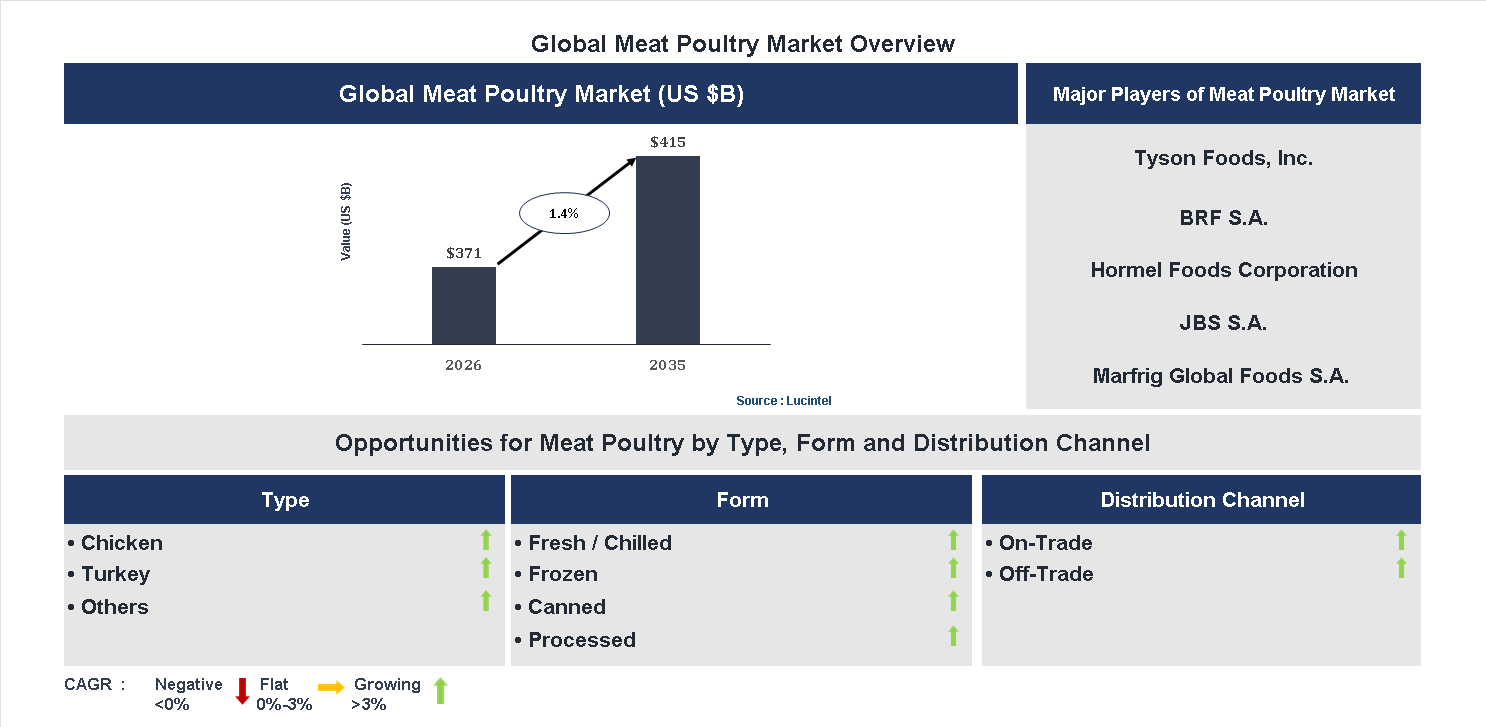
Key data points: The market size in 2035 = $415 billion, growth forecast = 12.5% annually for the next 8 years. Scroll below to get more insights. This market report covers trends, opportunities and forecasts in meat poultry market to 2035 by type (chicken, turkey, and others), form (fresh / chilled, frozen, canned, and processed), distribution channel (on-trade and off-trade), and region (North America, Europe, Asia Pacific, and the Rest of the World)
We'll send your sample report shortly.
• Lucintel forecasts that, within the type category, chicken is expected to witness higher growth over the forecast period.
• Within the distribution channel category, off-trade is expected to witness higher growth.
• In terms of region, APAC is expected to witness the highest growth over the forecast period. Gain valuable insights for your business decisions with our comprehensive 150+ page report. Sample figures with some insights are shown below.
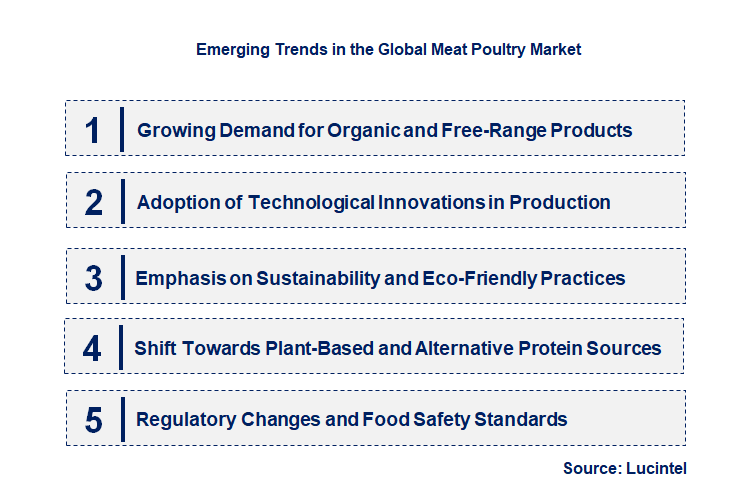
• Growing Demand for Organic and Free-Range Products: Consumers are increasingly seeking healthier, ethically produced poultry options. This trend is driven by rising awareness of animal welfare and health benefits, prompting producers to adopt organic and free-range practices. As a result, market offerings are expanding to include more premium, ethically sourced products, which often command higher prices. This shift influences supply chains, certification processes, and marketing strategies, ultimately encouraging sustainable farming practices and enhancing consumer trust.
• Adoption of Technological Innovations in Production: Automation, AI, and IoT are revolutionizing poultry farming by improving efficiency, disease management, and feed optimization. These technologies enable real-time monitoring of flock health, reduce waste, and enhance productivity. The impact includes lower operational costs, improved product quality, and increased traceability, which appeals to consumers demanding transparency. As technology becomes more accessible, smaller producers can also adopt these innovations, leading to a more competitive and efficient market landscape.
• Emphasis on Sustainability and Eco-Friendly Practices: Environmental concerns are prompting the industry to adopt sustainable practices such as waste reduction, renewable energy use, and water conservation. Companies are investing in eco-friendly packaging and reducing carbon footprints to meet regulatory standards and consumer expectations. This trend enhances brand reputation and appeals to environmentally conscious buyers, influencing product development and supply chain management. Sustainability initiatives are becoming a key differentiator in a competitive market, encouraging innovation and responsible farming.
• Shift Towards Plant-Based and Alternative Protein Sources: The rise of plant-based diets and alternative proteins is impacting traditional poultry markets. Consumers seek options that align with health, ethical, and environmental values, leading to increased demand for plant-based meats and lab-grown poultry. This trend challenges conventional producers to diversify their portfolios and innovate new products. It also influences marketing strategies, with brands emphasizing health benefits and sustainability. The market is evolving towards a more inclusive protein landscape, fostering competition and collaboration across sectors.
• Regulatory Changes and Food Safety Standards: Stricter regulations around animal welfare, food safety, and traceability are shaping industry practices. Governments and international bodies are implementing new standards that require transparency and accountability from producers. These regulations impact production processes, labeling, and certification, increasing compliance costs but also boosting consumer confidence. Companies investing in compliance and quality assurance gain a competitive edge, while the market overall becomes safer and more trustworthy, fostering long-term growth and stability. These emerging trends are fundamentally reshaping the meat poultry market by promoting sustainability, technological integration, product diversification, and regulatory compliance. They are driving innovation, improving efficiency, and aligning industry practices with consumer values, ultimately creating a more transparent, ethical, and competitive marketplace.
• Adoption of Automation and AI in Processing: The integration of automation and artificial intelligence is revolutionizing poultry processing, increasing efficiency, reducing labor costs, and enhancing product consistency. Automated systems improve slaughtering, packaging, and quality control, leading to faster turnaround times and minimized human error. AI-driven data analytics optimize supply chain management and inventory forecasting, enabling producers to respond swiftly to market demands. This technological shift boosts productivity, ensures food safety, and supports scalability, positioning the industry for sustainable growth.
• Rise of Plant-Based and Cultured Poultry Alternatives: The growing consumer interest in plant-based and lab-grown poultry products offers a significant growth opportunity. These alternatives cater to health-conscious, ethical, and environmentally aware consumers, reducing reliance on traditional meat sources. Innovations in food technology have improved taste, texture, and nutritional profiles, making these products more appealing. Market expansion is driven by increased acceptance and investment, encouraging traditional poultry producers to diversify offerings. This trend is reshaping market dynamics and expanding the consumer base.
• Focus on Sustainability and Ethical Sourcing: Sustainability initiatives and ethical sourcing practices are becoming central to industry operations. Companies are adopting eco-friendly farming methods, reducing water and energy consumption, and minimizing waste. Certification programs and transparent supply chains build consumer trust and brand loyalty. Ethical concerns about animal welfare are prompting shifts towards cage-free, free-range, and humane practices. These efforts not only meet regulatory requirements but also appeal to environmentally conscious buyers, fostering long-term market stability and opening new avenues for sustainable growth.
• Implementation of Food Safety and Traceability Technologies: Advanced food safety measures and traceability systems are critical in ensuring product integrity and consumer confidence. Blockchain and IoT technologies enable real-time tracking from farm to fork, enhancing transparency and accountability. These systems help in rapid recall processes and contamination prevention, reducing health risks. Enhanced safety protocols meet stringent regulations and consumer expectations, minimizing legal liabilities. The adoption of such technologies strengthens market reputation, encourages compliance, and supports the sustainable expansion of poultry products globally.
• Expansion into Emerging Markets: Emerging markets present substantial growth potential due to rising disposable incomes, urbanization, and changing dietary habits. Market players are investing in local infrastructure, distribution channels, and marketing strategies to capture these opportunities. Increased demand for affordable, protein-rich foods drives market expansion. Strategic partnerships and localization efforts facilitate market entry and growth. This expansion diversifies revenue streams, mitigates risks associated with mature markets, and accelerates global industry development, positioning the poultry sector for sustained long-term growth. The recent developments in automation, alternative proteins, sustainability, safety technologies, and emerging markets are collectively transforming the meat poultry market. These innovations enhance efficiency, meet evolving consumer demands, and promote sustainable practices, leading to increased competitiveness and market resilience. As these trends continue, they will drive growth, improve product quality, and expand market reach, shaping a more dynamic and responsible poultry industry worldwide.
• Expansion into Emerging Markets: The meat poultry market is poised for substantial growth in developing regions due to rising disposable incomes, urbanization, and changing dietary habits. As consumers shift towards protein-based diets, local producers and international companies are investing in infrastructure, supply chains, and marketing strategies to capture market share. This expansion offers opportunities for increased sales, brand recognition, and diversification of product offerings, ultimately driving global market growth and meeting the rising demand for poultry products.
• Adoption of Sustainable and Organic Poultry Farming Practices: Consumers are increasingly prioritizing health, animal welfare, and environmental sustainability, prompting a shift towards organic and ethically farmed poultry products. Companies adopting sustainable practices can differentiate themselves, access premium markets, and meet regulatory standards. Innovations in feed, waste management, and humane treatment are critical. This trend not only enhances brand loyalty but also aligns with global sustainability goals, creating long-term growth opportunities in premium and niche segments of the poultry market.
• Integration of Technology in Poultry Production and Processing: Advanced technologies such as automation, IoT, and data analytics are transforming poultry farming and processing. These innovations improve efficiency, reduce costs, and enhance product quality and safety. Precision farming techniques enable better resource management, disease control, and yield optimization. Implementing such technologies provides competitive advantages, ensures compliance with safety standards, and meets consumer expectations for transparency and quality, thereby fueling market growth and operational resilience.
• Development of Value-Added and Processed Poultry Products: The demand for convenience foods and ready-to-eat poultry products is rising globally. Companies are innovating with marinated, pre-cooked, and flavored poultry options to cater to busy lifestyles. This trend opens avenues for product differentiation, premium pricing, and expanded distribution channels. Investment in R&D for new recipes, packaging, and preservation techniques is essential to meet evolving consumer preferences, increase market penetration, and boost overall revenue within the poultry segment.
• Growing Focus on Health-Conscious and Functional Poultry Products: Consumers are seeking healthier options with added functional benefits, such as low-fat, high-protein, or fortified poultry products. Incorporating natural ingredients, reducing additives, and enhancing nutritional profiles are key strategies. This focus creates opportunities for product innovation, targeting health-conscious demographics and premium markets. Companies that develop functional poultry offerings can capitalize on health trends, increase consumer loyalty, and expand their market share in a competitive landscape. The overall market landscape is shaped by these opportunities, which collectively drive innovation, sustainability, and consumer-centric growth. Embracing these trends will enable industry players to strengthen their market positions, meet evolving consumer demands, and sustain long-term profitability in the dynamic meat poultry market.
• Technological Innovations: The adoption of advanced processing techniques, automation, and supply chain management systems has significantly improved efficiency, product quality, and safety standards. These innovations reduce costs, enhance traceability, and meet consumer demand for fresh, safe, and high-quality poultry products. As technology continues to evolve, market players can expand their product offerings and improve operational agility, fostering growth and competitiveness in the global market.
• Rising Consumer Demand for Protein: Increasing awareness of health benefits associated with poultry consumption, coupled with a shift away from red meats, has led to higher demand for poultry products. Urbanization, changing lifestyles, and a growing middle class in emerging economies further boost consumption. This trend encourages producers to expand capacity, innovate product lines, and explore new markets to meet the rising appetite for affordable, nutritious protein sources.
• Economic Growth and Urbanization: Rapid economic development in emerging markets has increased disposable incomes, enabling consumers to spend more on quality meat products. Urbanization also influences dietary habits, with city dwellers seeking convenient, ready-to-eat poultry options. These economic and demographic shifts create a favorable environment for market expansion, prompting investments in infrastructure, processing facilities, and distribution networks.
• Export Opportunities and Global Trade: The liberalization of trade policies and the expansion of international markets provide lucrative opportunities for poultry exporters. Countries with surplus production can access new markets, diversify revenue streams, and benefit from favorable trade agreements. This global connectivity encourages producers to meet international standards, invest in quality assurance, and develop competitive pricing strategies to capitalize on export growth.
• Sustainability and Ethical Practices: Growing consumer awareness about environmental impact and animal welfare influences market dynamics. Producers adopting sustainable farming practices, reducing carbon footprints, and ensuring humane treatment of poultry are gaining a competitive edge. Regulatory pressures and consumer preferences are pushing the industry toward more transparent, eco-friendly operations, which can enhance brand reputation and open new market segments. The challenges in the meat poultry market are:
• Stringent Regulatory Frameworks: Increasing regulations related to food safety, animal welfare, and environmental standards impose compliance costs on producers. Navigating complex legal requirements across different regions can hinder market entry and expansion. Non-compliance risks include product recalls, legal penalties, and damage to brand reputation, making regulatory adherence a critical challenge for industry players.
• Price Volatility and Feed Costs: Fluctuations in feed ingredient prices, such as corn and soy, directly impact production costs. Price volatility can lead to unpredictable profit margins and supply chain disruptions. Producers often struggle to balance cost management with maintaining competitive pricing, which can affect market stability and profitability, especially during periods of global economic uncertainty.
• Disease Outbreaks and Biosecurity Risks: Poultry is susceptible to infectious diseases like avian influenza, which can cause significant economic losses through culling, trade restrictions, and decreased consumer confidence. Maintaining biosecurity measures is costly and complex, requiring constant vigilance and investment. Disease outbreaks threaten supply continuity and market stability, posing ongoing risks to industry sustainability. The meat poultry market is shaped by technological progress, rising consumer demand, economic growth, and global trade opportunities, fostering expansion and innovation. However, regulatory complexities, price fluctuations, and disease risks present substantial hurdles that require strategic management. The interplay of these drivers and challenges determines the market’s trajectory, influencing investment decisions, operational practices, and competitive positioning. Overall, adaptability and proactive strategies are essential for stakeholders to thrive amid evolving industry dynamics.
• Tyson Foods, Inc.
• BRF S.A.
• Hormel Foods Corporation
• JBS S.A.
• Marfrig Global Foods S.A.
• Maple Leaf Foods
• Cargill, Incorporated
• Charoen Pokphand Foods Public Co. Ltd
• Continental Grain Company
• Fujian Sunner Development Co. Ltd
• Chicken
• Turkey
• Others
• Fresh / Chilled
• Frozen
• Canned
• Processed
• On-Trade
• Off-Trade
• North America
• Europe
• Asia Pacific
• The Rest of the World
• United States: The U.S. meat poultry market has seen a rise in plant-based alternatives and organic products, driven by health-conscious consumers. Technological innovations in automation and supply chain management have improved efficiency and safety standards. Additionally, there is increased focus on sustainable practices, such as reducing water usage and greenhouse gas emissions. Regulatory agencies are tightening standards around antibiotic use and animal welfare, influencing production methods. The market is also witnessing growth in premium and specialty poultry products, catering to diverse consumer preferences.
• China: China’s poultry market continues to expand rapidly, fueled by urbanization and rising disposable incomes. The government promotes modern farming techniques and biosecurity measures to prevent disease outbreaks like avian flu. There is a growing demand for processed and ready-to-eat poultry products, reflecting changing lifestyles. Investments in large-scale poultry farms and technological upgrades are increasing productivity. Additionally, China is importing more poultry to meet domestic demand, balancing local production with international trade. Sustainability practices are gradually gaining attention amid environmental concerns.
• Germany: Germany’s poultry market emphasizes animal welfare and environmental sustainability. The adoption of organic and free-range poultry products is on the rise, driven by consumer awareness. Innovations in feed and breeding techniques aim to improve product quality and reduce environmental impact. The country enforces strict regulations on antibiotic use and animal treatment, influencing industry practices. There is also a focus on reducing food waste and improving supply chain transparency. Germany’s market is characterized by a shift towards locally sourced and ethically produced poultry, aligning with broader European sustainability goals.
• India: India’s poultry industry is one of the fastest-growing sectors, driven by affordability and increasing protein consumption. Small-scale farmers dominate the landscape, but modernization efforts are underway with government support. The market is witnessing technological adoption in hatcheries and feed management to boost productivity. There is a rising demand for processed and branded poultry products, especially in urban areas. Challenges include disease management and infrastructure development. The government promotes self-sufficiency through initiatives like the National Poultry Development Program, aiming to enhance production and export potential while ensuring food security.
• Japan: Japan’s poultry market is characterized by high standards for safety and quality, with a focus on premium products. Innovations in breeding and feed technology aim to improve flavor and texture. The market is shifting towards organic and locally sourced poultry, driven by health and environmental concerns. Strict regulations on antibiotic use and animal welfare influence industry practices. There is also a growing interest in functional foods and specialty poultry products, such as free-range and heritage breeds. Technological advancements in supply chain management help reduce waste and ensure freshness, supporting Japan’s reputation for high-quality poultry products.


• Tyson Foods, Inc.
• BRF S.A.
• Hormel Foods Corporation
• JBS S.A.
• Marfrig Global Foods S.A.
• Maple Leaf Foods
• Cargill, Incorporated
• Charoen Pokphand Foods Public Co. Ltd
• Continental Grain Company
• Fujian Sunner Development Co. Ltd Q6. Which meat poultry market segment will be the largest in future? Answer: Lucintel forecasts that, within the type category, chicken is expected to witness higher growth over the forecast period. Q7. In meat poultry market, which region is expected to be the largest in next 5 years? Answer: In terms of region, APAC is expected to witness the highest growth over the forecast period. Q8. Do we receive customization in this report? Answer: Yes, Lucintel provides 10% customization without any additional cost.


Choose a license that fits your team. Instant PDF delivery.
Prices exclude taxes. Instant delivery. Custom licensing available on request.
Market Report · July 22, 2026
Market Report · July 22, 2026
Market Report · July 22, 2026
Trusted partner for strategic intelligence and business growth


Receive a complimentary market analysis tailored to your industry. Our analysts will identify key growth opportunities and competitive dynamics specific to your business.

Market size, growth rate, and key trend analysis for your specific sector.

Top competitor positioning and market share analysis.

Strategic recommendations backed by data-driven insights.
Get curated market intelligence and competitive moves straight to your inbox.
By subscribing, you agree to receive our monthly insights. Unsubscribe anytime.
Receive a complimentary market analysis tailored to your industry. Our analysts will identify key growth opportunities and competitive dynamics specific to your business.
Market size, growth rate, and key trend analysis for your specific sector.
Top competitor positioning and market share analysis.
Strategic recommendations backed by data-driven insights.
Get curated market intelligence, emerging trends, and competitive moves straight to your inbox each month.
By subscribing, you agree to receive our monthly insights. Unsubscribe anytime.
We'll send your sample report shortly.