
Market Report · September 3, 2026

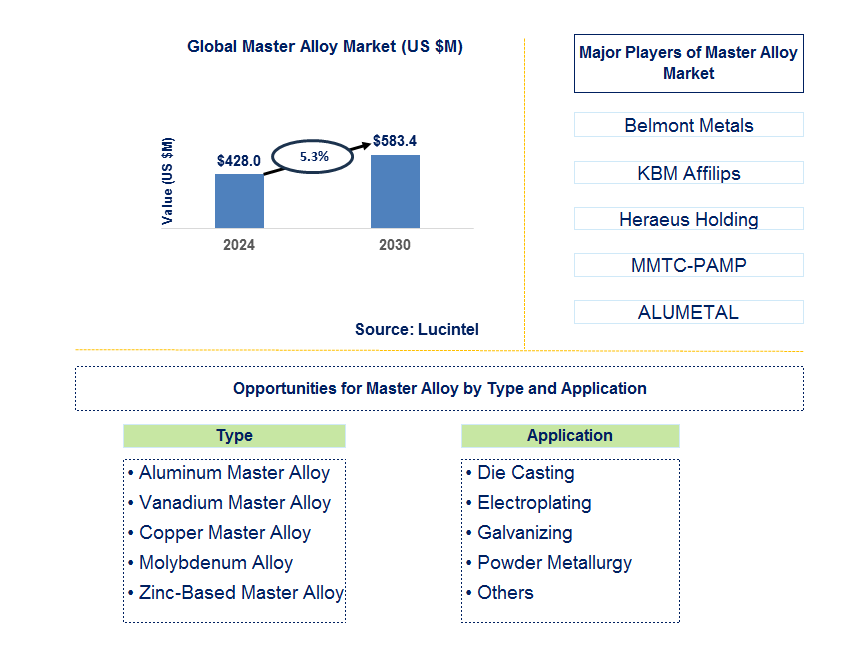
Key data points: The market size in 2030 = $583.4 million, growth forecast = 5.3% annually for the next 6 years. Scroll below to get more insights. This market report covers trends, opportunities, and forecasts in the global master alloy market to 2030 by type (aluminum master alloy, vanadium master alloy, copper master alloy, molybdenum alloy, and zinc-based master alloy), application (die casting, electroplating, galvanizing, powder metallurgy, and others), and region (North America, Europe, Asia Pacific, and the Rest of the World)
We'll send your sample report shortly.
• United States: Recent developments in the U.S. master alloy market have focused on producing high-performance alloys for aerospace and automotive applications. Companies are investing in research to enhance properties like strength and corrosion resistance, driven by increasing demand for lightweight materials and sustainable manufacturing processes.
• China: China has become a major player in the master alloy market, with significant investments in production capacity and technological advancements. The country is focusing on developing specialized master alloys for electronics and automotive industries, which are vital for enhancing the performance and reliability of components in these sectors.
• Germany: In Germany, advancements in the master alloy market are closely linked to the automotive and aerospace industries. German manufacturers are adopting innovative alloy compositions that improve performance and reduce weight, aligning with the country's push for sustainability and efficiency in manufacturing processes.
• India: India is witnessing growth in the master alloy market, driven by its expanding automotive and aerospace sectors. Recent developments include the establishment of new production facilities and partnerships with global manufacturers, aiming to increase the supply of high-quality alloys to meet local and international demands.
• Japan: Japan's master alloy market is characterized by technological innovation and a focus on high-performance materials. Japanese companies are developing advanced master alloys for electronics and automotive applications, enhancing properties like thermal conductivity and strength while ensuring compliance with stringent environmental regulations.
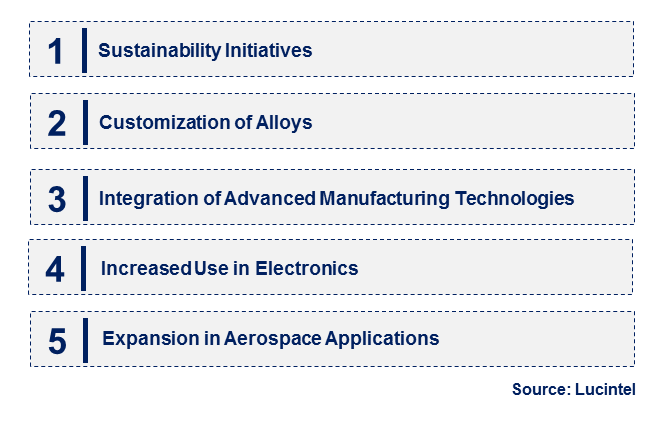
• Sustainability Initiatives: Companies are increasingly focusing on sustainable practices by developing eco-friendly master alloys, which reduce environmental impact and appeal to environmentally conscious consumers. This trend aligns with global efforts to promote sustainability in manufacturing processes and materials.
• Customization of Alloys: There is a growing demand for customized master alloys tailored to specific applications and performance requirements. Manufacturers are investing in R&D to create unique compositions that meet diverse industrial needs, enhancing their competitiveness in the market.
• Integration of Advanced Manufacturing Technologies: The adoption of advanced manufacturing technologies, such as 3D printing and automation, is transforming the production of master alloys. These technologies enable improved precision and efficiency, allowing manufacturers to produce complex geometries and reduce waste.
• Increased Use in Electronics: The electronics industry is increasingly utilizing master alloys for applications like connectors and semiconductor components. This trend is driven by the need for materials with enhanced electrical and thermal properties, boosting the overall performance of electronic devices.
• Expansion in Aerospace Applications: The aerospace sector is driving demand for high-performance master alloys, particularly those that offer superior strength-to-weight ratios. Manufacturers are developing specialized alloys to meet the stringent requirements of aerospace applications, contributing to advancements in aircraft design and efficiency. The convergence of these trends is reshaping the master alloy market, leading to enhanced product offerings and improved manufacturing processes.
• Development of Eco-friendly Alloys: Manufacturers are investing in the development of eco-friendly master alloys to minimize environmental impact. These alloys are produced using sustainable practices, appealing to industries aiming to reduce their carbon footprint and comply with stricter environmental regulations.
• Technological Innovations in Production: The introduction of advanced manufacturing technologies, such as additive manufacturing, is revolutionizing the production of master alloys. These technologies enable greater customization, reduced lead times, and improved material properties, enhancing overall efficiency in production.
• Collaboration and Partnerships: Companies are forming strategic partnerships and collaborations to leverage expertise and resources in master alloy development. This trend enhances innovation and accelerates the introduction of new alloy compositions to meet evolving market demands.
• Increased Research and Development: There is a significant uptick in R&D investments aimed at discovering new master alloy formulations. These efforts focus on enhancing performance characteristics and exploring new applications across various sectors, particularly in aerospace and automotive industries.
• Expansion of Production Facilities: Many companies are expanding their production capabilities to meet the growing demand for master alloys. This expansion allows manufacturers to increase output, improve supply chain efficiency, and enhance their competitive positioning in the global market. These developments are driving growth in the master alloy market, fostering innovation and improving the quality and availability of alloys for various applications.
• Aerospace Industry Growth: The aerospace sector is a significant growth opportunity for master alloys, driven by the demand for lightweight and high-strength materials. Manufacturers can focus on developing specialized alloys that enhance fuel efficiency and performance in aircraft components.
• Automotive Sector Innovations: The automotive industry is shifting towards lighter materials for improved fuel efficiency. Master alloys that offer enhanced properties, such as strength and corrosion resistance, present a lucrative opportunity for manufacturers to meet industry standards and regulations.
• Electronics Manufacturing Expansion: The growing electronics sector requires master alloys for connectors, components, and devices. Companies can capitalize on this demand by developing alloys with superior electrical and thermal conductivity, improving overall product performance.
• Green Technologies and Sustainability: As industries prioritize sustainability, there is a growing market for eco-friendly master alloys. Manufacturers can explore the development of alloys produced through sustainable practices, appealing to environmentally conscious consumers and industries.
• Emerging Markets Development: Emerging markets in Asia and Africa present opportunities for growth in the master alloy sector. Companies can expand their presence in these regions by establishing production facilities and partnerships to meet local demands for advanced materials. These strategic growth opportunities highlight the potential for manufacturers to innovate and expand their offerings in the master alloy market.
• Technological Advancements: Innovations in production processes and materials science are driving the development of new master alloys. These advancements enhance performance characteristics, enabling manufacturers to meet diverse industrial requirements.
• Rising Demand for Lightweight Materials: Industries such as automotive and aerospace are increasingly seeking lightweight materials to improve fuel efficiency and reduce emissions. This trend is driving demand for advanced master alloys with superior properties.
• Growth in End-use Industries: The expansion of end-use industries, including electronics, automotive, and aerospace, is fueling demand for master alloys. Manufacturers must adapt to changing market needs to maintain competitiveness.
• Focus on Sustainability: There is a growing emphasis on sustainability in manufacturing practices. Companies are developing eco-friendly master alloys to meet environmental regulations and appeal to environmentally conscious consumers.
• Globalization and Market Expansion: The globalization of supply chains and increasing trade opportunities are creating a broader market for master alloys. Companies can leverage these trends to expand their reach and enhance market presence. Challenges in the master alloy market are:
• Raw Material Price Volatility: Fluctuations in the prices of raw materials used in master alloy production can impact profitability. Manufacturers must navigate these challenges to maintain competitive pricing and supply chain stability.
• Regulatory Compliance: Adhering to stringent environmental and safety regulations can pose challenges for manufacturers. Companies must invest in compliance measures to avoid penalties and ensure sustainable practices.
• Technological Integration Costs: Implementing advanced manufacturing technologies can require significant investment. Smaller manufacturers may struggle to afford these upgrades, affecting their competitiveness in the market.
• Competition from Alternative Materials: The emergence of alternative materials, such as composites, can pose challenges to the master alloy market. Manufacturers must continuously innovate to differentiate their products and maintain market share.
• Skilled Labor Shortages: The industry faces challenges in finding and retaining skilled labor necessary for advanced manufacturing processes. Addressing this issue is vital for sustaining production capacity and growth. In conclusion, the interplay of these drivers and challenges significantly shapes the master alloy market landscape, influencing growth trajectories and strategic decision-making for manufacturers.
• Belmont Metals
• KBM Affilips
• Heraeus Holding
• MMTC-PAMP
• ALUMETAL
• Asturiana de Aleaciones
• Axayya Alloys
• Aluminum Master Alloy
• Vanadium Master Alloy
• Copper Master Alloy
• Molybdenum Alloy
• Zinc-Based Master Alloy
• Die Casting
• Electroplating
• Galvanizing
• Powder Metallurgy
• Others
• North America
• Europe
• Asia Pacific
• The Rest of the World
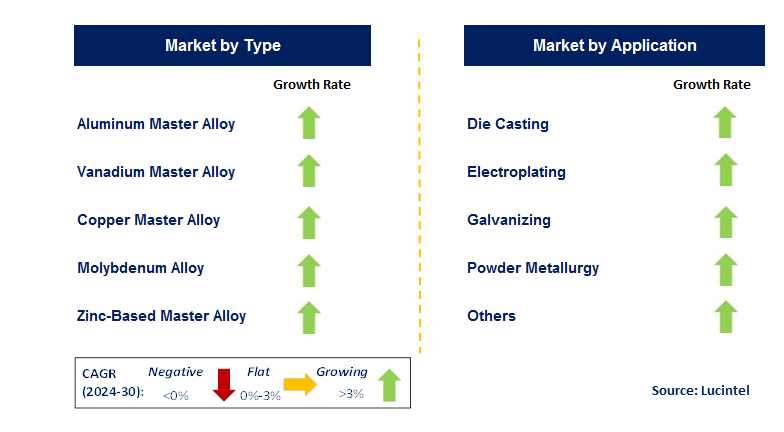
• Lucintel forecasts that, within the type category, aluminum master alloy will remain the largest segment over the forecast period due to its enhanced metal ductility, machinability, and strength.
• Within the application category, die casting is expected to witness the highest growth due to the rising use of master alloy in this application owing to its excellent heat conductivity, strong strength, and low weight.
• In terms of regions, North America will remain the largest region over the forecast period due to substantial demand for master alloy from the automotive and aerospace & defense sectors of the region.


• Belmont Metals
• KBM Affilips
• Heraeus Holding
• MMTC-PAMP
• ALUMETAL
• Asturiana de Aleaciones
• Axayya Alloys Q6. Which master alloy market segment will be the largest in future? Answer: Lucintel forecasts that aluminum master alloy will remain the largest segment over the forecast period due to its enhanced metals ductility, machinability, and strength. Q7. In master alloy market, which region is expected to be the largest in next 5 years? Answer: North America will remain the largest region over the forecast period due to substantial demand for master alloy from the automotive and aerospace & defense sectors of the region. Q.8 Do we receive customization in this report? Answer: Yes, Lucintel provides 10% customization without any additional cost.


Choose a license that fits your team. Instant PDF delivery.
Prices exclude taxes. Instant delivery. Custom licensing available on request.
Market Report · September 3, 2026
Market Report · July 22, 2026
Market Report · July 22, 2026
Trusted partner for strategic intelligence and business growth


Receive a complimentary market analysis tailored to your industry. Our analysts will identify key growth opportunities and competitive dynamics specific to your business.

Market size, growth rate, and key trend analysis for your specific sector.

Top competitor positioning and market share analysis.

Strategic recommendations backed by data-driven insights.
Get curated market intelligence and competitive moves straight to your inbox.
By subscribing, you agree to receive our monthly insights. Unsubscribe anytime.
Receive a complimentary market analysis tailored to your industry. Our analysts will identify key growth opportunities and competitive dynamics specific to your business.
Market size, growth rate, and key trend analysis for your specific sector.
Top competitor positioning and market share analysis.
Strategic recommendations backed by data-driven insights.
Get curated market intelligence, emerging trends, and competitive moves straight to your inbox each month.
By subscribing, you agree to receive our monthly insights. Unsubscribe anytime.
We'll send your sample report shortly.