
Market Report · July 22, 2026

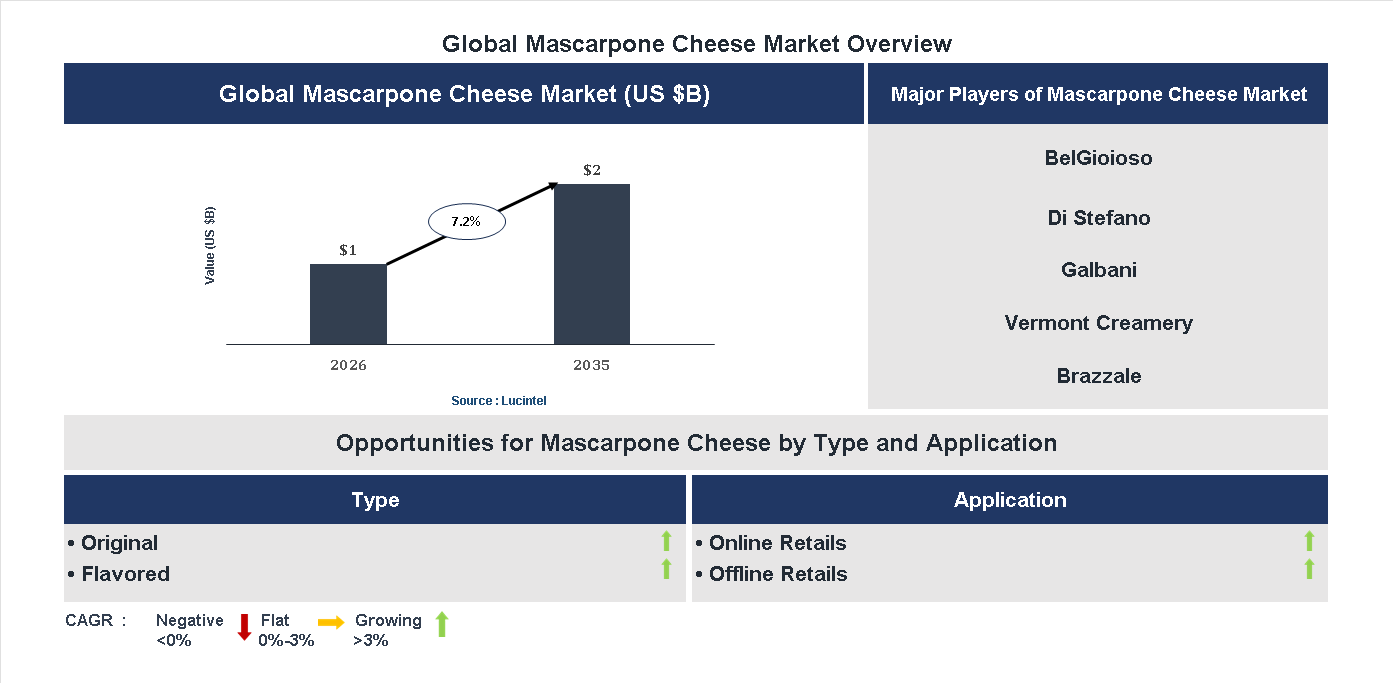
Key data points: The market size in 2035 = $2 billion, growth forecast = 7.2% annually for the next 8 years. Scroll below to get more insights. This market report covers trends, opportunities and forecasts in mascarpone cheese market to 2035 by type (original and flavored), application (online retails and offline retails), and region (North America, Europe, Asia Pacific, and the Rest of the World)
We'll send your sample report shortly.
• Lucintel forecasts that, within the type category, flavored is expected to witness higher growth over the forecast period.
• Within the application category, online retail is expected to witness higher growth.
• In terms of region, APAC is expected to witness the highest growth over the forecast period. Gain valuable insights for your business decisions with our comprehensive 150+ page report. Sample figures with some insights are shown below.
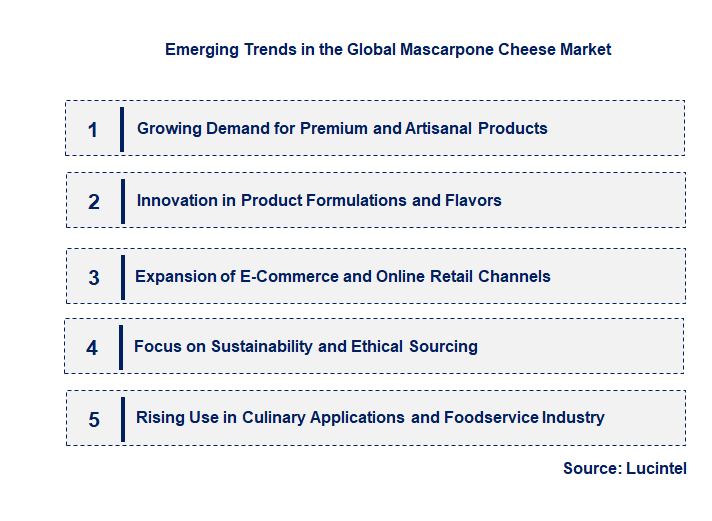
• Growing Demand for Premium and Artisanal Products: Consumers are increasingly seeking high-quality, artisanal mascarpone cheese, driven by a desire for authentic, gourmet experiences. This trend encourages producers to focus on traditional methods, organic ingredients, and unique flavor profiles, which can command higher prices and foster brand loyalty. The premium segments growth is also supported by the rising disposable income and a shift towards luxury food items, making artisanal mascarpone a sought-after product in both retail and foodservice sectors.
• Innovation in Product Formulations and Flavors: Manufacturers are diversifying mascarpone offerings by introducing flavored, reduced-fat, and organic variants to cater to health-conscious and adventurous consumers. Innovations include incorporating herbs, spices, and fruit infusions, expanding the products culinary applications. These developments enhance consumer engagement and open new market segments, such as health-focused and gourmet markets, thereby increasing overall market size and product versatility.
• Expansion of E-commerce and Online Retail Channels: The rise of online shopping platforms has made mascarpone cheese more accessible to a global audience. E-commerce enables brands to reach niche markets and offer a wider variety of products, including specialty and imported mascarpone. This trend reduces dependency on traditional retail channels, lowers distribution costs, and provides valuable consumer data for targeted marketing. The convenience and expanding digital infrastructure are expected to further accelerate market penetration and sales growth.
• Focus on Sustainability and Ethical Sourcing: Consumers are increasingly concerned about the environmental impact and ethical practices involved in dairy production. Companies are adopting sustainable sourcing, eco-friendly packaging, and transparent supply chains to meet these expectations. Such initiatives not only enhance brand reputation but also appeal to environmentally conscious buyers, influencing purchasing decisions and fostering long-term customer loyalty in a competitive market.
• Rising Use in Culinary Applications and Foodservice Industry: The versatility of mascarpone cheese is driving its adoption in various culinary applications, from desserts to savory dishes. The foodservice industry, including restaurants, cafes, and catering services, is expanding its use of mascarpone to create innovative menus. This trend boosts demand in the hospitality sector and encourages product innovation tailored for professional kitchens, further fueling market growth and diversification. These emerging trends are collectively reshaping the mascarpone cheese market by emphasizing quality, innovation, accessibility, sustainability, and culinary versatility. They are driving market expansion, encouraging product differentiation, and aligning with evolving consumer values, ultimately creating a dynamic and competitive landscape.
• Growing Demand for Premium Dairy Products: The market is witnessing increased consumer preference for high-quality, artisanal dairy items, including mascarpone cheese, driven by a shift towards gourmet and organic foods. This trend is encouraging producers to focus on quality, authenticity, and unique flavor profiles, which enhances brand value and market share. As consumers become more discerning, the demand for premium mascarpone is expected to rise, opening avenues for premium product lines and niche markets.
• Expansion of culinary applications: Mascarpone cheese is increasingly used beyond traditional desserts, including in savory dishes, spreads, and gourmet recipes. Chefs and home cooks are exploring its versatility, which broadens its market reach. This expansion is prompting manufacturers to develop new formulations and packaging suited for diverse culinary uses. The diversification of applications boosts sales volume and encourages innovation, making mascarpone a staple ingredient in various cuisines and foodservice sectors.
• Innovation in production techniques: Advances in manufacturing processes, such as improved fermentation and filtration methods, are enhancing product quality, consistency, and shelf life. These innovations reduce costs and environmental impact, making mascarpone more accessible and sustainable. Producers adopting these technologies can meet rising demand efficiently while maintaining high standards. This progress supports market growth by enabling larger-scale production and expanding distribution channels, ultimately benefiting consumers with better products at competitive prices.
• Rising popularity of Italian cuisine globally: The global proliferation of Italian restaurants and culinary culture has significantly increased mascarpone cheese consumption. As consumers worldwide embrace Italian dishes like tiramisu and pasta, demand for authentic ingredients surges. This trend encourages import-export activities and local production initiatives. Market players are capitalizing on this popularity by forming strategic partnerships and expanding distribution networks, which further accelerates growth and diversifies the market landscape.
• Focus on sustainable sourcing and eco-friendly packaging: Consumers and regulators are increasingly emphasizing sustainability, prompting manufacturers to adopt eco-friendly practices. This includes sourcing milk from sustainable farms and using biodegradable or recyclable packaging. These initiatives appeal to environmentally conscious consumers and comply with regulations, enhancing brand reputation. Sustainable practices are also reducing costs and environmental impact, fostering long-term market stability. As sustainability becomes a key differentiator, it is shaping the future growth trajectory of the mascarpone cheese industry. The overall impact of these developments is a dynamic, expanding market characterized by innovation, increased consumer engagement, and global reach. Enhanced product quality, diversified applications, and sustainable practices are driving growth, attracting new entrants, and strengthening existing players. These trends are positioning mascarpone cheese as a versatile, premium ingredient with significant potential for future market expansion.
• Expansion of gourmet and premium food segments: The increasing consumer preference for high-quality, artisanal, and gourmet products is driving demand for mascarpone cheese. Chefs and food enthusiasts seek this rich, creamy cheese for desserts, pasta, and spreads, boosting sales. Manufacturers are innovating with organic, locally sourced, and specialty variants to cater to this trend. The growth of upscale restaurants and specialty grocery stores further amplifies market opportunities, encouraging brands to expand product lines and enhance distribution channels to meet rising consumer expectations.
• Growing popularity of Italian cuisine globally: The global proliferation of Italian food culture is a key growth driver for mascarpone cheese. As Italian dishes like tiramisu, cannoli, and pasta gain popularity, demand for authentic ingredients increases. Foodservice providers and retail outlets are sourcing high-quality mascarpone to meet consumer preferences. This trend encourages manufacturers to strengthen supply chains, develop authentic product variants, and expand into emerging markets, thereby capitalizing on the expanding culinary landscape and increasing consumer exposure to Italian flavors.
• Innovation in product formulations and packaging: Companies are investing in product innovation to attract diverse consumer segments. This includes developing reduced-fat, organic, and plant-based mascarpone options to cater to health-conscious consumers. Packaging innovations such as resealable containers and single-serve portions enhance convenience and shelf life. These advancements improve product appeal, facilitate easier handling, and expand usage occasions. Innovation efforts also help differentiate brands in a competitive market, fostering customer loyalty and opening new distribution channels.
• Rising demand from foodservice and hospitality sectors: The foodservice industry’s growth significantly impacts mascarpone cheese demand. Restaurants, cafes, and catering services increasingly incorporate mascarpone into desserts, appetizers, and main courses. The trend towards premium, indulgent offerings boosts sales. Suppliers are forming strategic partnerships with foodservice providers to ensure consistent quality and supply. This sector’s expansion offers substantial growth opportunities, prompting manufacturers to tailor products for bulk purchasing, improve supply chain efficiency, and develop customized solutions for hospitality clients.
• Increasing focus on sustainable and organic products: Consumer awareness of environmental and health issues is driving demand for organic and sustainably produced mascarpone cheese. Producers adopting eco-friendly practices, organic certifications, and transparent sourcing are gaining competitive advantage. This trend aligns with the broader shift towards sustainable agriculture and ethical consumption. Market players are investing in sustainable farming, eco-friendly packaging, and traceability initiatives to meet consumer expectations. The focus on sustainability enhances brand reputation and opens access to premium markets, fostering long-term growth prospects. The overall market outlook is positively influenced by these growth opportunities, which collectively drive innovation, expand consumer base, and enhance competitive positioning. As demand for high-quality, authentic, and sustainable mascarpone cheese continues to rise, market players are well-positioned to capitalize on emerging trends. Strategic investments and product diversification will be crucial for sustained growth, ensuring the market remains dynamic and responsive to evolving consumer preferences and global culinary trends.
• Increasing Demand for Premium and Artisanal Dairy Products: The rising consumer preference for high-quality, gourmet, and artisanal foods significantly boosts the demand for mascarpone cheese. Consumers are willing to pay a premium for authentic, locally produced, and organic options, which encourages manufacturers to innovate and expand their product lines. This trend is driven by a growing awareness of health and wellness, as well as a desire for unique culinary experiences. The proliferation of food blogs, social media, and culinary tourism further amplifies this demand, making mascarpone cheese a sought-after ingredient in both home cooking and professional gastronomy. As a result, market players are investing in branding and product differentiation to capitalize on this trend.
• Technological Advancements in Dairy Processing and Packaging: Innovations in dairy processing techniques, such as improved fermentation and homogenization methods, enhance the texture, flavor, and shelf life of mascarpone cheese. Advanced packaging solutions, including vacuum sealing and modified atmosphere packaging, help preserve freshness and prevent spoilage during transportation and storage. These technological improvements reduce production costs and waste, enabling manufacturers to offer high-quality products at competitive prices. Moreover, automation and digitalization in manufacturing streamline operations, increase efficiency, and ensure consistent product quality. As consumers demand fresher and more durable products, technological progress remains a key driver fueling market growth.
• Growing Urbanization and Changing Lifestyles: Rapid urbanization, especially in emerging economies, leads to increased demand for convenient, ready-to-eat, and premium food products like mascarpone cheese. Busy lifestyles and dual-income households prefer versatile ingredients that can be used in quick recipes or as toppings, driving the popularity of mascarpone in household kitchens and foodservice sectors. Urban consumers are also more exposed to international cuisines, which often incorporate mascarpone cheese, further boosting its consumption. This shift in dietary habits encourages retailers and manufacturers to expand product availability through supermarkets, convenience stores, and online platforms, thereby fueling market expansion.
• Expansion of Foodservice and Hospitality Sectors: The global rise in the foodservice industry, including restaurants, cafes, and catering services, significantly contributes to mascarpone cheese demand. Chefs and culinary professionals increasingly incorporate mascarpone into desserts, pasta dishes, and gourmet menus, elevating its profile as a versatile ingredient. The growth of luxury hotels and fine dining establishments further amplifies demand for high-quality dairy products. This sectors expansion encourages dairy producers to innovate and scale production to meet the increasing volume requirements. Additionally, collaborations with foodservice distributors facilitate wider product reach, supporting overall market growth.
• Increasing Focus on Organic and Natural Products: Consumers are increasingly seeking organic, natural, and clean-label products, which directly impacts the mascarpone cheese market. Organic mascarpone, free from artificial additives and preservatives, appeals to health-conscious buyers and those with dietary restrictions. Certification standards and transparency in sourcing bolster consumer trust and brand loyalty. Manufacturers investing in organic dairy farms and sustainable practices are gaining competitive advantage. This trend not only expands the customer base but also encourages product innovation, such as lactose-free or plant-based alternatives, further diversifying the market offerings and driving growth. The challenges in the mascarpone cheese market are:
• Stringent Regulatory Standards and Food Safety Concerns: Compliance with food safety regulations, including hygiene standards, labeling requirements, and quality certifications, poses significant challenges for manufacturers. Variations across regions complicate international trade and necessitate substantial investments in quality control systems. Any lapses can lead to product recalls, legal penalties, and damage to brand reputation. Additionally, the need to meet organic and sustainability standards adds complexity to production processes. Ensuring consistent adherence to these regulations is crucial but often costly, especially for small and medium-sized enterprises aiming to expand globally.
• Volatility in Raw Material Prices: The cost of raw materials, primarily dairy milk, significantly influences the profitability of mascarpone cheese production. Fluctuations due to seasonal variations, climate change, and supply-demand imbalances can lead to unpredictable input costs. Price volatility affects pricing strategies, profit margins, and overall competitiveness. Manufacturers may face challenges in passing increased costs to consumers without losing market share. Additionally, reliance on imported dairy ingredients exposes the market to currency fluctuations and trade disruptions, further complicating cost management and planning.
• Competition and Market Saturation: The increasing number of local and international players entering the mascarpone cheese market intensifies competition. Market saturation in developed regions limits growth opportunities and pressures prices, impacting profit margins. Differentiation becomes essential, requiring significant marketing and innovation investments. Small-scale producers may struggle to compete with large multinational corporations that benefit from economies of scale. Moreover, counterfeit and imitation products threaten brand integrity and consumer trust. Navigating this competitive landscape demands strategic positioning, product innovation, and effective distribution channels to sustain growth. The mascarpone cheese market is driven by rising consumer demand for premium, artisanal, and organic products, supported by technological innovations and expanding foodservice sectors. However, regulatory complexities, raw material price volatility, and intense competition pose significant challenges. These factors collectively influence market dynamics, requiring stakeholders to adapt strategically. While growth prospects remain promising, success hinges on balancing innovation, compliance, and cost management. Overall, the markets evolution will depend on how effectively companies navigate these drivers and challenges to meet consumer preferences and regulatory demands.
• BelGioioso
• Di Stefano
• Galbani
• Vermont Creamery
• Brazzale
• La Casa Del Formaggio
• Gennaro Auricchio
• Sterilgarda
• BV Dairy
• Cream of Creams
• Original
• Flavored
• Online Retails
• Offline Retails
• North America
• Europe
• Asia Pacific
• The Rest of the World
• United States: The U.S. market has seen increased demand for artisanal and organic mascarpone cheese, driven by health-conscious consumers. Major dairy companies are investing in sustainable production practices and innovative packaging. E-commerce platforms have expanded access, boosting sales. Additionally, collaborations with local farms enhance product quality and traceability, strengthening consumer trust.
• China: China’s mascarpone market is rapidly growing, fueled by rising Western culinary influence and increasing disposable incomes. Local manufacturers are adopting advanced fermentation and processing technologies to improve product quality. Retail chains and online platforms are expanding distribution channels. The government’s focus on dairy safety standards is also encouraging market expansion and consumer confidence.
• Germany: Germany remains a key European market for mascarpone cheese, with a focus on high-quality, traditional products. Innovations include organic and lactose-free options to cater to diverse dietary needs. The country’s emphasis on sustainability has led producers to adopt eco-friendly packaging and sourcing practices. The popularity of Italian cuisine continues to drive demand in both retail and foodservice sectors.
• India: The Indian mascarpone cheese market is emerging, with increasing interest from urban consumers and upscale restaurants. Local dairy companies are investing in modern processing facilities to meet quality standards. The trend toward Western desserts and Italian dishes is boosting demand. Market players are also exploring partnerships with international brands to expand product offerings and distribution networks.
• Japan: Japan’s market for mascarpone cheese is characterised by a preference for premium, imported products. Domestic producers are focusing on high-quality, innovative variants such as reduced-fat and flavoured mascarpone. The country’s strong food safety regulations and consumer awareness promote the adoption of advanced manufacturing techniques. The popularity of Italian cuisine continues to support market growth, especially in upscale supermarkets and speciality stores.


• BelGioioso
• Di Stefano
• Galbani
• Vermont Creamery
• Brazzale
• La Casa Del Formaggio
• Gennaro Auricchio
• Sterilgarda
• BV Dairy
• Cream of Creams Q6. Which mascarpone cheese market segment will be the largest in future? Answer: Lucintel forecasts that, within the type category, flavored is expected to witness higher growth over the forecast period. Q7. In mascarpone cheese market, which region is expected to be the largest in next 5 years? Answer: In terms of region, APAC is expected to witness the highest growth over the forecast period. Q8. Do we receive customization in this report? Answer: Yes, Lucintel provides 10% customization without any additional cost.


Choose a license that fits your team. Instant PDF delivery.
Prices exclude taxes. Instant delivery. Custom licensing available on request.
Market Report · July 22, 2026
Market Report · July 22, 2026
Market Report · July 22, 2026
Trusted partner for strategic intelligence and business growth


Receive a complimentary market analysis tailored to your industry. Our analysts will identify key growth opportunities and competitive dynamics specific to your business.

Market size, growth rate, and key trend analysis for your specific sector.

Top competitor positioning and market share analysis.

Strategic recommendations backed by data-driven insights.
Get curated market intelligence and competitive moves straight to your inbox.
By subscribing, you agree to receive our monthly insights. Unsubscribe anytime.
Receive a complimentary market analysis tailored to your industry. Our analysts will identify key growth opportunities and competitive dynamics specific to your business.
Market size, growth rate, and key trend analysis for your specific sector.
Top competitor positioning and market share analysis.
Strategic recommendations backed by data-driven insights.
Get curated market intelligence, emerging trends, and competitive moves straight to your inbox each month.
By subscribing, you agree to receive our monthly insights. Unsubscribe anytime.
We'll send your sample report shortly.